

The best UK mobile proxies route traffic through real UK carrier IPs on 4G, 5G, and LTE. Teams use them for location-based testing, ad verification, and public data collection when a British phone profile is the match they need. Sticky proxy or rotating proxy sessions keep each UK workflow on its own carrier identity.
Discover the Best UK Mobile Proxies in 2026 – ResiProx.
What Is a UK Mobile Proxy and How Carrier IPs Work

A UK mobile proxy is a server that forwards your request through an IP a British carrier assigned to a phone on 3G, 4G, 5G, or LTE. The site you open sees a mobile exit in the United Kingdom, not your office line and not a data center range.
The best UK mobile proxies sit in front of that carrier address. You connect with four fields most tools already know: host, port, username, and password. The username can carry the exit you want, plus a session name. Reuse the same session name, and you return to the same identity. Change it, and you start another.
UK carriers do not give every handset a private public IP. Many real subscribers share one address through carrier-grade NAT. That shared pattern is normal on phones. It is also why mobile exits look ordinary on platforms that expect traffic from EE, Vodafone, O2, or Three.
Rotating mobile proxies fit high-volume public data collection. Sticky sessions fit logins and multi-step checks that should finish on the address they started on. SOCKS5 mobile proxies help when a client needs that protocol instead of plain HTTP. 4G LTE mobile proxies and 5G mobile proxies use the same carrier trust idea, with newer radios often feeling snappier on full pages.
Why UK Carrier IPs Earn More Trust Than Home Broadband
Reputation systems score the network behind an IP, not the story in your user agent. Carrier ranges belong to phones that reconnect all day. Home broadband ranges belong to one household for much longer. Datacenter ranges belong to servers. Many platforms treat those three groups differently.
A UK carrier exit matches how people actually open Instagram, Meta ads, X, Deliveroo, or a mobile search results page. UK residential proxies still work well for desktop-style research on sites that accept home ISP traffic. Mobile wins when the product itself is built for a phone.
That extra trust is why teams often reserve mobile for the hard, phone-first slice and keep residential proxies for broader public pages. Point mobile at ad verification, price monitoring, market research, and location-based testing that should look like a handset. Mix types when the job mixes surfaces.
City and carrier selection keeps the login story boring. A session that stays in London on one carrier looks calmer than a session that jumps countries. ISP proxies in the UK stay useful when you need one fixed address for a long hold. Mobile is built for shorter sticky windows and natural rotation.
Best UK Mobile Proxies
1. ResiProx – Best UK Mobile Proxies
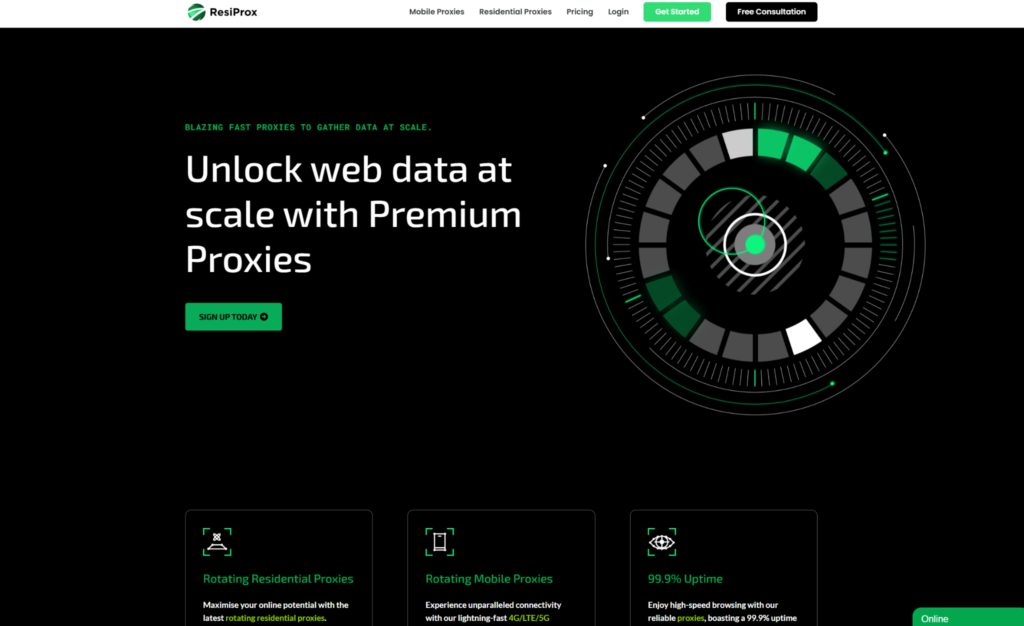
UK mobile proxies send requests through real 4G, 5G, and LTE carrier addresses, with a large United Kingdom pool inside a wider global network. You pick country, city, or carrier on the same HTTP endpoint most anti-detect browsers, bots, and HTTP clients already support. HTTPS and SOCKS5 are available.
Resiprox Premium Proxies – Unlock the Web with Power and Precision
Introducing Resiprox, the ultimate proxy solution designed to supercharge your online operations. With our Residential Proxies and Mobile Proxies, you get unmatched access to web data at scale, robust security, and seamless connectivity all backed by a free trial to experience the difference firsthand.
Product Features
- Rotating Residential Proxies: Harness the power of 10M+ ethically-sourced IPs across 180+ countries. These proxies rotate dynamically to support large-scale public data collection, market research, and workflows that benefit from automatic IP rotation, delivering 99.9% uptime and precise targeting at the country, city, or ZIP code level.
- Rotating Mobile Proxies: Powered by 4G/LTE/5G networks, our mobile proxies offer lightning-fast speeds with <0.3s response times and a 99.9% success rate perfect for real-time applications.
- Global IP Network: Tap into millions of IPs, including 3.5M+ in the US, 1.8M+ in Brazil, 3.1M+ in India, and more, ensuring coverage wherever you need it.
- Advanced Capabilities: Enjoy HTTPS proxy & SOCKS5 proxy support, unlimited concurrent sessions, and flexible rotating or sticky sessions, all wrapped in premium IP quality.
Product Specifications:
- Performance: High-speed browsing with 99.9% uptime and 24/7 expert support.
- Integration: Seamlessly works with Node.js, Python, PHP, Selenium, and more, featuring a dynamic endpoint generator and robust API access.
What It’s Built For:
Resiprox proxies are your all-in-one tool for:
- Public Data Collection: Collect public web data for approved business use cases, market research, and growth insights.
- Price Monitoring: Track prices across regions in real-time.
- Multi-Account Workflows: Run separate QA, monitoring, and research workflows across multiple accounts.
- SEO & Ad Verification: Monitor rankings and verify ads globally.
- Cybersecurity: Protect your brand and test applications securely.
- Specialized Tasks: From high-volume monitoring of limited-release products to travel fare aggregation, Resiprox delivers.
Why Resiprox Stands Out:
This isn’t just a proxy, it’s a game-changer. With comprehensive documentation, multi-platform compatibility, and a team of experts available 24/7, Resiprox ensures your projects run smoothly. Whether you’re a business scaling operations, a researcher gathering data, or a developer testing apps, our proxies adapt to your needs with precision and reliability.
Resiprox Premium Proxies – Your Key to a Smarter, Faster, and More Connected Online World.
Click here to discover our :
2. ProxyEmpire
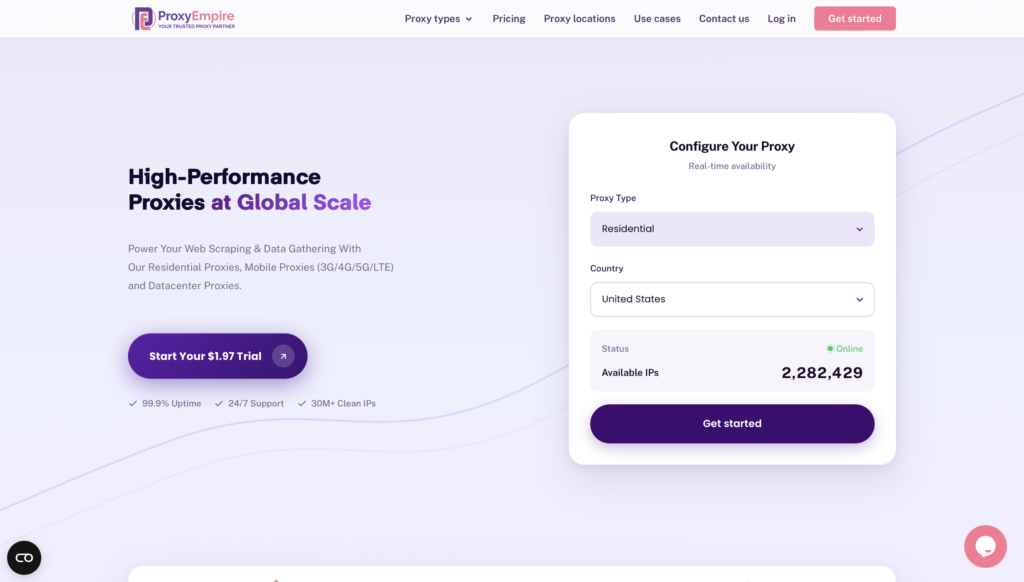
ProxyEmpire runs a sizable mobile and residential mix with 3G, 4G, 5G, and LTE support. Carrier-aware routing is part of the pitch, which matters in the UK, where EE, O2, Vodafone, and Three still shape how platforms read an address. City and ISP filters help keep a session in the area you care about. Sticky sessions support logins and multi-step research. Rotating sessions support public data collection and market research that benefit from automatic IP rotation.
The network is aimed at social research and other phone-first workflows, while residential covers home-line tasks. HTTP and SOCKS5 are supported. Headquarters is listed as the United Kingdom in many comparison writeups, and the company talks about ethical sourcing. Rollover-style bandwidth appears in some plans, which reduces waste when usage is uneven through the month.
Some users want allow lists or extra sub-user controls that are not always present. The product is capable, not flashy. If you need a guided enterprise portal with every module labeled, a larger platform may feel clearer. If you need British carrier exits with city and ISP selection and you already know how to paste proxy fields into a browser or client, ProxyEmpire is a solid mid-to-large option. Keep each research workflow on its own session so one lane does not share an identity with another.
Key features
- Mobile and residential coverage across many countries
- Carrier and city filters
- Sticky and rotating sessions
- HTTP and SOCKS5
- Carrier-aware routing
Facts and information
- Headquarters: United Kingdom
- Focus on ethical sourcing and carrier routing
- Useful for social research and public data work
- Dashboard tooling is thinner than the largest enterprise suites
3. Oxylabs
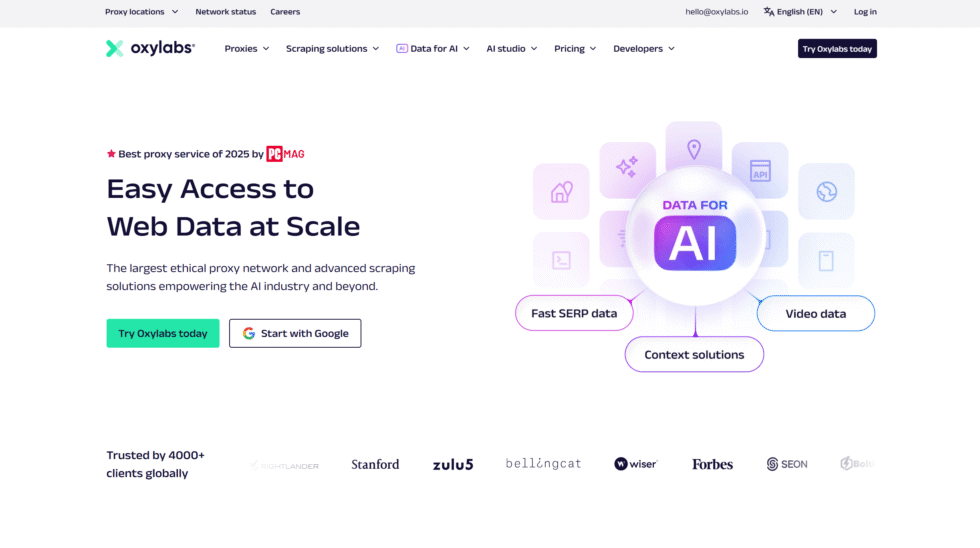
Oxylabs is a premium network built for teams that already know they need a large UK pool and tight location control. Mobile proxies run on 3G, 4G, 5G, and LTE carrier addresses. They suit ad verification, review monitoring, market research, and other phone-first checks. Residential and dedicated products sit beside mobile, so a desk can mix types without opening a second contract. Filters can include city, ASN, and coordinates on supported products. That helps when a test must look like a user in a specific British area, not just “United Kingdom.”
The control panel is made for larger operations. You get budgeting tools, detailed docs, and support that can stay with an account over time. HTTP and SOCKS5 are supported. Uptime claims are high, and independent UK tests have put success rates and response times in the same band as other leading residential networks. Mobile is positioned as a fast option for public pages that treat carrier traffic as normal phone use.
The tradeoff is weight. The product is powerful, and that power asks for budget and time. Smaller teams can feel lost in the extra settings. Entry plans are built around company use more than a weekend trial. If the brief is a few UK sessions for light QA, a simpler vendor may move faster. If the brief is ongoing UK collection plus mobile checks at scale, Oxylabs is the catalog that already contains most of the pieces.
Key features
- Mobile, residential, datacenter, and ISP
- City, ASN, and coordinate filters on supported products
- Rotating and sticky sessions
- HTTP and SOCKS5
- Enterprise-style dashboard and documentation
Facts and information
- Headquarters: Vilnius, Lithuania
- Marketed as a fast UK mobile option with high uptime
- Strong when location control and pool size both matter
- Better for established teams than for a first experiment
4. Bright Data
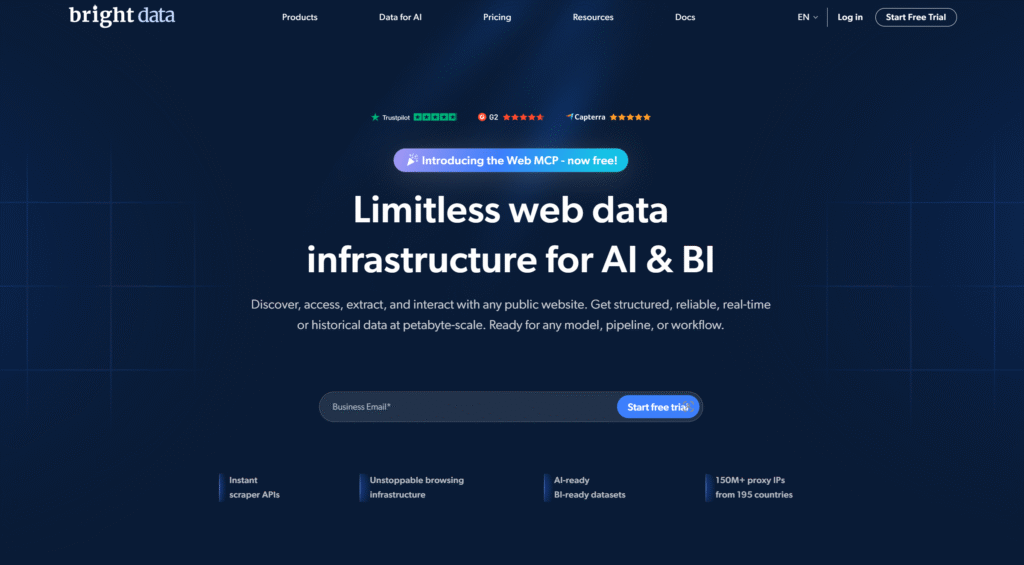
Bright Data offers mobile, residential, datacenter, and ISP products with one of the widest toolsets in the category. UK coverage is broad. Filters on supported networks can include city, ASN, ZIP, and coordinates. Rotation is available. Longer-lived dedicated groups exist on some products when a task needs the same address for longer than a short sticky window. A proxy manager and APIs sit on top of the pools, which helps engineering teams script targeting and session rules instead of clicking through a basic generator.
Mobile IPs come from carrier networks and are used for ad verification, app QA, and public data work that should look like a phone. Residential covers home-line research. Many buyers do not pick Bright Data for mobile alone. They pick it because the same platform can hold several proxy types and reporting in one place. HTTP, HTTPS, and SOCKS5 are supported. Support channels include live chat and account managers on larger plans.
The platform is heavier than mid-market dashboards. New users spend time learning modules they may not need. Performance has stayed solid in older public tests, while some rivals have closed the gap on speed and success rate. That does not make the network weak. It means you are paying for range and control as much as for raw UK mobile exits. If the team already lives in a complex data stack, the extra surface area is useful. If the team only needs a UK carrier session in a browser, a smaller product will feel lighter.
Key features
- Mobile and residential networks with many filter types
- Proxy manager and APIs
- HTTP, HTTPS, and SOCKS5
- Dedicated groups on some products
- Mixed-stack reporting
Facts and information
- Headquarters: Israel, with offices in other regions
- Often chosen for mixed proxy stacks, not mobile alone
- Flexible targeting across city and carrier-style filters
- Setup takes longer than simpler four-field products
5. SOAX
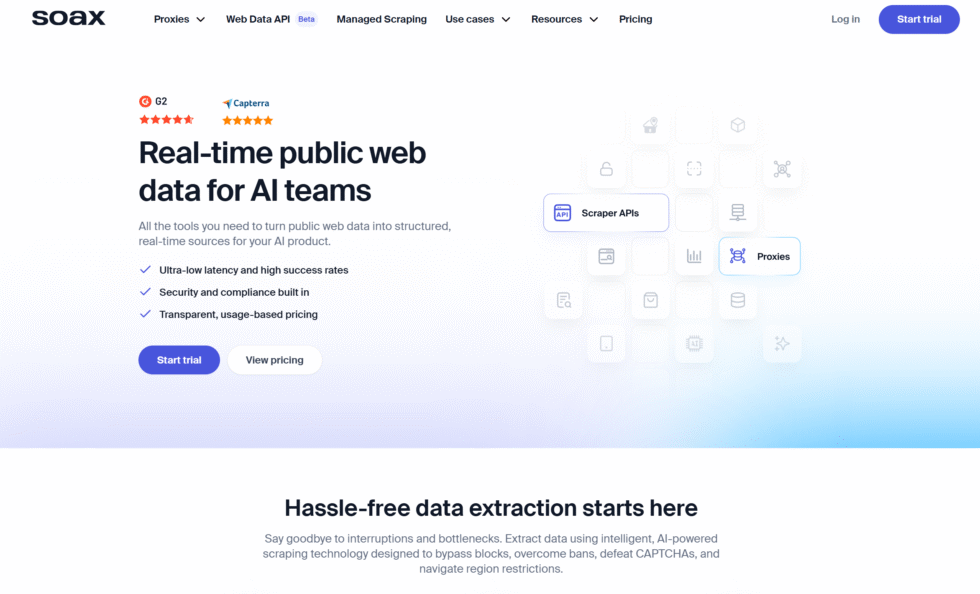
SOAX sells mobile, residential, and datacenter access in a platform style, so one subscription can open more than one product. That model helps UK teams that do not want a separate plan for every proxy type. Mobile exits use carrier addresses. Filters include state, city, and ASN, which is enough for most British city and network checks. Rotating sessions support public data collection. Sticky sessions support logins and short research flows that should stay on one identity.
Independent UK tests have shown high success rates and solid response times. SOCKS5 with UDP and QUIC is available on supported products, which matters for clients that send more than plain HTTPS. Live chat support runs around the clock. The network is a common pick for ad verification and location-based testing when the page should look like it was opened on a phone in a named UK area.
The dashboard has been moving to a new layout. During that change, some older controls have lagged, including allow-list style tools that certain software stacks still expect. Dedicated UK IPs are not the center of the mobile story. You get a shared pool with session control, not a private modem. For many approved business workflows that is enough. For a job that needs one exclusive British address for a long hold, another product type is the better match. Test the live ASN before you assume a city label equals the carrier you wanted.
Key features
- Mobile and residential in one platform style
- State, city, and ASN filters
- Rotating and sticky sessions
- HTTP and SOCKS5, with UDP and QUIC on supported products
- 24/7 live chat
Facts and information
- Headquarters: United Kingdom
- UK tests have placed success rate and speed in a strong band
- Useful when mobile and residential should share one vendor
- Dashboard transition is the main friction point for some teams
6. Infatica
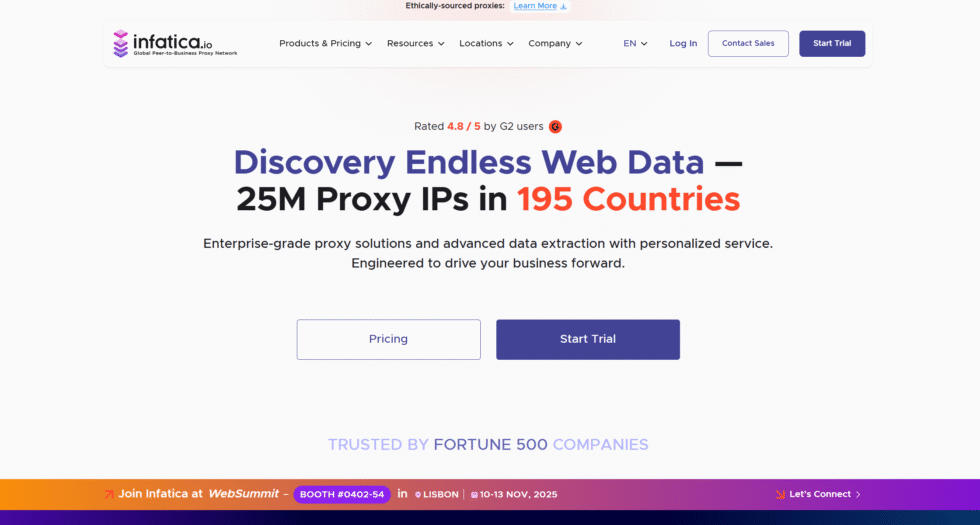
Infatica is a mid-market network with mobile, residential, datacenter, and ISP options. Reviewers often mention speed first. In UK connection tests, average response times have landed ahead of several larger names. That helps when you are loading full pages, not only fetching small JSON. Filters can include city, ASN, and ZIP on supported products, so a British task can be narrowed without jumping to an enterprise contract. Rotation is available on mobile, residential, and datacenter. Dedicated UK IPs exist on some lines when a longer, consistent session is required.
Pay-as-you-go style buying makes it easier to run a short test before a larger commitment. HTTP and SOCKS5 are supported. Support runs through tickets and live chat. The product is built with business use in mind, even if the brand is less famous than the premium tier.
The advertised UK unique-IP count is smaller than the biggest pools. That does not stop daily work. It can matter if many parallel sessions all demand fresh British carrier addresses at once. The interface is functional rather than polished. Teams that want a guided onboarding tour may need more help from support. For ad verification, price monitoring, market research, and location-based testing, Infatica is a practical speed-first option. Pair it with a calm request rate and a mobile-shaped client profile. The carrier IP is the first check a site runs, not the only one.
Key features
- Mobile, residential, datacenter, and ISP
- City, ASN, and ZIP filters on supported plans
- Rotating and sticky options
- HTTP and SOCKS5
- Flexible buying for tests
Facts and information
- Known in comparison tests for quick UK responses
- Smaller unique UK pool than the largest vendors
- Practical when speed matters more than brand size
- Support is available, with a simpler user experience than premium platforms
7. IPRoyal
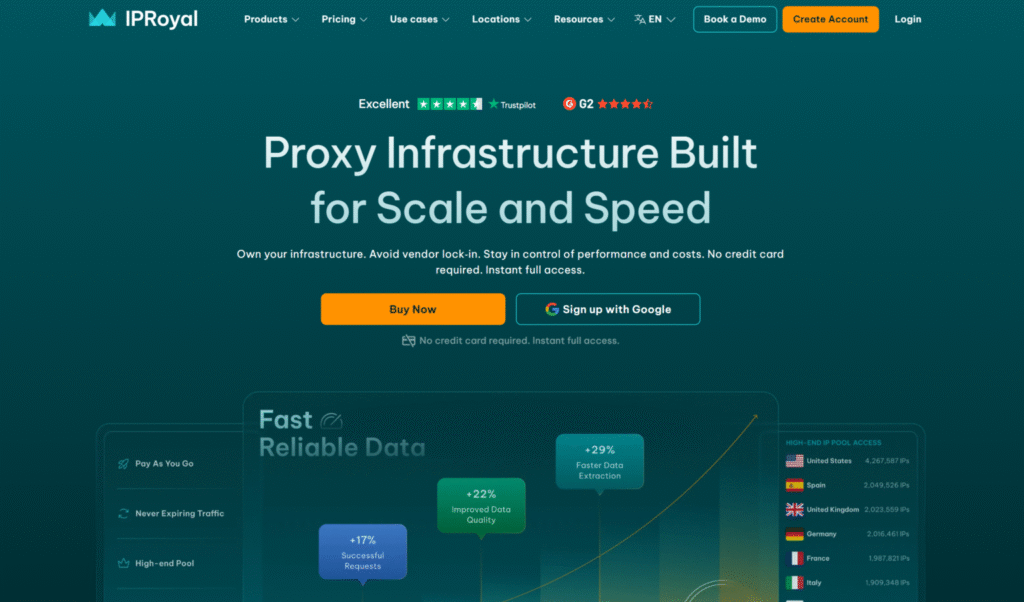
IPRoyal sells ethically sourced mobile IPs with a simple setup path. The dashboard is easy to read. Documentation is short and clear. You get rotating sessions and on-demand switching, plus HTTP, HTTPS, and SOCKS5. That combination covers many approved business use cases: public data collection, light social research, ad checks, and QA that should look like a phone. Teams that do not want an enterprise console often land here because the four fields work in the tools they already run.
Mobile IPs come from real devices on carrier networks. Rotation keeps identities fresh for workflows that benefit from automatic IP changes. Sticky behavior is available when a short task should stay on one address. The company is based in Lithuania and is a frequent name in mid-market roundups.
Targeting and pool depth are more modest than the largest platforms. Fine UK city-plus-carrier control may be thinner, and very large parallel programs can outgrow the inventory. Session quality still depends on the live carrier exit. IPRoyal is a clean fit for smaller UK mobile jobs and a weaker fit when you need the widest British city list and a full proxy catalog in one bill. Test the exact UK exit before you roll the credential into production.
Key features
- Mobile IPs from real devices
- Automatic rotation and on-demand switching
- HTTP, HTTPS, and SOCKS5
- Straightforward dashboard and docs
- Ethical sourcing emphasis
Facts and information
- Headquarters: Lithuania
- Often picked by smaller teams that want a short setup path
- Less filter depth than the biggest premium vendors
- Better for focused mobile work than for a mixed enterprise stack
8. Decodo
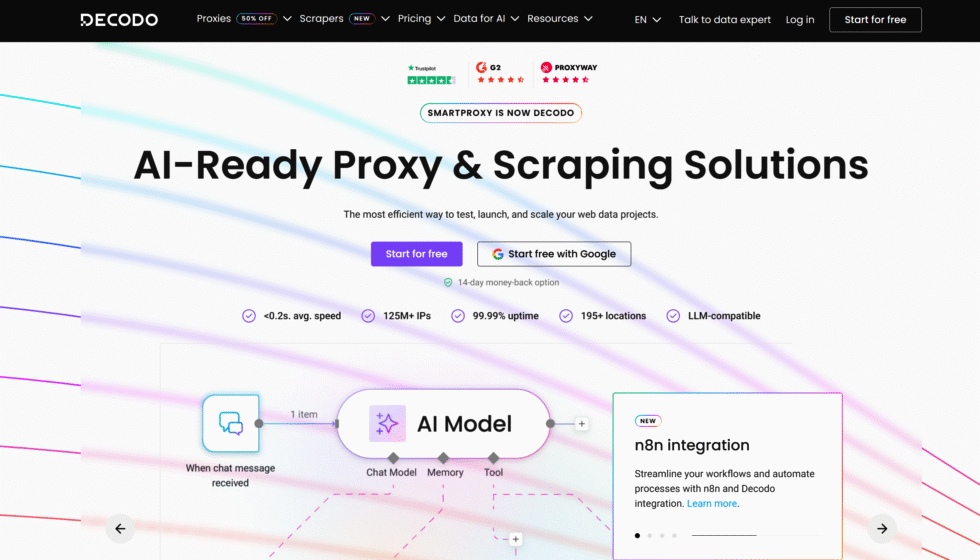
Decodo, formerly Smartproxy, sells mobile and residential networks from the same account style, which helps teams that switch proxy types on one UK project. Mobile exits use real carrier addresses. Residential exits use home lines. You can keep both and send phone-shaped checks to mobile and desktop-shaped checks to residential. City and ASN filters are available, so a London task can stay in London instead of landing somewhere else in Britain. Rotation and sticky modes both exist. Rotating sessions suit large-scale public data collection, market research, and workflows that benefit from automatic IP rotation. Sticky sessions suit logins and multi-step QA that should finish on the address they started on.
Setup is plain. Host, port, username, and password drop into anti-detect browsers, HTTP clients, and common automation libraries. SOCKS5 is available on supported products, including UDP in some cases. Documentation stays current, and support is easy to reach during onboarding. The dashboard is clearer than many enterprise consoles, which is why first-time buyers often start here.
The mobile pool is useful, though it is not as deep as the residential side. Very large UK programs that need every city and every carrier at once may still want a second vendor for overflow. Filters are strong, just not as granular as coordinate-level tools on some premium platforms. For approved business use cases such as ad verification, price monitoring, and location-based testing, Decodo is a steady mid-to-upper choice.
Key features
- Mobile, residential, datacenter, and ISP products in one catalog
- City and ASN filters
- Rotating and sticky sessions
- HTTP and SOCKS5
- Browser extension and API
Facts and information
- Headquarters: Lithuania
- UK connection tests have shown high success rates and quick responses
- Good fit when one vendor must cover mobile and residential together
- Support and docs are a frequent reason teams stay after the first test
9. IPBurger
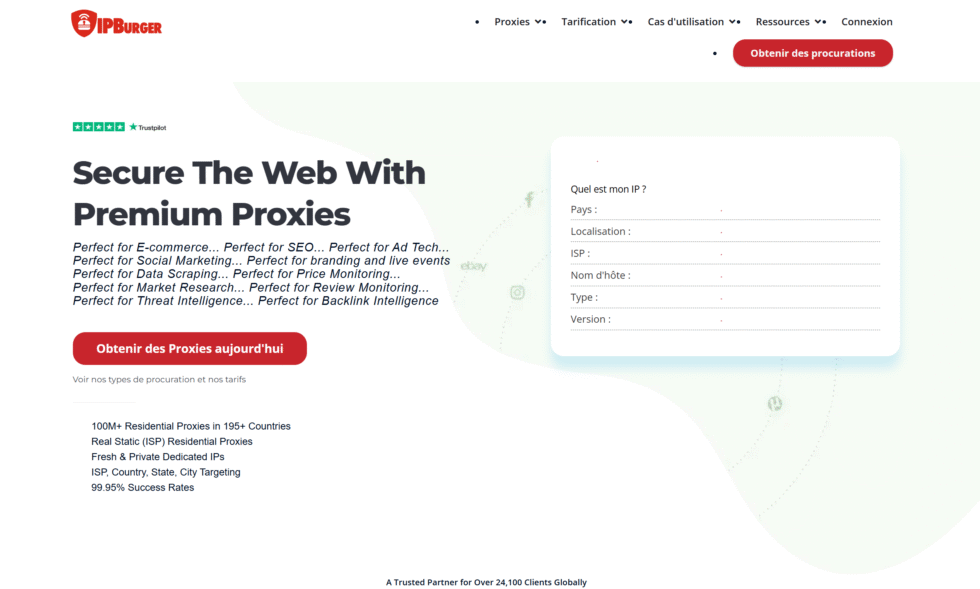
IPBurger markets a shared carrier pool instead of rented modems. You name a session in the username. That string is the identity. Reuse it and you return to the same mobile IP for the sticky window. Change it and you start another identity without waiting for hardware. Targeting is one axis at a time: country, US state, city, or mobile ISP. On UK work that usually means a country or city token, or a carrier token when the vendor exposes one. Concurrent named sessions are a core idea. You are billed for traffic, not for extra ports.
Sticky holds last for a short window measured in minutes. After that, the address can rotate, which matches how phones behave. Rotating mode assigns a fresh carrier IP on each request and fits collection jobs. HTTP is the published protocol, with host, port, username, and password as the only setup fields. The pool is described as a large set of real 4G, 5G, and LTE addresses across many countries.
This model is strong when you need many isolated UK identities at once. It is the wrong tool when you need an address nobody else can touch for days. Dedicated hardware wins for exclusive, long holds. Shared sessions win for account research, ad verification, and QA lanes that should not share one IP. Watch bandwidth on image-heavy pages. Every byte counts on a traffic plan.
Key features
- Shared 4G, 5G, and LTE carrier pool
- Session IDs in the username
- Sticky or rotating modes
- City, country, or carrier targeting one axis at a time
- HTTP host, port, username, and password
Facts and information
- Built for many identities on one bandwidth plan
- Sticky sessions are short compared with dedicated 4G ports
- Clear fit for isolated research workflows
- Not a replacement for a private modem
10. Lightning Proxies
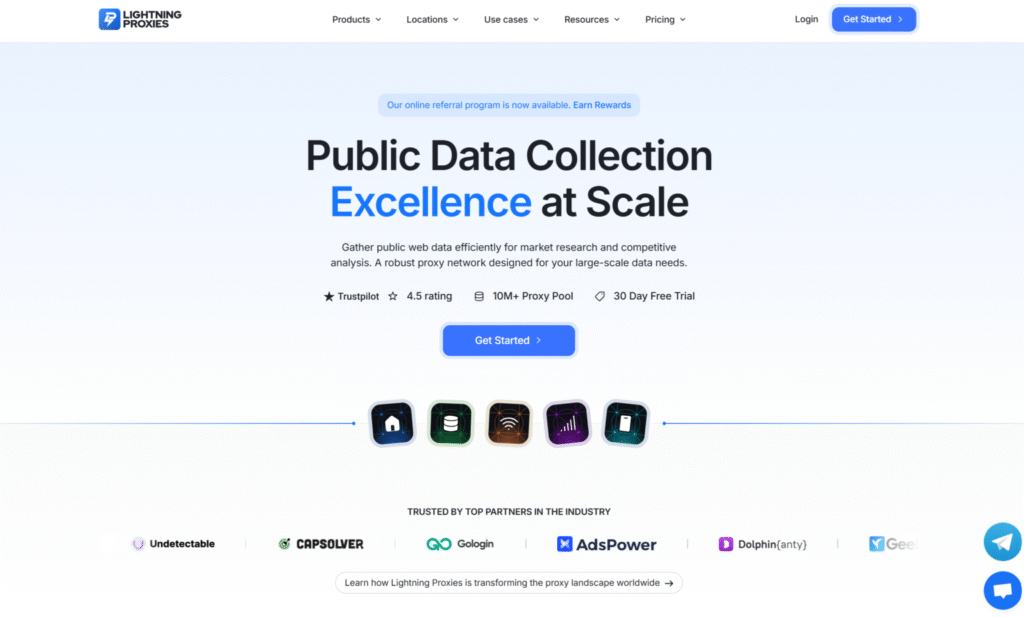
Lightning Proxies sells a mobile pool with country, state, city, and ISP targeting, plus rotating and sticky modes. Sticky sessions can last much longer than the short holds on some shared backconnect products. That longer window helps app QA, ad previews, and other multi-step checks that should stay on one UK carrier address. User-pass and IP allow lists are both supported, which helps software that cannot store a rotating username format.
The company describes a mobile pool across many countries and talks about unlimited published connection counts. Backconnect ports can assign a new IP on each request when you want rotation. The dashboard includes generators and basic analytics. Use cases on the marketing pages include mobile ad verification, app and mobile web testing, social research, and localized market research. Those map cleanly to approved business work.
Coverage is narrower than the largest global pools, and messaging around pool size varies by page. You should test the exact UK city and carrier you need instead of trusting a headline. Residential and ISP products exist in the same catalog if the job shifts away from mobile. Lightning is a reasonable pick when sticky time matters more than owning the widest British inventory. It is a weaker pick when you need the biggest city list and the most public test data behind the brand.
Key features
- 3G, 4G, LTE, and 5G mobile IPs
- Country, city, and ISP targeting
- Sticky sessions that can run for many hours
- User-pass and IP allow lists
- Rotating backconnect ports
Facts and information
- Aimed at ad verification, app testing, and public social research
- Longer sticky windows than many shared-session vendors
- Smaller advertised country set than the biggest networks
- Live UK exits should be checked before a full rollout
11. The Social Proxy
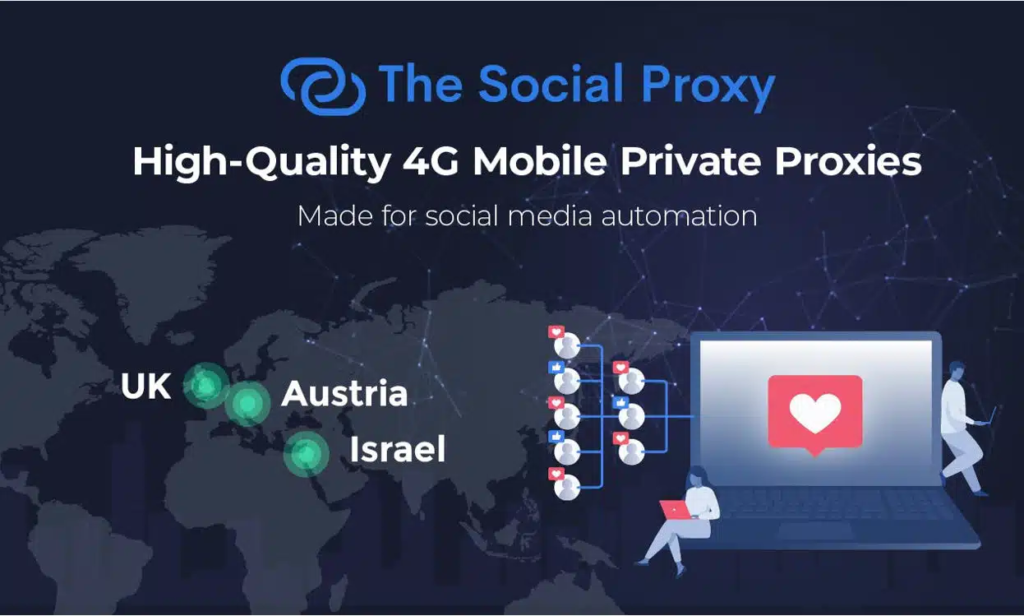
The Social Proxy focuses on 4G and 5G mobile IPs for social and mobile-first workflows rather than giant crawl jobs. Real-device routing is the point. The network is meant to look like a phone opening a public page, which is what many social platforms expect. Rotation and sticky behavior both exist. Sticky mode helps when you are reviewing a profile, checking a public post, or running a short QA path that should stay on one identity. Rotation helps when you are collecting public pages across many sessions.
Integration is the usual host, port, username, and password pattern. The product is narrower than full-catalog vendors. That focus is useful if the only job is social research or mobile QA in supported locations, including the UK. It is tight if you also need wide UK city lists, ISP products, datacenter overflow, and a reporting suite in one bill.
Pool size and carrier detail are less documented in public roundups than the largest names, so a live test matters more here than a feature grid. Use it for phone-shaped work. Move desktop-heavy public collection to residential. Keep each workflow on its own session. A trusted carrier address is the first check a site runs. It does not replace a clean client profile or a normal request pace.
Key features
- 4G and 5G mobile IPs
- Social and mobile app workflows
- Sticky and rotating options
- HTTP-style integration
- Real-device routing emphasis
Facts and information
- Built around phone-shaped traffic, not every proxy type
- Useful when the job is social research or mobile QA
- Less of an all-in-one stack than larger platforms
- Public documentation on UK city depth is thinner than premium peers
12. NodeMaven
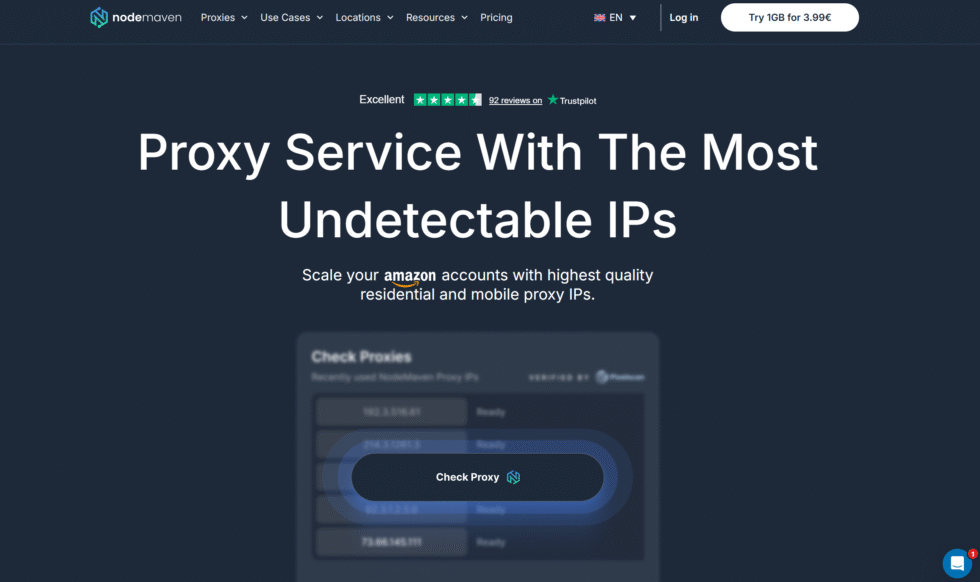
NodeMaven specializes in 4G and 5G mobile proxies sourced from real devices, with a smaller but selective network. Custom rotation intervals and routing logic are the stated edge. The goal is traffic that looks like a real handset, which helps public data collection and separate QA or research workflows. Coverage spans many countries, with the UK among the supported locations. City and carrier-style filters appear in comparison writeups. HTTP-style endpoints fit anti-detect browsers and standard clients.
The pool is not the largest on the market. NodeMaven trades size for control. Teams that want a giant British inventory may need a second source. Teams that want fewer, cleaner mobile identities often prefer this shape. Sticky sessions support multi-step tasks. Rotating sessions support collection work that benefits from automatic IP rotation. Support and onboarding are lighter than enterprise desks, so you should be comfortable configuring sessions yourself.
Use NodeMaven when the brief is mobile-first and quality-sensitive. Use a broader catalog vendor when the brief is every UK city, every protocol, and every proxy type. Pair the carrier exit with a mobile user agent and a steady pace. The IP is only one layer of a believable session.
Key features
- Real-device 4G and 5G mobile IPs
- Custom rotation intervals
- City and carrier-style filters
- Sticky and rotating sessions
- HTTP client compatibility
Facts and information
- Smaller network than the biggest global pools
- Positioned for quality and device-like routing
- UK is supported, with less public pool detail than premium brands
- Best as a specialist mobile layer, not a full proxy suite
13. DataImpulse
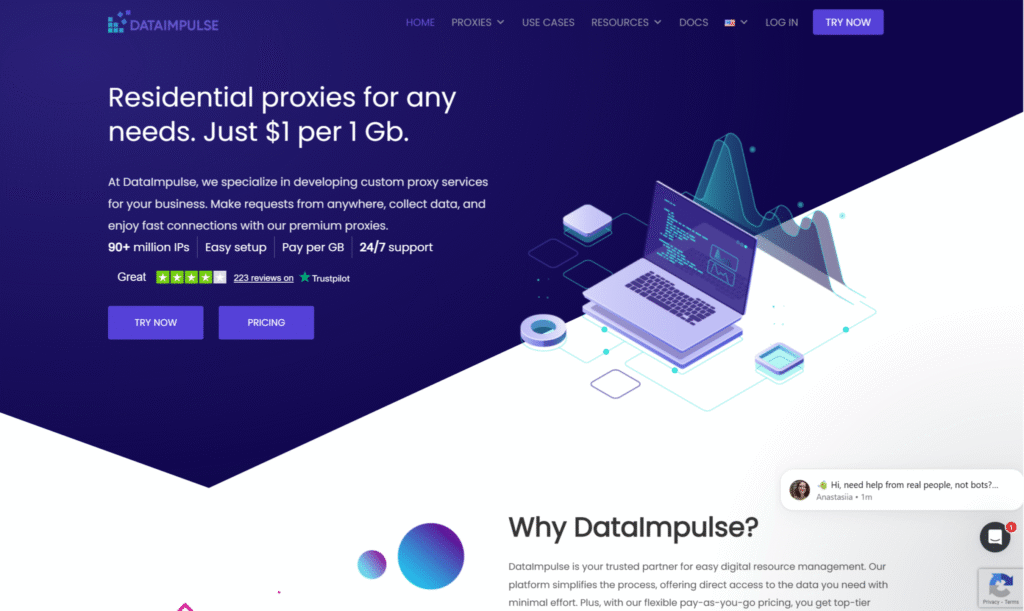
DataImpulse is often chosen for irregular volumes and traffic that does not expire on the same clock as a classic monthly cap. Mobile and residential options appear in the catalog, with rotation for collection jobs. The buying model appeals to teams whose UK workload spikes, then goes quiet. You are less likely to waste unused capacity at the end of a cycle. Endpoints follow the usual username and password pattern.
Mobile IPs support approved business use cases such as market research and public page checks. The brand is less associated with deep UK carrier marketing than the specialist mobile vendors above. Targeting is present, but the public story leans on flexible traffic more than on EE-versus-O2 control. SOCKS and HTTP availability should be confirmed for your client, because published protocol lists vary by product line.
The tradeoff is focus. If you need the most detailed British city and carrier matrix, a mobile specialist or a premium platform will feel clearer. If you need a workhorse that can absorb uneven UK traffic without a rigid calendar, DataImpulse is in the conversation. Run a short UK session test. Check the ASN. Then decide whether the exit is carrier-true enough for the phone-first pages on your list.
Key features
- Mobile and residential products
- Rotation for collection workflows
- Traffic that can roll beyond a tight monthly window
- Standard proxy authentication
- Mixed-volume friendly plans
Facts and information
- Popular when usage is uneven through the month
- Less public detail on UK carrier depth than mobile specialists
- Practical overflow vendor beside a primary UK mobile source
- Live exit checks matter more than catalog copy
14. Geonode
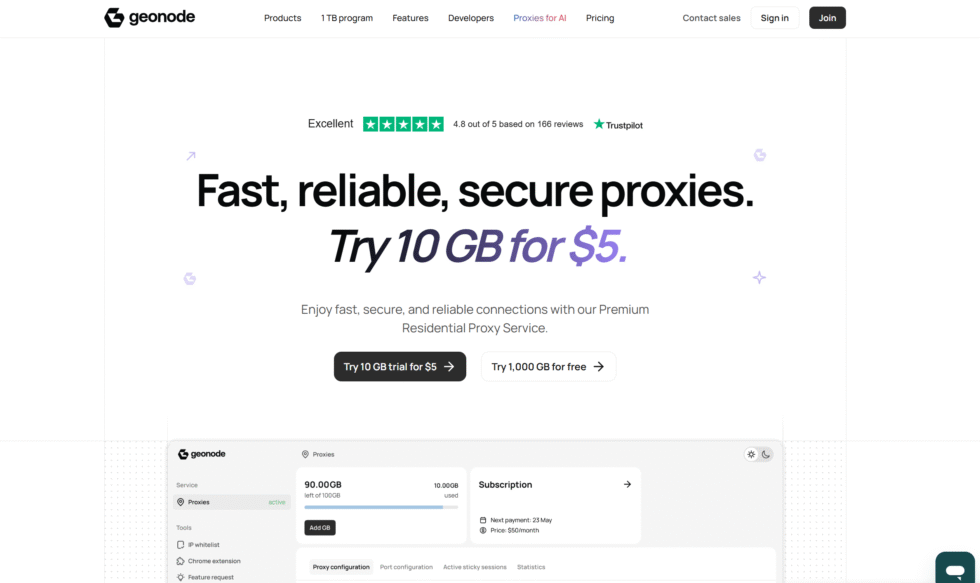
Geonode positions mobile proxies around location accuracy. Country, city, and related filters are the product story. That helps UK work where the page must match a place, such as local ads, local search, or storefronts that change by city. Mobile IPs are meant to view public web experiences across supported locations. Rotating and sticky modes cover collection and short session work. HTTP-style integration is the default path into browsers and scripts.
The network is specialized rather than huge. Some pages describe a focus on location-heavy operations more than on raw pool size. Protocol and carrier options should be verified for each plan, because the brand is discussed more for targeting than for every advanced transport feature. Support and dashboard quality sit in the mid-market band.
Geonode fits teams whose UK brief is this city and this kind of mobile exit. It is a weaker all-purpose stack if you also need ISP, datacenter, and residential in one deeply instrumented platform. Keep mobile sessions for phone-shaped checks. Keep residential for home-line research when the target expects broadband. Do not share one identity across unrelated workflows.
Key features
- Mobile proxies with strong location filters
- Country and city selection
- Rotating and sticky sessions
- HTTP-style setup
- Focus on location-accurate public checks
Facts and information
- Built for location-based testing more than for maximum pool size
- Useful for local ads, local search, and city-level QA
- Thinner public detail on UK carrier lists than the largest vendors
- Best as a location-specialist layer in a wider toolkit
UK Mobile Carriers and City Exits You Can Select
The UK still runs on a small set of real radio networks. EE, O2, Vodafone, and Three own the masts. Many consumer brands ride those same networks. Tesco Mobile and giffgaff sit on O2. Smarty sits on Three. VOXI sits on Vodafone. BT Mobile sits on EE. Vodafone and Three now sit under one combined group, while the consumer brands still appear as separate names.
Coverage updates show 5G reaching more UK premises each year, with EE often strong on 5G share and Vodafone still carrying a large 4G share. That mix matters when you pick a carrier for 4G LTE mobile proxies versus 5G mobile proxies.
City exits matter for local results. London, Manchester, and Birmingham see most of the demand. A United Kingdom proxy that can hold one city keeps search, ads, and storefronts aligned with the audience you study.
| Need | Better exit |
| Mobile app or mobile web QA | UK carrier IP, sticky session |
| Broad public page collection | Rotating mobile proxies or rotating residential proxies |
| One address held for a long time | UK ISP proxy or dedicated address |
| Local ads and mobile search | City plus carrier on a mobile session |
| British publishers and players | UK residential and mobile pairs |
Named Sessions Versus a Dedicated UK 4G Modem
Shared carrier pools and rented modems solve different jobs. On a shared pool you name a session. That string is the identity. Run many sessions at once and each one draws its own address from the pool. You pay for traffic, not for another physical port. Sticky time is limited. After that window the address can change, which matches how phones behave.
A dedicated 4G modem gives you hardware and an address nobody else on that plan can touch. Hold times can last far longer. Each extra identity is another device and another line to manage. Most approved business work does not need a modem. Ad verification, price monitoring, market research, and separate QA workflows do well on named mobile residential proxy sessions. Choose hardware when the brief says one exclusive address for days, not minutes.
Keep each account or each test lane on its own session ID. If one lane draws attention, the others stay on different carrier addresses. That isolation is the practical reason to name sessions instead of sharing one UK IP across every tab.
Why Free UK Mobile IPs Are a Poor Fit
Free UK lists look handy. They rarely stay clean. Many are overloaded, slow, and reused by strangers. Some operators watch traffic to fund the service. British publishers, retailers, and ad systems already treat unknown free ranges as low trust.
Paid United Kingdom proxies from a known vendor give you session control, carrier selection, and a pool maintained for business use. That is the difference between a test that reflects a real UK phone and a test that reflects a burned list.
A mobile proxy is also not a VPN. It moves only the traffic you point at it. It does not rewrite cookies, TLS fingerprints, or how you click. Pair the carrier IP with a normal mobile profile and a calm request rate. The address is the first check a site runs, not the only one. UK residential proxies remain the better match when the page expects home broadband rather than a handset.
FAQ
What Makes UK Mobile Proxies Different From UK Residential Proxies?
UK mobile proxies exit through carrier networks such as EE, O2, Vodafone, and Three. UK residential proxies exit through home broadband lines such as BT, Virgin Media, or Sky. Both are consumer networks. Mobile usually scores higher on phone-first products. Residential usually covers more cities for everyday desktop-style research and holds a home-line session more cheaply. Many teams keep both and assign each request to the network the target expects.
How Long Should a Sticky UK Mobile Session Last?
Match the task. A login, an ad preview, or a checkout test needs the same IP until the steps finish. Shared mobile proxy pools often hold an address for minutes, not days. If the workflow is longer than that sticky window, split the work or move that lane to ISP proxies in the UK or a dedicated address. Rotating sessions on rotating mobile proxies fit public data collection where a new carrier IP on each request is the point.
Can I Pick a UK City and a UK Carrier at the Same Time?
Some vendors let you set only one axis per username, such as city or carrier. Others allow richer filters. Read the username format before you plan a London-plus-EE lane on the UK proxy. If a provider cannot combine both, run the city that matches the audience and accept the carrier the pool assigns, or the reverse. Test the live exit. A label in a dashboard is not the same as the ASN you land on.
Which Tools Work With UK Mobile Proxies?
Anything that speaks HTTP proxy, HTTPS proxy, and SOCKS5 proxy can send traffic through a UK mobile endpoint. That includes anti-detect browsers, common HTTP clients, and automation libraries. You paste host, port, username, and password. Session and location flags live in the username on many networks, so you can add identities without opening extra ports.
When Should You Use a UK Mobile Proxy Instead of a Dedicated 4G Modem?
Use a shared UK mobile proxy when you need many named identities, short sticky holds, and traffic billed by use rather than by extra hardware. Named sessions keep QA, monitoring, and research workflows on separate carrier addresses. Use a dedicated 4G modem when the brief needs one exclusive address held for a long stretch. Most ad verification, price monitoring, and location-based testing fits the session model. Hardware fits the rare case where nobody else may share that British exit.
Read Also:
- Top 17 Best UK Residential Proxies in 2026
- Buy United Kingdom Proxy Server
- Top 20 Best 4G LTE Mobile Proxies in 2026
- Best Residential and Mobile Proxies for BBC
- How to Use Proxy in Mobile
Discover the Best UK Mobile Proxies in 2026 – ResiProx.