
4G LTE mobile proxies use real IP addresses from cellular carriers, making them highly effective for bypassing restrictions and accessing geo-blocked content. These proxies route your connection through actual mobile devices on 3G, 4G, and 5G networks, providing authentic residential-grade IPs that websites trust. Mobile proxies excel at avoiding detection during web scraping, managing multiple accounts, and conducting market research across platforms. Discover the Best 4G LTE Mobile Proxies in 2026.
Businesses and marketers often rely on the best 4G mobile proxies for secure browsing, web scraping, and account management. Comparing the best mobile proxy providers for 2025 also helps users find reliable networks with fast speeds and trusted carrier IPs.
Different projects benefit from different mobile proxy configurations, so it is important to choose a solution that matches your workflow. Explore reliable mobile proxies for public data collection, market research, QA testing, and ad verification, or compare the best 4G mobile proxies to find dependable carrier based connections that support consistent performance for approved business operations.
- Why 4G LTE Mobile Proxies Matter in 2026?
- Top 35 Best 4G LTE Mobile Proxies in 2026
- 1. 🏆ResiProx – Best 4G LTE Mobile Proxies in 2026 🏆
- 2. ProxyEmpire
- 3. Bright Data
- 4. Oxylabs
- 5. Decodo (formerly Smartproxy)
- 6. NetNut
- 7. SOAX
- 8. NodeMaven
- 9. IPRoyal
- 10. Infatica
- 11. Rayobyte
- 12. Proxidize
- 13. The Social Proxy
- 14. IPFoxy
- 15. Geonode
- 16. DataImpulse
- 17. Proxy-Seller
- 18. Proxy-Cheap
- 19. MarsProxies
- 20. HydraProxy
- 21. GridPanel
- 22. MountProxies
- 23. Litport
- 24. Mobileproxies.org
- 25. ProxyWing
- 26. Coronium
- 27. BuyPersonalProxy
- 28. MangoProxy
- 29. Detect Expert
- 30. ProxyGuys
- 31. VoidMob
- 32. CyberYozh
- 33. AnoProxy
- 34. USProxy.club
- 35. MorkoProxy
- Best Use Cases for 4G LTE Mobile Proxies in 2026
- Sticky Sessions vs Rotating Sessions in 4G LTE Mobile Proxies
- How 4G LTE Mobile Proxies Compare to Other Proxy Types?
- Key Considerations When Choosing Mobile Proxies
- 4G LTE Mobile Proxy Pricing Guide and Comparison 2026
- Mobile Proxies vs Residential Proxies: Which Is Better in 2026?
- How to Set Up and Integrate 4G LTE Mobile Proxies with Popular Tools
- Best Practices for Using 4G LTE Mobile Proxies in Public Data Collection & Automation
- How 4G LTE Mobile Proxies Work: From SIM Cards to CGNAT
- Mobile Proxies vs VPNs: Key Differences and When to Use Each
- Latest News In 2026
- FAQ
- What makes 4G LTE mobile proxies different from 5G proxies?
- Can mobile proxies bypass CAPTCHA and anti-bot systems?
- How many concurrent connections do I need for web scraping?
- Are mobile proxies legal to use?
- Are shared or dedicated 4G LTE mobile proxies better?
- Can 4G LTE mobile proxies help with app testing and local SEO?
- How long should a sticky session last on a 4G LTE mobile proxy?
- What factors should users weigh first when picking 4G LTE mobile proxies?
- How do sticky sessions differ from rotating ones in mobile proxy setups?
- Can 4G LTE mobile proxies support both web scraping and account management at once?
- Why do some projects combine mobile proxies with other proxy types?
- What makes 4G LTE mobile proxies stand out for location based testing?
- How do 4G LTE mobile proxies support multi-location testing?
- What role does session control play in long-running automation?
- Which protocols work with most 4G LTE mobile proxy setups?
- Can 4G LTE mobile proxies help with SEO and ranking checks?
- How does carrier-level targeting improve research accuracy?
- What happens when a 4G LTE mobile proxy rotates its IP address?
- How do sticky sessions support multi-step research workflows?
- Can 4G LTE mobile proxies pair with antidetect browsers for account research?
- Why does carrier targeting improve location-based testing accuracy?
- Do 4G LTE mobile proxy setups support both HTTP and SOCKS5 protocols?
- How does the physical modem influence the authenticity of mobile traffic?
Why 4G LTE Mobile Proxies Matter in 2026?
The global proxy network software market reached approximately $5.8 billion in 2026, with mobile proxy networks experiencing the highest growth rate at 13.5% CAGR. Mobile proxies leverage carrier-grade NAT infrastructure and genuine device fingerprints, making them nearly impossible to detect compared to datacenter alternatives. The proliferation of mobile devices worldwide has created massive IP pools spanning 170+ countries, giving users access to authentic local connections.
4G LTE technology specifically offers speeds ranging from 10-100 Mbps with latency between 30-60ms, striking a balance between performance and authenticity. Unlike residential proxies that may share IPs across multiple users, mobile proxies provide dynamic IP rotation through carrier networks, automatically changing addresses as devices move between cell towers or reconnect. This natural rotation pattern mimics real user behavior, reducing ban rates for social media management, e-commerce operations, and ad verification tasks.
Top 35 Best 4G LTE Mobile Proxies in 2026
1. 🏆ResiProx – Best 4G LTE Mobile Proxies in 2026 🏆
Resiprox Premium Proxies – Unlock the Web with Power and Precision
Introducing Resiprox, the ultimate proxy solution designed to supercharge your online operations. With our Residential Proxies and Mobile Proxies, you get unmatched access to web data at scale, robust security, and seamless connectivity all backed by a free trial to experience the difference firsthand.
Product Features
- Rotating Residential Proxies: Harness the power of 10M+ ethically-sourced IPs across 180+ countries. These proxies rotate dynamically to support large-scale public data collection, market research, and workflows that benefit from automatic IP rotation, delivering 99.9% uptime and precise targeting at the country, city, or ZIP code level.
- Rotating Mobile Proxies: Powered by 4G/LTE/5G networks, our mobile proxies offer lightning-fast speeds with <0.3s response times and a 99.9% success rate perfect for real-time applications.
- Global IP Network: Tap into millions of IPs, including 3.5M+ in the US, 1.8M+ in Brazil, 3.1M+ in India, and more, ensuring coverage wherever you need it.
- Advanced Capabilities: Enjoy HTTPS & SOCKS5 support, unlimited concurrent sessions, and flexible rotating or sticky sessions, all wrapped in premium IP quality.
Product Specifications:
- Performance: High-speed browsing with 99.9% uptime and 24/7 expert support.
- Integration: Seamlessly works with Node.js, Python, PHP, Selenium, and more, featuring a dynamic endpoint generator and robust API access.
What It’s Built For:
Resiprox proxies are your all-in-one tool for:
- Public Data Collection: Collect public web data for approved business use cases, market research, and growth insights.
- Price Monitoring: Track prices across regions in real-time.
- Multi-Account Workflows: Run separate QA, monitoring, and research workflows across multiple accounts.
- SEO & Ad Verification: Monitor rankings and verify ads globally.
- Cybersecurity: Protect your brand and test applications securely.
- Specialized Tasks: From high-volume monitoring of limited-release products to travel fare aggregation, Resiprox delivers.
Why Resiprox Stands Out:
This isn’t just a proxy, it’s a game-changer. With comprehensive documentation, multi-platform compatibility, and a team of experts available 24/7, Resiprox ensures your projects run smoothly. Whether you’re a business scaling operations, a researcher gathering data, or a developer testing apps, our proxies adapt to your needs with precision and reliability.
Resiprox Premium Proxies – Your Key to a Smarter, Faster, and More Connected Online World.
Click here to discover our :
2. ProxyEmpire
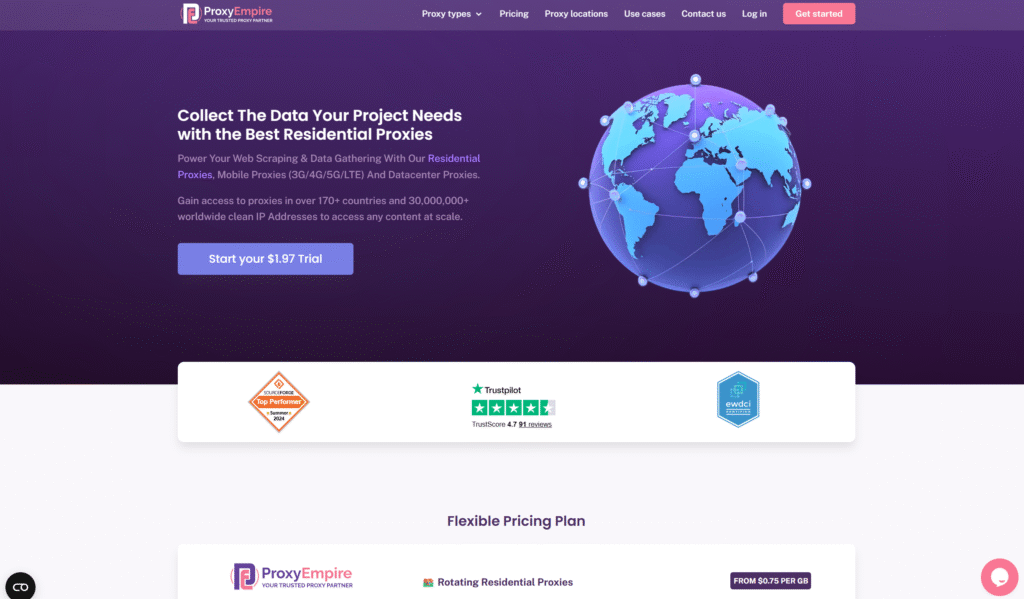
ProxyEmpire delivers a robust mobile proxy network built on real carrier connections that span more than 170 countries. Support for 3G, 4G, 5G, and LTE technologies enables smooth transitions across network generations, while patented rotation algorithms produce natural IP behavior that closely matches everyday mobile users. City-level and ISP-specific targeting give users the precision needed for localized campaigns, price monitoring, or region-specific data gathering. The service maintains an impressive 99.8 percent uptime and supports unlimited concurrent threads, making it highly effective for demanding automation tasks. Flexible pay-as-you-go pricing combined with data rollover for unused bandwidth helps businesses optimize costs without sacrificing performance. Developers appreciate the comprehensive API that simplifies integration into custom workflows, while the overall reliability positions ProxyEmpire as a practical choice for scaling operations in competitive digital environments that involve public data collection for approved business use cases and location-based testing.
- Key Features: Patented rotation technology, granular geo-targeting down to carrier level, unlimited concurrent threads
- Pros: Flexible pay-as-you-go pricing, robust API for automation tasks, excellent success rates for scraping
- Cons: Higher cost per GB compared to some competitors
- Headquarters: United States
3. Bright Data
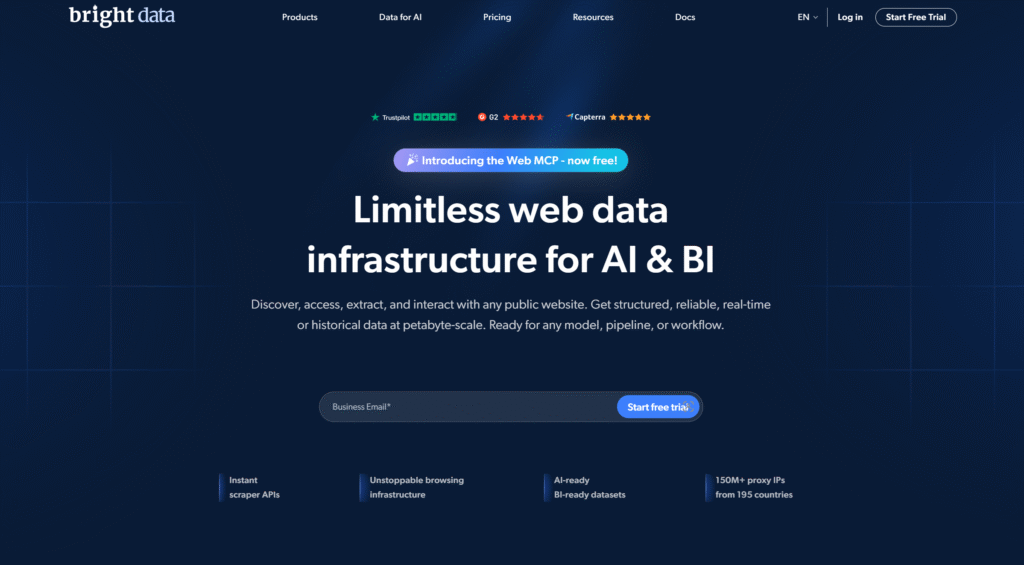
Bright Data stands out with one of the most extensive mobile proxy ecosystems, drawing from millions of ethically sourced IPs across nearly 200 countries. Advanced geo-targeting down to city, ZIP code, carrier, and ASN levels enables enterprises to simulate connections with remarkable accuracy for global market intelligence and ad verification projects. The platform integrates AI-driven unblocking tools and auto-retry systems that keep operations running smoothly even against sophisticated detection mechanisms. Session persistence options extending up to 24 hours provide the stability required for complex account management or long-form data extraction. With uptime figures nearing 99.99% and dedicated support teams, it caters especially well to large organizations needing compliance-focused solutions. Although positioned at the premium end with volume-based pricing, the infrastructure delivers consistent, high-success results that justify the investment for teams prioritizing reliability and ethical data practices in high-stakes environments.
- Key Features: AI-powered unblocking, session control up to 24 hours, auto-retry mechanisms for failed requests
- Pros: Enterprise-grade reliability, compliance-focused ethical sourcing, dedicated account managers
- Cons: Premium pricing tier, bandwidth metered with volume requirements
- Headquarters: Israel
4. Oxylabs
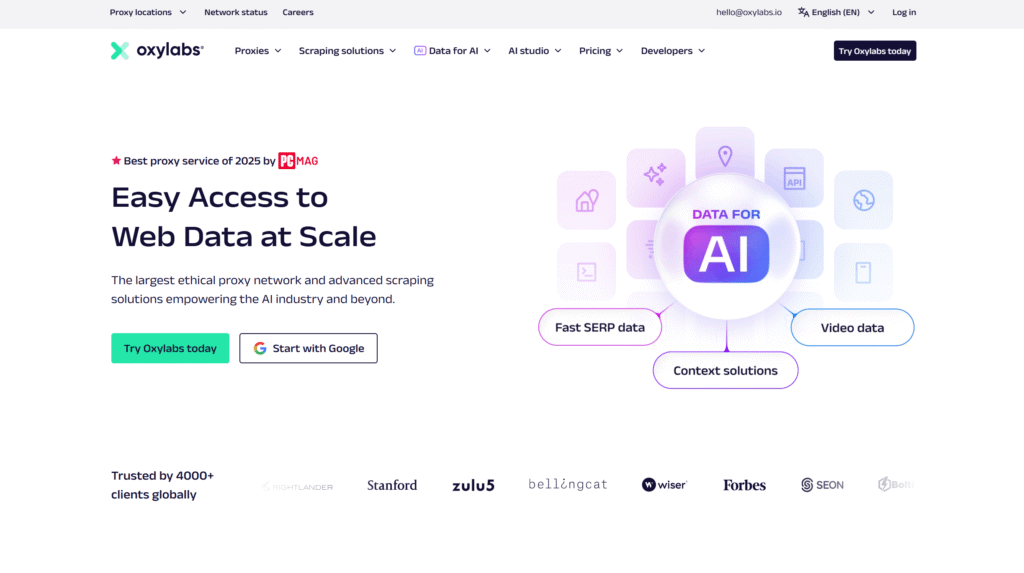
Oxylabs brings enterprise-level sophistication to mobile proxies through a massive network of over 20 million IPs covering more than 140 countries. Precise targeting features, including ASN and coordinate-level options, allow users to replicate connections from extremely specific real-world locations for accurate localized testing and research. Automatic rotation intervals of up to 30 minutes maintain fresh IPs without manual intervention, supporting large-scale scraping campaigns with minimal interruption. The service achieves strong success rates thanks to customizable configurations and near-perfect network stability. Businesses value the ability to handle complex automation at volume, whether for competitor analysis or price tracking across international markets. While bandwidth-based pricing and higher entry costs target professional users, the technical depth and performance consistency make Oxylabs a preferred infrastructure partner for organizations that demand scalable, dependable mobile connectivity in competitive landscapes.
- Key Features: ASN targeting, coordinate-level precision, session persistence options
- Pros: Excellent for scraping at scale, 99.95% network uptime, customizable proxy configurations
- Cons: Enterprise focus with higher entry costs, bandwidth-based pricing model
- Headquarters: Lithuania
5. Decodo (formerly Smartproxy)
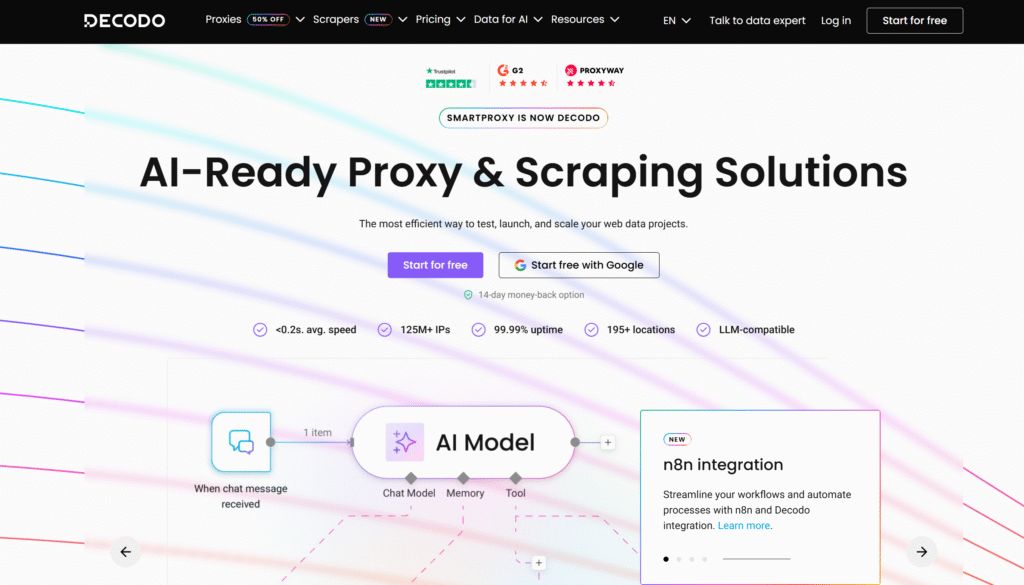
Decodo, evolving from its Smartproxy roots, focuses on delivering an accessible yet powerful mobile proxy experience with millions of ethically sourced IPs across 160-plus locations. OS-level filtering for iOS and Android devices enhances authenticity, helping users simulate genuine mobile traffic for app testing and social platform interactions. Sub-0.5-second response times and unlimited concurrent sessions keep workflows efficient even during intensive data collection. The intuitive dashboard and convenient browser extensions lower the barrier for teams new to proxy management, while competitive pricing and unmetered bandwidth options on certain plans deliver strong value. Although the IP pool size may not rival the absolute largest providers, the combination of speed, usability, and reliability makes Decodo particularly appealing for mid-sized operations focused on web scraping, multi-account management, and performance-driven automation tasks.
- Key Features: Device-type filtering, unlimited concurrent sessions, flexible rotation intervals
- Pros: User-friendly dashboard, competitive pricing, unmetered bandwidth on select plans
- Cons: Smaller mobile pool than top-tier competitors
- Headquarters: Netherlands
6. NetNut
NetNut offers a high-performance mobile proxy solution powered by millions of rotating IPs from 100-plus countries, emphasizing direct ISP routing for reduced latency and improved connection quality. Full support for 3G, 4G, 5G, and LTE networks ensures broad compatibility, while city and state-level targeting helps users achieve precise geographic simulation. The platform supports both HTTP(S) and SOCKS5 protocols, giving developers flexibility across diverse applications from data mining to ad verification. Unlimited threads and session control features streamline large-scale operations, and many plans include unmetered bandwidth that benefits heavy users. Although documentation for advanced setups could be more extensive, the service’s focus on raw speed and consistent delivery has earned it a loyal following among professionals who need dependable mobile IPs for continuous monitoring and automation projects.
- Key Features: Direct ISP routing for low latency, unlimited threads, session control
- Pros: High-performance data mining, excellent for ad verification, unlimited bandwidth on many plans
- Cons: Limited documentation for advanced configurations
- Headquarters: Israel
7. SOAX
SOAX maintains one of the largest mobile proxy pools with tens of millions of 3G, 4G, 5G, and LTE IPs distributed across nearly 200 locations worldwide. Granular targeting options at city, carrier, and ASN levels, paired with AI-powered routing, enable highly customized connections that perform exceptionally well in competitive environments. The platform’s customizable management tools and strong success rates support diverse applications ranging from price monitoring to comprehensive market research. Unlimited concurrent requests and ethical sourcing practices appeal to teams that value both scale and compliance. While standard plans use metered bandwidth, the overall flexibility and massive IP diversity make SOAX a versatile option for businesses expanding their global data collection efforts. Its user-friendly interface helps reduce the learning curve associated with advanced proxy configurations.
- Key Features: ASN, city, and carrier targeting, AI-powered routing, 99%+ success rates
- Pros: Massive IP pool, unlimited concurrent requests, ethical sourcing practices
- Cons: Bandwidth metered on standard plans, learning curve for advanced features
- Headquarters: United Kingdom
8. NodeMaven
NodeMaven specializes in authentic 4G and 5G mobile proxies sourced directly from real devices, delivering a smaller but exceptionally high-quality network across more than 50 countries. Custom rotation intervals and AI-driven algorithms create device fingerprints that are difficult to distinguish from genuine user traffic, making it particularly effective for stealthy scraping and multi-account operations. Developer-friendly APIs and unmetered plan options simplify integration and cost management for technical teams. The service maintains uptime above 98% and emphasizes session customization that aligns well with specific workflow requirements. Although geographic coverage is more focused than industry giants, the emphasis on IP quality and anti-bot evasion has built a dedicated user base among developers and businesses that prioritize authenticity over sheer volume.
- Key Features: AI-driven rotation algorithms, device fingerprint authenticity, session customization
- Pros: Developer-friendly API, unmetered plans available, excellent anti-bot bypassing
- Cons: Smaller geographic coverage than industry leaders
- Headquarters: United States
9. IPRoyal
IPRoyal provides cost-effective mobile proxies with strong emphasis on unlimited bandwidth and speeds reaching up to 100 Mbps across its global network. Customizable rotation settings and authentic carrier IPs support smooth market research, account management, and automation tasks without throttling concerns. The platform’s straightforward pricing and ethical sourcing practices make it accessible for users seeking reliable performance on a budget. Session duration controls give users the flexibility to maintain stable connections for longer workflows, while the service’s overall simplicity appeals to both beginners and experienced professionals. Although the IP pool is smaller than enterprise leaders, the combination of speed, unlimited data transfer, and value-driven approach positions IPRoyal as a practical solution for teams that need dependable mobile connectivity without complex overhead.
- Key Features: Unlimited data transfer, speed optimization, session duration control
- Pros: Cost-effective pricing, no bandwidth throttling, ethical IP sourcing
- Cons: Smaller IP pool compared to enterprise providers
- Headquarters: British Virgin Islands
10. Infatica
Infatica delivers a balanced mobile proxy service with millions of IPs covering over 100 countries, supporting flexible HTTP and SOCKS5 protocols for broad application compatibility. Country and city targeting combined with session control features help users execute precise data projects and automation scripts efficiently. Transparent pricing models and unmetered bandwidth options on select tiers provide clear cost predictability that appeals to growing businesses. Responsive support and straightforward API integration further enhance the user experience for custom workflows. While advanced targeting options may not match top-tier providers, the service’s reliability and ease of use make it well-suited for web scraping, custom data collection, and mid-scale automation needs where straightforward performance matters most.
- Key Features: Country and city targeting, session control, API integration
- Pros: Transparent pricing model, unmetered bandwidth options, responsive support
- Cons: Limited advanced targeting compared to top-tier providers
- Headquarters: Cyprus
11. Rayobyte
Rayobyte focuses on delivering dependable US-centric 3G and 4G mobile proxies backed by unlimited bandwidth and ethical sourcing practices. The service’s straightforward setup and solid success rates support essential tasks like data collection and basic automation without unnecessary complexity. Users benefit from consistent performance tailored to domestic operations, making it suitable for teams with primarily North American requirements. The platform’s no-restriction data transfer policy eliminates common pain points associated with usage caps, while affordable pricing keeps it accessible for smaller operations. Although international coverage is more limited, the emphasis on quality US-based IPs and reliable connectivity has established Rayobyte as a practical choice for users prioritizing simplicity and value in targeted regional workflows.
- Key Features: US-focused IP pool, unlimited data transfer, straightforward setup
- Pros: No bandwidth restrictions, affordable pricing for US proxies, good for basic tasks
- Cons: Limited international coverage, fewer advanced features
- Headquarters: United States
12. Proxidize
Proxidize stands apart by offering self-hosting capabilities for 4G and 5G mobile proxies, giving users complete control over rotation, hardware, and deployment. The service provides speeds up to 100 Mbps with unlimited concurrency, ideal for teams building custom proxy farms or requiring maximum customization. Hardware and software solutions allow businesses to tailor infrastructure precisely to their needs, from web scraping to specialized automation. While setup requires some technical expertise, the absence of bandwidth limits and full rotation control deliver unmatched flexibility. Primarily focused on US-based operations, Proxidize appeals to advanced users who want ownership over their proxy environment rather than relying on managed cloud services.
- Key Features: Self-hosting capabilities, complete rotation control, hardware options available
- Pros: Maximum customization, no bandwidth limits, hardware and software solutions
- Cons: Requires technical expertise for setup, primarily US-focused
- Headquarters: United States
13. The Social Proxy
The Social Proxy specializes in dedicated private 4G mobile IPs sourced from real SIM cards, optimized specifically for social media automation on platforms like Instagram and TikTok. Clean subnets and non-shared connections minimize reputation risks, providing stable performance for account management and content distribution. The service’s focus on authenticity and platform-specific optimization helps users maintain multiple profiles without triggering security flags. While usage remains concentrated on social workflows, the dedicated nature ensures consistent behavior that shared solutions often cannot match. Higher costs reflect the premium clean-IP approach, making it a strategic choice for marketers and agencies prioritizing long-term account health over broad data collection needs.
- Key Features: Dedicated IPs, real SIM card authenticity, social platform optimization
- Pros: No IP sharing, clean reputation, specialized for social automation
- Cons: Limited to social media use cases, higher cost for dedicated IPs
- Headquarters: United Kingdom
14. IPFoxy
IPFoxy offers dynamic rotating 4G mobile proxies from real carriers across more than 200 countries, emphasizing global reach and developer-friendly APIs for automation and ad verification. Flexible rotation settings allow users to balance speed and stability according to specific project requirements. The extensive country coverage supports truly international operations, from app testing to geo-targeted research. Competitive pricing and straightforward integration make it accessible for teams expanding their reach without heavy upfront investment. While per-country IP density may be more modest, the combination of broad availability and easy API access positions IPFoxy as a versatile option for developers and businesses needing worldwide mobile connectivity on demand.
- Key Features: Global coverage, dynamic IP rotation, developer-friendly API
- Pros: Extensive country coverage, flexible rotation settings, competitive pricing
- Cons: Smaller IP pool per country, limited advanced targeting
- Headquarters: Singapore
15. Geonode
Geonode provides budget-conscious mobile proxies with 4G support across more than 200 countries, focusing on fast rotation and simple session control for entry-level users. Country-level targeting and straightforward API integration suit basic public data collection, SEO monitoring, and automation tasks effectively. The service’s affordable pricing serves as an ideal testing ground for teams exploring mobile proxy benefits without significant commitment. While advanced features may be more limited compared to premium alternatives, the reliable performance and ease of setup make Geonode a practical starting point for smaller projects and cost-sensitive operations looking to scale gradually into more sophisticated workflows involving location-based testing and ad verification.
- Key Features: Budget-friendly pricing, country targeting, session persistence
- Pros: Affordable entry point, straightforward integration, good for testing
- Cons: Smaller IP pools, basic feature set compared to premium providers
- Headquarters: United States
16. DataImpulse
DataImpulse delivers an accessible entry into mobile proxies with flexible 3G, 4G, 5G, and LTE options designed for scraping, automation, and account management. Global coverage combined with rotating and sticky session capabilities supports a wide range of workflows without requiring enterprise-level budgets. The service appeals to value-focused users who want to test mobile traffic gradually before committing to larger solutions. Straightforward setup and competitive pricing make it particularly suitable for smaller teams and individual professionals building their proxy strategy. While support may be lighter than premium providers, the overall affordability and practical feature set position DataImpulse as a smart stepping stone for growing operations in the competitive proxy landscape.
Key Features: Global mobile proxy coverage, rotating and sticky session options, support for automation and scraping workflows
Pros: Affordable entry point, easy to test for smaller projects, useful for scaling mobile traffic gradually
Cons: Better for value-focused users than teams that need heavy enterprise support
Headquarters: Europe
17. Proxy-Seller
Proxy-Seller provides a broad selection of mobile proxies with extensive location options and support for 4G, 5G, and LTE connections. Flexible plan formats and carrier IP access accommodate diverse use cases from account work to geo-targeted scraping. The service’s wide geographic range helps users find suitable connections for region-specific tasks without complicated purchasing processes. Simple buying flow and mid-sized plan variety make it convenient for businesses seeking quick deployment across multiple markets. While plan comparison can require some review time, the overall accessibility and location diversity establish Proxy-Seller as a reliable mid-market option for users balancing cost and performance in everyday proxy operations.
Key Features: Wide geo coverage, mobile carrier IPs, flexible proxy plan formats
Pros: Large location selection, simple buying flow, useful for many mid-size use cases
Cons: The plan structure can take longer to compare if you want the simplest setup
Headquarters: Europe
18. Proxy-Cheap

Proxy-Cheap focuses on delivering affordable mobile proxy solutions ideal for budget-conscious users handling social media automation, ad checks, and lighter scraping projects. Shared and dedicated 4G/LTE options provide flexibility for teams prioritizing cost control alongside basic performance needs. The service’s straightforward approach allows quick onboarding for smaller operations and testing scenarios. While advanced enterprise features may be limited, the combination of competitive pricing and practical mobile IP access makes Proxy-Cheap a sensible starting point for users who need functional proxies without premium overhead. Its focus on accessibility helps cost-sensitive teams maintain operational efficiency while exploring the benefits of carrier-based connections.
Key Features: Shared and dedicated mobile options, 4G/LTE support, flexible setup for smaller teams
Pros: Budget-friendly, easy to start with, decent fit for testing and lighter workloads
Cons: Better suited to cost-conscious users than teams needing advanced enterprise tooling
Headquarters: Hong Kong
19. MarsProxies
MarsProxies emphasizes affordable private-style mobile proxies that deliver simplicity and reliability for account management and repeated session-based tasks. The service’s straightforward deployment appeals to SMBs and solo users who prefer a dedicated feel without complex configurations. Support for automation workflows and consistent performance helps users maintain stable operations across various platforms. While geared more toward smaller-scale needs than massive enterprise deployments, the value-driven positioning and beginner-friendly approach make MarsProxies a practical choice for teams seeking dependable mobile connectivity on a budget. The service’s focus on accessibility continues to attract users who want effective proxies without the learning curve of more advanced alternatives.
Key Features: Mobile proxy support, private-style access, support for account and automation workflows
Pros: Good for users who want a simpler dedicated proxy feel, beginner-friendly positioning, fair value
Cons: More appealing for SMB and solo-user setups than very large proxy operations
Headquarters: Europe
20. HydraProxy
HydraProxy specializes in targeted 4G LTE mobile proxies with strong emphasis on U.S.-based traffic, carrier-level options, and session control for niche automation and testing workflows. The service excels at simulating authentic mobile-origin connections for localized campaigns and regional traffic requirements. Practical features support focused use cases such as app verification and campaign-specific data collection. While more specialized than broad marketplace providers, the dedicated attention to mobile-specific needs makes HydraProxy a valuable addition for users requiring precise carrier-based simulation. Its targeted approach delivers efficient performance for teams whose projects benefit from focused geographic and network authenticity rather than global scale.
Key Features: 4G LTE mobile proxies, targeting options, support for mobile-origin traffic
Pros: Strong fit for mobile-specific workflows, useful for targeted campaigns, practical for testing
Cons: More specialized than broad all-in-one proxy marketplaces
Headquarters: United States
21. GridPanel
GridPanel is a specialized US-based provider of premium dedicated 4G mobile proxies that utilize real mobile phone connections on major American carrier networks. The company focuses exclusively on 100% dedicated hardware setups with fresh SIM cards and unlimited data plans, ensuring no sharing and consistent high performance. Users benefit from state-level targeting across important markets such as Texas, Illinois, New York, California, Massachusetts, and Florida. GridPanel supports automatic IP rotation as well as on-demand rotation through its API, delivering genuine carrier-grade IPs that maintain excellent reputation scores. This infrastructure is particularly effective for tasks requiring high trust signals like large-scale web scraping, social media account management, ad verification, and bypassing strict anti-bot systems that flag non-mobile traffic. The service emphasizes maximum stability, full anonymity, and compatibility with both HTTP and SOCKS5 protocols while delivering reliable uptime close to 99.99 percent.
- Key features: 100% dedicated modems and SIM cards, state-level targeting in major US locations, automatic and on-demand IP rotation via API, HTTP and SOCKS5 protocol support, IP whitelist or username/password authentication.
- Accurate data and information: 99.99% uptime guarantee, unlimited 4G data with consistent throughput, coverage across six major US states using authentic American carrier networks.
22. MountProxies
MountProxies specializes in high-performance dedicated USA 4G and 5G LTE mobile proxies built on real mobile devices connected directly to authentic cellular networks. Each proxy is exclusively assigned to a single user for the entire subscription period, eliminating any risk of IP sharing and ensuring maximum control and stability. The service offers coverage across multiple important US states and cities including New Jersey, Pennsylvania, California, North Carolina, Washington D.C., and Maine, drawing from major carriers such as AT&T, T-Mobile, and Verizon. Users can customize rotation intervals or use static IP options depending on their workflow requirements. The platform supports unlimited concurrent threads and connections, making it highly suitable for large-scale social media management, SEO monitoring, web scraping, and multi-account operations. Emphasis on premium hardware, strong security measures, and no-logging policies helps deliver reliable and anonymous mobile traffic that closely mimics genuine user behavior.
- Key features: Fully dedicated phone-based proxies with no sharing, custom IP rotation intervals and static options, unlimited concurrent threads, broad US carrier support, compatibility with automation tools and browsers.
- Accurate data and information: Access to millions of real mobile IPs from top US carriers, real carrier speeds typically ranging 1-26 Mbps depending on location, high uptime through enterprise-grade hardware and contracts.
23. Litport
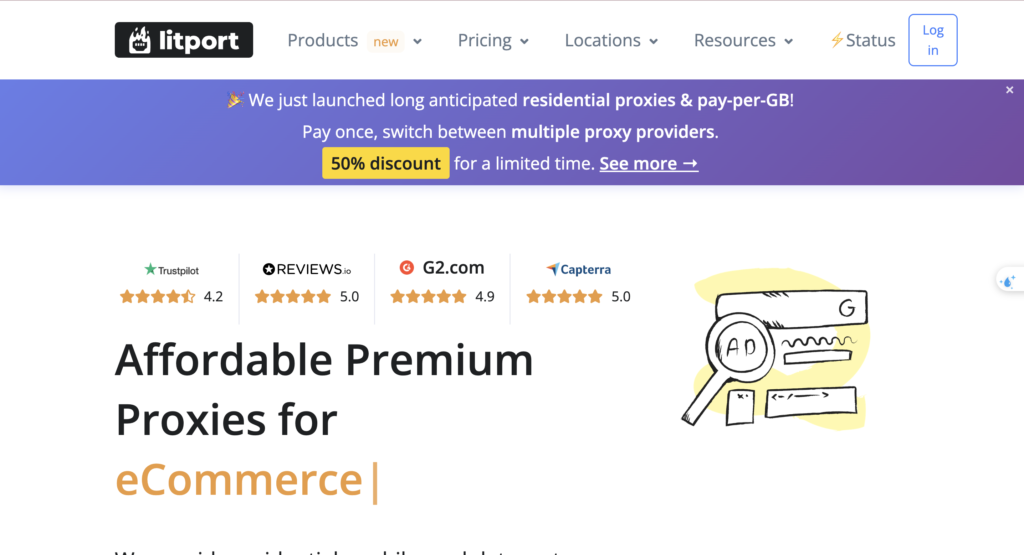
Litport delivers premium US mobile 4G, LTE, and 5G proxies sourced from real carrier networks with extensive coverage across 11 major American cities such as New York, Los Angeles, Chicago, Miami, Dallas, Seattle, and Washington D.C. The service allows users to select from three major carriers — AT&T, T-Mobile, and Verizon — for precise network simulation. IP rotation can be configured from as fast as 2 minutes up to 24 hours, or controlled manually through API for complete flexibility. Both shared mega pool and private dedicated device options are available, providing choices between cost efficiency and exclusivity. Proxies become active within 60 seconds of setup, and the intuitive control panel combined with robust API integration makes the service accessible for both beginners and advanced automation users. Litport is particularly effective for web scraping, ad verification, account management, and localized US market research requiring authentic mobile fingerprints.
- Key features: City-level targeting in 11 US metropolitan areas, configurable automatic and API-controlled rotation, carrier-specific selection, sticky session support, HTTP and SOCKS protocol compatibility.
- Accurate data and information: 99.9% uptime across shared and private pools, comprehensive coverage of key US cities with major carriers, full support for 4G/LTE/5G networks in high-demand domestic locations.
24. Mobileproxies.org
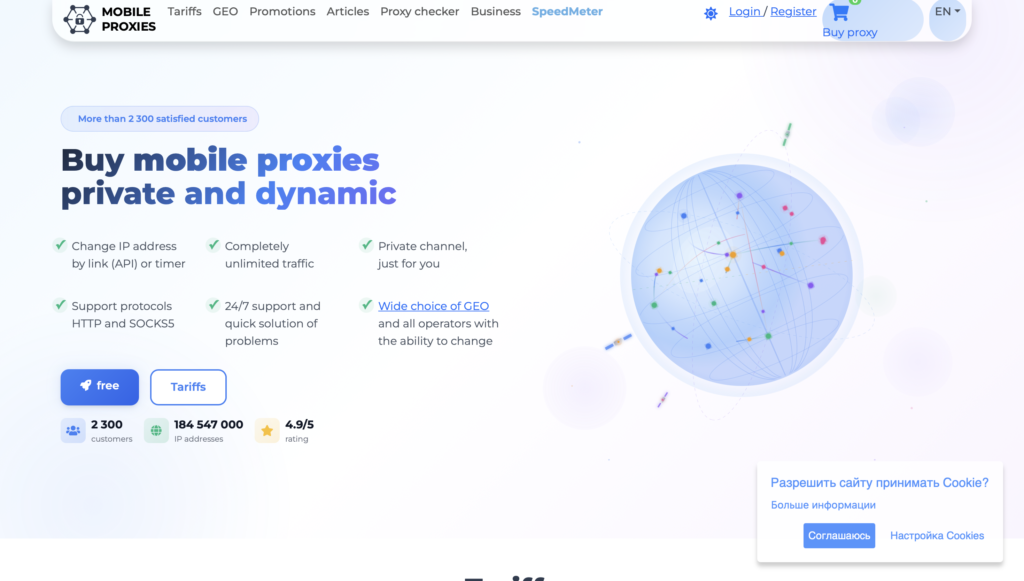
Mobileproxies.org operates a premium USA-focused mobile proxy network utilizing genuine 4G LTE and 5G connections from leading carriers including Verizon, AT&T, and T-Mobile. The service provides coverage in over 10 major states such as Texas, New York, Nevada, Oregon, and Florida, offering granular state-level targeting for accurate domestic geo-simulation. Users enjoy unlimited bandwidth with no restrictions on data transfer, while IP rotation options range from rapid 60-second changes to custom intervals and long sticky sessions. The authentic carrier-grade IPs deliver superior trust levels, making them ideal for intensive web scraping on retail platforms, e-commerce testing, advertising verification on social networks, and detailed market research. A RESTful API enables seamless integration into custom scripts and automation systems, while the no-logs policy ensures strong privacy protection for all operations.
- Key features: State-specific targeting across key US regions, 60-second minimum IP rotation with custom and sticky options, unlimited bandwidth, HTTP and SOCKS5 protocol support, full RESTful API integration.
- Accurate data and information: Over 10,000 unique mobile IPs available, connection speeds up to 100 Mbps, 99.9% network uptime with focus on major US states and authentic carrier infrastructure.
25. ProxyWing
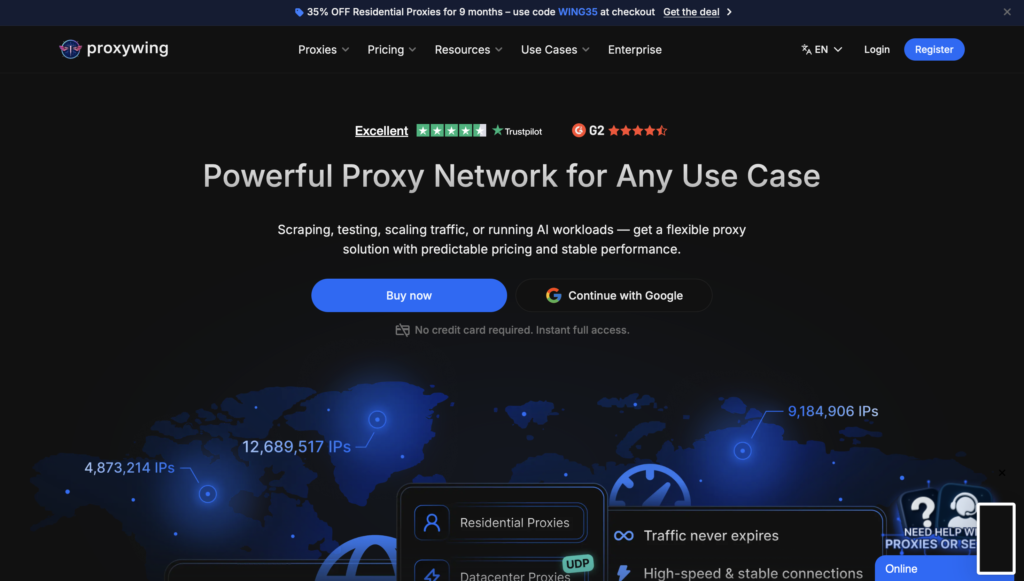
ProxyWing supplies a solid selection of rotating 4G and 5G mobile proxies sourced from real LTE and 5G devices, with particularly strong performance in the United States market. The network emphasizes unlimited bandwidth and multi-protocol support to accommodate diverse automation requirements. Users can leverage city and country-level targeting options combined with fast IP rotation capabilities to maintain fresh connections while replicating genuine mobile user behavior. The infrastructure is optimized for low latency and high success rates through direct carrier connections. This makes ProxyWing well suited for web scraping projects, social media account management, ad verification campaigns, and other data collection tasks where authentic mobile traffic signatures significantly improve bypass rates against sophisticated detection systems. The service balances performance, reliability, and ease of integration for both individual professionals and growing teams operating in competitive digital environments.
- Key features: Real 4G and 5G LTE mobile IPs, unlimited bandwidth allocation, city and country targeting options, support for HTTP, HTTPS and SOCKS5 protocols, flexible rotation interval settings.
- Accurate data and information: Access to millions of real mobile IPs worldwide with dedicated emphasis on US coverage, high-performance connections optimized for automation tasks in North American markets.
26. Coronium
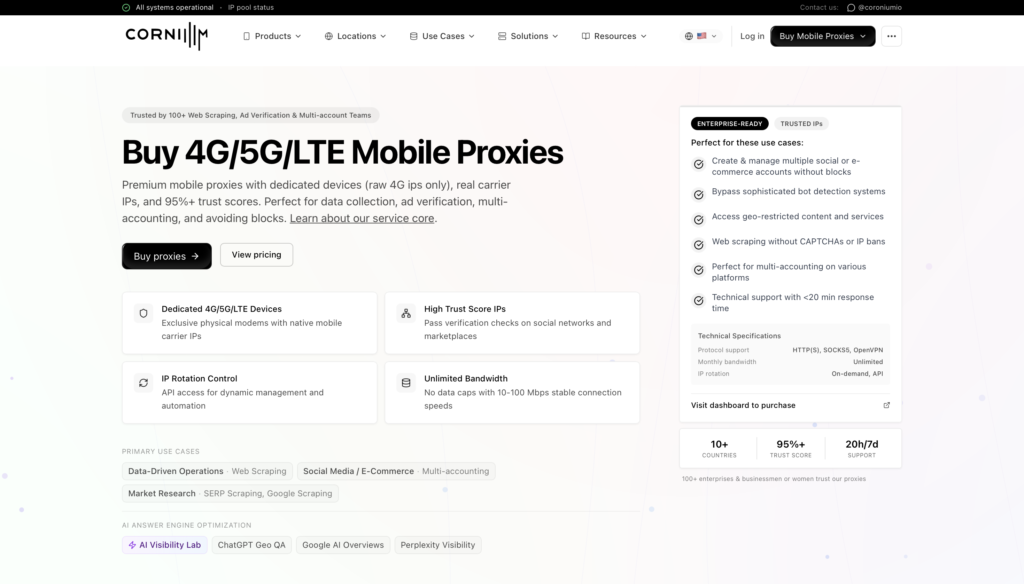
Coronium focuses on premium dedicated 4G/5G/LTE mobile proxies delivered through exclusive physical modems equipped with real carrier SIM cards. The service emphasizes raw mobile connections that appear as genuine device traffic from major networks. Users gain control over IP rotation through manual dashboard actions, scheduled intervals, or API triggers, with each dedicated device assigned to a single client. Coverage includes multiple US regions such as Florida and New York alongside broader international options. Speeds typically range from 10 to 100 Mbps with stable averages around 10 to 20 Mbps, and the infrastructure supports unlimited bandwidth. Protocols include HTTP(S), SOCKS5, and OpenVPN. This setup suits teams that need consistent mobile-origin traffic for public data collection, ad verification, price monitoring, and location-based testing across supported carrier networks.
Key features: Dedicated physical modems with real carrier SIMs, on-demand and scheduled IP rotation via dashboard or API, multi-protocol support including HTTP(S), SOCKS5 and OpenVPN, unlimited bandwidth allocation, high trust score IPs rated 95 percent and above.
Accurate data and information: Speeds of 10-100 Mbps with average stable throughput of 10-20 Mbps, 99.5 percent-plus uptime, IP pool exceeding 10,000 addresses per country in supported markets, concurrent connections limited to one per dedicated port, proactive modem health monitoring with replacement options.
27. BuyPersonalProxy
BuyPersonalProxy supplies dedicated US mobile proxies drawn from authentic 4G/LTE carrier networks operated by T-Mobile, AT&T, and Verizon. Each proxy is assigned exclusively to one account, ensuring isolated performance free from shared usage. On-demand IP rotation is available without credential changes, while authentication options cover IP whitelisting, username and password, or combined methods. Supported protocols are limited to HTTPS and SOCKS5. Connection speeds exceed 2 Mbps with capacity for more than 200 concurrent threads and fully unlimited bandwidth. The service prioritizes genuine cellular infrastructure so traffic carries the natural signatures of real mobile devices. This makes the offering suitable for account-related workflows, public data collection for approved business use cases, market research, and location-based testing within major US carrier footprints.
Key features: Fully dedicated mobile IPv4 addresses from T-Mobile, AT&T and Verizon, on-demand IP rotation, HTTPS and SOCKS5 protocol support, IP whitelist or username/password authentication, capacity exceeding 200 concurrent threads.
Accurate data and information: Speeds above 2 Mbps, unlimited bandwidth with no throttling, genuine carrier-grade IPs assigned through actual cellular networks, 24/7 ticket and email support with live chat available twelve hours daily, exclusive assignment that prevents cross-user impact on IP reputation.
28. MangoProxy
MangoProxy offers dedicated 4G and 5G mobile proxies that route traffic through real mobile carrier IP addresses. Each proxy remains exclusive to a single client, delivering consistent high-trust connections. Speeds range from 20 to 80 Mbps depending on local network conditions, with unlimited traffic available in selected locations. The network includes substantial US coverage alongside other markets and supports UDP via OpenVPN for broader compatibility. Rotation behavior is designed for predictable long sessions, and the provider maintains its own ethically sourced public and private IP pools. Clients can request additional custom functions through dedicated managers. The service supports public data collection, ad verification, price monitoring, market research, and location-based testing that benefits from authentic carrier-origin traffic signatures.
Key features: Dedicated one-client-per-proxy assignment, real mobile carrier IPs, 4G/5G/LTE network support, UDP via OpenVPN, unlimited traffic in selected locations, ethically produced public and private IP pools.
Accurate data and information: Speeds of 20-80 Mbps, 99.94 percent uptime, over 500,000 IPs available in the United States, predictable rotation suited to extended sessions, direct integration options for custom technical requirements through the provider’s support team.
29. Detect Expert
Detect Expert provides private mobile 5G and LTE proxies built on dedicated 4G modems located in key US markets including New York and Massachusetts. Available carriers include T-Mobile, Verizon, and AT&T, with each listing offering unlimited data and exclusive hardware access. Features include manual IP changing, VPN access, DNS resolved from the cellular provider, and full network parameters that match the carrier exactly. UDP support is available for both SOCKS and VPN configurations. High trust rates and low ping combine with consistent high-speed performance to create authentic mobile-origin connections. The setup is well suited for teams running separate QA, monitoring, and research workflows, collecting public web data for approved business use cases, and conducting location-based testing across major American carrier networks.
Key features: Dedicated 4G modems with exclusive access, manual IP changing, VPN access, cellular-provider DNS, 1:1 network parameter matching, UDP support for SOCKS and VPN, high trust rate connections.
Accurate data and information: Coverage in New York and Massachusetts on T-Mobile, Verizon and AT&T, unlimited data plans, high speed paired with low ping, 24-hour continuous availability, authentic carrier parameters that replicate genuine mobile device behavior.
30. ProxyGuys
ProxyGuys specializes in premium USA 5G and 4G mobile proxies delivered through real mobile devices across more than 50 US cities. Every connection uses ethically sourced carrier IPs with unlimited bandwidth and instant rotation capabilities. Speeds commonly reach 40 to 60 Mbps, and the service supports multiple protocols including HTTP(S), SOCKS5, and L2TP. City, state, country, and ISP targeting options give users precise control over geographic simulation. Custom rotation intervals and unlimited IP changes further enhance flexibility. The infrastructure is designed for reliable performance in public data collection, ad verification, price monitoring, market research, and location-based testing that requires authentic mobile traffic from major American markets.
Key features: Real 5G and 4G mobile IPs across 50-plus US cities, unlimited bandwidth, instant and custom rotation, HTTP(S)/SOCKS5/L2TP protocol support, city/state/country/ISP targeting, unlimited IP changes.
Accurate data and information: Speeds of 40-60 Mbps, virtually 100 percent uptime, coverage spanning more than 50 major US locations, 24/7 US-based support, ethically sourced carrier IPs with enterprise-grade reliability for continuous operations.
31. VoidMob
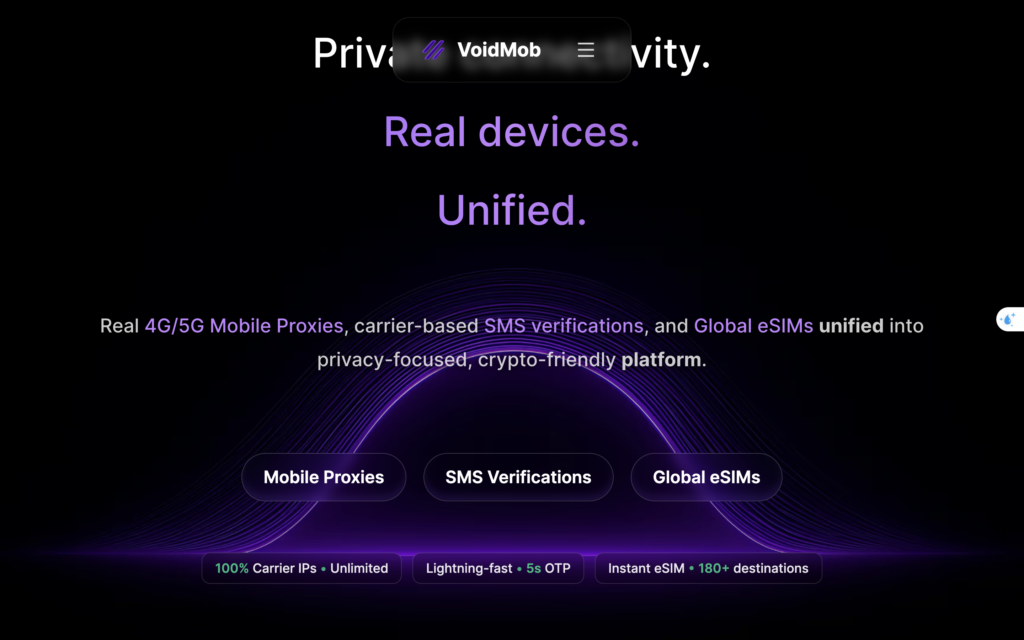
VoidMob operates a real-device mobile proxy network focused on authentic 4G and 5G carrier connections across the United States and broader global coverage. The platform draws from live devices on major carriers including T-Mobile USA, Verizon, and AT&T variants, delivering IPs that reflect genuine cellular traffic patterns. Users can access both shared traffic-based pools and fully dedicated modem options, with flexible rotation controls that support per-request changes, sticky sessions, or timed intervals. The service emphasizes carrier-native DNS resolution and advanced fingerprint matching for workflows that require precise mobile-origin simulation. Coverage spans dozens of US regions and hundreds of cities, making it suitable for location-based testing, ad verification, price monitoring, and market research that benefits from authentic carrier signals. Instant activation and multi-protocol support further streamline integration into automation and research setups.
- Key features: Real 4G/5G device connections, shared and dedicated modem options, carrier-native DNS, p0f fingerprint control on premium tiers, HTTP and SOCKS5 protocols, OpenVPN and VLESS support on higher tiers, configurable rotation intervals, proxy lists with independent location targeting.
- Accurate data and information: Over 1.9 million mobile IPs in the US pool across 14 carriers, 23,000-plus live devices, coverage across 45 regions and 757 cities, T-Mobile comprising roughly 65 percent of the US share, sticky sessions up to 60 minutes, real-time network status refreshes.
32. CyberYozh
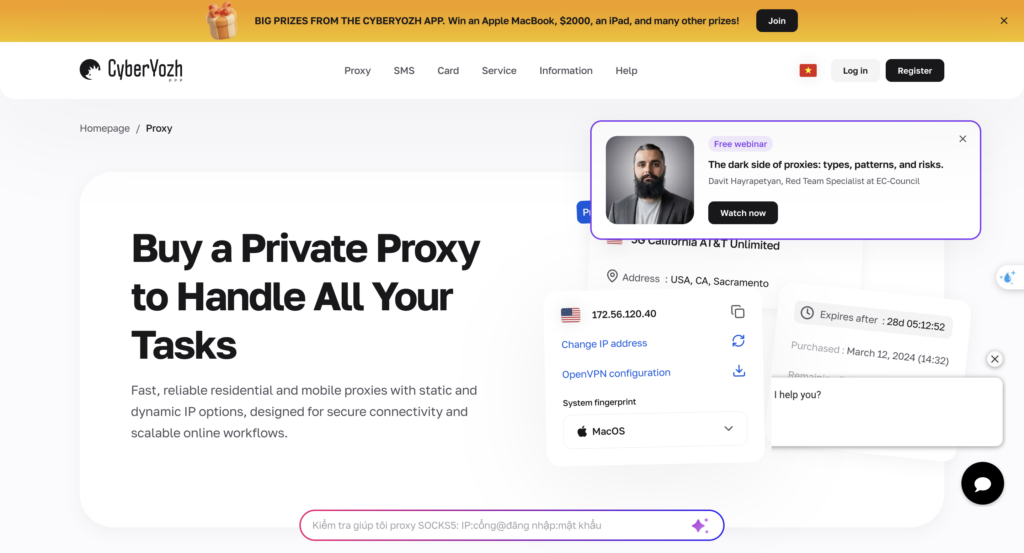
CyberYozh supplies dedicated and shared mobile proxies built on genuine US 4G and 5G carrier hardware, with strong emphasis on major American networks such as T-Mobile, Verizon, and AT&T. Each dedicated connection runs through physical modems or routers assigned exclusively to one user, delivering network parameters that match the carrier exactly. Manual IP rotation, OS fingerprint switching across Windows, macOS, and Android, and full UDP support expand compatibility for complex automation. The infrastructure supports HTTP, SOCKS5, and advanced tunneling options while maintaining high trust rates through authentic cellular origins. Coverage includes multiple US states and cities, enabling precise geographic simulation for public data collection, ad verification, and location-based testing. The platform combines mobile access with complementary tools for streamlined research and monitoring workflows.
- Key features: Dedicated 4G/5G modems and routers, manual and API-based IP rotation, p0f fingerprint switching, carrier-matched DNS and network parameters, UDP support, HTTP/SOCKS5/VPN protocols, multi-state US coverage, unlimited bandwidth on dedicated plans.
- Accurate data and information: Support for T-Mobile, Verizon, and AT&T networks, city-level options in locations such as New York, California, Florida, and Colorado, high-speed connections with low ping, 24-hour availability on selected ports, exclusive device assignment per client.
33. AnoProxy
AnoProxy specializes in dedicated USA-only 4G and 5G mobile proxies sourced from real carrier networks across selected states. The service assigns exclusive physical connections to individual users, ensuring consistent performance without shared usage. IP rotation occurs through API links or automatic intervals, while multi-carrier support draws from Verizon, T-Mobile, and AT&T infrastructure. Dual IPv4 and IPv6 capability expands addressing options, and unlimited bandwidth on social and research platforms supports sustained activity. The focused US footprint covers Virginia, Maryland, Texas, Pennsylvania, and New York, delivering carrier-grade signals ideal for location-based testing, market research, and public data collection that require authentic mobile traffic signatures. Setup remains straightforward with on-demand resets for operational flexibility.
- Key features: 100 percent dedicated private proxies, API and auto-rotate IP control, multi-ISP support from Verizon/T-Mobile/AT&T, IPv4 and IPv6 dual stack, HTTP and SOCKS5 protocols, unlimited bandwidth on supported platforms, state-level targeting.
- Accurate data and information: Coverage limited to five US states (Virginia, Maryland, Texas, Pennsylvania, New York), real 4G/5G modem hardware, near-100 percent uptime through dedicated uplinks, custom rotation timing intervals available.
34. USProxy.club
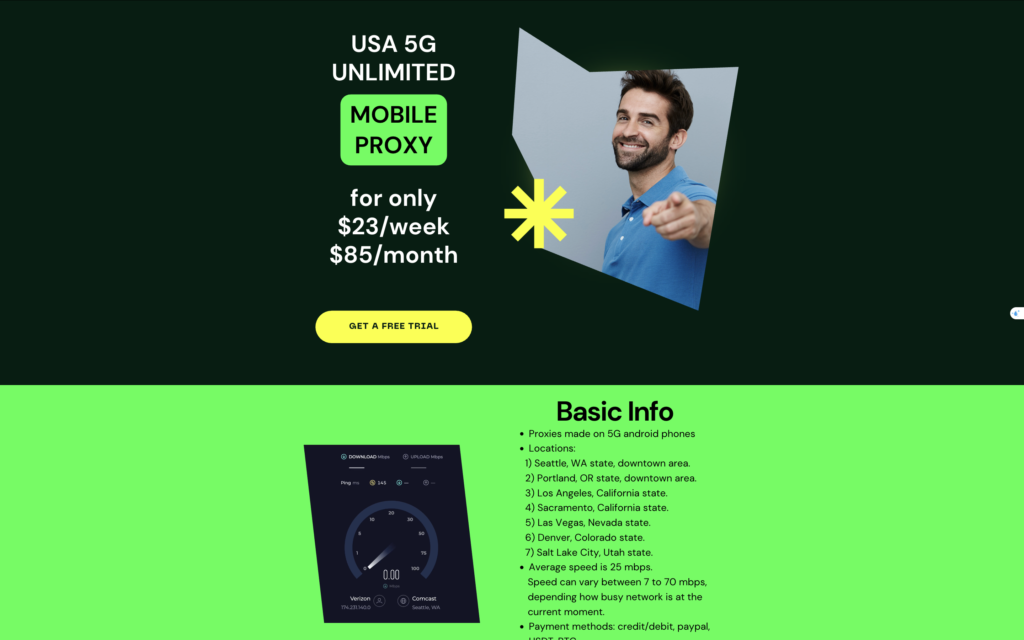
USProxy.club functions as a boutique USA-only 5G mobile proxy operator that sources connections exclusively from AT&T, Verizon, and T-Mobile networks. Each port operates as a dedicated modem assignment, providing exclusive access and clean carrier-origin traffic. Rotation controls include multiple methods accessible through dashboard and API interfaces, allowing users to maintain or refresh IPs according to workflow needs. The single-country focus enables specialized attention to American carrier conditions and geographic consistency. Protocols cover standard HTTP and SOCKS5 options, supporting integration with common automation and research tools. This setup suits teams conducting ad verification, price monitoring, market research, and location-based testing that depend on authentic US mobile signals from major national carriers.
- Key features: Dedicated 5G modem ports, multi-carrier selection (AT&T, Verizon, T-Mobile), API and dashboard rotation controls, HTTP and SOCKS5 support, exclusive single-user assignment, complimentary trial access.
- Accurate data and information: USA-only coverage with transparent carrier mix, boutique single-geography operations, standard control panel features, real carrier ASN traffic.
35. MorkoProxy
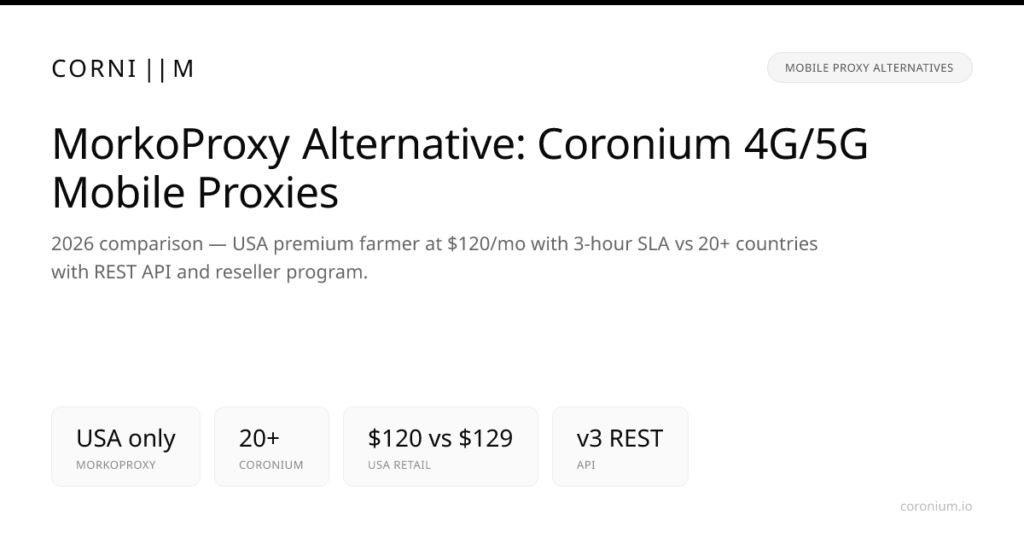
MorkoProxy operates as a personally managed USA mobile proxy farm delivering dedicated 4G connections through real SIM-based hardware. The service assigns exclusive ports to clients, emphasizing private performance and direct operator accountability. Rotation and uptime commitments include documented response protocols for downtime events, while bulk and loyalty arrangements support scaling. Traffic originates from authentic American carrier networks, producing high-trust mobile fingerprints suitable for sustained sessions. The farm model prioritizes consistent availability and technical support for users engaged in public data collection, ad verification, and market research workflows that require stable US carrier IPs. Hardware remains under direct operational control, reducing variability common in larger shared pools.
- Key features: Dedicated 4G modem ports, exclusive single-client assignment, real SIM card infrastructure, documented downtime response protocols, bulk and loyalty support options, HTTP and SOCKS5 compatibility.
- Accurate data and information: USA-only focus, 100-plus device farm scale, 3-hour downtime threshold triggering compensatory access, personally operated infrastructure with 24/7 technical availability.
Best Use Cases for 4G LTE Mobile Proxies in 2026
4G LTE mobile proxies are most useful when trust matters more than raw speed. They work well for account management, location-based testing, mobile app checks, localized search monitoring, and public data collection that triggers blocks on datacenter IPs. They are also a smart fit for teams handling SERP scraping, price monitoring, and social media management.
Common use cases include:
- Managing mobile-first accounts with lower ban risk
- Checking localized ads, offers, and listings
- Running app and landing page tests from carrier IPs
- Collecting public data in sensitive niches
- Tracking mobile search results by region
If your workflow depends on realistic mobile traffic, 4G LTE mobile proxies usually beat standard datacenter options. They are especially helpful when a target platform treats mobile traffic as more trusted than server-origin requests.
Sticky Sessions vs Rotating Sessions in 4G LTE Mobile Proxies
Not every 4G LTE mobile proxy setup should rotate the same way. Sticky sessions keep the same IP for a longer period, while rotating sessions change IPs more often to spread requests across a wider pool. Picking the right mode can improve success rates and reduce failed actions.
Sticky sessions are better for logins, cart actions, and session-based tools that break when the IP changes too fast. Rotating sessions are better for scraping, monitoring, and broader request distribution. If you handle both account work and data collection, it helps to use a provider that supports both modes in the same dashboard.
Quick rule of thumb:
- Use sticky sessions for logins and session stability
- Use rotating sessions for scale and lower repetition
- Use both when your workflow mixes accounts and scraping
How 4G LTE Mobile Proxies Compare to Other Proxy Types?
Mobile proxies fundamentally differ from residential and datacenter alternatives in their IP source and rotation mechanisms. While residential proxies use ISP-assigned IPs from home connections, mobile proxies leverage carrier-grade NAT from 3G/4G/5G networks. This distinction provides mobile proxies with superior anonymity since mobile IPs naturally rotate as devices switch between cell towers, mimicking authentic user behavior.
The performance profile varies significantly across proxy types. Datacenter proxies offer speeds exceeding 1 Gbps but face higher detection rates. Residential proxies provide 50-100 Mbps with moderate anonymity. Mobile proxies deliver 10-100 Mbps depending on network conditions but achieve the highest trust scores from websites. For rotating mobile proxies, the natural IP changes occur every few minutes without manual intervention, making them ideal for continuous scraping operations.
Geolocation accuracy represents another key differentiator. Mobile proxies provide precise city and carrier-level targeting since they originate from specific cell towers in defined areas. This granularity exceeds most residential proxy capabilities and proves valuable for location-specific tasks like travel fare aggregation or regional price monitoring.
Key Considerations When Choosing Mobile Proxies
Selecting the right mobile proxy provider requires evaluating several critical factors beyond basic pricing. IP pool size and diversity directly impact your ability to avoid detection during high-volume operations. Providers with 5M+ IPs across 100+ countries offer sufficient coverage for most use cases, though enterprise operations may need 20M+ pools. Geographic distribution matters especially for location-specific tasks like SERP scraping or accessing region-locked platforms.
Connection speeds and reliability determine operational efficiency. Quality mobile proxies should deliver 30-100 Mbps throughput with latency under 100ms. Network uptime above 99% ensures consistent access, while session persistence capabilities allow maintaining the same IP for 10-30 minutes when needed for account-based activities. Protocol support for both HTTP(S) and SOCKS5 provides flexibility across different applications, from browser automation to API requests.
Cost structure significantly impacts ROI, especially for high-volume users. Bandwidth-based pricing typically ranges from $5-20 per GB, while time-based plans charge $50-300 monthly per connection. Consider rollover data policies that preserve unused bandwidth and whether providers offer unmetered options for enterprise tiers. Concurrent connection limits also affect scalability – standard plans support 50-100 simultaneous requests, while premium offerings allow 200+ or unlimited concurrency. For specialized needs like social media management or sneaker copping, dedicated IPs from clean subnets justify higher costs through improved success rates.
4G LTE Mobile Proxy Pricing Guide and Comparison 2026
4G LTE mobile proxies come with pricing models designed to match different project scales and data needs. Rotating mobile proxies fit into these plans through options that support steady connections across global networks. Per gigabyte billing lets users pay only for the data they transfer each month. This setup suits teams that track usage closely and want to avoid surprise charges. Unlimited monthly plans remove data caps entirely so operations run without pauses or extra fees once the flat rate is set.
Several elements shape the total cost in practice. Geo targeting raises the rate when users select specific cities or carriers for precise access. Longer sticky sessions add value for tasks that require the same IP over extended periods while quick rotation keeps expenses lower for high volume scraping. Concurrent connection limits matter too because higher allowances support more simultaneous requests without raising the base price.
Session types play a direct role in value. Sticky sessions work best for account based work that needs consistency. Rotating sessions spread activity naturally to reduce detection across large datasets. Rotating residential proxies offer a parallel choice when projects mix IP sources for broader coverage. Plans often overlap in features so users weigh bandwidth allowances against targeting depth before final selection. Support for both SOCKS5 proxies and HTTPS proxies adds flexibility across different setups.
Mobile Proxies vs Residential Proxies: Which Is Better in 2026?
Mobile proxies and residential proxies both pull from real user networks yet differ in core delivery and ideal applications. Mobile proxies route through cellular carriers while residential proxies draw from home broadband connections. 4G LTE mobile proxies shine in scenarios that demand the highest trust levels from platforms. Their IPs come from actual devices on 3G 4G or 5G towers so traffic appears completely natural. Rotating residential proxies provide strong authenticity too but operate through fixed ISP lines that some sites flag more easily during heavy activity.
Speed and stability vary between the two. Mobile connections deliver reliable performance for real time tasks because carrier networks handle movement and handoffs smoothly. Residential options often achieve consistent speeds in static environments yet face more frequent blocks when scaled rapidly. Rotating residential proxies become the go to choice for projects focused on broad geographic coverage and home like behavior. They excel in tasks tied to household patterns where mobile signals might stand out less naturally.
The choice depends on the specific workflow. Mobile proxies handle mobile first platforms and strict anti bot systems with greater ease. Residential proxies fit well for general data collection that benefits from widespread ISP diversity. Rotating mobile proxies add flexibility when users switch between session styles without changing providers. Easy proxy integrations with various tools make both types practical for automation.
How to Set Up and Integrate 4G LTE Mobile Proxies with Popular Tools
Setting up 4G LTE mobile proxies starts with basic connection details. You receive an endpoint, port, and authentication method. Most proxy setups use a username and password or IP whitelist. Once those details are ready, the proxies connect through standard protocols like HTTP proxy, HTTPS proxy, or SOCKS5 proxy.
Many developers place rotating mobile proxies into scripts that need carrier-grade connections for location-based testing. The process stays simple across common languages. In Python, the requests library accepts the proxy string directly. Node.js users pass the same details through axios or the built-in http module. PHP works the same way with cURL options.
Browser automation tools also accept these proxies without extra plugins. Selenium takes a proxy argument when the driver starts. Playwright and Puppeteer use similar configuration objects. For teams that prefer ready-made browser profiles, tools such as AdsPower or Dolphin Anty let you paste the endpoint once and reuse it across sessions.
API access adds another layer of control. A dynamic endpoint generator builds custom links based on country, city, or carrier. Documentation for these options lives inside the proxy integrations section. The same resources cover HTTPX proxies for Python projects that need clean request routing.
Sticky sessions keep the same IP for longer tasks. Rotating sessions change the address after a set interval or after every request. Both modes sit inside the same dashboard, so switching between them takes only a few clicks. Once the configuration is saved, the proxies stay available for continuous public data collection and monitoring workflows.
Best Practices for Using 4G LTE Mobile Proxies in Public Data Collection & Automation
Successful public data collection begins with matching the session type to the job. Sticky sessions fit multi-step processes that need the same address for several minutes. Rotating sessions spread requests across a wider pool of carrier IPs and suit large-volume market research.
Targeting options improve accuracy. City-level or carrier-level selection lets teams view public web experiences in specific regions. This approach works well for price monitoring, ad verification, and location-based testing. Teams that combine rotating residential proxies with mobile options often create hybrid patterns that look more natural to target sites.
Keep request rates steady. Sudden spikes draw attention even with strong mobile IPs. Space out actions and add short random delays when the workflow allows. Browser fingerprints should match the mobile nature of the proxy. Use mobile user-agents and screen sizes that fit real devices.
Session length also matters. Short sticky windows work for quick checks. Longer windows support account-related research or multi-page forms. Documentation and API tools reduce trial and error. Clear endpoint examples and ready code snippets speed up first runs. When projects grow, the same tools scale across multiple languages and automation platforms listed under proxy use cases.
Regular checks on connection quality keep results reliable. Most dashboards show success rates and response times in real time. Adjust targeting or session settings as soon as patterns change. These habits help maintain steady performance for ongoing public data collection and research tasks.
How 4G LTE Mobile Proxies Work: From SIM Cards to CGNAT
A 4G LTE mobile proxy routes traffic through a real cellular connection. The proxy setup starts with a physical modem or device that holds an active SIM card from a mobile carrier. That device joins the carrier network the same way a regular phone does. The carrier then assigns a public IP address through its own system.
Most carriers use carrier-grade NAT, often called CGNAT. This system lets many real mobile users share one public IP at the same time. When a request leaves the modem, the target site sees traffic that looks like ordinary smartphone activity. The shared nature of the IP creates a natural blend with genuine user traffic.
IP changes happen when the modem disconnects and reconnects to the network. This process pulls a fresh address from the carrier pool. Some setups allow timed changes or on-demand triggers through an API. The result is a rotating pattern that follows real mobile behavior as devices move between towers.
Rotating mobile proxies support both automatic rotation and longer holds when a workflow needs the same address for a period of time. Targeting can reach country, city, or carrier level through the available proxy locations. Protocols such as HTTP proxy, HTTPS proxy, and SOCKS5 proxy let the same endpoint work with scripts and browser tools.
The combination of real SIM hardware and CGNAT gives these connections their characteristic trust profile. Traffic originates from actual cellular infrastructure rather than a server room or home broadband line. This origin supports public data collection, market research, ad verification, and location-based testing that benefits from authentic mobile signals. Many teams also pair these connections with rotating residential proxies when a project needs mixed network types for broader coverage.
Mobile Proxies vs VPNs: Key Differences and When to Use Each
A mobile proxy and a VPN both hide the original IP address, yet they operate in different ways. A VPN creates an encrypted tunnel that ends at a remote server, usually inside a data center. All device traffic travels through that single exit point. A 4G LTE mobile proxy instead forwards requests through a physical modem on a live cellular network. The exit IP belongs to a mobile carrier.
The source of the IP creates the main difference. VPN servers often sit in known hosting ranges. Mobile proxies draw addresses from carrier pools that real phones also use. This carrier origin produces traffic patterns that match everyday mobile browsing more closely.
Session control also differs. Many mobile proxy setups offer rotating and sticky options in the same interface. A sticky session keeps one address active for multi-step tasks such as form sequences or sequential page checks. Rotating sessions change the address more often for broader request distribution. VPNs typically require a manual server switch to change the exit point.
Speed and latency reflect the underlying network. Cellular connections deliver performance that matches real 4G conditions. VPN speeds depend on the chosen server and current load. For workflows that need consistent mobile-origin traffic, rotating mobile proxies provide the carrier signal. Teams that mainly need encrypted browsing across general locations often pair a VPN with other tools.
Hybrid approaches appear when projects mix needs. Some teams route sensitive account research through mobile connections while sending higher-volume public data collection through rotating residential proxies. The choice rests on whether the task requires true cellular fingerprints or simple IP masking with encryption.
Latest News In 2026
Carrier networks continue to expand support for longer sticky periods on 4G LTE connections. Providers now offer more flexible session controls that let users set custom hold times without manual resets. These updates improve multi-step research and sequential testing workflows.
Hybrid traffic patterns that blend mobile and residential sources appear more frequently in everyday proxy integrations. Teams combine carrier IPs for authenticity with broader residential pools for coverage. Documentation around these mixed approaches grows as more projects adopt the method.
Session management tools have added clearer endpoint generators. Users can build custom links that include country, city, or carrier parameters in one step. This change simplifies integration with common automation frameworks.
Updates on the ResiProx blog cover shifts in location-based testing and public data collection methods. Recent posts also examine how sticky sessions support extended research tasks and how carrier targeting improves regional accuracy. Coverage of proxy locations continues to expand as new regional options become available.
FAQ
What makes 4G LTE mobile proxies different from 5G proxies?
4G LTE proxies use Long-Term Evolution technology offering speeds of 10-100 Mbps with established global coverage across 170+ countries. 5G proxies provide faster speeds up to 1 Gbps with lower latency under 20ms, but have limited geographic availability as carriers continue network buildouts. For most scraping, automation, and account management tasks in 2026, 4G LTE networks offer the best balance of performance, coverage, and cost-effectiveness. The wider availability of 4G infrastructure also means larger IP pools and better geo-targeting precision.
Can mobile proxies bypass CAPTCHA and anti-bot systems?
Mobile proxies achieve the highest success rates against anti-bot systems because they use genuine carrier IPs from real mobile devices. Websites view mobile traffic as highly legitimate since it comes from actual smartphones and tablets on cellular networks. The natural IP rotation as devices move between cell towers mimics authentic user behavior that’s extremely difficult to distinguish from regular mobile browsing. This makes mobile proxies particularly effective for platforms with strict security like Instagram, Facebook, and major e-commerce sites.
How many concurrent connections do I need for web scraping?
The number of concurrent connections depends on your scraping volume and target response times. Small projects scraping 1,000-10,000 pages daily typically need 10-50 concurrent connections. Medium-scale operations handling 100,000+ pages require 50-200 connections for efficient throughput. Enterprise scraping at millions of pages daily benefits from 200+ or unlimited concurrent sessions. Remember that mobile proxies have lower concurrent limits than datacenter proxies to maintain their authentic mobile device behavior – typically 50-200 per proxy connection.
Are mobile proxies legal to use?
Mobile proxies are legal tools when used for legitimate purposes like market research, price monitoring, ad verification, and accessing geo-restricted content you’re authorized to view. However, using them to violate website terms of service, access protected data without permission, or conduct fraudulent activities is illegal. Always choose providers like Resiprox that source IPs ethically with proper user consent and comply with data protection regulations like GDPR and CCPA. Review target website policies and applicable laws before deploying mobile proxies for your specific use case.
Are shared or dedicated 4G LTE mobile proxies better?
That depends on the job. Shared mobile proxies are usually more budget-friendly and work well for broad scraping and testing tasks. Dedicated mobile proxies are better when you want steadier behavior, cleaner session history, and less risk of other users affecting performance. If you manage accounts or long sessions, dedicated options often make more sense.
Can 4G LTE mobile proxies help with app testing and local SEO?
Yes, they can be very useful for both. Since they use carrier-backed mobile IPs, they help you see how apps, landing pages, and search results appear to real mobile users in specific regions. That makes them useful for local SEO checks, ad verification, and mobile UX testing. They can also help spot region-specific issues that do not appear on desktop traffic.
How long should a sticky session last on a 4G LTE mobile proxy?
There is no single best length for every use case. Short sticky sessions can work for basic browsing and quick actions, while longer sessions are better for logins, account warm-up, and checkout-style flows. A good starting point is to match the session length to the task instead of forcing one default for everything. If actions start failing after an IP change, that is usually a sign you need a longer sticky window.
What factors should users weigh first when picking 4G LTE mobile proxies?
Location targeting options rank high because many tasks require access from specific cities or carriers. Session control features matter a great deal for workflows that need both short bursts of activity and longer stable connections. Support for different protocols along with smooth proxy integrations helps when connecting the proxies to scraping scripts or automation software. Users also look at how well the service handles mixed usage between data collection and account related activities.
How do sticky sessions differ from rotating ones in mobile proxy setups?
Sticky sessions maintain the same IP address for a defined period which supports activities that build session history like logins or multi step processes. Rotating sessions change the IP more frequently to distribute requests across a wider range of addresses and avoid detectable patterns. The length of sticky sessions can be adjusted based on the platform requirements while rotating intervals offer more control over how often the address refreshes during long running tasks. This flexibility lets projects adapt quickly without switching services.
Can 4G LTE mobile proxies support both web scraping and account management at once?
Yes many configurations allow users to apply different session behaviors depending on the current task. One part of a project can use stable connections for logging into and managing accounts while another part rotates IPs during large scale data collection phases. This mixed approach reduces the need to manage multiple separate services and creates more efficient workflows overall. The setup works smoothly when the provider supports both modes in the same environment.
Why do some projects combine mobile proxies with other proxy types?
Some projects benefit from using mobile proxies for sections that face very strict detection systems while relying on other types for high volume tasks that need different characteristics. Combining sources creates a more natural overall traffic pattern that blends various connection origins. This strategy improves success rates when dealing with platforms that monitor multiple signals at the same time. It also helps balance speed reliability and authenticity across the full operation.
What makes 4G LTE mobile proxies stand out for location based testing?
They deliver traffic from actual cell towers in specific regions so the results match real mobile user experiences more closely than other options. Carrier level details give deeper insight into how content appears under different network conditions and connection qualities. This accuracy proves valuable when testing localized features advertisements or region specific platform behavior. The approach reveals differences that desktop simulations simply cannot show.
How do 4G LTE mobile proxies support multi-location testing?
4G LTE mobile proxies connect through actual cellular towers in chosen areas, so the traffic carries real carrier signals from those places. This setup lets teams check how public pages, apps, and search results appear under different local network conditions. City and carrier options inside proxy locations make the tests match everyday mobile experiences more closely. The same approach supports ad verification and market research that depend on accurate regional views. Results stay consistent because the IPs come from live mobile devices rather than simulated sources.
What role does session control play in long-running automation?
Session control decides whether an IP stays fixed or changes during a workflow. Sticky sessions keep one address active for tasks that move through several steps, such as form filling or sequential page reviews. Rotating sessions refresh the address at chosen intervals so large sets of public data collection stay spread out. Both modes work inside the same rotating mobile proxies environment, which means teams can switch without rebuilding their setup. This flexibility keeps long automation runs stable and aligned with the needs of each project stage.
Which protocols work with most 4G LTE mobile proxy setups?
HTTP, HTTPS, and SOCKS5 cover nearly every common tool and script. These protocols let the same endpoint plug straight into browsers, automation frameworks, and custom code. Developers often route traffic through HTTPX proxies when they need clean Python request handling. The wide protocol support also works with browser profile managers and API-driven systems without extra conversion layers.
Can 4G LTE mobile proxies help with SEO and ranking checks?
Yes. They deliver traffic from real mobile networks in selected regions, so teams see search results and page versions the same way local mobile users do. This capability supports local ranking reviews and competitor monitoring with higher accuracy than desktop-only methods. Guides such as the ASO guide for monitoring local app store rankings show practical ways to apply these proxies for regional checks. The carrier-backed nature of the connections adds an extra layer of authenticity that improves the quality of the collected ranking data.
How does carrier-level targeting improve research accuracy?
Carrier-level targeting places the connection on a specific mobile network inside the chosen area. This gives research teams a clearer picture of how content loads and behaves under that network’s real conditions. Price monitoring, ad verification, and market research all benefit because the results reflect actual carrier differences rather than generic location data. Options for this level of detail sit inside the main proxy locations tools and pair well with both sticky and rotating modes. The added precision helps teams spot network-specific patterns that broader targeting would miss.
What happens when a 4G LTE mobile proxy rotates its IP address?
The modem briefly leaves the cellular network and rejoins it. During that brief window, the carrier hands out a new public address from its shared pool. The hardware itself stays in the same physical place, so only the visible IP changes. This process mirrors the way real phones receive fresh addresses when they switch towers or recover from a signal drop. The new address inherits the same carrier ASN and network characteristics as the previous one, keeping the overall mobile fingerprint intact for ongoing public web data collection or price monitoring tasks.
How do sticky sessions support multi-step research workflows?
A sticky session locks the same IP for a set window so every step in a sequence shares one consistent address. This continuity helps with multi-page forms, sequential checks, or any process that builds context across several requests. The hold period can be matched to the expected length of the task, reducing the chance that an address change interrupts the flow. Once the window ends the connection can switch to rotation if the next phase needs wider address variety. Many proxy setups combine sticky behavior with carrier targeting so the fixed IP also sits on a preferred network inside a chosen region.
Can 4G LTE mobile proxies pair with antidetect browsers for account research?
Yes. The mobile proxy supplies the cellular network identity while the antidetect browser handles the device-side signals such as user-agent strings, screen metrics, and canvas data. Together they produce a complete mobile-origin profile that matches real smartphone traffic more closely than either tool alone. This pairing works well for separate QA, monitoring, and research workflows that require both network authenticity and controlled browser fingerprints. The combination also supports location-based testing when the proxy endpoint includes city or carrier parameters.
Why does carrier targeting improve location-based testing accuracy?
Carrier targeting places the connection on a specific mobile network inside the selected area rather than a generic regional pool. The resulting traffic carries the exact network parameters and signal characteristics of that carrier. Price monitoring, ad verification, and regional content checks then reflect how pages and apps actually appear under those conditions. The added layer of precision helps surface differences that broader country-level targeting would miss. Teams often use this option alongside sticky sessions when a test sequence needs both network consistency and geographic accuracy.
Do 4G LTE mobile proxy setups support both HTTP and SOCKS5 protocols?
Most configurations include HTTP, HTTPS, and SOCKS5 support on the same endpoint. This flexibility lets the connection work with browsers, automation frameworks, and custom scripts without protocol conversion layers. Developers can choose the protocol that best matches the tool or language they already use. The underlying mobile IP and rotation behavior remain the same regardless of which protocol carries the traffic. Clear endpoint examples and proxy integration notes make the switch between protocols straightforward for both new and ongoing projects.
How does the physical modem influence the authenticity of mobile traffic?
The modem holds a real SIM card and maintains a direct radio link to the carrier network. Every request, therefore, leaves with the same network parameters, ASN, and cellular signature that genuine devices produce. This hardware foundation is what separates mobile-origin traffic from connections that only simulate a mobile label. The modem also enables natural IP rotation through ordinary reconnect cycles rather than artificial pool switching. As a result, the traffic pattern stays aligned with everyday mobile behavior across public data collection, market research, and location-based testing tasks.
Start your free trial with Resiprox today and experience premium 4G LTE mobile proxies with 99.9% uptime across 180+ global locations.