

Teams that need one home-style IP for long sessions often look for the best static residential proxies unlimited bandwidth. A fixed ISP address plus unmetered traffic fits QA, market research, ad verification, and public data collection better than a rotating pool that keeps changing identity mid-task. ResiProx builds that mix for everyday business workflows.
Discover the Best Static Residential Proxies Unlimited Bandwidth in 2026 – ResiProx.
- What Unlimited-Bandwidth Static Residential Proxies Actually Are
- How ISP-Hosted Static IPs Combine Residential Trust With Server Speed
- Best Static Residential Proxies Unlimited Bandwidth
- Dedicated, Shared, And Semi-Dedicated Static Residential IPs
- Why Unmetered Traffic Matters For Long-Lived Residential Sessions
- Session Persistence, Sticky Control, And IP Replacement Policies
- FAQ
- What Makes A Static Residential Proxy Different From A Sticky Rotating IP?
- Who Should Use Unlimited Bandwidth On A Static Residential IP?
- Can I Run HTTP And SOCKS5 On The Same Static Plan?
- How Do I Judge Quality Without A Traffic Meter?
- Should I Pick Dedicated, Shared, Or Semi-Dedicated For Long Sessions?
What Unlimited-Bandwidth Static Residential Proxies Actually Are

The best static residential proxies unlimited bandwidth pair a fixed residential IP with traffic that is not billed by the gigabyte. You keep the same ISP-backed address for a login, a checkout test, or a long research tab. The plan is sold as an IP, not as a traffic bucket, so large file pulls and repeat page checks do not drain a GB meter.
That is different from metered rotating residential proxies. Rotating pools change the address on a timer or after each request. They fit high-volume public data collection when a new identity each time is helpful. Static unmetered lines fit the opposite job: one identity, a long sitting, and as much traffic as the workflow needs. Many providers also sell sticky proxy sessions on rotating networks. A sticky window holds one IP for a short stretch, then moves on. A true static residential line is meant to stay put for the life of the assignment.
How ISP-Hosted Static IPs Combine Residential Trust With Server Speed
Static residential proxy IPs are often called ISP proxies. The address belongs to a consumer internet brand. The hardware sits in a server room, not on a home Wi-Fi router. Pages still see a household-style ASN. Your tools still get a stable path that does not drop when someone at a house closes a laptop.
That mix is why teams pick static lines over plain datacenter proxies. Datacenter proxy IPs are fast and cheap to run, but many sites treat them as lab traffic. Rotating residential proxy IPs look like real homes, but the path can wobble because the last hop may be a real device. ISP-hosted static IPs sit in the middle: residential reputation, server uptime, and a session that can last.
Unmetered billing matters here. A long sticky session that also pulls images, search pages, or product files can burn through metered GB plans. Paying for the IP, then using the line hard, is the point of this category. ResiProx also lists supported locations so the same idea can be matched to the market you need to view.
Best Static Residential Proxies Unlimited Bandwidth
1. ResiProx – Best Static Residential Proxies Unlimited Bandwidth
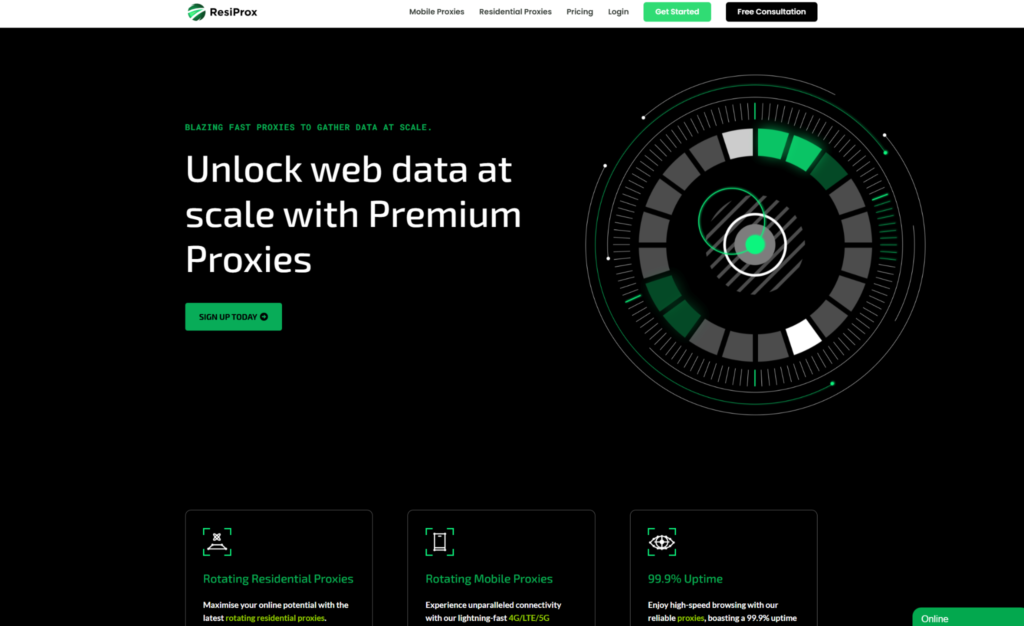
Static residential proxies from ResiProx keep a single ISP-backed address on the line while you work through long QA, research, and public data jobs. The pool is built from ethically sourced residential IPs across many countries, so pages see a normal home path instead of a short-lived lab address.
Resiprox Premium Proxies – Unlock the Web with Power and Precision
Introducing Resiprox, the ultimate proxy solution designed to supercharge your online operations. With our Residential Proxies and Mobile Proxies, you get unmatched access to web data at scale, robust security, and seamless connectivity all backed by a free trial to experience the difference firsthand.
Product Features
- Rotating Residential Proxies: Harness the power of 10M+ ethically-sourced IPs across 180+ countries. These proxies rotate dynamically to support large-scale public data collection, market research, and workflows that benefit from automatic IP rotation, delivering 99.9% uptime and precise targeting at the country, city, or ZIP code level.
- Rotating Mobile Proxies: Powered by 4G/LTE/5G networks, our mobile proxies offer lightning-fast speeds with <0.3s response times and a 99.9% success rate perfect for real-time applications.
- Global IP Network: Tap into millions of IPs, including 3.5M+ in the US, 1.8M+ in Brazil, 3.1M+ in India, and more, ensuring coverage wherever you need it.
- Advanced Capabilities: Enjoy HTTPS proxy & SOCKS5 proxy support, unlimited concurrent sessions, and flexible rotating or sticky sessions, all wrapped in premium IP quality.
Product Specifications:
- Performance: High-speed browsing with 99.9% uptime and 24/7 expert support.
- Integration: Seamlessly works with Node.js, Python, PHP, Selenium, and more, featuring a dynamic endpoint generator and robust API access.
What It’s Built For:
Resiprox proxies are your all-in-one tool for:
- Public Data Collection: Collect public web data for approved business use cases, market research, and growth insights.
- Price Monitoring: Track prices across regions in real-time.
- Multi-Account Workflows: Run separate QA, monitoring, and research workflows across multiple accounts.
- SEO & Ad Verification: Monitor rankings and verify ads globally.
- Cybersecurity: Protect your brand and test applications securely.
- Specialized Tasks: From high-volume monitoring of limited-release products to travel fare aggregation, Resiprox delivers.
Why Resiprox Stands Out:
This isn’t just a proxy, it’s a game-changer. With comprehensive documentation, multi-platform compatibility, and a team of experts available 24/7, Resiprox ensures your projects run smoothly. Whether you’re a business scaling operations, a researcher gathering data, or a developer testing apps, our proxies adapt to your needs with precision and reliability.
Resiprox Premium Proxies – Your Key to a Smarter, Faster, and More Connected Online World.
Click here to discover our :
2. ProxyEmpire
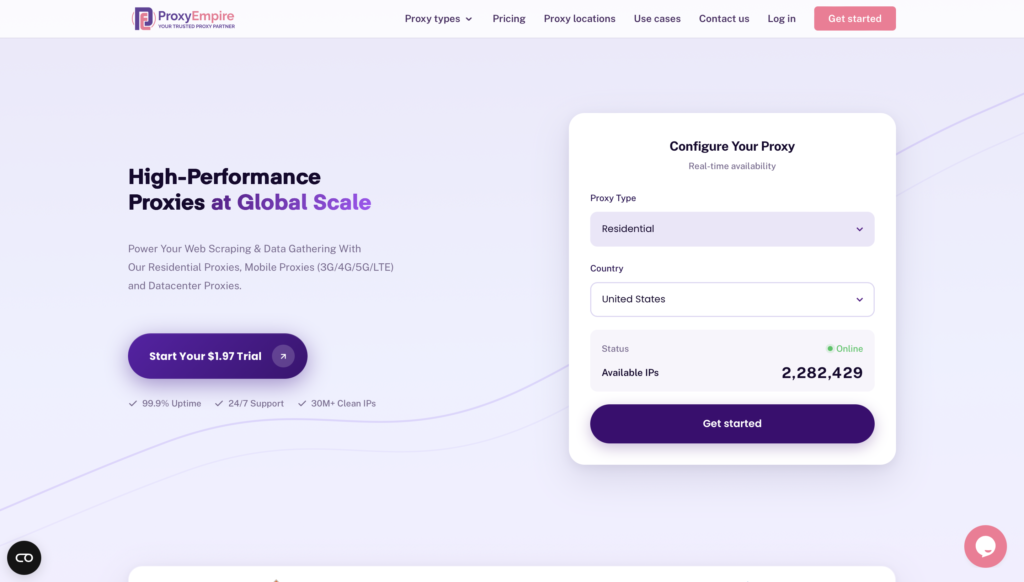
ProxyEmpire focuses on ISP and static residential allocations that stay with one customer. The pitch is a held identity, HTTP and SOCKS5, and traffic that is often treated as open after the IP is assigned. That combination matches long QA seats, repeat research logins, and separate monitoring workflows that should not share a busy rotating pool.
Documentation is lighter than the biggest enterprise vendors. You should expect to test more than you read. Location depth varies by batch, so the country you need may be easy one month and tight the next. Replacement handling is the detail that decides whether the product stays useful. A dedicated IP that cannot be swapped when it ages becomes a liability.
The panel is simpler than a full data platform. There is no giant unlock-browser suite attached by default. For many operators that is a plus. For teams that want parsers, scheduled collectors, and role-based workspaces, it will feel thin.
ProxyEmpire works when you want a reserved ISP address and you are willing to validate hold time yourself. It is less suitable as the only vendor for worldwide coverage. Pair it with a clear rule: one workflow, one IP, one owner. Then watch how the address behaves across a full week of approved public page work.
Key features
- Dedicated-style ISP IPs
- HTTP and SOCKS5
- Session control aimed at long logins
- Traffic treated as open on many assignments
- Simple allocation model
Facts and information
- Appeals to operators who want a held identity
- Panel and docs are simpler than premium suites
- Pool size is modest next to global rotating networks
3. Oxylabs
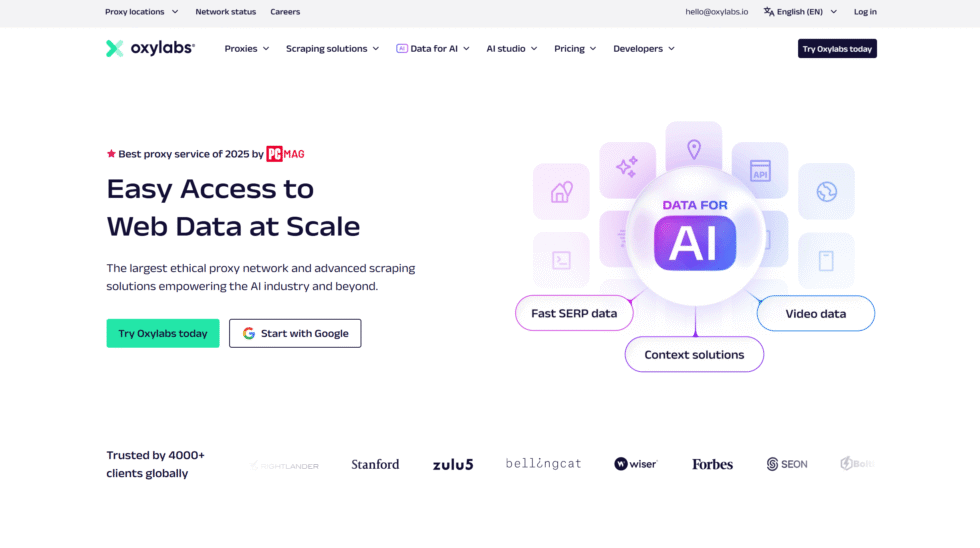
Oxylabs, headquartered in Vilnius, Lithuania, sells dedicated ISP proxies that many desks treat as the premium static residential option. Addresses come from consumer internet brands, then sit on maintained infrastructure rather than a home router. The result is a line that looks like a household user and still stays up through long research windows.
Sessions can remain open for extended work. That helps ad verification walks, price monitoring, market research, and QA that must return to the same seat. Success rates on protected public sites are high when the ASN matches what the site expects from a real subscriber. Response time is often quicker than peer-based residential paths because the last hop is a server.
The tradeoff is focus. Static targeting is thinner than Oxylabs rotating products. You get quality over a giant picker wheel. Onboarding is built for serious data teams, so a small shop can feel extra process in contracts, seats, and endpoint design. Docs are thorough for HTTP and SOCKS flows, sample code, and session controls.
Oxylabs is a fit when reputation and uptime matter more than a huge self-serve catalog. It is a heavier choice when you only need one or two IPs for a short test. Confirm how replacements are issued if an address ages out. For approved public data collection that repeats the same path, the dedicated ISP model is the point of this vendor.
Key features
- Dedicated ISP-backed static IPs
- Long uninterrupted sessions
- Consumer ASN mix
- Production-ready HTTP and SOCKS support
- Enterprise-style onboarding and docs
Facts and information
- Often chosen for reputation-sensitive research
- Static filters are tighter than rotating plans
- Best after a scoped pilot on your target sites
4. Bright Data
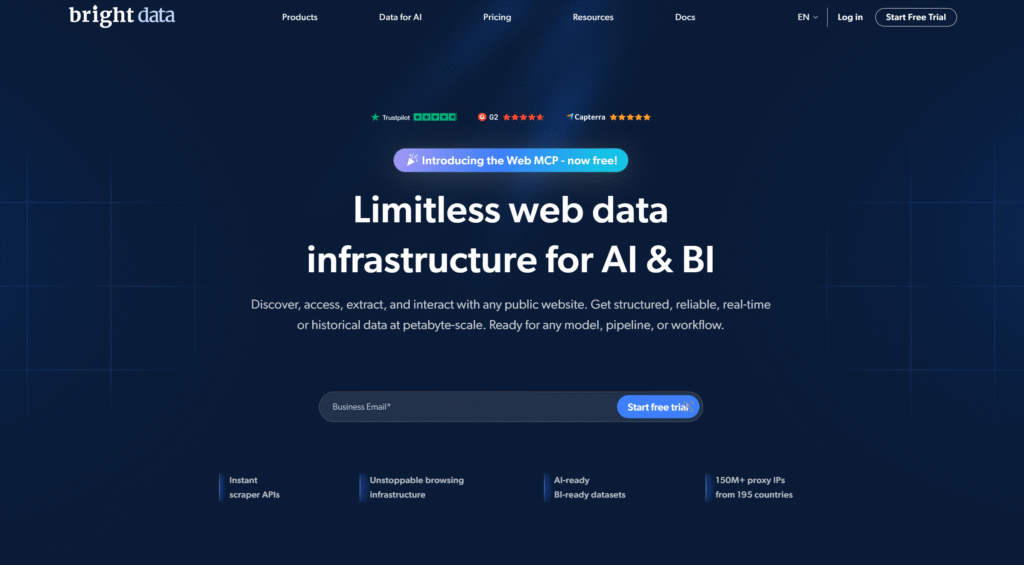
Bright Data, based in Netanya, Israel, runs static residential and ISP inventory next to a large rotating network. Shared and dedicated IPs both exist, so a team can isolate a login while other jobs share a pool. City-level picks appear on many routes, which helps location-based testing with residential IPs when a market must match a real metro.
The management layer is the real product. Dashboards, APIs, browser-style tools, and unlock products live in one account. That helps large research desks standardize how they collect public web data for approved business use cases. It also means new users spend time choosing the right endpoint type. A static ISP line, a rotating residential port, and a browser product are not interchangeable, even when they sit under the same login.
Fair-use rules can still shape how hard a line may be worked. Unmetered language on a sales page does not always mean every product SKU is open-ended. Read the plan that matches static residential, not the rotating traffic plan. Protocol support covers the usual HTTP and SOCKS paths used by scripts and browsers.
Bright Data fits companies that already want a full proxy platform. It is more than you need if the job is one dedicated IP and a whitelist. Ask how long a static address is reserved and how a stained IP is swapped. Then run the same workflow you will use in production.
Key features
- Shared or dedicated static IPs
- Broad location menu
- Deep proxy management tools
- API and browser-oriented products in one account
- City-level picks on many routes
Facts and information
- Common with large research and operations teams
- Tooling is richer than most mid-market panels
- Onboarding takes longer than a simple IP list
5. Webshare
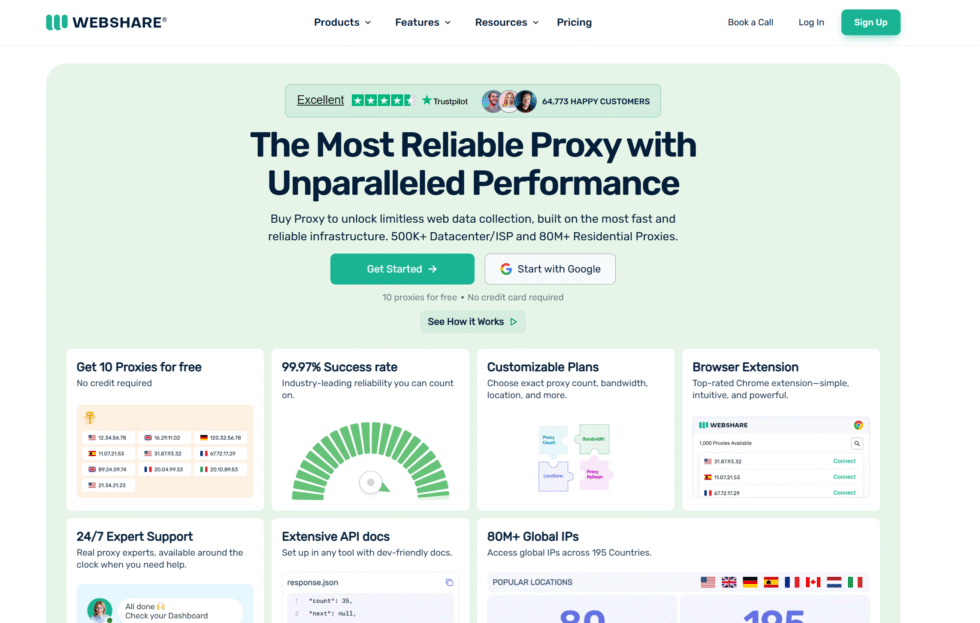
Webshare is a self-serve static residential option for teams that want to buy an IP, paste it into a tool, and move on. Shared and dedicated lines are both listed. Optional rotation can be switched on when a task should change identity, then switched off when a login must stay put. That dual mode is useful if one account handles both monitoring and short collection jobs.
A large share of the static pool sits in the United States. Country-level control is the usual limit. Fine city or ASN filters are not the headline. That is enough for nationwide QA and many U.S. public page checks. It is weaker when a test must match a named carrier or a single metro.
The checkout flow is fast. Extra add-ons can stack if you turn on every upgrade in the panel. Keep the plan close to the static IP itself if unmetered use is the reason you are here. HTTPS and SOCKS5 cover browsers, scrapers used for approved collection, and desktop tools.
Webshare works well for lean engineering groups that prefer a list they can edit themselves. It is less of a match for desks that need a named account manager and a custom ASN list. Test hold time. Some static products elsewhere advertise months of reservation. Confirm what “static” means on the exact SKU you pick.
Key features
- Shared or dedicated static IPs
- Optional rotation on the same product family
- Fast self-serve checkout
- HTTPS and SOCKS5
- Simple credential lists
Facts and information
- Popular with small technical teams
- Static inventory leans toward U.S. routes
- Best when you want control without a heavy platform
6. IPRoyal
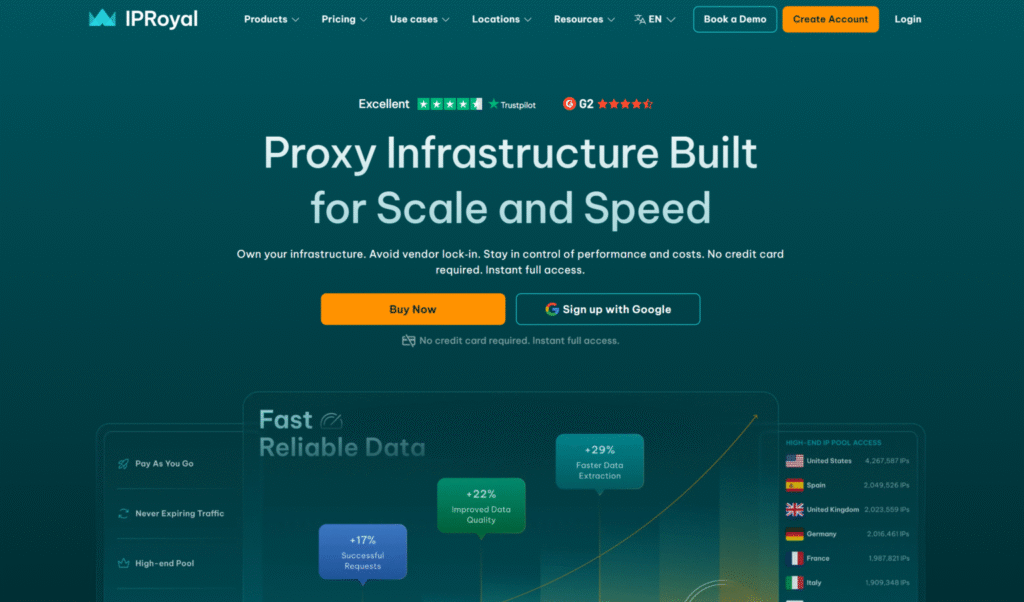
IPRoyal, from Vilnius, Lithuania, sells dedicated static residential IPs and often frames traffic as open once the address is yours. The story is simple. You pick a country, receive an IP, and keep that identity for the assignment. Feature depth is basic: whitelist, protocol, and a held line. That is enough for single-market QA, light research, and repeat visits to the same public pages.
Download speed can feel slower than premium ISP hosts that sit on carrier-grade links. Plans commonly lock one location per assignment, so multi-market work means more separate IPs. That model is clear. It does not scale like a rotating pool with one port and many countries.
IPRoyal is used by operators who want a dedicated address without enterprise paperwork. Docs cover HTTP and SOCKS style connections. Support is available, though the product is not a full data platform. There is no large browser layer or parser suite attached to the static IP.
Use it when the job is one seat, one market, and unmetered movement on that seat. Look elsewhere when you need ASN matching, city filters, or a huge simultaneous allocation. Always verify replacement rules. A dedicated IP only helps while public sites still treat it as a healthy household path.
Key features
- Dedicated static IPs
- Unmetered traffic on many static lines
- Coverage across many countries
- Simple assignment model
- Standard browser and script protocols
Facts and information
- Fits simple, single-market sessions
- Speed is adequate, not class-leading
- Less appeal for multi-market desks that want one pooled endpoint
7. Rayobyte
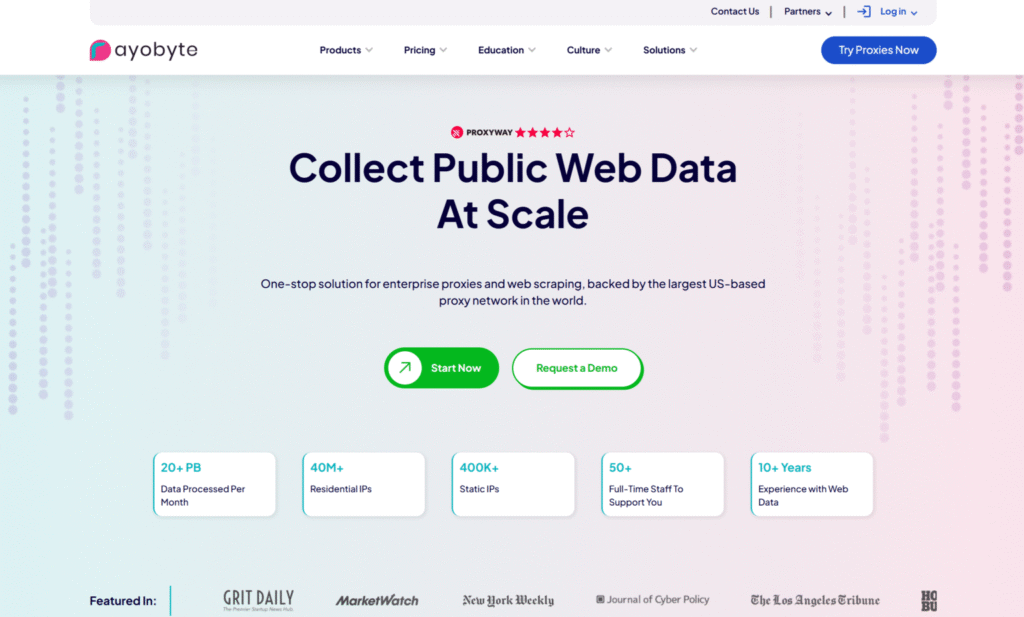
Rayobyte, based in the United States, sells shared and dedicated ISP-style proxies built around major consumer internet brands. That ASN mix is the draw. Sites that trust well-known household carriers often treat these lines as ordinary subscriber traffic. U.S. city filters exist on some routes, which helps location-based testing with residential IPs inside one country.
Sessions are mostly unmetered and hold up for long research windows. That suits ad verification, price monitoring, and market research that repeats the same path. The country list is short next to global rotating networks. If your work spans many markets, you will feel that limit quickly. Per-IP allocation can also feel tight when you want a wide spread of addresses rather than a few strong ones.
The product style is raw infrastructure. You get endpoints, protocols, and allocation controls, not a giant app marketplace. HTTP and SOCKS cover common collectors and browsers. Support is used to talking with operators who already know what an ISP proxy is.
Rayobyte is a fit for U.S.-centric desks that care about carrier brand and uptime. It is a weaker fit for worldwide coverage from one SKU. Ask which consumer ISNs sit in your batch and how a tired address is replaced. Then run the login and the heavy page-load test on the same IP.
Key features
- Shared or dedicated ISP IPs
- U.S. city filters on selected routes
- Major consumer ISP brands
- Mostly unmetered session style
- HTTP and SOCKS support
Facts and information
- Strong when the work is U.S.-centric
- Location menu is smaller than global pools
- Built for operators who want raw IPs, not a huge app suite
8. SOAX
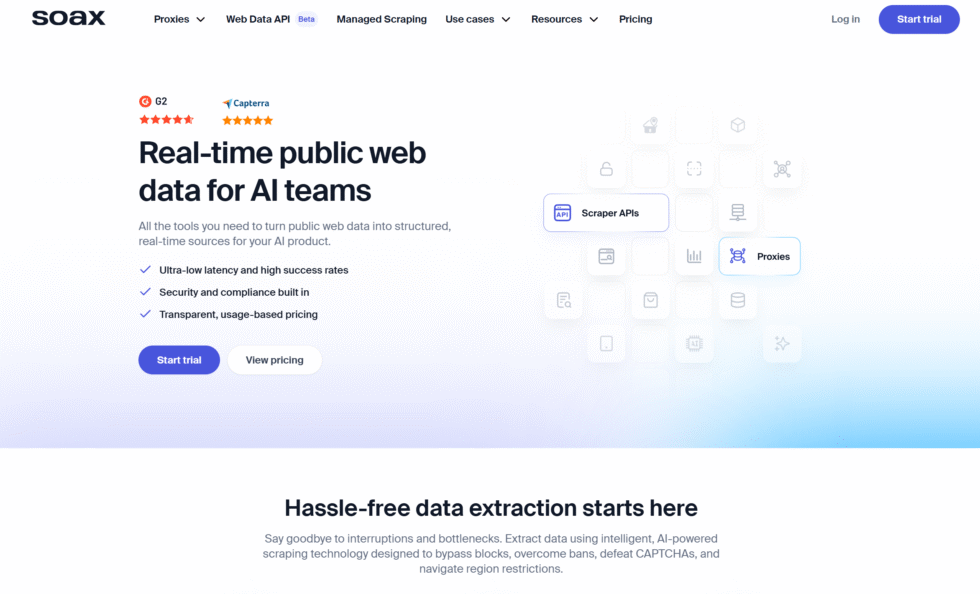
SOAX mixes ISP and residential products in one catalog. City, state, and ASN filters appear on many plans, which is the reason teams put it on a static shortlist even when they also buy rotation. You can hold a sticky window when a workflow needs the same address, then let the pool move when the next job should look new.
The network is used for market research and location-based testing with residential IPs. Static inventory is still the scarce piece. Rotating peers are easier to scale. If your project must reserve many private ISP addresses, confirm stock before you design the workflow around it.
The control panel has more knobs than a basic IP shop. That helps once you know what you want. It can slow a first-time user who only needed a single dedicated line. Traffic rules also change by product line. Unmetered use is not automatic on every SKU. Read the ISP or static plan, not the rotating GB plan.
SOAX fits teams that will tune filters and session length. It is extra product if you only need one held IP and a whitelist. HTTPS and SOCKS endpoints cover scripts and browsers. Support can help map ASN choices to a target site’s expectations. A short pilot on your real destinations is still the right gate.
Key features
- ISP plus residential options
- City, state, and ASN filters
- Adjustable sticky windows
- One catalog for static and rotating work
- Standard protocol endpoints
Facts and information
- Helpful when ASN matching matters
- Static capacity is the tighter resource
- Better for teams that will tune filters, not just paste an endpoint
9. Decodo
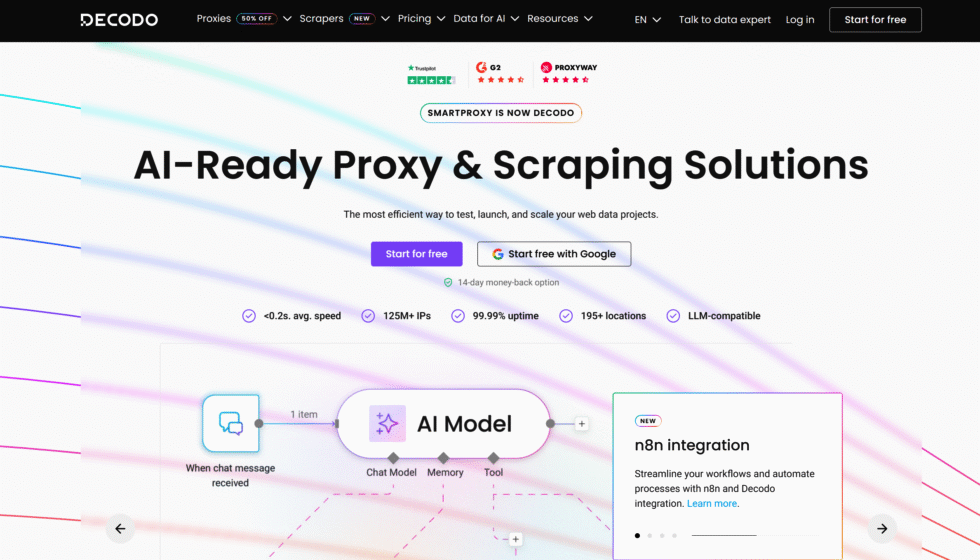
Decodo, previously sold as Smartproxy and based in Lithuania, is a common shortlist name for static residential and ISP-style IPs. The product is built for teams that want a fixed home-like address without standing up a full enterprise stack. You can take a shared line for lighter QA or a dedicated line when one workflow should own the identity. The dashboard is self-serve, so adding an endpoint, setting a sticky window, and copying credentials does not need a sales call.
Static coverage is smaller than Decodo’s rotating residential pool. Many static plans stop at country-level selection. City and ASN filters that exist on rotating products are not always present on the static SKU. That is fine for nationwide checks. It is weaker when a test must match a specific carrier brand.
Speed is steady for browser work, scripts, and monitoring jobs. Some operators describe response time as average next to premium ISP hosts that sit closer to major exchanges. HTTPS and SOCKS5 are both documented, which keeps browsers and collectors on one account. An API issues and recycles endpoints, so developers can treat the pool like inventory instead of a one-off list.
Decodo fits teams that already know the old Smartproxy flow and want a calm static add-on. It is less ideal if you need a huge private ASN menu or street-level precision. Run a live session on your real sites before you assign the IP to a long login.
Key features
- Shared or dedicated static IPs
- Self-serve dashboard and API
- Sticky sessions for longer holds
- HTTPS and SOCKS5
- Familiar control panel for former Smartproxy users
Facts and information
- Strong for simple research, QA, and public page checks
- Static location depth is narrower than the rotating network
- Better as a daily driver than as a rare-ASN specialist
10. Infatica
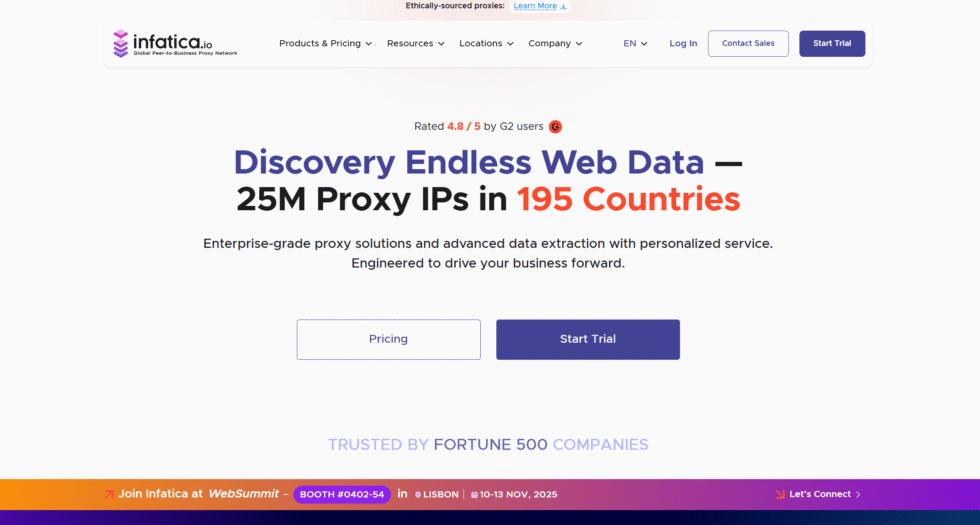
Infatica sells ethically marketed residential and ISP endpoints with sticky and static options. Peer routes and ISP routes both appear in the catalog, so a team can keep a fixed line for logins and a rotating line for wider public data collection. The sourcing story is part of the sale. Procurement teams that ask where IPs come from often put Infatica on the list for that reason.
Static counts are smaller than the rotating peer pool. Treat reserved ISP addresses as limited inventory, not an endless rack. Some routes are better for research page views than for heavy file movement. If your workflow pulls a lot of media, test throughput on the exact static product, not on a rotating port.
Support is available and used to hybrid setups. The product story is broader than a pure unmetered static shop. You may be offered several endpoint types before you land on the one that holds an address. Write the requirement down first: dedicated or shared, how long the hold lasts, and what happens when the IP needs a replacement.
Infatica is useful when origin policy and mixed products matter. It is a slower path when you only want a price-style IP list. Run location-based testing with residential IPs you actually need, and keep sticky length in writing so the session does not expire mid-task.
Key features
- ISP and residential mix
- Sticky and static session modes
- Ethics-focused sourcing story
- One vendor for held and rotating work
- Support for hybrid setups
Facts and information
- Useful when procurement asks about IP origin
- Static supply is the scarce piece
- Works best when paired with clear session rules
11. DataImpulse
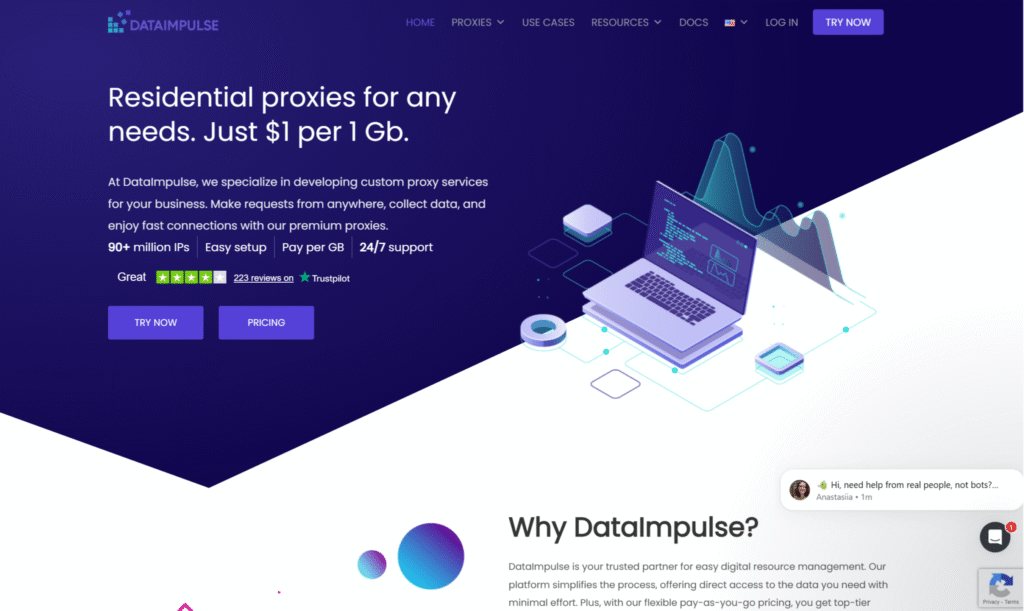
DataImpulse offers residential and ISP access with unmetered options on selected plans. The product is presented as a straightforward pool: pick a type, set a session, point your tool at an endpoint. That low-friction style appeals to teams that already know how to collect public web data for approved business use cases and do not want a large platform.
Targeting tools are more limited than the largest platforms. Country picks are the usual control. Fine ASN or city filters may be thin or absent, depending on the SKU. The brand is newer on many buyer shortlists, so independent write-ups are thinner than for long-running ISP vendors. That makes a live test more important than a feature table.
Protocol support covers the usual HTTP and SOCKS paths. Unmetered language applies only to some plans, so match the SKU to static or ISP use. A rotating metered plan will not behave like a held unmetered IP even if both sit in the same dashboard.
DataImpulse can work as a second source next to a primary static vendor. It is a harder sole choice for reputation-sensitive logins until you have watched an address for a full work week. Ask about hold time, replacement, and whether the IP is dedicated. Then run QA, monitoring, and research workflows on the same line.
Key features
- Residential and ISP pools
- Unmetered options on selected plans
- Straightforward endpoints
- HTTP and SOCKS support
- Simple session settings
Facts and information
- Handy as a backup static source
- Targeting tools are basic
- Best after a live session test on your sites
12. LunaProxy
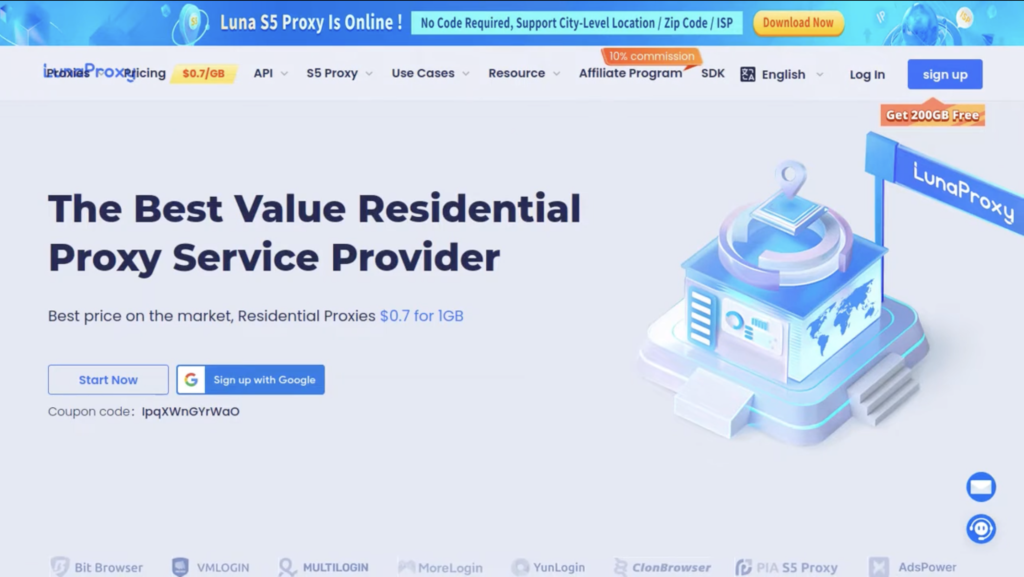
LunaProxy lists static and ISP-style products beside a rotating residential pool. The dashboard covers whitelist, rotation, and location picks, so one login can serve more than one job type. Many plans advertise open traffic once the IP is assigned, which is the detail buyers want in this category. Inventory quality can vary by country batch. An address that looks fine on a lookup still needs a real session test.
Support quality depends on plan tier. Higher seats tend to get faster answers. Lower seats may rely on docs and tickets. Hold time is the other variable. Some static products mean “does not rotate every request.” Others mean “this IP is reserved for you.” Those are not the same promise. Get the reservation window in writing.
HTTP and SOCKS5 are available for browsers and scripts. The panel is easy to try, which helps small teams start. Serious desks should still map replacement policy, concurrency, and whether the line is shared. A shared static IP can be fine for light public page checks. It is a poor fit for a long login that must look like one household.
LunaProxy fits teams that want one panel for several proxy types. It is less convincing as a premium dedicated ISP specialist. Use it after a pilot that includes both a quiet login and a heavier approved collection pass on the same address.
Key features
- Static and ISP product lines
- Dashboard whitelist and rotation controls
- HTTP and SOCKS5
- Open traffic claims on many assignments
- Mixed rotating and static catalog
Facts and information
- Fits teams that want one panel for several proxy types
- Hold time and replacement rules need a close read
- A live test on your workflow is the real filter
13. Proxy-Seller
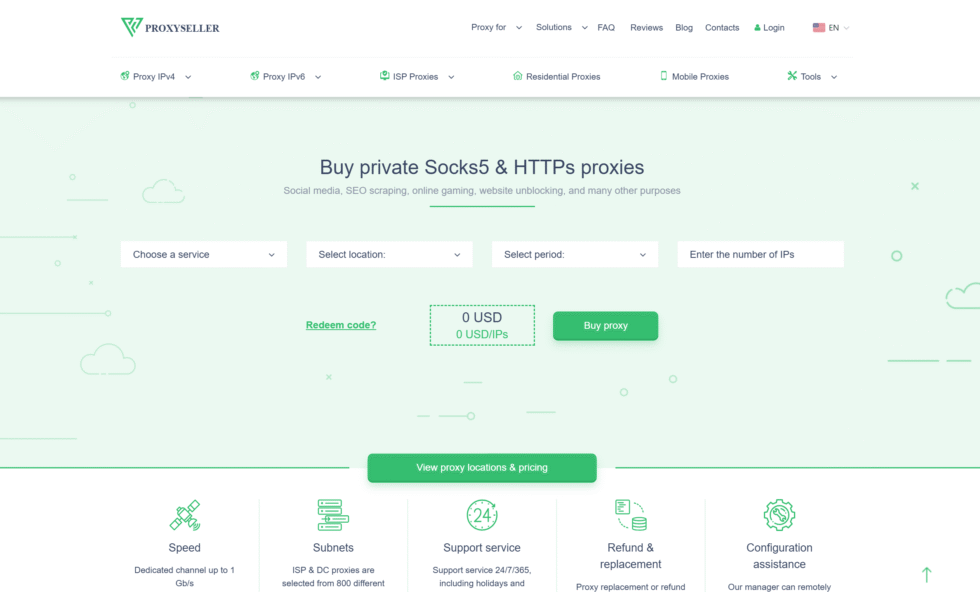
Proxy-Seller sells dedicated residential and ISP-style IPs in a self-serve style. You can often buy a small count of addresses instead of a large package, which helps when a project only needs a few held seats. Coverage spans many countries, though depth is uneven. Some markets have ready stock. Others take a request.
The product is an IP list more than a platform. That keeps setup short. It also means you bring your own monitoring. There is less built-in analytics, user hierarchy, or browser tooling than at the largest vendors. HTTP and SOCKS5 are the usual connect methods. Traffic and concurrency limits are often loose on static assignments, which is why the vendor appears in unmetered shortlists.
Usability can feel dated next to newer dashboards. Enterprise buyers who need SSO, audit logs, and named success managers may look past it. Independent operators who want a dedicated address and will test it themselves may not mind.
Proxy-Seller is a practical source for extra static IPs in markets your primary vendor does not hold. It is not the first pick for a global, policy-heavy rollout. Confirm whether the IP is exclusive, how long it stays assigned, and what a replacement looks like if public sites stop treating it as a healthy home path.
Key features
- Dedicated IPs sold in small counts
- Many country options
- HTTP and SOCKS5
- Loose traffic and concurrency on many static lines
- List-style delivery
Facts and information
- Useful when you only need a few reserved addresses
- Dashboard and tooling are basic
- Quality depends on the specific country batch you receive
14. Massive

Massive is known for ISP and residential infrastructure with a strong U.S. footprint, including routes that sit near major internet hubs. That placement can help when the work talks to large American platforms and you want short paths plus a consumer ASN. Download speed is a frequent reason teams try the ISP lines.
The pool is more limited than a worldwide rotating network. Many of the most discussed static routes are U.S. only. Subscription flexibility is narrower than self-serve shops that let you add a single IP at a time. If your team needs mixed countries from one contract, this will feel tight.
The infrastructure story is the strength. Hardware and transit are built for sustained movement, which matches unmetered static use better than a peer device on home Wi-Fi. Protocols cover standard HTTP and SOCKS clients. Support is used to performance questions, not only to “how do I enable a port.”
Massive fits U.S. research, QA, and approved collection that needs both reputation and throughput. It is the wrong sole vendor for a multi-country program. Ask which hub your IP sits in, whether the line is dedicated, and how long it is reserved. Then run a long session that actually moves pages and files, not a one-line IP check.
Key features
- ISP-style U.S. routes
- Hub-oriented infrastructure
- Strong throughput on many lines
- Standard protocol support
- Focus on sustained sessions
Facts and information
- Best when the work is U.S.-centered
- Location spread is limited
- Plan structure is less flexible than small self-serve shops
Dedicated, Shared, And Semi-Dedicated Static Residential IPs
Not every static IP is private. Dedicated lines belong to one customer. That is the usual pick for logins, brand protection checks, and any workflow where the same identity must look familiar day after day.
Shared static IPs are used by more than one customer at once. They cost less attention to allocate and still help with light public page checks. They are a weaker fit when a site scores reputation per address.
Semi-dedicated lines sit in the middle. A few customers share the IP. You get more stability than a busy shared address, without locking a fully private line.
Unmetered billing can apply to any of those three. The sharing model changes reputation. The bandwidth model changes how hard you can work the line. For account-style QA, dedicated plus unmetered is the clean pairing. For simple e-commerce proxy, a lightly shared static IP can be enough.
| Line type | Who uses the IP | Session feel | Usual fit |
| Dedicated static | One team | Most stable identity | Logins, long QA, sensitive research |
| Semi-dedicated static | A few teams | Steady, with some neighbor noise | Mixed research and monitoring |
| Shared static | Many teams | Least isolated | Light public page checks |
| Rotating residential | Pool, address changes | Fresh identity often | High-volume public data collection |
Why Unmetered Traffic Matters For Long-Lived Residential Sessions
A fixed IP only solves half the job. The other half is how you pay for movement. Metered residential proxies charge as pages, images, and files cross the wire. A quiet login is cheap. A day of public web data collection, screenshot checks, or catalog reads is not.
Unmetered static lines flip that. You reserve the address. Then you use it. That is why this format shows up in ad verification, price monitoring, market research, and location-based testing with residential IPs. The session can stay open. The traffic can spike after lunch. The identity does not reset because a GB cap got close.
This is also why some teams keep two products. A rotating pool handles wide crawls. A static unmetered line handles the seat that must look like the same person. Enterprise proxy setups often keep both on purpose.
Session Persistence, Sticky Control, And IP Replacement Policies
Ask three questions before you keep an IP.
How long will this address stay mine? Some ISP products hold a line for a work shift. Others hold it for months. “Static” on a sales page can mean either one.
What happens if the IP goes bad? Clean vendors replace a dead or stained address. Weak vendors leave you holding a line that public sites no longer trust. Replacement speed matters more than pool slogans.
Can I pin, then release? Good high quality proxies let you freeze an IP for a login, then send it back when the project ends. That is different from a rotating sticky window that expires on a timer you do not control.
ResiProx session tools cover sticky holds and rotation on the same residential account, which keeps that choice inside one login. If the work later needs a phone-network path, mobile proxies sit next to it without a new vendor story.
FAQ
What Makes A Static Residential Proxy Different From A Sticky Rotating IP?
A static residential proxy is assigned as your address for the plan window. A sticky rotating IP is borrowed from a pool for a short hold, then given back. Both can look like home users on residential proxies. Only the static line is meant to be the same person tomorrow morning. Sticky windows help a single checkout test. Static unmetered lines help when the same seat must come back all week.
Who Should Use Unlimited Bandwidth On A Static Residential IP?
Teams that stay logged in and still move a lot of public pages. That includes ad verification walks, price monitoring, market research, QA on the same account, and approved public data collection that repeats the same path. If every request should look new, rotating residential proxies are the better shape. If the request should look like the same household, keep the IP and stop watching a GB counter.
Can I Run HTTP And SOCKS5 On The Same Static Plan?
Many residential proxy setups expose HTTPS proxy and SOCKS5 proxy from one account. HTTP-style endpoints fit browsers and simple scripts. SOCKS5 fits tools that want a lower-level tunnel, including some SOCKS5 mobile style workflows. Protocol support does not change whether the IP is dedicated or shared. It only changes how your software connects.
How Do I Judge Quality Without A Traffic Meter?
Look at hold time, replacement policy, ASN brand, and how the IP behaves on your real sites. Run location-based testing with residential IPs you actually need. Check whether the vendor can isolate a private residential proxy line. Read how support handles a stained address. A quiet test week on one workflow tells you more than a pool size claim.
Should I Pick Dedicated, Shared, Or Semi-Dedicated For Long Sessions?
Dedicated static residential proxy IPs belong to one team and fit logins, multi-account QA, and brand protection checks that need a familiar identity. Shared static IPs are used by more than one customer and suit lighter public page checks. Semi-dedicated lines sit in the middle, with fewer neighbors than a busy shared address. Unmetered billing can apply to any of the three. The sharing model changes reputation. The bandwidth model changes how hard you can work the line.
Read Also:
- Top 30 Best Static Residential Proxies in 2026
- Rotating Vs Static Residential Proxies
- Sticky Proxy vs Rotating Proxy
- ISP vs. Datacenter Proxies: Key Differences, Pros & Which to Choose in 2026
- Top 10 Best Private Residential Proxies in 2026
Discover the Best Static Residential Proxies Unlimited Bandwidth in 2026 – ResiProx.