The best private mobile proxies in USA route traffic through real carrier networks so sites see ordinary phone traffic. Private mobile exits keep a stable US session for ad verification, price monitoring, and public data collection on Verizon, AT&T, and T-Mobile routes. Sticky proxy sessions help logins and multi-step checks stay on one exit.
Discover the Best Private Mobile Proxies in USA in 2026 – ResiProx.
- Why US Carrier IPs Earn Higher Trust Than Home Broadband Or Server Addresses
- What Private Mobile Proxies Mean On American Networks
- Best Private Mobile Proxies in USA
- How To Confirm Real US Mobile Carriers Instead Of Relabeled Home IPs
- How To Test Private USA Mobile Proxies On Your Real Target
- Common Mistakes When Buying Private Mobile Proxies In The USA
- FAQ
- What Makes A Private Mobile Proxy Different From A Shared Rotating Pool?
- Which US Carriers Should I Match For App And Ad Checks?
- Should I Use Rotating Or Sticky Sessions For Private USA Mobile Work?
- Are Private Mobile Proxies Legal To Use In The United States?
- When Do Private USA Mobile Proxies Fit Better Than Residential IPs?
- Read Also:
Why US Carrier IPs Earn Higher Trust Than Home Broadband Or Server Addresses

The best private mobile proxies in USA leave through cellular carriers, not home Wi-Fi and not a hosting rack. US networks often place many phone users behind one public address. Platforms treat that shared carrier path with more care, because a hard filter can hit real subscribers on the same route.
That is why mobile exits help on phone-first work. In-app ads, carrier checks, and mobile search layouts look different from desktop views. A 4G LTE mobile proxy or a 5G mobile proxy matches the path a handset already uses. Home broadband still helps many desktop pages. Server IPs stay fast for light checks. Private mobile is the better fit when the target expects a phone on Verizon, AT&T, or T-Mobile.
What Private Mobile Proxies Mean On American Networks
“Private” does not mean every mobile plan is exclusive. It describes how the exit is assigned.
- Rotating mobile proxy hands you a new carrier IP per request or on a short timer. It fits broad public data collection and ad sampling across cities.
- Sticky mobile holds the same carrier IP for a set window. It fits logins, carts, and multi-step QA.
- Dedicated or private ports reserve a gateway, modem, or SIM-backed route for one team. The carrier may still refresh the public address, but you do not share that port with another buyer.
Many teams mix modes. They rotate for listing pages, then stick for a form. They reserve a private port for a long-running research profile. Dedicated mobile proxies sit on that last model.
Best Private Mobile Proxies in USA
1. ResiProx – Best Private Mobile Proxies in USA
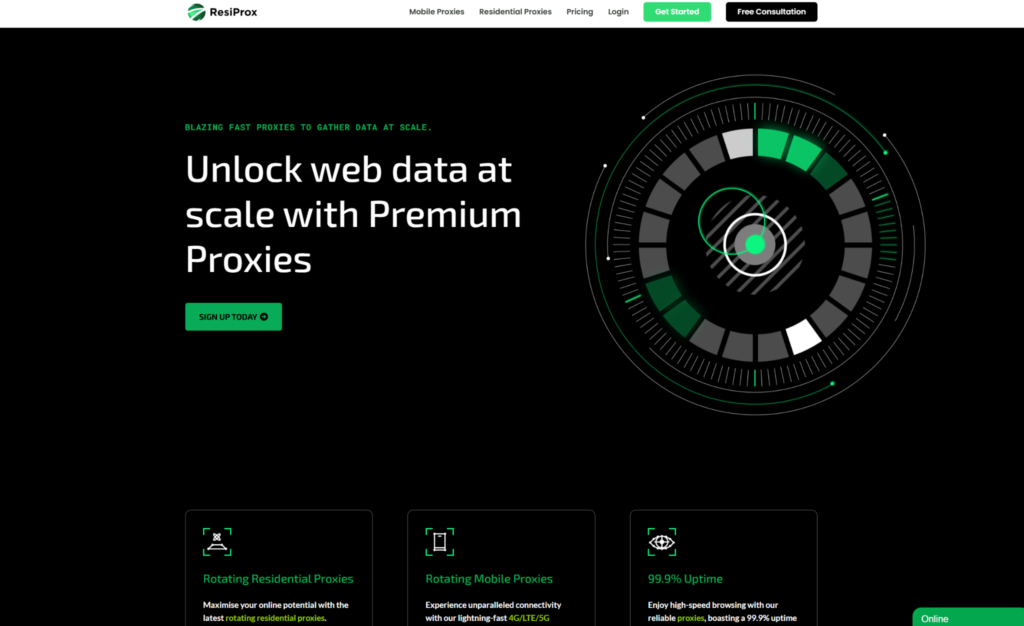
Private mobile proxies in the USA from ResiProx run on real 3G, 4G, LTE, and 5G carrier paths with HTTP proxy, HTTPS proxy, and SOCKS5 proxy. You can keep rotating sessions or sticky sessions, filter by country, city, state, ZIP, carrier, and ASN, and run many concurrent connections on the same plan. The United States inventory is large, replies stay quick, and human support is available all day.
Resiprox Premium Proxies – Unlock the Web with Power and Precision
Introducing Resiprox, the ultimate proxy solution designed to supercharge your online operations. With our Residential Proxies and Mobile Proxies, you get unmatched access to web data at scale, robust security, and seamless connectivity all backed by a free trial to experience the difference firsthand.
Product Features
- Rotating Residential Proxies: Harness the power of 10M+ ethically-sourced IPs across 180+ countries. These proxies rotate dynamically to support large-scale public data collection, market research, and workflows that benefit from automatic IP rotation, delivering 99.9% uptime and precise targeting at the country, city, or ZIP code level.
- Rotating Mobile Proxies: Powered by 4G/LTE/5G networks, our mobile proxies offer lightning-fast speeds with <0.3s response times and a 99.9% success rate perfect for real-time applications.
- Global IP Network: Tap into millions of IPs, including 3.5M+ in the US, 1.8M+ in Brazil, 3.1M+ in India, and more, ensuring coverage wherever you need it.
- Advanced Capabilities: Enjoy HTTPS proxy & SOCKS5 proxy support, unlimited concurrent sessions, and flexible rotating or sticky sessions, all wrapped in premium IP quality.
Product Specifications:
- Performance: High-speed browsing with 99.9% uptime and 24/7 expert support.
- Integration: Seamlessly works with Node.js, Python, PHP, Selenium, and more, featuring a dynamic endpoint generator and robust API access.
What It’s Built For:
Resiprox proxies are your all-in-one tool for:
- Public Data Collection: Collect public web data for approved business use cases, market research, and growth insights.
- Price Monitoring: Track prices across regions in real-time.
- Multi-Account Workflows: Run separate QA, monitoring, and research workflows across multiple accounts.
- SEO & Ad Verification: Monitor rankings and verify ads globally.
- Cybersecurity: Protect your brand and test applications securely.
- Specialized Tasks: From high-volume monitoring of limited-release products to travel fare aggregation, Resiprox delivers.
Why Resiprox Stands Out:
This isn’t just a proxy, it’s a game-changer. With comprehensive documentation, multi-platform compatibility, and a team of experts available 24/7, Resiprox ensures your projects run smoothly. Whether you’re a business scaling operations, a researcher gathering data, or a developer testing apps, our proxies adapt to your needs with precision and reliability.
Resiprox Premium Proxies – Your Key to a Smarter, Faster, and More Connected Online World.
Click here to discover our :
2. ProxyEmpire
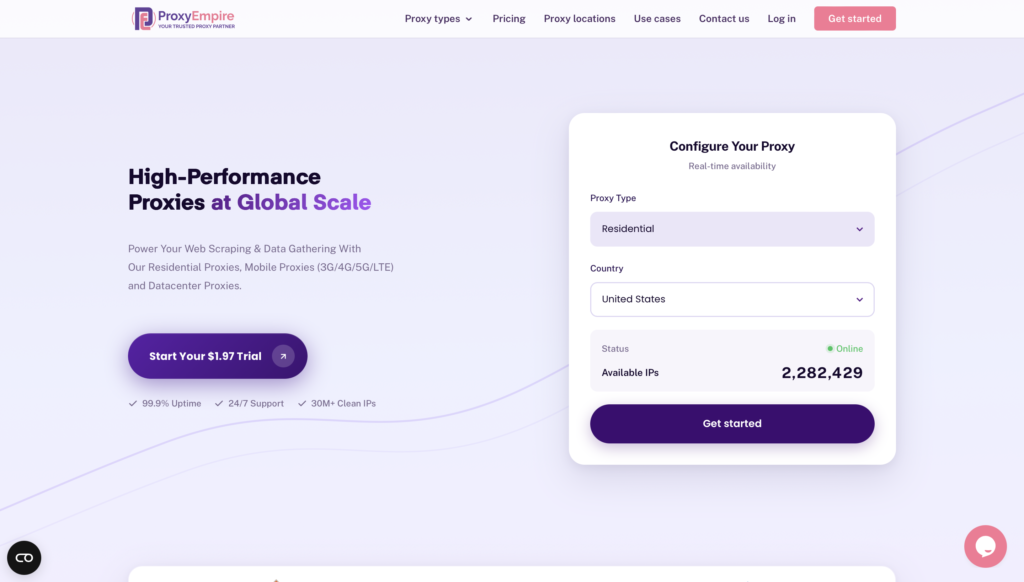
ProxyEmpire is often used for carrier-based mobile routes with city and ISP filters. The network spans many countries and supports 3G, 4G, 5G, and LTE. Rotation is built to look like ordinary phone movement, which helps public data collection and market research that should not sit on one exit all day. Headquarters messaging on vendor pages points to the United States. Tooling is lighter than a full enterprise proxy manager. Buyers who need ZIP-level precision, coordinate filters, or long dedicated SIM control may still need another product beside it. As with any shared pool, local US freshness depends on the city and carrier you request. ProxyEmpire is a mid-market mobile option rather than a private hardware loft. Use it when you want carrier identity and city picks without running your own modems. Hold sticky sessions for logins and forms. Rotate for listing pages and ad sampling. Check a live lookup so the ISP filter you chose still matches the carrier on the wire.
Key features
- Carrier-based mobile IPs
- City and ISP filters
- Multiple mobile generations
- Rotating and sticky options
Facts and Information
- Common pick in mid-market mobile comparisons
- Broad country list
- Dedicated SIM hardware is not the core product
- US city quality should be tested per campaign
3. Oxylabs
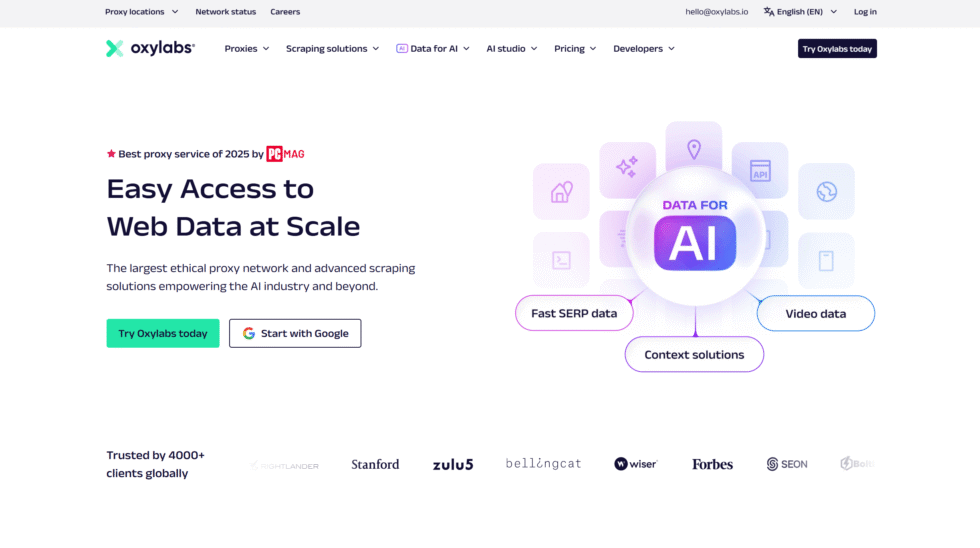
Oxylabs is based in Vilnius, Lithuania and builds mobile access for teams that want a formal dashboard, long sessions, and fine location controls. United States targeting can move from country down to state, city, coordinates, and network number. Traffic can rotate on each request or hold a sticky session for a long window, which helps checkout paths, in-app checks, and other flows that store cookies. HTTP, HTTPS, HTTP/3, and SOCKS5 are supported. The company also sells scraper-style APIs next to raw proxies, so engineering teams can keep collection and proxy control in one place. Reliability and support messaging is aimed at larger pipelines rather than a first weekend test. Onboarding is more formal than a simple self-serve pool. Some buyers only need a few US carrier exits and find the product heavier than that job requires. Coordinate and city filters help location-based testing when a campaign brief names a metro, not just “United States.” As with any shared mobile pool, you should confirm that the exit is a real carrier path in the city you requested, not a home broadband address with a mobile label.
Key features
- Country, state, city, coordinate, and network filters
- Per-request rotation and long sticky sessions
- HTTP, HTTPS, HTTP/3, and SOCKS5
- High concurrent session support and API tooling
Facts and Information
- Built for enterprise collection and ad verification
- Long sticky windows help multi-step public workflows
- Better match for high-volume teams than tiny spot checks
- US city depth should be tested on the real target
4. Decodo
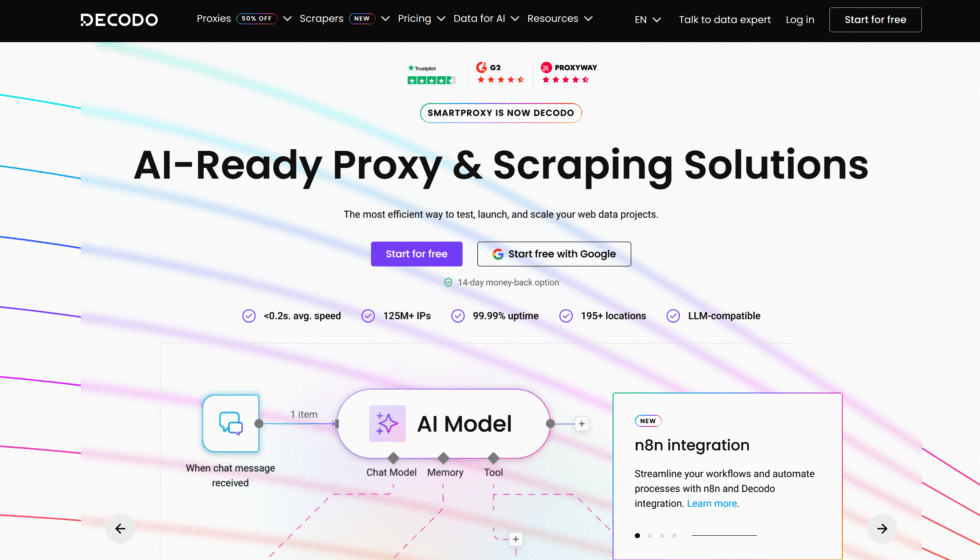
Decodo, formerly Smartproxy and also based in Vilnius, Lithuania, lists mobile routes across many locations and a wide carrier catalog. 4G and 5G are the usual network types. You can rotate on each request or keep a sticky session for a long window over HTTP or SOCKS5. The dashboard is plain, which helps teams that want carrier coverage without learning a heavy proxy manager. That carrier breadth is the reason Decodo shows up in US app and ad QA shortlists. You can sample more than one American network from the same vendor and compare how a page or creative looks on each path. Small plans can feel tighter than volume tiers if your traffic spikes. City and carrier depth still varies by metro, so a New York T-Mobile test does not prove a Dallas Verizon path. Decodo also sells residential and other proxy types, which helps when only some URLs need a phone identity. Run a short proof on the exact US target before you scale. Score complete pages and stable sessions, not a raw success reply.
Key features
- Wide carrier catalog across many locations
- Rotating and long sticky mobile sessions
- HTTP(S) and SOCKS5
- One vendor for mobile and other proxy types
Facts and Information
- Practical mid-market pick for US carrier sampling
- Trial or refund language is published for new users
- Local inventory changes by city and network
- Works well next to residential collection on the same account
5. IPRoyal
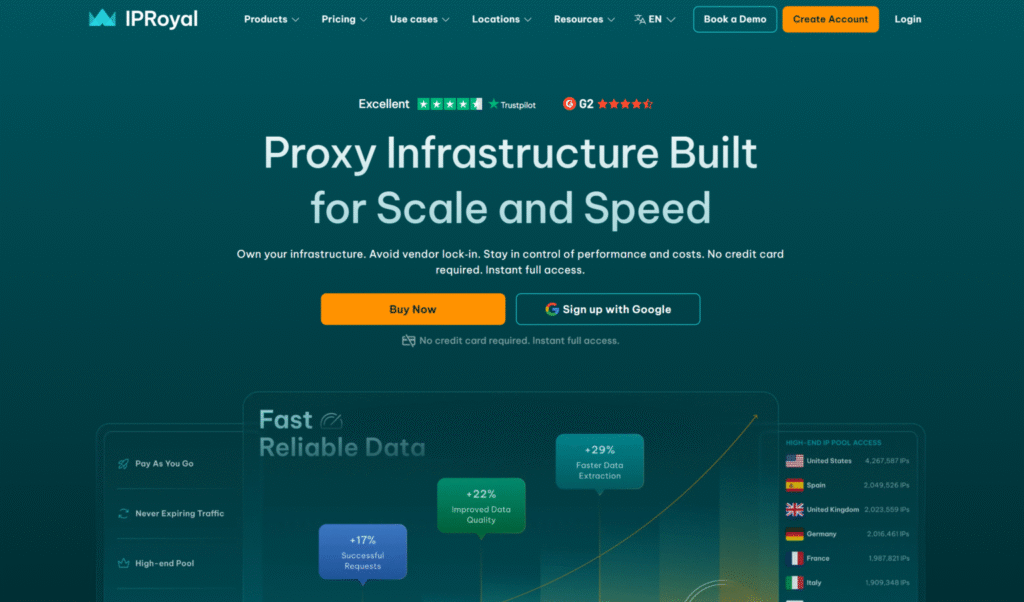
IPRoyal sells rotating mobile traffic and dedicated mobile ports, which is why QA and research teams use it when a profile should not share an exit. The pool is smaller than the biggest global catalogs, but it includes 3G, 4G, LTE, and 5G with named-carrier filters such as Verizon and T-Mobile. Dedicated lines are sold by the day or the month, so one team can keep a port for a campaign window. HTTP and SOCKS5 are supported. Dedicated ports can carry a daily traffic cap, so heavy collection days need a check against that limit. Rotating and dedicated catalogs use different rules, and mixing them without a plan is a common mistake. Rotating mobile fits listing pages, SERP checks, and ad sampling. Dedicated ports fit logins, carts, and longer monitoring. City and carrier filters help when a brief names both a metro and a network. Confirm the lookup still shows a mobile carrier after you connect. A reserved port is only private if the exit stays on a real phone network and is not reused across unrelated jobs on your side.
Key features
- Rotating mobile plus dedicated ports
- Carrier, city, and network-type filters
- HTTP(S) and SOCKS5
- Custom rotation on reserved lines
Facts and Information
- Useful for social QA and longer research sessions
- Dedicated access is port-based, not a giant shared pool
- Daily caps may apply on reserved ports
- Match rotating mode to stateless jobs and dedicated mode to stateful jobs
6. DataImpulse
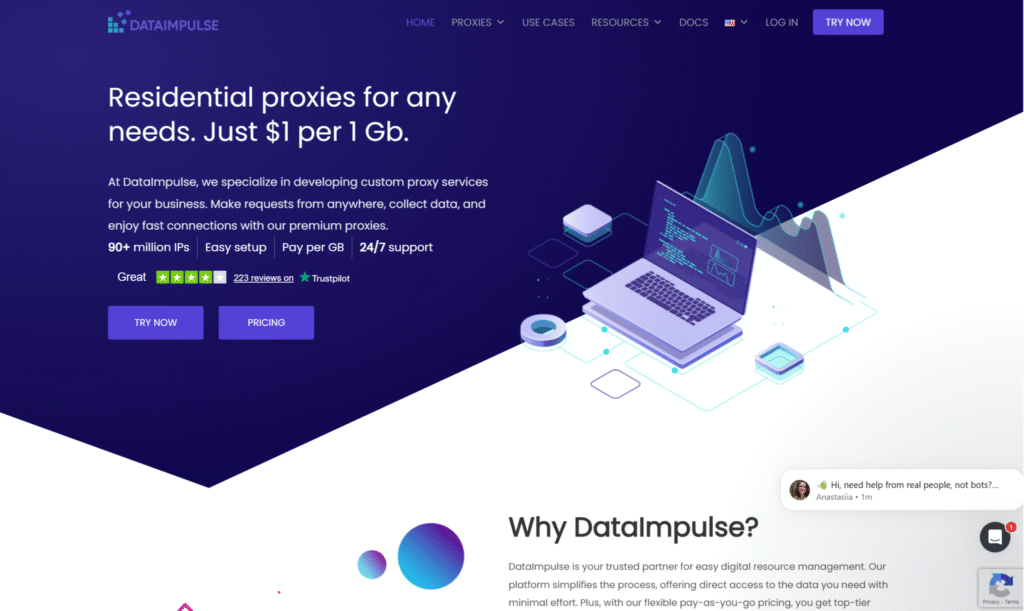
DataImpulse is listed under Softoria LLC in St. Petersburg, Florida. Mobile access is pay-as-you-go on 3G, 4G, LTE, and 5G, with rotating sessions or sticky sessions that can last a couple of hours. Country targeting is included. City, state, ZIP, and network filters exist as add-ons, so a private-style USA workflow should confirm those extras before you treat the headline plan as the full product. HTTP, HTTPS, and SOCKS5 are supported. Traffic does not expire on the published model, which helps irregular projects that pause for weeks. The pool is described as large and spread across many countries, including the United States. Support is staffed around the clock on vendor pages. DataImpulse is easy to start because you buy traffic and point a tool at the endpoint. It is less of a hardware SIM platform than a shared carrier pool with session controls. If your job needs one exclusive modem in a single US city, a dedicated-port vendor is a closer match. If your job needs flexible US mobile traffic for public data collection and market research, this model is simpler.
Key features
- Pay-as-you-go mobile traffic that does not expire
- Rotating and sticky sessions
- HTTP, HTTPS, and SOCKS5
- Optional city, ZIP, and network filters
Facts and Information
- Easy entry for small US tests
- Country targeting is the default
- Sub-country filters may sit behind an add-on
- Better as a shared pool than as a private SIM loft
7. Proxidize
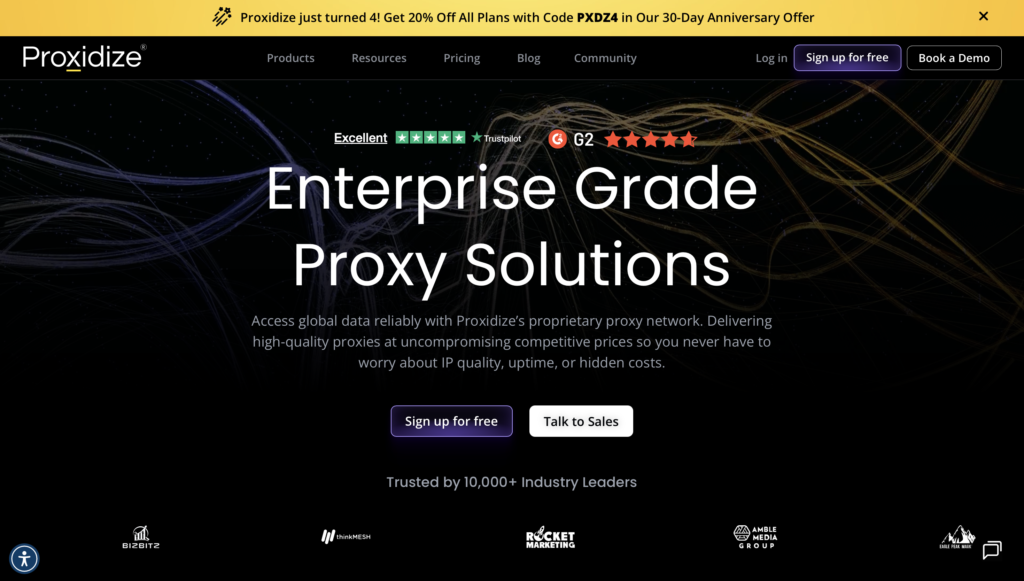
Proxidize is built around private SIM-based 4G and 5G infrastructure, plus hosted mobile plans. That is closer to a true private port than a giant shared pool. You pick carriers in a dashboard and control rotation by hand, by API, or per proxy. Hosted plans also offer city and network filters and sticky sessions that can last hours. The company does not publish a public pool count, which makes paper comparisons harder. Signup includes identity checks. Coverage focuses on selected markets rather than every country, so United States availability should be confirmed for the cities you need. This product fits teams that want ownership of the exit, not just a label that says mobile. Premium research profiles, regulated workflows, and production drops often need that exclusivity because a shared pool can place someone else’s traffic on the same carrier address. Hardware ownership and hosted plans are different buying models. Ask which one you are getting. A hosted traffic plan is not the same as a SIM in a device you control. Test session hold time when the modem reconnects, because carrier refresh can still change the public address.
Key features
- Private SIM or hosted 4G/5G ports
- Manual, timed, and API rotation
- Carrier selection in the dashboard
- Long sticky windows on hosted plans
Facts and Information
- Best known for exclusive ports rather than shared pools
- Useful when one team must own the exit
- Inventory is narrower than global shared networks
- Identity checks and unpublished pool size slow casual comparison
8. Proxy-Seller
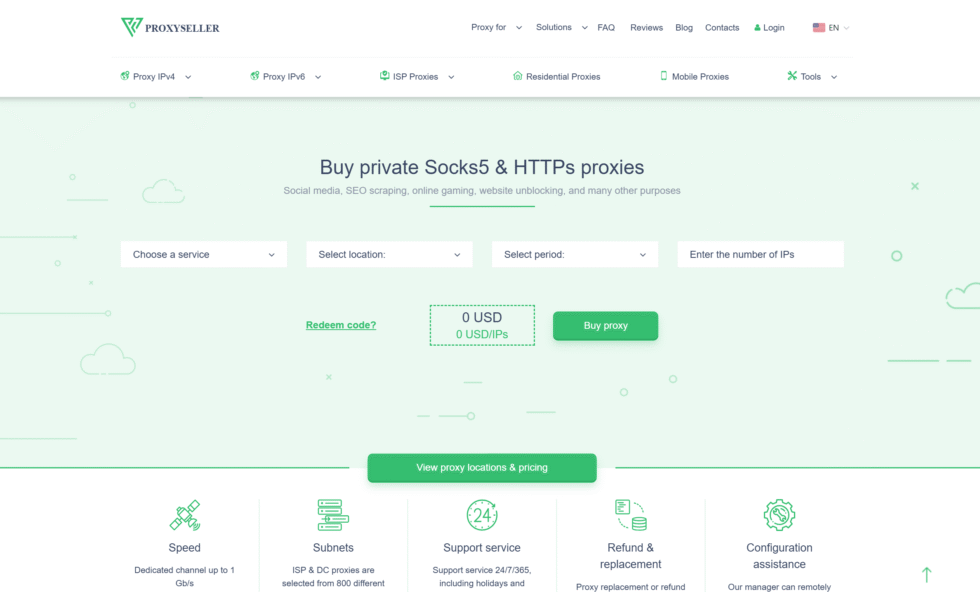
Proxy-Seller sells shared and dedicated 4G, LTE, and 5G access by IP rather than by a giant advertised pool. United States and other markets sit in a smaller country list than global enterprise vendors. You can rotate by hand or on a short timer. HTTP and SOCKS5 are supported. Bandwidth is marketed as open, subject to carrier fair-use rules, so heavy jobs should ask what that cap looks like in writing. There is no standard public trial on mobile. Pool depth is not published. That combination makes Proxy-Seller a simple reserved-address product, not a research platform with deep city analytics. Teams that want one carrier IP for a week and a clear rotation interval often look here. Teams that need ZIP filters across many American metros may need a larger pool vendor. Dedicated and shared lines should not be treated as the same thing. Shared access can still be a real carrier path. It is not private in the exclusive-port sense. Confirm the ASN on connect, pick the rotation interval that matches the workflow, and keep stateful jobs on a dedicated line.
Key features
- Shared or dedicated carrier IPs
- Manual or timed rotation
- HTTP(S) and SOCKS5
- Carrier and location picks in supported countries
Facts and Information
- Simple per-IP model
- Fits teams that want a reserved address
- Country coverage is limited next to global pools
- Fair-use rules can still limit heavy days
9. SOAX
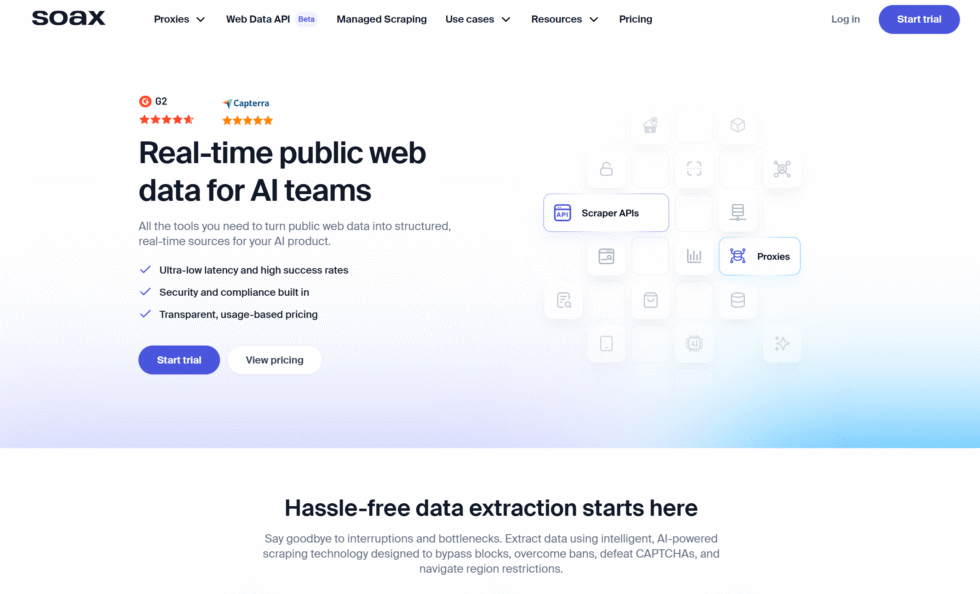
SOAX sells mobile routes on 3G, 4G, LTE, and 5G and lets you pick a named carrier, city, region, or network when the job needs a specific American path. Sessions can change on every request or stay sticky for a limited window, which helps when a login or multi-step form must keep one exit. HTTP, HTTPS, and SOCKS5 are available, and some plans add extra transport options for teams that mix tools. Mobile credits often sit in the same wallet as residential and other proxy types, so one account can shift from phone-like checks to home-broadband collection without opening a second vendor. That shared-credit model is the main reason mid-size data teams look here. The advertised mobile inventory is large and spans many countries, including the United States. Sticky time is shorter than some enterprise dashboards, so long account warm-ups may need a dedicated port elsewhere. Plans lean toward monthly credits rather than a tiny one-off test, which can feel heavy if you only need a short US carrier sample. Carrier labels should still be checked on a live lookup, because a named filter only helps when the exit actually lands on that network.
Key features
- Named carrier, city, region, and network filters
- Rotating sessions and sticky sessions
- HTTP, HTTPS, SOCKS5, and extra protocol options
- Shared credits across mobile and other proxy types
Facts and Information
- Strong fit when one bill must cover phone routes and home-IP work
- Useful for ad verification, price monitoring, and market research
- Sticky windows are measured in minutes, not a full workday
- Live carrier checks still matter in each US city you use
10. The Social Proxy
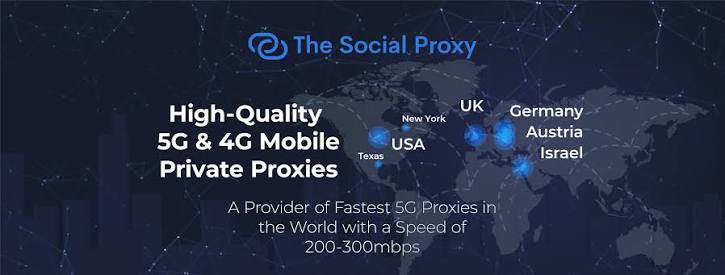
The Social Proxy focuses on 4G and 5G mobile exits for social QA, creative checks, and similar phone-first workflows. Plans lean toward private-style allocation rather than a huge anonymous pool. That can help when each research profile should keep a stable mobile identity for a session. Public documentation on pool size is thinner than enterprise catalogs. Targeting and rotation controls are simpler. Teams that need ZIP, network-number, and coordinate filters across many states may outgrow it. It remains a reasonable match for smaller social and in-app jobs that want a mobile fingerprint and do not need a global data platform. Pair sticky sessions with one profile at a time. Do not bounce that profile across unrelated exits during the same workflow. If the work grows into nationwide ad verification with named carriers in many metros, a larger pool or a dedicated SIM platform is a closer next step. Confirm that the exit still looks like a US carrier on lookup after you connect.
Key features
- 4G and 5G mobile exits
- Private-style allocation
- Social and app QA focus
- HTTP and SOCKS5 on typical plans
Facts and Information
- Built around phone-like sessions
- Less public detail on raw pool size
- Narrower tooling than large data platforms
- Better for focused QA than nationwide collection
11. ProxyGuys
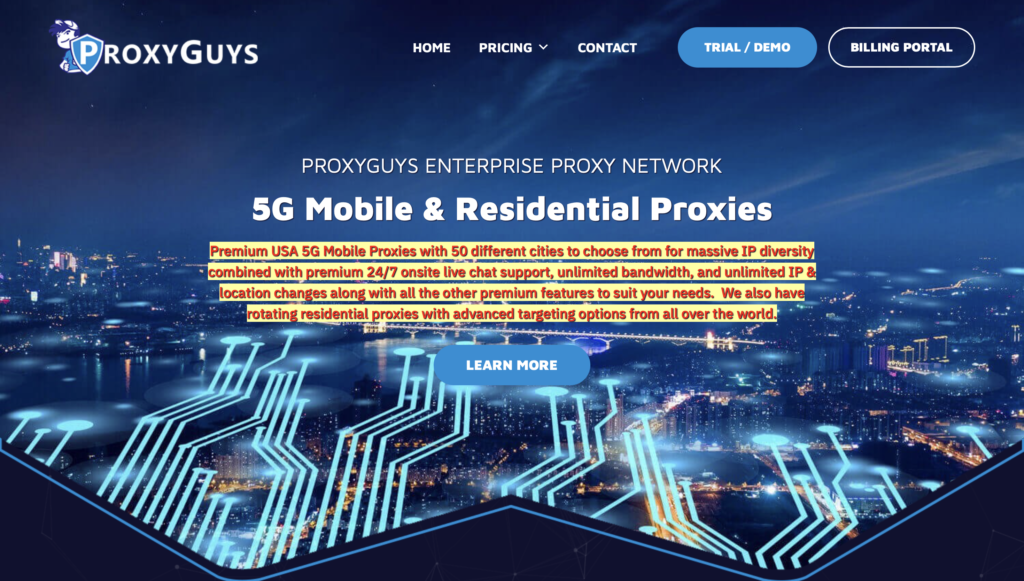
ProxyGuys markets United States 5G mobile proxies for teams that want an American mobile exit without a global shopping list. The pitch is local carrier traffic and simpler plans. That can help US-only ad checks, app QA, and location-based testing when the only market that matters is the United States. The catalog is smaller than vendors that publish worldwide mobile pools. Rotation and sticky controls should be confirmed in the dashboard before you depend on a long session. If you also need other countries on the same invoice, a global mobile vendor is a closer fit. ProxyGuys is a specialist shape, not an all-in-one proxy suite. Ask which carriers appear in the US pool and whether you can pin a session to one of them. A 5G label is not automatically more trusted than 4G. Both are carrier paths. Trust comes from the ASN, the freshness of the exit, and whether the session length matches the job. Test the real target in the city you care about.
Key features
- USA-focused 5G mobile offering
- Carrier-style exits
- Straightforward plan structure
- Phone-network identity for US targets
Facts and Information
- Useful when the only market that matters is the United States
- Less global coverage than enterprise pools
- Session rules vary by plan
- Carrier pinning should be confirmed before a long QA run
12. Infatica
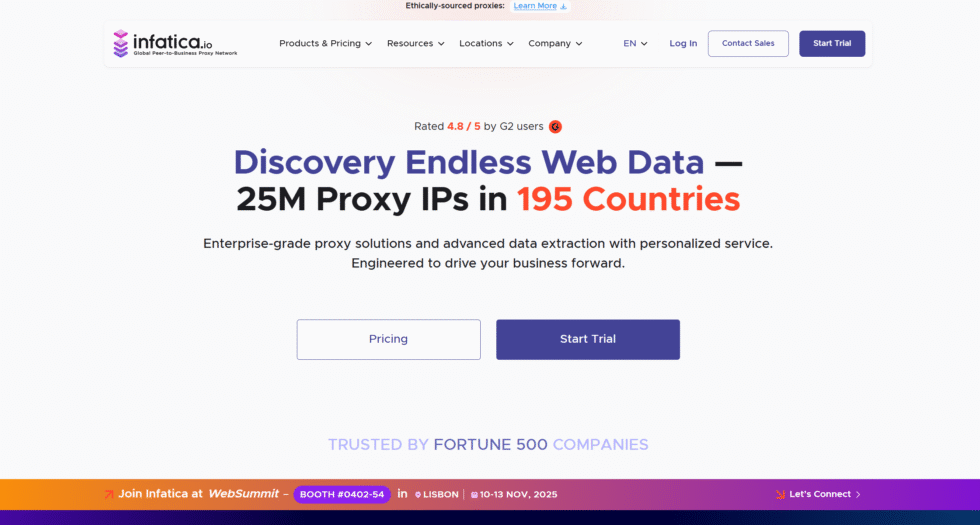
Infatica sells ethically sourced residential and mobile routes with city and carrier filters in many countries. Mobile is part of a wider proxy stack, not a hardware SIM platform. Sticky and rotating modes are available, and documentation is aimed at data teams that collect public web data for approved business use cases. United States coverage exists, but mobile depth should be tested in the exact carrier and city you need. Some buyers use Infatica more for residential collection and only add mobile for phone-first pages. Tooling is capable. Private-port exclusivity is not the headline feature. That makes Infatica a general data vendor with a mobile option, not a private US modem shop. Use rotating mobile for stateless collection. Use sticky mobile when a form or login must keep one exit. Keep residential IPs for desktop research on open sites. If a profile cannot share an exit with anyone, look at a dedicated SIM or reserved-port product instead of assuming a shared ethical pool is private.
Key features
- Mobile plus residential in one vendor
- City and carrier filters
- Rotating and sticky sessions
- Ethical-sourcing messaging
Facts and Information
- Solid general-purpose data vendor
- Mobile is one product among several
- Private SIM ownership is not the main model
- Split phone work and home-IP work by page type
13. Bright Data
Bright Data is an enterprise proxy platform based in Israel and long associated with deep targeting controls, compliance tooling, and a proxy manager. Its mobile network has been described with country, city, ZIP, carrier, and network filters wrapped in audit-friendly workflows. That feature set still matters for procurement-led teams that need named US carriers in named cities. Public comparisons in 2026 also note that mobile proxies were discontinued for new users in April 2026. Existing contracts and remaining inventory may differ from what a new buyer can open today. If you already have access, the manager, logging, and carrier filters remain the draw. If you do not, treat Bright Data as a legacy enterprise option for this category and compare vendors that still sell mobile to new accounts. Do not assume a residential pool in the same dashboard is a substitute for a carrier ASN. Phone-first ad verification and in-app QA still need a real mobile path.
Key features
- Deep city, ZIP, carrier, and network filters on classic mobile plans
- Proxy manager and compliance workflows
- Rotating sessions with advanced controls
- Enterprise contracting and audit trails
Facts and Information
- Strong historic fit for procurement-led teams
- New-user mobile access was pulled in 2026
- Remaining value is tooling and existing inventory
- Confirm current product status before planning a US mobile program
14. ASocks
ASocks publishes mobile network IPs with country, city, and network filters and prices many plans per proxy per month rather than only by traffic. That per-port shape can feel more predictable when you want a set number of mobile exits and a simple invoice. Documentation and onboarding are simpler than enterprise stacks. Rotation is the default model. Long exclusive SIM control is not the core story. The advertised pool covers many locations, including markets used for US work, but local carrier mix should still be checked. ASocks fits mid-market teams that want rotating mobile without learning a proxy manager. It is a weaker match for a reserved modem in one American city. If your workflow is ad sampling and public page collection, rotating exits are enough. If your workflow is a login-heavy research profile, ask how long a session can stick and whether that port is shared. Per-month ports are not automatically private. Ask who else can receive exits from the same gateway.
Key features
- Mobile IPs with country, city, and network filters
- Rotating sessions
- Per-proxy monthly planning on many offers
- Simpler onboarding than enterprise managers
Facts and Information
- Predictable port-style billing for some teams
- Less dedicated hardware control than SIM platforms
- Fine for rotating collection, weaker for exclusive long sessions
- Verify US carrier identity on a live lookup
How To Confirm Real US Mobile Carriers Instead Of Relabeled Home IPs
A private label is not enough. The exit should resolve to a real mobile carrier, not a home ISP wearing a mobile name. For US work, that usually means Verizon, AT&T, T-Mobile, and regional networks that publish mobile ASNs.
Ask three things before you keep a vendor:
- Which US carriers appear on a live lookup for the ports you were given
- Whether city and carrier filters actually land in that metro
- How long a sticky session holds if the handset or modem drops
Proxy location and an IP lookup help you check the path you received. A small, fresh carrier set in the cities you use beats a huge mixed pool that rarely hits the ASN you asked for.
How To Test Private USA Mobile Proxies On Your Real Target
Run the same job on two vendors before you commit. Use the same city, the same carrier, the same concurrency, and the same session length. Score the run on complete pages or complete records, not a raw “OK” reply. Watch how often a challenge page appears, how long the exit stays stable, and whether the session dies when you click through a second or third step.
Then pick the route that gives more finished work for the traffic you spent. A cheap shared pool that retries all day is not cheaper. How to use a proxy on mobile covers device and app setup if your test runs on a phone. Sticky 5G mobile proxies help when the flow has cookies, logins, or a checkout path. 4G mobile proxies remain enough when the brief cares about carrier and city more than peak throughput.
| Workflow | Session style | Why it fits |
| Ad sampling across cities and carriers | Rotating mobile | Fresh exits, no login state |
| Login, cart, or multi-step form | Sticky mobile | Same carrier IP for the full path |
| High-value profile or reserved capacity | Dedicated / private port | One team uses that gateway |
| Desktop research on open sites | Residential | Home broadband is enough |
Common Mistakes When Buying Private Mobile Proxies In The USA
The frequent miss is using rotating exits on a stateful job. A login that jumps across carrier IPs in a few minutes looks unstable to a risk model, even when each IP is a real phone address.
Other misses show up often:
- Buying a global pool when you only need a few US cities
- Skipping carrier checks, then landing on the wrong network for an ad or app test
- Ignoring connection limits, then stalling a job that needed more threads
- Comparing a shared per-traffic plan with a reserved port as if they were the same product
- Skipping a live test on the real target
Match the session to the job. Rotate for breadth. Stick for depth. Reserve a port when that profile cannot share an exit. USA private proxy setups follow the same rule on home IPs when mobile is not required. A mobile proxy service with clear sticky controls is the safer default for phone-first QA.
FAQ
What Makes A Private Mobile Proxy Different From A Shared Rotating Pool?
A shared pool hands out mobile proxies from common carrier inventory, so many workflows can receive exits from that same group over a day. A private or dedicated mobile proxy reserves the gateway, port, or SIM-backed route for one team. The public address can still change when the carrier refreshes it. You are not sharing that port. Use a pool for broad public data collection and ad sampling. Use a private port when one United States research profile must keep a stable phone path.
Which US Carriers Should I Match For App And Ad Checks?
Match the network your users or your campaign brief already use. National checks often need Verizon, AT&T, and T-Mobile. Regional work may need a local carrier in that state. USA mobile proxy paths can show different app layouts, ads, and landing pages by carrier and city, so one random American mobile IP is not a full test. Run the same creative on each network you care about. A live IP lookup helps confirm the exit is still that carrier after you connect.
Should I Use Rotating Or Sticky Sessions For Private USA Mobile Work?
Rotating sessions fit listing pages, ad sampling, and other stateless market research where you do not need to keep cookies. Sticky sessions fit logins, carts, and multi-step QA because the same carrier IP stays in place for the window you set. Dedicated ports help when that profile cannot share an exit. Keep one session style per workflow.
Are Private Mobile Proxies Legal To Use In The United States?
The technology is lawful in most US business settings. What you do with it still has to follow the site terms, local law, and data rules. Stay on public pages, keep a lawful basis if you handle personal data, and pick vendors that can explain consent-based sourcing. A carrier IP only changes the network path. It does not grant extra permission. The same standard applies to residential proxies and to USA proxy routes used beside mobile exits.
When Do Private USA Mobile Proxies Fit Better Than Residential IPs?
Private US mobile fits when the target expects phone traffic on a carrier path, such as in-app ads, carrier QA, mobile search layouts, and sticky phone sessions. Residential proxies still fit many desktop pages, price monitoring on open sites, and longer home-broadband sessions. 4G LTE mobile proxies and 5G mobile proxies are not automatically better on every URL. They are better when the page or app treats a cellular ASN as the normal visitor. Choose by the identity the target already sees, not by the product name alone.
Read Also:
- Top 15 Best USA Mobile Proxy in 2026
- Best USA Private Proxy
- Top 19 Best Dedicated Mobile Proxies in 2026
- What Are Mobile Proxies? (2026 Updated Guide)
- How to Use Proxy in Mobile
Discover the Best Private Mobile Proxies in USA in 2026 – ResiProx.