
Teams that need real carrier traffic in the United States often search for the best 4G USA mobile proxies. These 4G USA mobile proxy IPs sit on major carrier networks and help with ad verification, app checks, and public data collection. ResiProx 4G mobile proxies route that traffic through live 4G, LTE, and 5G paths.
Discover the Best 4G USA Mobile Proxies in 2026 – ResiProx.
Why Real US Carrier IPs Carry Higher Trust

The best 4G USA mobile proxies do not look like home broadband or server traffic. They leave through IPs that mobile carriers assign to phones on 4G, LTE, and 5G links. Verizon, AT&T, and T-Mobile style paths sit behind carrier-grade NAT. Many real phone users can share one public address. Platforms treat that pattern as normal phone traffic, so the same public page often loads the mobile layout, the mobile ad unit, and the mobile offer.
That is the whole point of a US 4G path. Residential proxies still help when you need a home ISP identity. A mobile proxy exit is the better match when the target checks for a carrier ASN, a phone-like route, or a city that lines up with a live US network. Pair that with country, city, carrier, and ASN filters from the proxy locations page when the job needs a specific American market.
A useful 4G USA proxy is not a label on a random IP. It should resolve to a real mobile carrier, stay fresh, and let you hold or rotate the session on purpose. HTTP proxy, HTTPS proxy, and SOCKS5 proxy cover most browsers, scripts, and proxy integrations. Sticky time matters for logins and multi-step checks. Rotation matters for wide public collection. Dedicated 4G proxy or private SIM ports matter when one workflow cannot share an exit with anyone else.
How We Ranked These 4G USA Mobile Proxy Providers
This list follows the same checks serious buyers use for 4G mobile proxies, not a pool-size contest.
- Real carrier identity, not a home IP wearing a mobile name
- US coverage that can reach major carriers and many cities
- Rotation you can set, plus sticky sessions for work that has state
- A dedicated or private option when a shared pool is the wrong fit
- HTTP, HTTPS, and SOCKS5
- Clear docs, API or endpoint tools, and human support
- Sourcing language that matches approved public-data use
Headline catalog size does not decide rank. A smaller, clean US mobile pool can beat a huge pool that already looks tired on strict apps. Session control, carrier filters, and how the IP actually behaves on US mobile pages matter more.
Best 4G USA Mobile Proxies
1. ResiProx – Best 4G USA Mobile Proxies
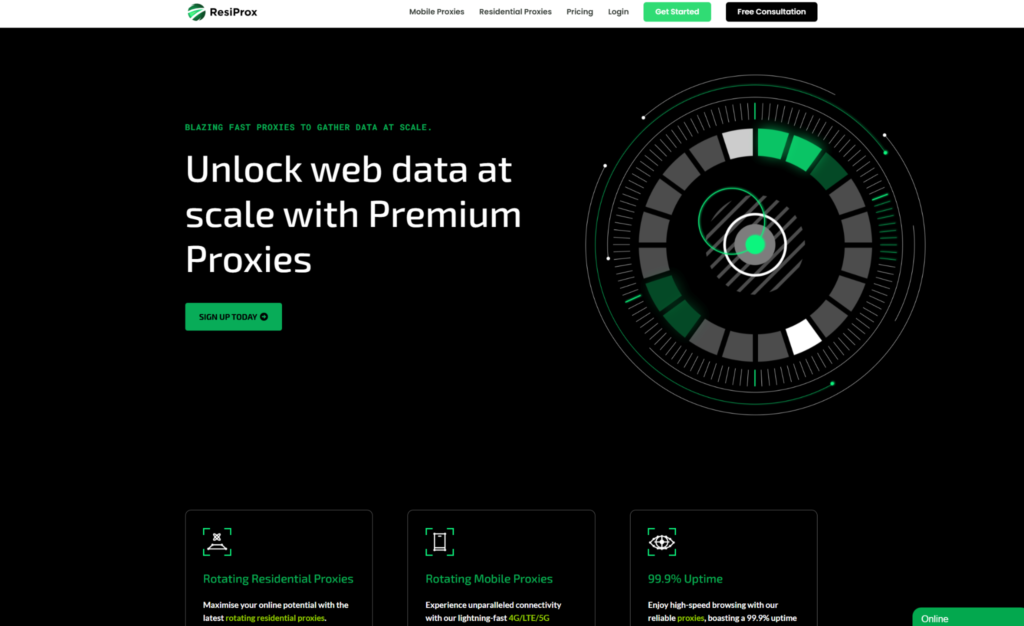
4G USA mobile proxies from ResiProx put your traffic on real 3G, 4G, LTE, and 5G carrier paths, with a large United States share inside a wider global pool. You can pick rotating or sticky sessions, then filter by country, state, city, coordinate, ASN, and carrier. HTTP, HTTPS, and SOCKS5 work with Python, Node.js, PHP, Selenium, Playwright, Puppeteer, and popular antidetect browsers. A dynamic endpoint generator and API keep setup short for research teams that already run mixed mobile and home-ISP jobs.
Resiprox Premium Proxies – Unlock the Web with Power and Precision
Introducing Resiprox, the ultimate proxy solution designed to supercharge your online operations. With our Residential Proxies and Mobile Proxies, you get unmatched access to web data at scale, robust security, and seamless connectivity all backed by a free trial to experience the difference firsthand.
Product Features
- Rotating Residential Proxies: Harness the power of 10M+ ethically-sourced IPs across 180+ countries. These proxies rotate dynamically to support large-scale public data collection, market research, and workflows that benefit from automatic IP rotation, delivering 99.9% uptime and precise targeting at the country, city, or ZIP code level.
- Rotating Mobile Proxies: Powered by 4G/LTE/5G networks, our mobile proxies offer lightning-fast speeds with <0.3s response times and a 99.9% success rate perfect for real-time applications.
- Global IP Network: Tap into millions of IPs, including 3.5M+ in the US, 1.8M+ in Brazil, 3.1M+ in India, and more, ensuring coverage wherever you need it.
- Advanced Capabilities: Enjoy HTTPS proxy & SOCKS5 proxy support, unlimited concurrent sessions, and flexible rotating or sticky sessions, all wrapped in premium IP quality.
Product Specifications:
- Performance: High-speed browsing with 99.9% uptime and 24/7 expert support.
- Integration: Seamlessly works with Node.js, Python, PHP, Selenium, and more, featuring a dynamic endpoint generator and robust API access.
What It’s Built For:
Resiprox proxies are your all-in-one tool for:
- Public Data Collection: Collect public web data for approved business use cases, market research, and growth insights.
- Price Monitoring: Track prices across regions in real-time.
- Multi-Account Workflows: Run separate QA, monitoring, and research workflows across multiple accounts.
- SEO & Ad Verification: Monitor rankings and verify ads globally.
- Cybersecurity: Protect your brand and test applications securely.
- Specialized Tasks: From high-volume monitoring of limited-release products to travel fare aggregation, Resiprox delivers.
Why Resiprox Stands Out:
This isn’t just a proxy, it’s a game-changer. With comprehensive documentation, multi-platform compatibility, and a team of experts available 24/7, Resiprox ensures your projects run smoothly. Whether you’re a business scaling operations, a researcher gathering data, or a developer testing apps, our proxies adapt to your needs with precision and reliability.
Resiprox Premium Proxies – Your Key to a Smarter, Faster, and More Connected Online World.
Click here to discover our :
2. ProxyEmpire
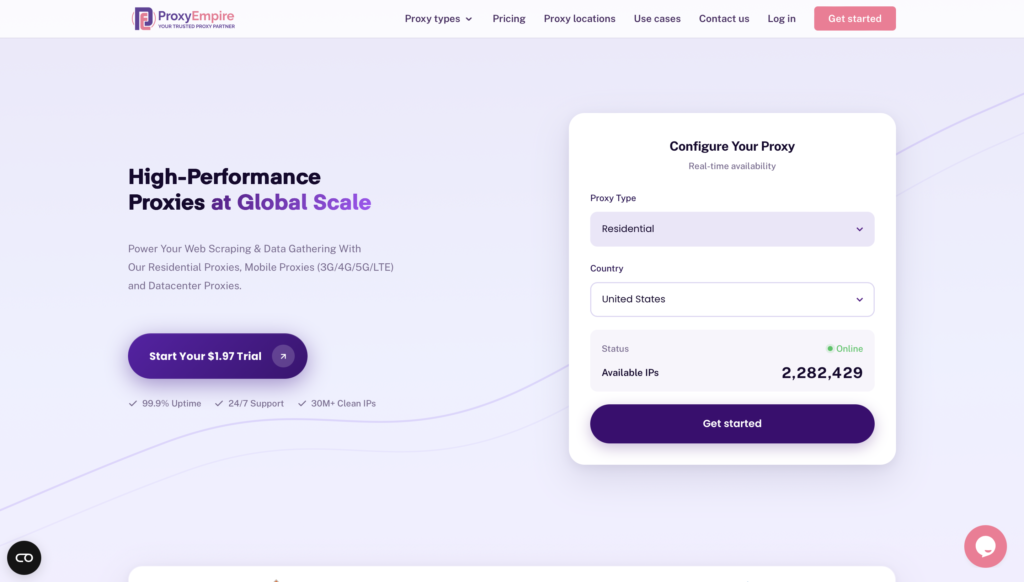
ProxyEmpire is a mobile-first network with a large international pool and both rotating and sticky options. United States coverage sits inside that global mix rather than on a US-only hardware farm. That is useful when the same desk reviews American mobile pages one hour and another market the next. Protocol support is the usual HTTP and SOCKS set, so most browsers and collection tools connect without custom transports. Rotation helps large-scale public data collection and market research. Sticky sessions help when a check has to keep state for a short run.
Fine US carrier control can feel thinner than an enterprise manager that names ZIP and ASN on every request. For approved public collection and mobile-page QA across several markets, pool size is the attraction. For one exclusive American SIM, a specialist farm is a different product. Onboarding is aimed at teams that already know backconnect endpoints. The catalog is wide, and freshness still depends on how hard a target has been used. Treat it as a multi-country mobile layer. Keep a dedicated US port beside it if a single identity has to stay clean.
Key features
- Large international mobile pool
- Rotating and sticky sessions
- Standard proxy protocols for scripts and browsers
- United States available inside a wider network
Facts and information
- Common shortlist pick for multi-country mobile work
- Less of a private-SIM story than hardware platforms
- Carrier and city depth varies by destination
- Better as a broad mobile layer than as one locked US exit
3. Oxylabs
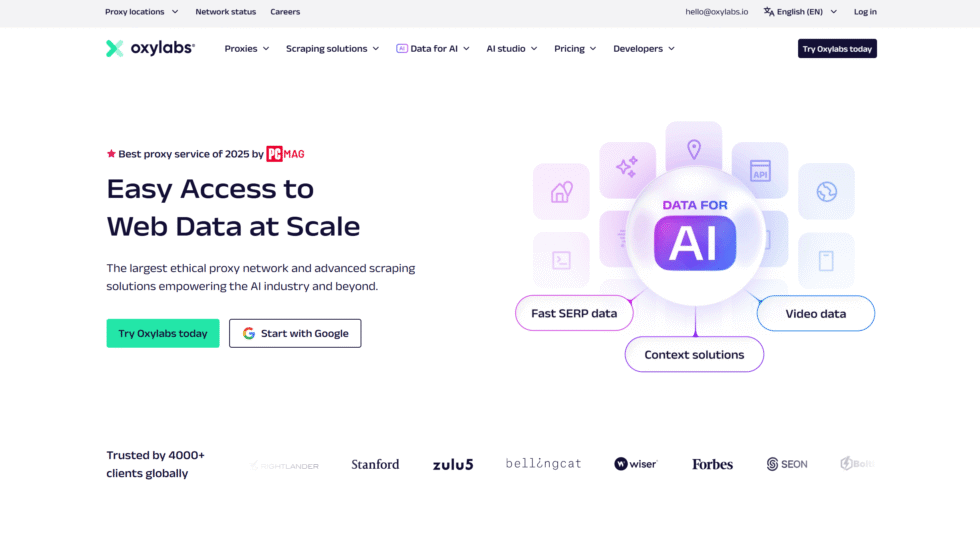
Oxylabs sells mobile IPs drawn from real devices and markets them as a reliability-first network for public-data pipelines. Filters reach continent, country, state, city, coordinates, and ASN, which helps when a US test must sit near a given metro rather than a generic national exit. Auto rotation is the default story. That helps large-scale public data collection, market research, and workflows that benefit from automatic IP rotation. Sticky control exists in the wider stack, but the mobile pitch leans on rotation and uptime language more than on a private SIM you own.
Headquarters are in Vilnius, Lithuania. Docs, scraper APIs, and support depth are the usual reasons enterprises keep the vendor on a shortlist. The network covers many countries, with the United States inside that mix. Response times are described as quick enough for production jobs, and the company talks about high uptime. That matters for scheduled SERP checks and repeating ad QA. It matters less if you want one exclusive US modem. Entry plans feel formal. Smaller teams can get the targeting they need, then spend extra time inside an enterprise-style dashboard they did not plan to learn.
Key features
- Real mobile device IPs
- Continent, country, city, coordinate, and ASN filters
- Auto-rotating sessions and a mature API stack
- Built for pipeline-style public collection
Facts and information
- Broad country coverage with solid US reach
- Known for support depth and scraper-API tooling
- Better for scheduled research than private-modem control
- Setup is polished, and it can feel formal for tiny tests
4. SOAX
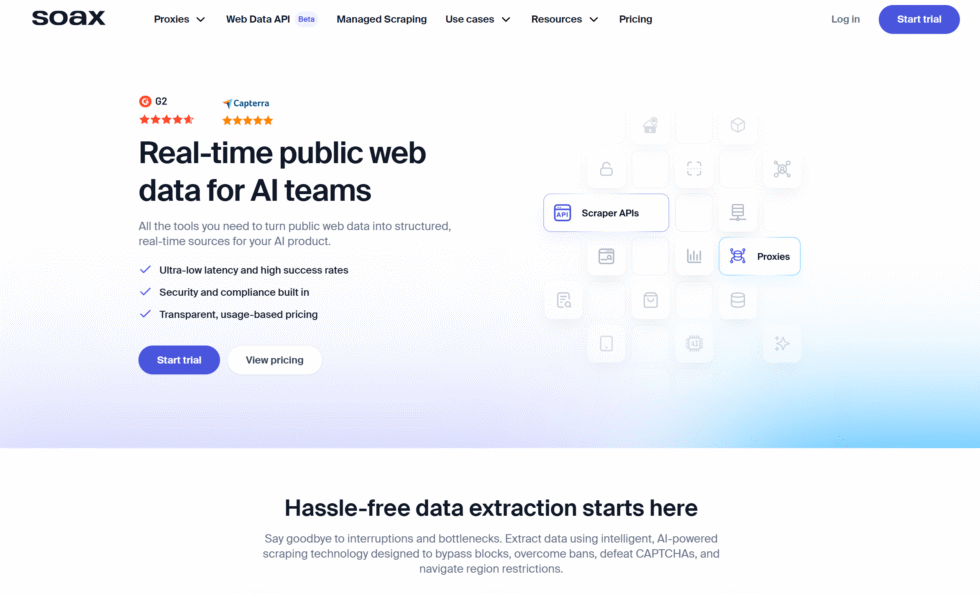
SOAX runs a large mobile pool and lets country, region, city, ISP, and ASN filters share one credit wallet with other proxy types. That unified-credit model is the practical hook. One project can flip from a US 4G ad check to a home-ISP landing-page review without opening a second vendor account. Named-carrier language is part of the pitch, which helps when an American campaign names Verizon, AT&T, or T-Mobile. Rotating sessions cover sweep work. Sticky sessions hold an exit for a short window, useful for multi-step QA that still ends inside an hour.
Protocols include HTTP, HTTPS, and SOCKS5, with UDP and QUIC on some setups. That extra protocol set helps teams testing modern mobile transports, not only classic browser pulls. The pool size is a talking point. Freshness still decides results on strict apps, so a large catalog is not a free pass. Sticky time is useful and finite. Teams that need a full-day hold or an exclusive US SIM usually add a dedicated product. Teams that hate juggling invoices like the single bill. Headquarters messaging points to a global mid-market vendor rather than a US-only hardware farm.
Key features
- Large mobile pool with named-carrier targeting
- Rotating and sticky sessions
- HTTP, HTTPS, SOCKS5, UDP, and QUIC
- Shared credits across mobile and other proxy types
Facts and information
- Handy when one workspace mixes mobile and home-ISP checks
- Wide location set that includes the United States
- Sticky time is a short window, not a full-day hold
- Pool size helps breadth more than exclusive identity
5. Decodo
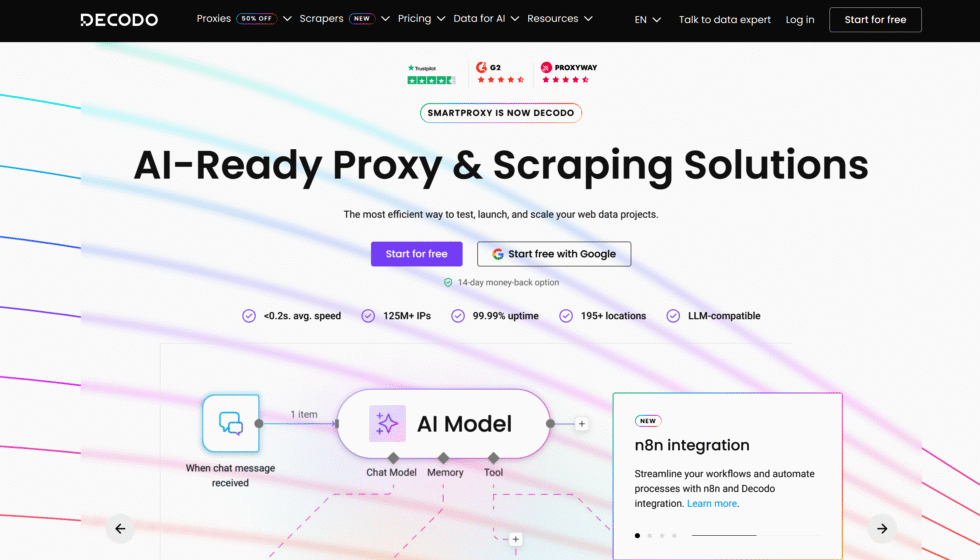
Decodo, formerly Smartproxy, is a mid-market mobile network on 4G and 5G carrier IPs with a clean dashboard and a wider stack that also covers residential, ISP, and datacenter exits. Headquarters are in Lithuania. Carrier breadth is a talking point, with many operators cited across a large location set. That helps approved ad verification and app checks when you need more than one American network. Rotating mobile is the straightforward path. You pick a location, point the tool, and let the exit refresh for public collection and market research.
The draw is one vendor for mixed work. A team can review a mobile landing page, then switch to a home-ISP view without leaving the same panel. Dedicated private-SIM control is not the core product. Buyers who need a locked US port for one high-value workflow often keep Decodo for rotating sweeps and add a hardware farm for the identity that cannot be shared. Onboarding is lighter than an enterprise proxy manager. Docs and scraping extras sit beside the mobile product, which suits research groups that already live in a single mid-market toolkit.
Key features
- 4G and 5G carrier IPs
- Rotating mobile setup in a simple dashboard
- Same vendor stack for other proxy types
- Carrier coverage across many locations
Facts and information
- Easy onboarding for mid-size research teams
- Useful when mobile and residential jobs share one workspace
- Less focus on exclusive US hardware ports
- Carrier list is broad, and city depth varies by market
6. IPRoyal
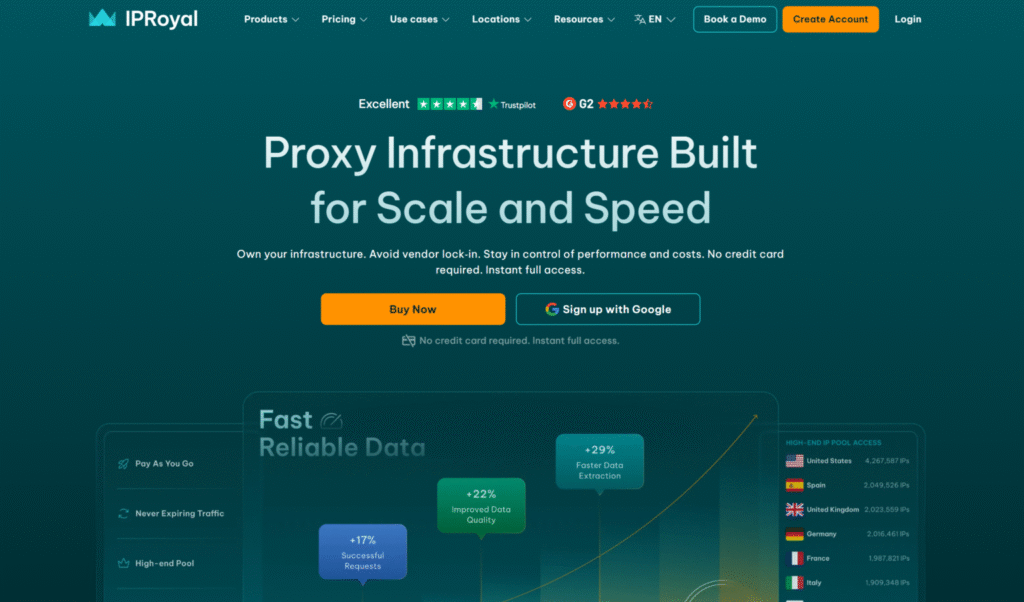
IPRoyal sells rotating mobile exits and dedicated mobile lines, which is closer to how long social research and app QA actually run. The pool covers 3G, 4G, 5G, and LTE. Filters include country, city, carrier, and network type. Named carriers such as Verizon, T-Mobile, Vodafone, and Orange appear in product copy, so a US job can aim at a real American network instead of a generic mobile label. Rotating mode fits ad sweeps, SERP pulls, and listing-page collection. Dedicated lines give one team a steadier exit than a busy shared pool.
That split matters. Shared rotating traffic is fine when the page has no login state. A dedicated line is the better match when a workflow has cookies, a dashboard, or a multi-step form. The mobile pool is smaller than the giant enterprise networks. For many US social and app workflows, the dedicated option is the feature that matters. Setup stays familiar: host, port, user, and pass, with HTTP and SOCKS paths for browsers and scripts. Teams that only want a huge backconnect catalog may look bigger. Teams that want a named carrier and a private line often stop here.
Key features
- Rotating mobile and dedicated mobile lines
- Carrier and network-type filters
- 3G, 4G, 5G, and LTE support
- HTTP and SOCKS access for common tools
Facts and information
- Useful when one workflow needs its own mobile exit
- Named US and EU carriers show up in targeting
- Shared-pool size is modest next to the largest vendors
- Dedicated lines fit longer QA and research sessions
7. DataImpulse
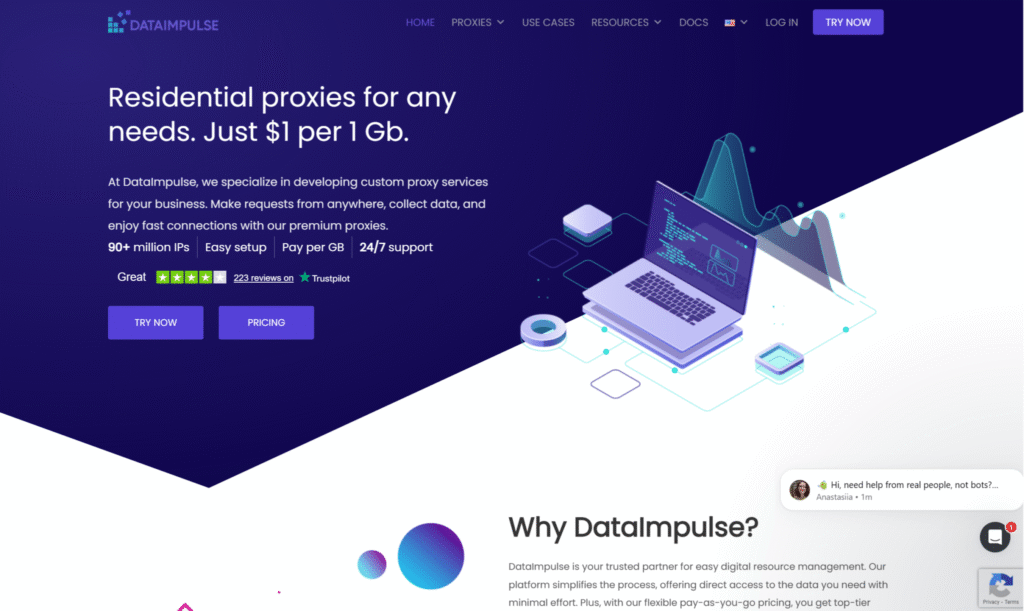
DataImpulse is a pay-as-you-go mobile pool aimed at teams that want carrier IPs without an enterprise contract. Softoria LLC lists an address in St. Petersburg, Florida, United States. The mobile network covers 3G, 4G, 5G, and LTE. Rotating mode supports wide public collection. Sticky mode holds an exit for a window measured in hours, which is enough for many multi-step checks and still short of a private all-day port. Country filters are standard. City, state, ZIP, and ASN filters can sit behind an add-on, so fine US metro work needs a closer look at the plan you pick.
HTTP, HTTPS, and SOCKS5 cover the usual scripts and browsers. Traffic that you buy does not sit on a monthly burn-it-or-lose-it clock in the same way some subscriptions do, which helps irregular research calendars. The pitch is value and a real-carrier pool you can test in small steps. Granular American city work can take extra setup if every request must pin a ZIP or ASN. Human support is part of the product story. The network is a shared pool, not a rack of SIMs you own. That is the right starting shape for many approved ads, apps, and research jobs, and the wrong shape when exclusivity is the requirement.
Key features
- Pay-as-you-go mobile traffic
- Rotating and sticky sessions
- Country filters, with finer filters as an add-on
- HTTP, HTTPS, and SOCKS5
Facts and information
- US-based company listing
- Sticky windows long enough for many multi-step checks
- Good starter path before a private US modem
- Shared-pool model, not exclusive hardware
8. Bright Data
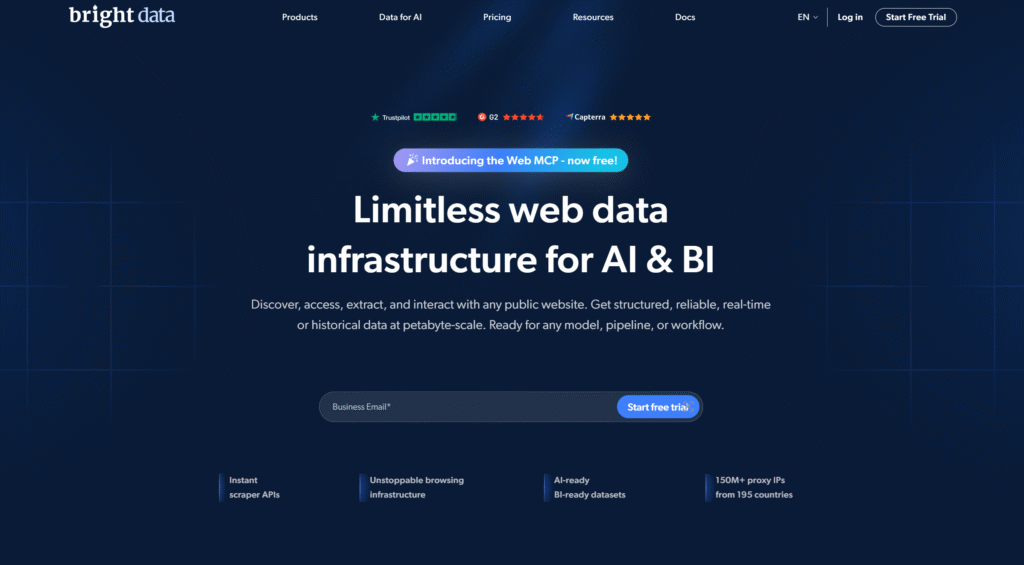
Bright Data runs an enterprise mobile network built for teams that need named US carriers and named cities in the same workflow. Traffic leaves through mobile carrier IPs, then you narrow the exit with country, city, ZIP, carrier, and ASN filters. That mix helps ad verification, in-app creative checks, and location-based testing when a campaign must land on a specific American network, not just any US phone path. A proxy manager sits on top of the pool, so larger groups can set rotation rules, review usage, and keep an audit trail for compliance teams.
The published mobile pool is not the largest on the market by raw count. Targeting depth is the reason many research desks still shortlist it. Rotating mode fits wide public collection. Advanced session controls help when a check has to keep state for a short window. HTTP and SOCKS-style access cover browsers and scripts. The product feels heavy if you only need one username and a simple sticky port. Procurement-friendly contracts and documented workflows are the usual fit for global market intelligence and paid-media QA. Smaller labs often find the manager more than they need for a single US 4G test.
Key features
- Mobile carrier IPs with city, ZIP, carrier, and ASN filters
- Proxy manager and compliance workflows
- Rotating exits plus advanced session controls
- HTTP and SOCKS-style protocols for browsers and scripts
Facts and information
- Strong match for enterprise ad verification and market intelligence
- Tooling is heavier than a plain endpoint shop
- US carrier precision is the main reason teams stay
- Better for long programs than for a one-off sticky port
9. Proxidize
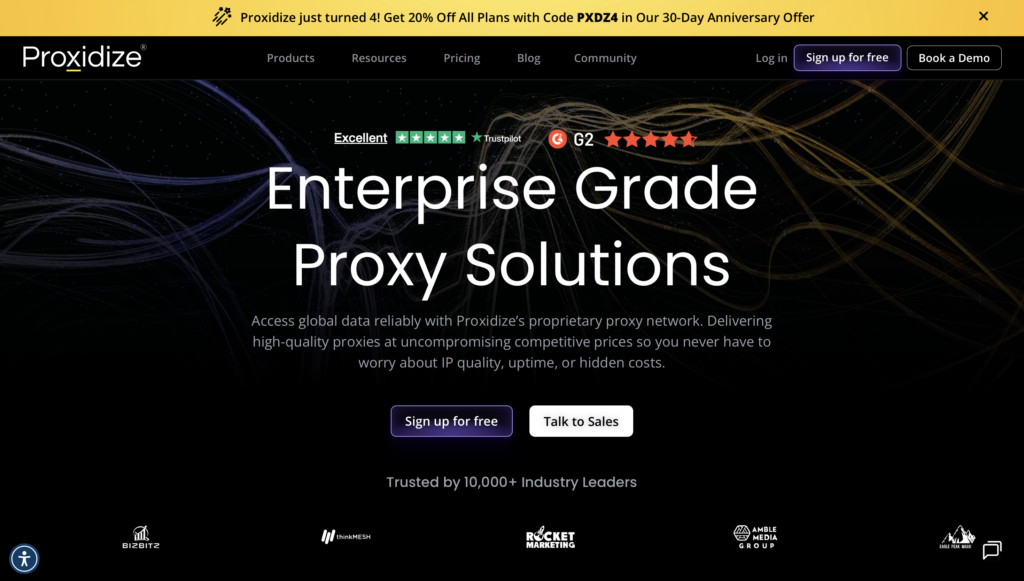
Proxidize is not a giant shared pool sold by the gigabyte alone. It is a platform for private SIM-based 4G and 5G proxies, plus hosted mobile plans for teams that do not want to rack hardware. You control rotation from the dashboard or an API, pick carriers, and keep an exit that other customers do not share. That model fits premium research identities, regulated workflows, and limited-release monitoring where a shared pool is too noisy. Carrier selection lives in the dashboard, which is the point of a private 4G stack.
Setup is more hands-on than a single backconnect username. You think in ports, SIMs, and hold times, not only in rotating gateways. Hosted plans lower that burden. Self-hosted hardware raises control and also raises operations work. Protocols follow the usual HTTP and SOCKS paths, with extra tunnels on some builds. If you want a ready-made US pool with one string and automatic city hop, this is a different shape of product. If you want the outgoing IP to belong to your project, this is the category that answers that need.
Key features
- Private SIM or hosted mobile exits
- Manual, API, and per-proxy rotation
- Carrier selection in the dashboard
- Built for exclusive ports
Facts and information
- Strong match for long-lived US mobile identities
- More operations work than a simple rotating endpoint
- Hosted plans exist for teams that skip hardware
- Shared-pool convenience is not the design goal
10. The Social Proxy
The Social Proxy focuses on 4G and 5G mobile exits for social research, creator QA, and app-style checks. Sticky behavior and phone-like carrier IPs are the product story. US routes are part of the mix for teams that review public social pages, in-app placements, and mobile landing pages. The pool is not positioned as the largest catalog on the market. Support and setup aim at marketers and research ops more than at scraping engineers who want a raw proxy manager.
That focus is useful when the job is approved social and app review from a US phone path. It is thinner when you need city-by-city ASN automation at scale. Rotating traffic can still support public collection. The better use is a stable mobile identity that matches how a phone user would open the same public page. Pair the exit with a consistent browser profile. Do not treat the carrier IP as a full disguise. The network supplies the mobile route. The rest of the session still has to look like a real device.
Key features
- 4G and 5G mobile focus
- Sessions aimed at social and app QA
- Phone-like carrier exits
- Setup aimed at marketing and research ops
Facts and information
- Built around social and mobile-web research
- US use is common in that niche
- Smaller footprint than the largest global pools
- Less depth for giant automated city grids
11. HydraProxy
HydraProxy offers mobile ports with short rental windows and rotating or sticky behavior, which some testers like for quick US checks. The product is simple. You pick a port, point the browser or script, and run the session. That keeps onboarding light and avoids an enterprise manager. Protocols cover the usual HTTP and SOCKS paths. Rotation supports sweep-style public collection. Sticky holds help when a short QA path has to keep cookies for a little while.
You are not buying a huge managed US carrier map with ZIP-level controls. City and carrier precision depend on what that port actually is, not on a giant filter string. For a short research spike, the format is easy. For a year-long ad-verification grid across many American cities, a larger targeted pool is usually the better shell. Treat HydraProxy as a tactical mobile port. Confirm the exit before a full run. Move to a broader network when the calendar turns from a test into a repeating program.
Key features
- Mobile ports with flexible session control
- Simple setup for tests and short projects
- Common protocol support
- Rotating and sticky options on a port model
Facts and information
- Handy for quick US 4G trials
- Less depth in fine American city and carrier maps
- Better as a tactical port than as a full research platform
- Rental windows favor short work over long shared-pool programs
12. MarsProxies
MarsProxies supplies USA-focused 4G, 5G, and LTE exits sourced from real cellular links on AT&T, T-Mobile, and Verizon style networks. The pitch is authentic US carrier traffic for public data extraction, ad verification, and market research aimed at American pages. Coverage is United States first, which matches this list. Global reach is not the selling point. Teams that only work in the US often like that focus. Teams that also need other countries in the same username string will still want a global pool beside it.
Rotation supports approved public collection. The carrier story is the reason to shortlist it for mobile SERP checks, in-app ads, and phone-layout QA. You should still match session type to the job. A rotating US 4G exit is fine for listing pages. A sticky hold is the better match for a multi-step flow. The product does not try to be a private SIM platform and a 140-country catalog at once. That honesty is useful. Use it when the question is whether this American phone path sees the same public page you expect, not whether one vendor covers every market you touch.
Key features
- USA-focused 4G, 5G, and LTE exits
- Major American carrier paths
- Rotating mobile use for research and ads
- Phone-like routes for US public pages
Facts and information
- Built around US carrier identity
- Fits American app, ad, and SERP checks
- Narrower than a multi-continent mobile catalog
- Best as a United States layer, not a world layer
13. NodeMaven
NodeMaven sits in the mid-market mobile and residential space with filters that include country, city, and ISP-style targeting, plus rotating and sticky sessions. The mobile side is meant for teams that already collect public web data and want a phone-like exit for the pages that change on cellular networks. United States routes are available inside a wider country list. HTTP and SOCKS support keeps the usual Python, Node, and browser tools working. The dashboard aims at fast endpoint creation rather than a full hardware lab.
The product is a shared pool with session controls, not an exclusive US modem. That is enough for many ad checks and market scans. It is not enough when one identity must stay off everyone else’s traffic. Sticky windows help short QA. Rotation helps breadth. Docs and API access matter if you already automate endpoint changes. Carrier naming is present on some plans and thinner on others, so confirm the American networks you need before you build a whole grid. Use NodeMaven when you want a practical mobile add-on. Keep a dedicated port in reserve for the workflow that cannot share an exit.
Key features
- Rotating and sticky mobile sessions
- Country, city, and ISP-style filters
- HTTP and SOCKS for common stacks
- Dashboard aimed at fast endpoints
Facts and information
- US routes sit inside a wider country list
- Shared-pool model for mixed research work
- Carrier naming should be checked per plan
- Better as a flexible endpoint than as private hardware
14. Infatica
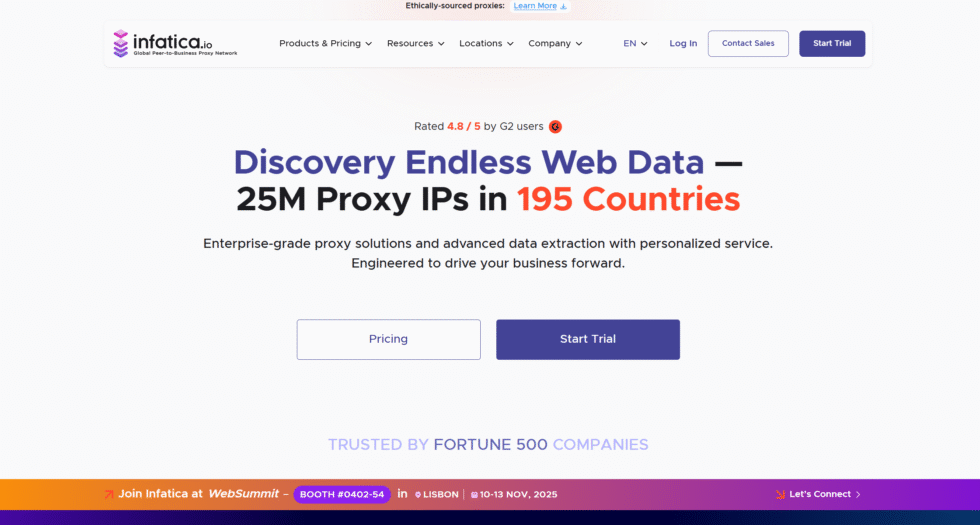
Infatica sells ethically sourced residential and mobile traffic with country and city filters and a peer-style pool. Mobile exits are the piece that matters here. They help view public web experiences across supported US locations and collect public web data for approved business use cases when the page expects a phone path. Rotating sessions cover sweep work. Sticky sessions cover short, stateful checks. Protocols follow HTTP and SOCKS norms, so most collection stacks connect without extra tunnels.
The company positions itself as a research-friendly network rather than a sneaker-farm brand. That shows up in the way docs talk about market research, ads, and public collection. US mobile depth is real and still smaller than the largest carrier catalogs. Fine ASN and named-carrier control can be less detailed than an enterprise manager. For many approved programs that is fine. For a carrier-specific American ad test it may not be. Support and ethical-sourcing language are part of the shortlist case. Private SIM exclusivity is not.
Key features
- Mobile and residential traffic in one vendor
- Country and city filters
- Rotating and sticky sessions
- HTTP and SOCKS support
Facts and information
- Aimed at research, ads, and public collection
- US mobile is available, and it is not the biggest carrier map
- Ethical-sourcing language is part of the pitch
- Shared pool, not exclusive US hardware
When 4G USA Mobile Proxies Fit Better Than Other Proxy Types
A US 4G exit is the right tool when the page or app changes for phones, or when the network itself is part of the test. Mobile proxies versus residential proxies is not a quality fight. It is a fit fight.
Use a 4G USA mobile proxy path when you need to:
- Check how an in-app or mobile-web ad renders on a carrier IP
- Review public mobile pages, deep links, and landing pages
- Run location-based testing that should look like a US phone
- Collect public web data for approved business use cases on mobile-first sites
- Compare offers, SERP layouts, or storefronts the way a phone user sees them
Stay on residential proxies when the job is ordinary desktop research, catalog monitoring, or any workflow where a home ISP identity is enough. ISP-style static residential exits fit long, stable sessions that do not need a cellular fingerprint. Datacenter exits still win on raw speed for light, low-sensitivity tasks.
Pay for mobile proxies when carrier identity is the point. Do not pay for mobile when a home IP already answers the question. Many teams keep both in one stack: mobile for the phone view, residential for the home view. ResiProx is built for that mix.
| Job | Better exit | Why it fits |
| In-app ad and creative QA | 4G USA mobile | Carrier IP and phone-like route |
| Mobile SERP and local pack checks | 4G USA mobile | Matches how phones fetch results |
| Public catalog or price research | Residential | Home ISP identity is enough |
| Long stable login on a desktop site | ISP or sticky residential | Same exit for hours without a cell hop |
| Bulk low-sensitivity collection | Datacenter | Speed first, trust second |
LTE proxies and 5G proxies sit inside the same mobile family. LTE is still the workhorse across most US metros. 5G helps when the test must match a newer radio. For most approved research, a clean 4G or LTE carrier ASN matters more than the radio badge on the brochure.
Rotating Vs Sticky Vs Dedicated 4G USA Sessions
Picking the wrong session type wastes traffic. It also wrecks logins. The three modes below show up across USA mobile proxy guides for a reason.
Rotating mobile
A new carrier IP per request, or on a short timer. Use it for ad sweeps, SERP pulls, listing-page collection, and any check that does not keep cookies or a logged-in state. Breadth is the goal. Rotating mobile proxies help large-scale public data collection, market research, and workflows that benefit from automatic IP rotation.
Sticky mobile
The same outgoing IP for a set window. Use it for logins, checkout previews, multi-page QA, and any flow where the site stores session state. Some networks hold a sticky mobile IP for many minutes. Some hosted 4G products advertise much longer holds. Match the timer to the task, then stop. A sticky exit that sits idle still ages.
Dedicated or private mobile
One port, sometimes one SIM, that only your project uses. This is the hardware-farm model and the dedicated-line model some dedicated 4G proxy providers sell. Use it when a shared pool is too noisy for a high-value workflow. You trade convenience for control.
A hard rule helps. Rotate for breadth. Stick for depth. Go private when the identity itself has value. Flipping three carrier IPs during one login looks like a stolen session to many risk models, even when every IP is a real US mobile address. Keep 4G LTE mobile proxies on sticky or dedicated mode for anything with a password, a cart, or a multi-step form.
Setup stays plain. Copy host, port, user, and pass, or whitelist your server. Put country, city, carrier, and session flags in the username or dashboard. Point the browser or script at the endpoint. Confirm the exit with an IP lookup before you run the full job.
FAQ
What Makes 4G USA Mobile Proxies Different From Home Broadband IPs?
Home broadband IPs come from cable, fiber, or DSL providers. 4G USA mobile proxies come from cellular carriers and often sit behind carrier-grade NAT, so the public address looks like a phone on Verizon, AT&T, T-Mobile, or a similar network. That is why mobile-first ads, app store pages, and phone SERPs are a better match for a 4G exit than for a home ISP path. A residential proxy can still view the public web and support location-based testing with residential IPs. It does not always receive the same mobile creative or the same carrier-tuned offer that a live US cell route sees.
Which US Carriers Matter For App And Ad Checks?
Match the carrier to the campaign or the user base you are reviewing. Many American checks start with Verizon, AT&T, and T-Mobile, and some tests also need regional operators listed on a locations filter. If the brief names a carrier, the 4G mobile proxy filter should name that carrier too. Country-only mobile traffic can still help you view public web experiences across supported locations. Carrier plus city is the cleaner setup for approved ad verification, app QA, and price monitoring when the network itself is part of the result.
Can 4G USA Mobile Proxies Work With Antidetect Browsers?
Yes. Many teams pair a sticky or dedicated US 4G exit with an antidetect profile so the network path and the browser profile stay aligned. Proxy integrations cover tools such as AdsPower, BitBrowser, Dolphin Anty, Playwright, Puppeteer, and Selenium, which is enough for most research browsers. The mobile proxy only supplies the carrier IP. It does not fix a sloppy device profile. Keep one sticky identity per research profile and avoid rotating mid-session when the workflow has cookies or a login state.
How Should Teams Start A US 4G Mobile Workflow?
Start with the job, not the pool size. Sweep-style public pages fit rotating mobile proxies. A login or multi-step path fits sticky 4G. An identity that cannot be shared fits a dedicated 4G proxy port. Set United States plus the city or carrier you actually need, run a small approved sample, and confirm the exit with IP lookup before the full job. Hold the same exit until the workflow ends, then rotate on purpose. That pattern beats a giant pool used on the wrong session type.
When Do Rotating, Sticky, And Dedicated 4G USA Sessions Fit Different Jobs?
Rotating 4G LTE mobile proxies fit ad sweeps, SERP pulls, listing pages, and other approved collection that has no stored state. Sticky sessions fit logins, checkout previews, multi-page QA, and any flow where the site keeps cookies. Dedicated or private mobile ports fit high-value research identities that should not share an exit with a crowded pool. The same US carrier IP can fail the job if the session mode is wrong. Rotate for breadth, stick for depth, and keep a dedicated path when the identity itself is the asset.
Read Also:
- Top 15 Best USA Mobile Proxy in 2026
- Top 25 Best 4G Mobile Proxies in 2026
- Top 20 Best 4G LTE Mobile Proxies in 2026
- Best Dedicated 4G Proxy Providers
- Mobile Proxies Vs. Residential Proxies
Discover the Best 4G USA Mobile Proxies in 2026 – ResiProx.