

Managing multiple Snapchat accounts or accessing geo-restricted content requires reliable proxy solutions that won’t trigger platform detection. Residential proxies and mobile proxies offer authentic IP addresses that help you bypass restrictions, automate marketing campaigns, and protect your accounts from bans. This guide explores the top Snapchat proxy providers, focusing on rotating residential proxies that deliver speed, security, and undetectable performance for both personal and business use. Discover the best Snapchat proxies in 2025
Ready to experience the best Snapchat proxies? Start your free trial today – ResiProx
- Managing Multiple Snapchat Accounts Safely
- Why Snapchat Requires Specialized Proxies
- Top 20 Best Snapchat Proxies in 2026
- How Rotating Proxies Enhance Snapchat Automation
- Mobile Proxies vs Residential Proxies for Snapchat
- How to Set Up Proxies for Snapchat (Step-by-Step Guide)
- Best Practices for Snapchat Account Management with Proxies
- Latest News In 2026
- FAQ
- What makes a proxy good for Snapchat?
- Can Snapchat detect proxy usage?
- How many proxies do I need for multiple Snapchat accounts?
- Are free proxies safe for Snapchat?
- What session type fits longer Snapchat activity sessions?
- How does location targeting work with Snapchat content?
- Which protocols support Snapchat proxy connections?
- Do mobile proxies suit mobile app based Snapchat tasks?
- How can sticky sessions support consistent profile activity?
Managing Multiple Snapchat Accounts Safely
Running multiple Snapchat profiles from one location triggers the platform’s duplicate-account detection. Each account needs a unique IP address that appears to originate from a different household or mobile carrier. Residential proxies assign clean, household-grade IPs to each profile, making it look like separate users in different neighborhoods.
The key to successful social media management lies in combining proxies with anti-detect browsers that modify device fingerprints. When each account has both a unique IP and a distinct browser fingerprint, Snapchat sees no connection between profiles. This approach works for influencer marketing, brand monitoring, and automated content posting without raising platform alerts. Studies show that proper proxy rotation reduces account ban rates by over 80% for social media marketers.
Why Snapchat Requires Specialized Proxies
Snapchat employs advanced anti-bot detection systems that flag suspicious activity patterns and shared IP addresses across multiple accounts. The platform monitors login locations, device fingerprints, and user behavior to identify automated tools or proxy usage. Standard proxies fail because Snapchat’s algorithms can detect datacenter IPs and blacklisted IP ranges, resulting in temporary locks or permanent account suspensions.
Residential and mobile proxies work by routing your traffic through real devices with ISP-assigned IP addresses, making your activity appear as genuine user behavior. These proxies rotate IPs automatically or maintain sticky sessions, depending on your needs. For marketers managing dozens of accounts or users accessing region-locked Stories, the right proxy infrastructure prevents detection while maintaining account health.
Top 20 Best Snapchat Proxies in 2026
1. 🏆ResiProx – Best Snapchat Proxies in 2026 🏆
Resiprox Premium Proxies – Unlock the Web with Power and Precision
Introducing Resiprox, the ultimate proxy solution designed to supercharge your online operations. With our Residential Proxies and Mobile Proxies, you get unmatched access to web data at scale, robust security, and seamless connectivity all backed by a free trial to experience the difference firsthand.
Product Features
- Rotating Residential Proxies: Harness the power of 10M+ ethically-sourced IPs across 180+ countries. These proxies rotate dynamically to support large-scale public data collection, market research, and workflows that benefit from automatic IP rotation, delivering 99.9% uptime and precise targeting at the country, city, or ZIP code level.
- Rotating Mobile Proxies: Powered by 4G/LTE/5G networks, our mobile proxies offer lightning-fast speeds with <0.3s response times and a 99.9% success rate perfect for real-time applications.
- Global IP Network: Tap into millions of IPs, including 3.5M+ in the US, 1.8M+ in Brazil, 3.1M+ in India, and more, ensuring coverage wherever you need it.
- Advanced Capabilities: Enjoy HTTPS & SOCKS5 support, unlimited concurrent sessions, and flexible rotating or sticky sessions, all wrapped in premium IP quality.
Product Specifications:
- Performance: High-speed browsing with 99.9% uptime and 24/7 expert support.
- Integration: Seamlessly works with Node.js, Python, PHP, Selenium, and more, featuring a dynamic endpoint generator and robust API access.
What It’s Built For:
Resiprox proxies are your all-in-one tool for:
- Public Data Collection: Collect public web data for approved business use cases, market research, and growth insights.
- Price Monitoring: Track prices across regions in real-time.
- Multi-Account Workflows: Run separate QA, monitoring, and research workflows across multiple accounts.
- SEO & Ad Verification: Monitor rankings and verify ads globally.
- Cybersecurity: Protect your brand and test applications securely.
- Specialized Tasks: From high-volume monitoring of limited-release products to travel fare aggregation, Resiprox delivers.
Why Resiprox Stands Out:
This isn’t just a proxy, it’s a game-changer. With comprehensive documentation, multi-platform compatibility, and a team of experts available 24/7, Resiprox ensures your projects run smoothly. Whether you’re a business scaling operations, a researcher gathering data, or a developer testing apps, our proxies adapt to your needs with precision and reliability.
Resiprox Premium Proxies – Your Key to a Smarter, Faster, and More Connected Online World.
Click here to discover our :
2. ProxyEmpire
ProxyEmpire stands out with a substantial network of over 30 million residential IPs spanning more than 170 countries, supported by patented technology that delivers strong uptime around 99.86 percent and response times as low as 0.6 seconds. Users can apply precise targeting by country, city, state, ISP, and mobile carrier, making it practical for location-based testing with residential IPs and consistent session control. The service supports both automatic rotation and sticky sessions, along with HTTP, HTTPS, and SOCKS5 protocols, while offering unlimited concurrent sessions on higher plans. Bandwidth rollover features help teams manage longer projects without monthly resets. Its infrastructure suits ad verification, price monitoring, and market research workflows that benefit from clean, ethically sourced addresses. Global operations and an advanced API further simplify integration into automation stacks for developers and agencies handling multi-location public data collection.
- Pool size: 30+ million residential IPs across 170+ countries
- Rotation: Automatic IP rotation every request or session-based
- Targeting: Country, city, state, ISP, and mobile carrier precision
- Speed: Low latency optimized for real-time social media tasks
- Pros: Unlimited concurrent sessions, no bandwidth caps on premium plans, advanced API for automation
- Cons: Enterprise-focused pricing may be high for casual users
- Headquarters: Global operations
3. SOAX
SOAX maintains a large and diverse pool exceeding 155 million residential IPs across 195 locations, complemented by a dedicated mobile network of over 33 million addresses drawn from real 3G, 4G, and 5G carriers. Average response times sit near 0.55 seconds with success rates reported at 99.95 percent, giving teams reliable performance for real-time interactions. Flexible rotation intervals and sticky session options let users tailor connection stability to the task at hand, while city-level and carrier targeting enable accurate location-based testing with residential IPs. The platform supports multiple proxy types under a unified model and provides unlimited concurrent connections. Ethical sourcing through transparent opt-in methods and a user-friendly dashboard make SOAX suitable for collecting public web data for approved business use cases, ad verification, and market research that require consistent global coverage and precise geographic control.
- Pool size: 191 million IPs in 195+ countries
- Rotation: Flexible rotation intervals with sticky session support
- Targeting: Country, city, and carrier-level precision
- Speed: 0.55-second average response time
- Pros: User-friendly interface, multiple proxy types, excellent for bypassing geo-restrictions
- Cons: Bandwidth-based pricing can add up for heavy users
4. Bright Data
Bright Data operates one of the industry’s largest networks with more than 400 million residential IPs available monthly across 195 countries, alongside mobile, ISP, and datacenter options. The service carries ISO 27001 certification and emphasizes compliance-focused infrastructure that appeals to enterprise teams. Advanced targeting reaches country, city, ZIP code, ASN, and carrier levels, while AI-assisted rotation and auto-retry mechanisms help maintain high success rates near 99.99 percent uptime. Users gain access to powerful management tools, a dedicated proxy manager, and extensive API capabilities that integrate smoothly into large-scale workflows. Bright Data supports both shared and dedicated configurations, making it well suited for ad verification, price monitoring, market research, and location-based testing with residential IPs. Its enterprise-grade security and broad tooling set support organizations that need depth of coverage and managed services for public web data collection across multiple regions.
- Pool size: 150+ million residential IPs globally
- Rotation: AI-powered rotation with auto-retry mechanisms
- Targeting: Country, city, ZIP code, ASN, and carrier targeting
- Speed: High-speed connections with 99.99% uptime
- Pros: Enterprise-grade security, compliance-focused, powerful API, and proxy manager tools
- Cons: Complex interface for beginners, higher pricing tier
5. Oxylabs
Oxylabs delivers a premium residential network of over 175 million high-quality IPs covering 195 countries, with additional mobile and ISP options available. Headquartered in Lithuania, the provider focuses on large-scale data collection and market research, offering carrier-level and ASN targeting for precise geographic control. Session management includes both rotating and sticky modes with customizable durations, while HTTPS and SOCKS5 protocols ensure flexible connectivity. Response times average around 0.41 seconds in independent tests, paired with success rates above 99 percent. Dedicated account managers and advanced API integrations assist technical teams in scaling operations. Oxylabs suits organizations that require reliable infrastructure for collecting public web data for approved business use cases, ad verification, price monitoring, and location-based testing with residential IPs. Its emphasis on quality and enterprise support makes it a strong choice for high-volume, compliance-conscious projects.
- Pool size: 100+ million residential IPs worldwide
- Rotation: Rotating and sticky sessions with custom duration
- Targeting: Country, city, state, carrier, and ASN targeting
- Speed: Enterprise-grade infrastructure with low latency
- Pros: Dedicated account managers, advanced API integrations, reliable for high-volume operations
- Cons: Requires technical knowledge for setup, enterprise pricing
6. IPRoyal

IPRoyal provides access to more than 32 million rotating residential proxies covering 195 countries, with city-level targeting and customizable session lengths that extend up to 24 hours or longer on select plans. The service offers both rotating and static residential options, supporting HTTP, HTTPS, and SOCKS5 protocols with unlimited concurrent sessions on many tiers. Non-expiring bandwidth on residential plans allows teams to purchase traffic once and use it over time without monthly resets. Ethically sourced IPs and competitive pricing starting at lower per-gigabyte rates appeal to a wide range of users. Mobile proxies are also available for carrier-based connections. IPRoyal works well for ad verification, price monitoring, market research, and location-based testing with residential IPs. Its balance of affordability, flexible rotation, and straightforward dashboard makes it accessible for both individual operators and growing teams focused on public web data collection.
- Pool size: 32+ million residential IPs globally
- Rotation: Customizable from instant to 24-hour sessions
- Targeting: Country and city-level targeting
- Speed: Fast connections with 99.9% uptime
- Pros: Affordable pricing, unmetered bandwidth on select plans, ethical IP sourcing
- Cons: Smaller pool compared to enterprise providers
7. MarsProxies
MarsProxies focuses on residential and datacenter solutions tailored for social platform workflows, offering a pool of more than one million residential IPs across 190-plus locations. Users benefit from automatic rotation alongside sticky session options that can last from seconds to several days, giving control over connection consistency. City-level targeting is available in key markets, and the service supports HTTP, HTTPS, and SOCKS5 protocols with non-expiring traffic on many plans. Low-latency connections help maintain smooth performance for content-related tasks. Competitive pricing and a simplified management interface lower the barrier for smaller teams. MarsProxies serves ad verification, price monitoring, market research, and location-based testing with residential IPs effectively. Its emphasis on social media-oriented features and flexible session control makes it practical for operators who need reliable, affordable access without complex enterprise overhead.
- Pool size: Millions of residential IPs across multiple continents
- Rotation: Automatic rotation with sticky session availability
- Targeting: Multi-location support for geo-bypassing
- Speed: Low latency optimized for social media
- Pros: Social media-focused features, competitive pricing, sticky sessions for consistent access
- Cons: Smaller network than top-tier providers
8. NetNut
NetNut specializes in ISP and residential proxies sourced through direct ISP partnerships, resulting in a network of over 85 million addresses that deliver datacenter-like speeds with residential legitimacy. Headquartered in Tel Aviv, the provider emphasizes connection stability and genuine ISP-level routing. Country and city targeting options support localized workflows, while rotating and sticky sessions give users flexibility for different task lengths. HTTP and SOCKS5 protocols are fully supported, and high concurrency limits accommodate parallel operations. The infrastructure reduces variability often seen in peer-to-peer pools. NetNut is well suited for ad verification, price monitoring, market research, and location-based testing with residential IPs. Teams that prioritize consistent performance and direct ISP sourcing find its combination of speed, stability, and geographic coverage effective for sustained public web data collection projects.
- Pool size: 85+ million ISP-derived residential IPs
- Rotation: Rotating options with customizable frequency
- Targeting: Country and city-level precision
- Speed: Datacenter-like speeds with residential legitimacy
- Pros: Direct ISP routing, high stability, good for automation
- Cons: Limited regional coverage in some areas
9. Webshare
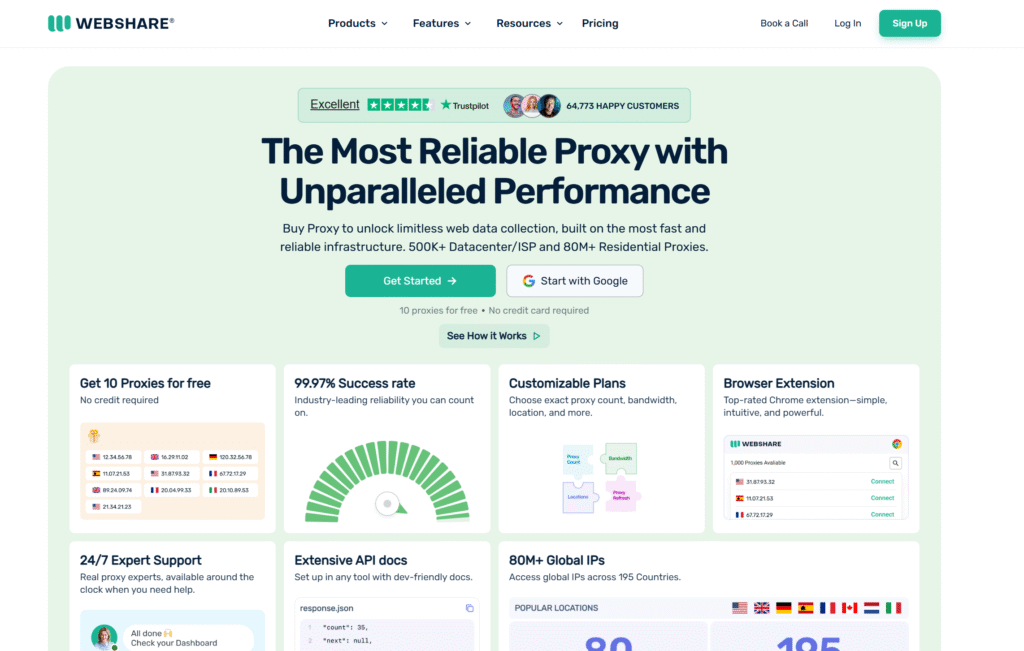
Webshare offers an accessible entry point with more than 80 million residential IPs spanning 195 countries, plus extensive datacenter and ISP options. Both rotating and static residential configurations are available, along with country and city-level targeting. Unlimited bandwidth on shared plans and straightforward self-service tools appeal to budget-conscious users and beginners. The platform supports HTTP and SOCKS5 protocols and delivers high speeds suitable for everyday tasks. Uptime figures near 99.97 percent on core products provide dependable availability. Webshare works well for collecting public web data for approved business use cases, ad verification, price monitoring, and location-based testing with residential IPs. Its combination of large residential coverage, flexible plan structures, and user-friendly dashboard makes it a practical choice for teams seeking reliable performance without enterprise-level complexity or cost.
- Pool size: Millions of residential IPs in 40+ countries
- Rotation: Both rotating and static residential options
- Targeting: Country-level targeting
- Speed: High speeds with unlimited bandwidth on shared plans
- Pros: Budget-friendly, unlimited bandwidth, user-friendly for beginners
- Cons: Smaller geographic coverage, limited advanced features
10. NodeMaven
NodeMaven distinguishes itself through AI-driven rotation technology and a focus on clean IP quality rather than sheer volume, offering more than 30 million residential IPs and over 200,000 mobile addresses across 190 countries. The service provides both static and rotating residential options with smart routing that prioritizes performance. Unmetered bandwidth plans and 99.9 percent uptime guarantees support continuous operations, while low latency benefits real-time workflows. Developer-friendly tools and flexible session control simplify integration into custom scripts. Targeting includes country, city, and quality filters. NodeMaven is effective for ad verification, price monitoring, market research, and location-based testing with residential IPs. Its emphasis on IP cleanliness and intelligent rotation appeals to automation specialists and developers who value consistent success rates over maximum pool size.
- Pool size: Millions of residential IPs with a focus on quality over quantity
- Rotation: AI-powered rotation for optimal performance
- Targeting: Global coverage with smart routing
- Speed: Low latency with 99.9% uptime guarantee
- Pros: Clean IP quality, AI-driven technology, unmetered bandwidth options, developer-friendly
- Cons: Smaller overall pool size
- Headquarters: Not publicly disclosed
11. Smartproxy (Decodo)
Decodo, formerly Smartproxy, maintains a network of more than 125 million ethically sourced residential and mobile IPs across 195 countries, with average response times near 0.54 seconds and success rates around 99.68 percent. Users can choose request-based or sticky sessions with custom intervals, and targeting extends to country, state, city, ASN, and ZIP code levels. Unlimited concurrent threads, non-expiring traffic, and browser extensions simplify everyday use. Additional tools such as a Site Unblocker and pre-built scraping APIs expand its utility. The platform supports HTTP, HTTPS, and SOCKS5 protocols. Decodo suits ad verification, price monitoring, market research, and location-based testing with residential IPs. Affordable entry pricing combined with strong performance metrics and user-friendly features makes it a versatile option for both individual operators and mid-sized teams collecting public web data.
- Pool size: 125+ million residential and mobile IPs in 195+ countries
- Rotation: Request-based or sticky sessions with custom intervals
- Targeting: Country, state, city, ASN, ZIP code, IP quality filtering
- Speed: 0.54-second response time with 99.68% success rate
- Pros: Unlimited concurrent connections, non-expiring traffic, affordable pricing, browser extensions, Web Unblocker auto-bypass
- Cons: Support hours limited to 5AM-7PM European time
12. Infatica
Infatica supplies more than 35 million residential and mobile IPs across 100-plus countries, with a strong focus on ethical sourcing and transparent operations. Flexible rotation intervals range from every request to 5-60 minute windows or unlimited sticky sessions. Gateway servers in the United States, Asia, and Europe allow optimized routing, and fallback options help maintain connectivity. Unlimited concurrency supports scalable workloads, while HTTP, HTTPS, and SOCKS5 protocols ensure broad compatibility. Dashboard tools generate proxy lists and support API configuration. Infatica is practical for ad verification, price monitoring, market research, and location-based testing with residential IPs. Its combination of flexible session control, ethical practices, and multi-region gateways serves teams that need reliable, customizable access for public web data collection without unnecessary complexity.
- Pool size: 15+ million residential and mobile IPs in 100+ countries
- Rotation: Every request, 5-60 minute intervals, or unlimited sticky sessions
- Targeting: Country-level with gateway selection (US, Asia, Europe)
- Speed: Gateway-optimized routing for consistent performance
- Pros: Flexible rotation intervals, ethical IP sourcing, fallback connection options, unlimited concurrency
- Cons: Limited to 1,000 IPs per generated list, no sub-user accounts
13. Rayobyte
Rayobyte provides a diverse set of solutions including more than 100,000 residential IPs across 100 countries, alongside rotating and static datacenter options. Ethical data collection practices and regular IP rotation form the foundation of its approach. Sticky session support and dual authentication through IP whitelisting or credentials give users control over access. Unlimited bandwidth on residential plans keeps costs predictable for higher-volume work. HTTP, HTTPS, and SOCKS5 protocols are supported across IPv4 and IPv6, with 24/7 customer support available for technical needs. Country-level targeting is standard, with limited city options in select regions. Rayobyte works effectively for collecting public web data for approved business use cases, ad verification, price monitoring, and location-based testing with residential IPs. Its cost-effective structure and reliable support make it suitable for teams focused on steady, ethical proxy performance.
- Pool size: 100,000+ residential IPs across 100 countries
- Rotation: Default rotation with sticky session support per request
- Targeting: Country-level filtering, random city targeting in select regions
- Speed: High-speed connections with unlimited bandwidth
- Pros: Unlimited bandwidth, ethical sourcing, 24/7 support, cost-effective for scraping
- Cons: No custom rotation time intervals, SOCKS5 not available for residential tier
14. GeoNode
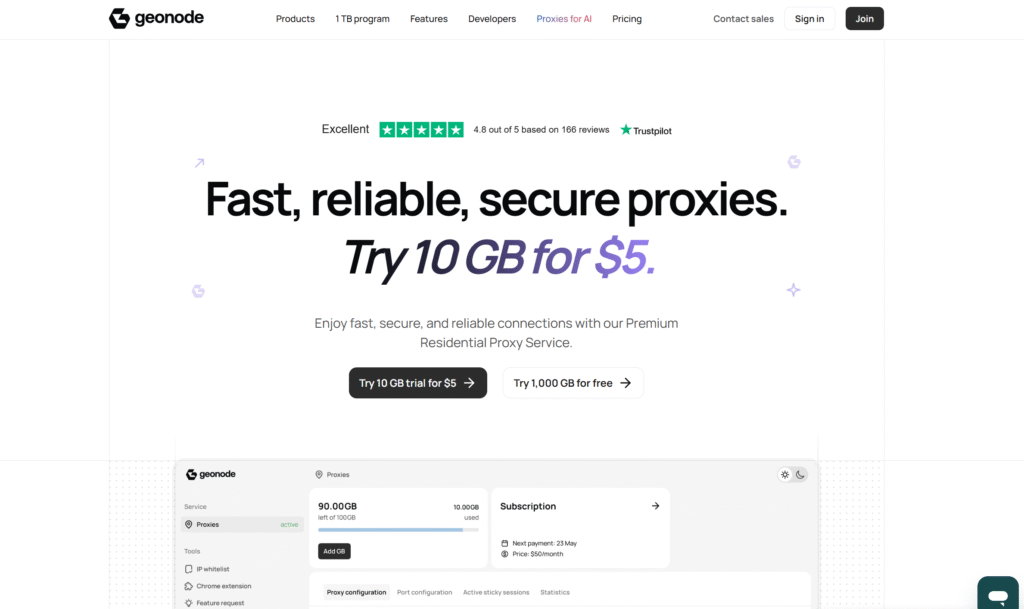
GeoNode delivers affordable residential and datacenter proxies with flexible geo-targeting at country, city, and state levels worldwide. Port-level configuration lets users assign specific protocols and settings, choosing between HTTPS and SOCKS5 as needed. Sticky sessions maintain IPs for defined durations while rotating modes assign new addresses per request. Multiple gateway locations in Singapore, France, and the United States help reduce latency for regional workflows. The platform balances residential anonymity with datacenter speed depending on the use case. GeoNode supports location-based testing with residential IPs, ad verification, price monitoring, and market research. Flat-rate pricing and straightforward controls appeal to users who want reliable performance and geographic flexibility without enterprise overhead, making it a practical choice for both individual projects and growing operations that collect public web data.
- Pool size: Large residential and datacenter pool with global coverage
- Rotation: Sticky sessions with custom duration or per-request rotation
- Targeting: Country, city, state-level precision with IP type selection
- Speed: Low latency with gateway servers in Singapore, France, USA
- Pros: Affordable flat-rate pricing, flexible port configuration, multiple protocols, gateway location options
- Cons: Smaller pool compared to enterprise providers, limited advanced features
15. Shifter
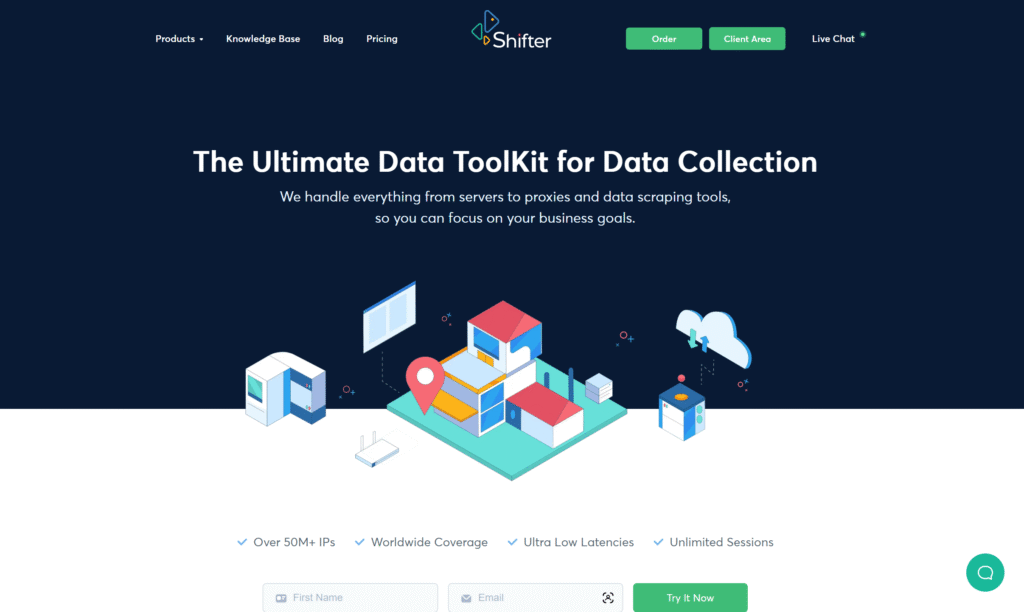
Shifter specializes in rotating backconnect residential proxies designed for high success rates in data gathering applications, offering a large pool with worldwide coverage and customizable rotation intervals ranging from minutes to hours. Users can select on-demand or timed rotation modes, and unlimited concurrent sessions allow scaling without artificial limits. Geo-targeting options support location-specific routing, while Tier 1 ISP proxies provide additional stability for demanding tasks. Non-rotating options remain available for longer consistent sessions. The service emphasizes automatic assignment of fresh residential exit addresses based on configured rules. Shifter is well suited for ad verification, price monitoring, market research, and location-based testing with residential IPs. Its flexible configuration and unlimited session model make it effective for teams running large-scale public web data collection that benefits from automatic IP rotation and broad geographic reach.
- Pool size: Large rotating residential pool with worldwide coverage
- Rotation: Custom intervals (5+ minutes) or on-demand with backconnect technology
- Targeting: Worldwide geo-targeting with location-specific routing
- Speed: Optimized for scraping with high success rates
- Pros: Unlimited concurrent sessions, flexible rotation configuration, Tier 1 ISP options, on-demand and rotating modes
- Cons: Time-based pricing model may increase costs for extended use
16. Proxyrack
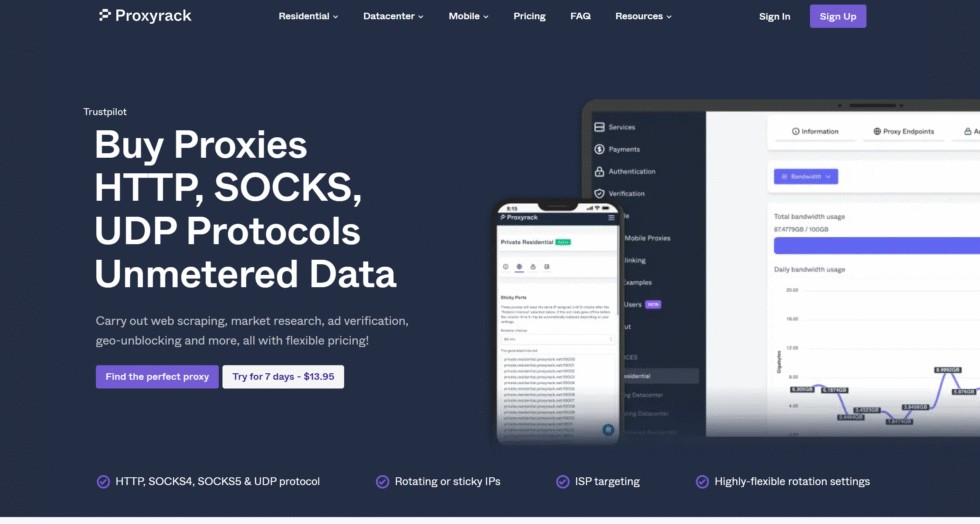
Proxyrack delivers residential proxy solutions with access to large monthly IP pools designed for consistent public data collection and location-based testing with residential IPs. The service includes premium residential options alongside unmetered residential plans that draw from more than 35 million monthly addresses. Users can target by country, city, or ISP while selecting from HTTP, SOCKS, and UDP protocols. Unlimited threads support parallel workflows for ad verification, price monitoring, and market research. Sticky and rotating session controls allow teams to match connection behavior to specific tasks such as longer monitoring sessions or high-volume public web data collection. The platform emphasizes straightforward integration for developers and automation tools, making it suitable for teams that need reliable geographic coverage and flexible protocol support across multiple regions without complex enterprise tooling.
- Key features: Premium and unmetered residential proxy options, country city and ISP targeting, HTTP SOCKS and UDP protocol support, unlimited concurrent threads, customizable rotation intervals, sticky session capability.
- Accurate data: Access to 35 million-plus monthly residential IPs, global coverage with city-level precision available, high success rates reported for standard public data workflows, developer-focused API and dashboard tools.
17. DataImpulse
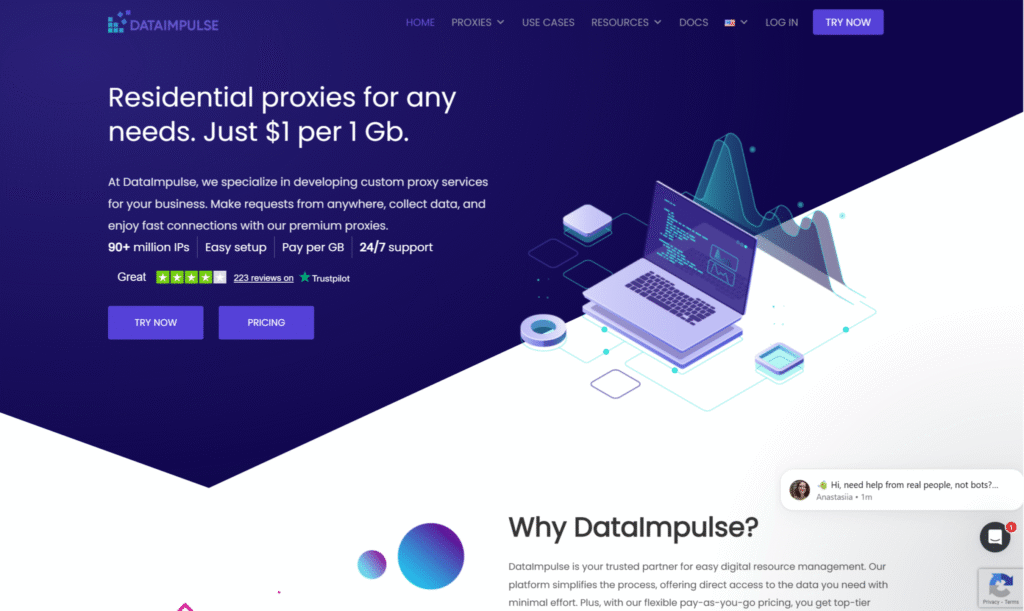
DataImpulse operates a first-party residential proxy network exceeding 90 million ethically sourced IP addresses across 195 countries. The provider also maintains separate pools for mobile and datacenter addresses, giving users flexibility for different workflow types. Country targeting is included by default while state, city, ZIP code, and ASN filtering remain available for finer control. Rotating and sticky sessions support both high-volume public data collection and longer consistent connections required for monitoring tasks. Response times average near one second with uptime figures around 99.9 percent. The infrastructure suits ad verification, price monitoring, market research, and location-based testing with residential IPs. Teams benefit from transparent first-party sourcing that avoids resold networks and from non-expiring traffic credits that simplify long-term project planning.
- Key features: First-party residential IP pool, mobile and datacenter options, country to ASN and ZIP targeting, rotating and sticky sessions, HTTP HTTPS and SOCKS5 support, non-expiring traffic model.
- Accurate data: More than 90 million residential IPs, 16 million-plus mobile addresses, 20 million datacenter IPs, coverage across 195 countries, average response time approximately one second, 99.9 percent uptime.
18. Live Proxies
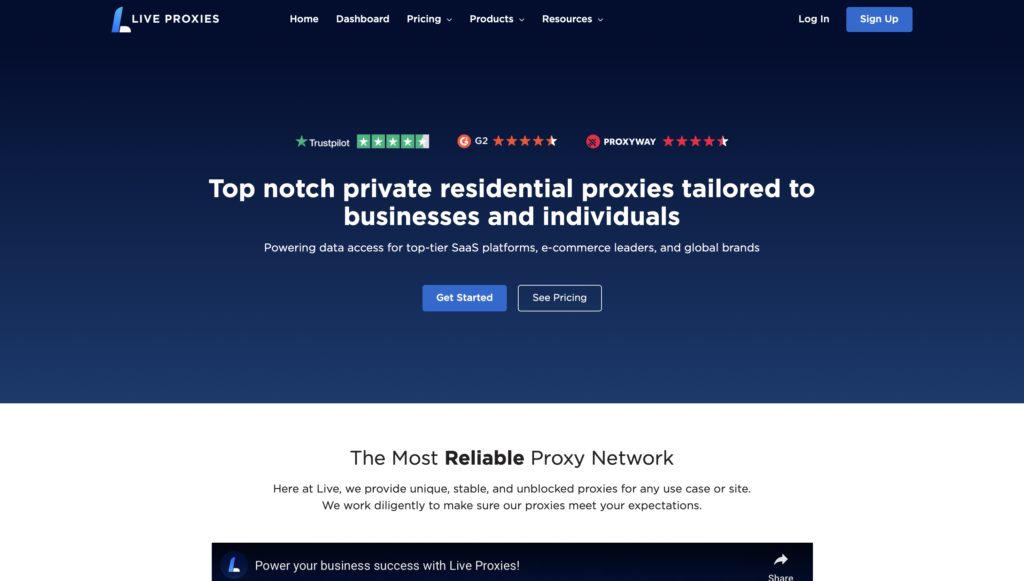
Live Proxies, headquartered in California, USA, focuses on rotating residential and rotating mobile proxies with private IP allocation options. The network covers more than 55 countries and supports sticky sessions lasting up to 24 hours. Unlimited threads and automatic rotation help teams scale public data collection and research workflows. HTTP and SOCKS5 protocols are available, and users can select country, city, or ASN targeting. The service emphasizes real-peer residential addresses suitable for ad verification, price monitoring, market research, and location-based testing with residential IPs. Private allocation reduces shared-pool contention for teams that require more consistent address quality during longer sessions or parallel operations.
- Key features: Rotating residential and mobile proxies, private IP allocation, sticky sessions up to 24 hours, unlimited threads, country city and ASN targeting, HTTP and SOCKS5 support.
- Accurate data: Coverage in 55-plus countries, sticky session duration up to 24 hours, founded in 2020, California USA headquarters, flexible rotation modes for high-volume and monitoring use cases.
19. Proxy-Seller
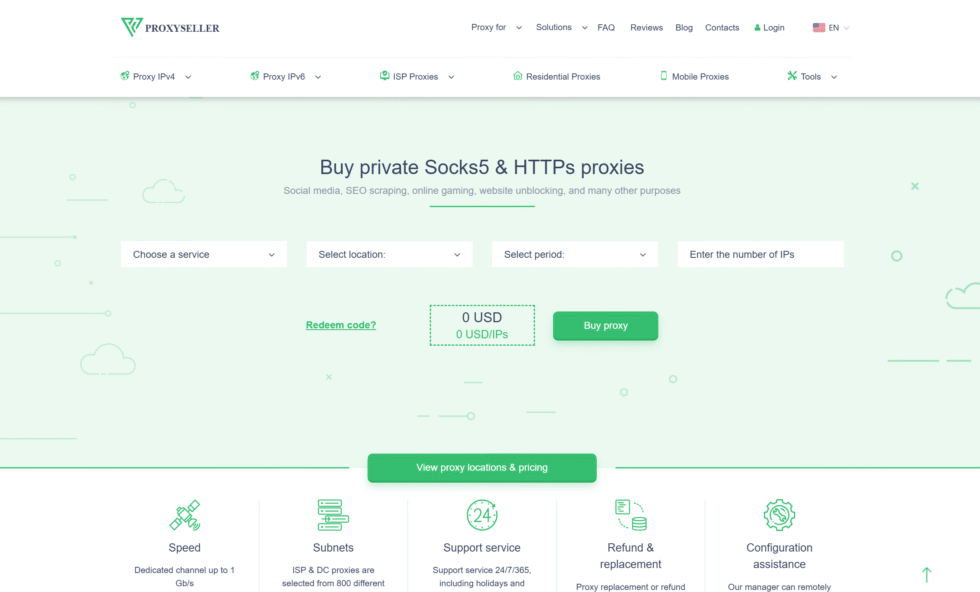
Proxy-Seller maintains a residential proxy network of more than 47 million IP addresses spanning over 220 locations. Targeting options reach country, region, city, ISP, and ASN levels, giving precise control for location-based testing with residential IPs. Users can configure rotation per request, by time interval, or as sticky sessions that hold an address for a defined window. Average response times sit near 0.35 seconds with success rates reported above 99.5 percent. The platform supports HTTP, HTTPS, and SOCKS5 protocols and provides a control panel with usage analytics. These capabilities support ad verification, price monitoring, market research, and collecting public web data for approved business use cases across a wide geographic footprint.
- Key features: 47 million-plus residential IPs, 220-plus locations, country to ASN targeting, per-request time-based or sticky rotation, HTTP HTTPS and SOCKS5 support, analytics dashboard.
- Accurate data: Response time approximately 0.35 seconds, success rate above 99.5 percent, broad location coverage including city and ISP selection, suitable for SEO monitoring and automation workflows.
20. Proxidize
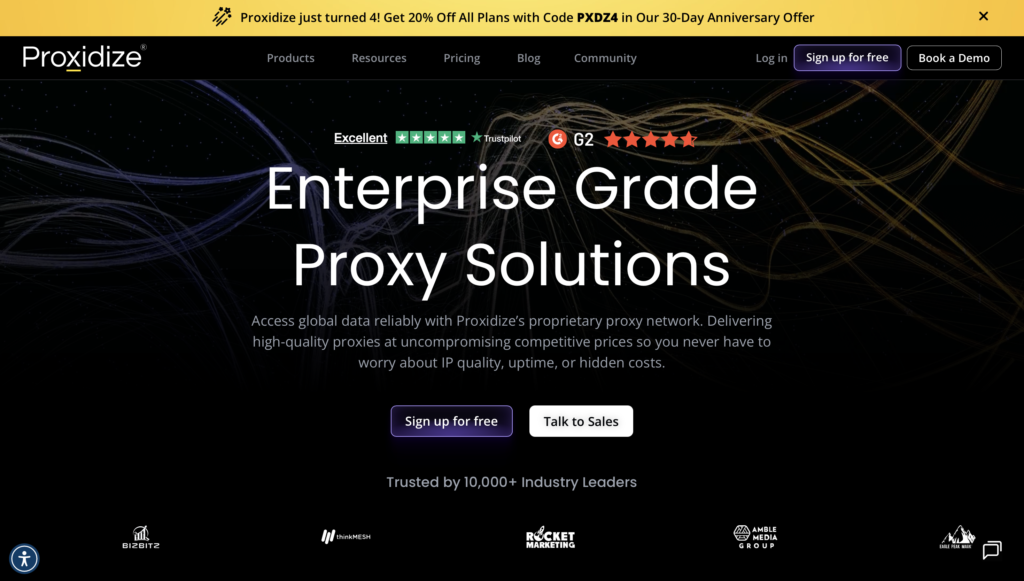
Proxidize specializes in managed cloud mobile and residential proxies built for automation and data collection workflows. The service evolved from self-hosted mobile proxy infrastructure into a cloud-managed platform that emphasizes reliability and session control. Users gain access to both mobile carrier-based addresses and residential IPs with rotation and sticky options. The platform supports high concurrency and includes tools for monitoring connection health. It is positioned for teams running ad verification, price monitoring, market research, and location-based testing with residential IPs that require stable mobile or residential routes. SOC 2 and ISO 27001 certifications indicate attention to operational security standards.
- Key features: Managed cloud mobile and residential proxies, rotation and sticky session controls, high concurrency support, connection health monitoring tools, SOC 2 and ISO 27001 certified infrastructure.
- Accurate data: Focus on mobile carrier and residential address types, cloud-managed delivery model, certifications for security compliance, suitable for automation and public data collection tasks.
How Rotating Proxies Enhance Snapchat Automation
Rotating residential proxies automatically switch IP addresses at set intervals or after each request, making automated activity appear as organic user behavior. This rotation prevents Snapchat from linking multiple requests to a single source, which is critical when automating likes, follows, Story views, or content posting across multiple accounts. Research shows that rotating proxies reduces bot detection rates by over 85% compared to static IPs.
The rotation frequency matters depending on your task. Session-based rotation maintains the same IP for 10-30 minutes, allowing you to complete login sequences and browse content without interruption. This approach works best for account management and engagement activities. Request-based rotation changes IPs with every action, making it ideal for web scraping and high-volume data collection where each request appears to come from a different user.
Combining rotating proxies with anti-detect browsers creates the most effective setup. While proxies change your IP address, anti-detect browsers modify your device fingerprint, canvas data, and WebRTC settings. This dual-layer approach makes it virtually impossible for Snapchat to correlate accounts, letting you scale operations from dozens to hundreds of profiles safely.
Mobile Proxies vs Residential Proxies for Snapchat
Mobile proxies route traffic through real mobile devices with carrier-assigned IP addresses from networks like AT&T, Verizon, or T-Mobile. These IPs carry the highest trust scores because Snapchat primarily operates as a mobile-first platform. Mobile proxies provide dynamic IP rotation through carrier NAT (Network Address Translation), making them extremely difficult to detect or block. The downside is cost, mobile proxies typically run 3-5x more expensive than residential options due to infrastructure complexity.
Residential proxies come from ISP-assigned home connections, offering a middle ground between datacenter proxies and mobile solutions. They work exceptionally well for desktop-based Snapchat management, automation tools, and tasks requiring longer session durations. Residential IPs cost less than mobile proxies while maintaining high success rates for bypassing detection. For most users managing Snapchat accounts, residential rotating proxies provide the best balance of performance, reliability, and affordability.
The choice depends on your specific needs. If you’re automating mobile app interactions or need maximum legitimacy, invest in mobile proxies. For desktop-based management, content scheduling, or analytics gathering, residential proxies deliver excellent results at lower costs. Many advanced users combine both types, using mobile proxies for critical account actions and residential proxies for less sensitive tasks like content research or competitor monitoring.
How to Set Up Proxies for Snapchat (Step-by-Step Guide)
Setting up a proxy for Snapchat starts with choosing the right type of connection. Many users pick rotating residential proxies when they need household-grade IPs that match everyday home network patterns. Others select mobile proxies for carrier-level addresses that align with phone-based activity.
First, gather your proxy credentials from the provider dashboard. You will need the host address, port number, username, and password. These details let you route Snapchat traffic through the selected IP.
On a desktop browser, open the proxy settings menu in Chrome or Firefox. Enter the host and port. Add the authentication details if required. Save the changes and test the connection by visiting a site that shows your current IP. Confirm the address matches the one assigned by the service.
For Android devices, go to Wi-Fi settings, long-press the active network, and choose modify. Select advanced options and switch the proxy setting to manual. Input the host, port, and any login information. Save and reopen the Snapchat app. The traffic now flows through the new IP.
iOS users can create a configuration profile with a tool like Apple Configurator or a third-party proxy app. Enter the server details and install the profile under Settings > General > VPN & Device Management. Once active, launch Snapchat to verify the connection.
Sticky sessions keep the same IP for a set period. This approach supports login sequences and short browsing periods without sudden changes. Request-based rotation switches the address more often and works well for lighter research tasks. Match the session style to the length of each activity.
City and country filters help when you need content from a specific area. Select the target proxy location inside the proxy dashboard before starting.
After setup proxy, open Snapchat and complete a simple action such as viewing a public Story. Check that the app loads normally and that the IP remains consistent during the session. Adjust the rotation interval if the connection feels unstable.
Best Practices for Snapchat Account Management with Proxies
Good account management begins with assigning one dedicated IP to each profile. Shared addresses can create patterns that platforms notice. Residential proxies supply unique household IPs that keep profiles separate.
Use sticky sessions for any activity that lasts more than a few minutes. A steady IP during login and early browsing supports natural behavior. Switch to shorter rotation only when the task involves many separate public data checks.
Match the proxy location to the account’s usual region. City-level targeting on mobile proxies or residential pools helps the connection look local. Keep activity levels steady. Start with light viewing and gradual engagement instead of sudden spikes. This pattern mirrors how real users interact with the app over time.
Pair the proxy with a clean browser environment. Clear cookies and cache between sessions when you switch profiles. Some users also change device fingerprints through separate tools to add another layer of separation.
Monitor connection quality. High success rates and low response times keep the app responsive. If a session slows down, rotate to a fresh IP from the same country or city pool. Document each profile’s assigned proxy. A simple list of usernames and matching credentials prevents mix-ups when managing larger groups. Review the list regularly and update any expired credentials. These habits support smooth multi-profile workflows and longer-term account stability.
Latest News In 2026
Proxy networks continue to expand support for mobile-first platforms. Providers now offer finer carrier-level filters that let users select specific mobile networks inside major markets. This change helps teams running location-based testing and public content reviews.
Session control tools have also improved. Dashboards let operators set exact sticky durations from five minutes to several hours with one click. The update reduces the need for custom scripts when handling longer profile sessions.
Proxy integration options grew as well. New endpoints work directly with common automation libraries and browser extensions. Teams can pull fresh IPs into existing scripts without rewriting large parts of their code.
Ethical sourcing standards tightened across the industry. More networks now publish clear peer-consent details and allow users to filter for fully verified residential proxy and mobile proxy pools. The shift gives researchers and marketers greater confidence in the origin of each address.
Geo-targeting accuracy reached new levels in several regions. City and ZIP code options now cover more secondary markets, supporting localized public data collection and ad verification tasks.
FAQ
What makes a proxy good for Snapchat?
A quality Snapchat proxy must provide authentic residential or mobile IP addresses that aren’t flagged in Snapchat’s databases. The proxy should offer IP rotation capabilities to distribute requests across multiple addresses, preventing pattern detection. Fast response times under 1 second ensure smooth Story uploads and real-time messaging. Look for providers offering city-level targeting, SOCKS5 protocol support, and at least 99% uptime guarantees. The best proxies source IPs ethically from real devices and ISPs rather than datacenter ranges.
Can Snapchat detect proxy usage?
Snapchat can detect proxies if they come from known datacenter IP ranges, shared proxy pools, or blacklisted addresses. The platform uses sophisticated fingerprinting that checks IP reputation, connection consistency, and behavior patterns. However, high-quality residential and mobile proxies that rotate IPs naturally avoid detection because they appear identical to regular home or mobile connections. Using sticky sessions for complete actions and pairing proxies with anti-detect browsers significantly reduces detection risk.
How many proxies do I need for multiple Snapchat accounts?
You should use one unique proxy IP per Snapchat account to prevent the platform from linking your profiles together. If managing 10 accounts, you need at least 10 distinct IP addresses rotating on separate sessions. For larger operations with 50+ accounts, rotating residential proxy pools that assign different IPs to each profile works efficiently. Some marketers use a 2:1 ratio (two accounts per IP) for low-activity profiles, but a dedicated 1:1 assignment provides maximum safety.
Are free proxies safe for Snapchat?
Free proxies are unsafe for Snapchat because they typically come from public datacenter IPs that the platform automatically flags and blocks. These proxies often log your data, inject malware, or sell your credentials to third parties. Free proxy servers have poor performance with high latency and frequent downtime, making account management impractical. More critically, thousands of users share the same free proxy IPs, meaning Snapchat sees suspicious activity patterns that trigger immediate bans. Professional residential proxy services starting at a few dollars per gigabyte provide the security and reliability necessary for protecting your accounts.
What session type fits longer Snapchat activity sessions?
Sticky sessions hold the same IP for a chosen time window and work well when a profile needs to stay connected through login, Story viewing, and light interaction. The fixed address reduces interruptions that can occur with frequent changes during extended use. Providers usually let users set the duration in minutes or hours so the session matches the planned activity length. Once the window ends the connection can rotate cleanly or close. This approach pairs naturally with residential proxies that supply stable household-grade addresses.
How does location targeting work with Snapchat content?
Country, city, and ZIP code filters route the connection through an exit node in the chosen area so public Stories and Discover sections appear as they would to a local viewer. The selection happens in the dashboard before the session begins and applies to every request that follows. Finer filters help teams review regional content differences or test how material displays across markets. Coverage maps and available cities stay listed on the proxy locations page for easy reference. The same targeting options appear in both residential and mobile pools.
Which protocols support Snapchat proxy connections?
HTTPS proxy and SOCKS5 proxy handle the traffic Snapchat generates on both web and mobile versions. HTTPS works with most browsers and simple configuration tools while SOCKS5 offers broader compatibility for apps and custom scripts. Either protocol carries authentication details so the proxy can identify the authorized user. Choice depends on the device or software in use and the level of flexibility required.
Do mobile proxies suit mobile app based Snapchat tasks?
Mobile proxies route through real carrier networks and match the connection style most people experience when they open the Snapchat app on a phone. The addresses come from 3G, 4G, and 5G pools so the traffic looks consistent with typical mobile usage. Short and medium sessions benefit from the natural rotation that carrier networks already apply. Teams running app-focused checks often prefer these pools for their alignment with phone behavior.
How can sticky sessions support consistent profile activity?
A sticky session keeps one IP active for the full length of a login, browsing period, or content review so the profile experiences a steady network presence. The fixed address supports smoother transitions between actions without mid-session shifts. Users set the hold time to match the expected duration of the task and then allow rotation once the work ends. This method fits both residential and mobile pools, depending on the preferred IP type.