
The best private mobile proxies route traffic through real 4G and 5G carrier IPs. Sites see a phone on a live network, not a server farm. Teams pick a private mobile identity for ad verification, market research, price monitoring, and location-based testing with residential proxy IPs when the session must stay consistent.
Discover the Best Private Mobile Proxies in 2026 – ResiProx.
Private Mobile Proxies vs Shared Mobile Pools
A shared mobile pool hands you a carrier address that many other customers can also draw. That can still work for broad public data collection and quick checks. A private setup is different. You keep one identity for one workflow, so another team’s traffic does not sit on the same exit.
Private can mean a dedicated SIM port. It can also mean a named sticky session that returns to the same carrier path for a set window. Both beat a random hop when a login, a checkout test, or a multi-step ad click has to finish on the address it started on. Rotating mobile proxies still help when you need a fresh carrier path on each request. Sticky or dedicated options fit work that has state to lose. The best private mobile proxies keep those two modes in one product. You rotate for sweeps. You hold an IP when the task is a session, not a single page view.
Why Carrier IPs Score Higher Trust Than Home Broadband
Mobile carriers do not give every phone its own public address. Many real subscribers share one public IP through carrier-grade NAT. Reputation systems treat that pattern as normal phone traffic. A home broadband line is still trusted. A carrier line is trusted in a different way, because it looks like a handset on Verizon, AT&T, T-Mobile, Vodafone, or another live network.
That is why 4G mobile proxies and 5G mobile proxies show up in mobile-first checks. In-app ads, mobile search pages, and phone-only landing pages change by network. A data center range does not show that view. Even rotating residential proxies exit through home lines, not cellular ones. Private use of those carrier IPs is about consistency. The same country, the same city when you need it, and the same carrier for the life of the task. A new country on every request is what makes a session look odd, even if every IP is a real mobile address.
Best Private Mobile Proxies
1. ResiProx – Best Private Mobile Proxies
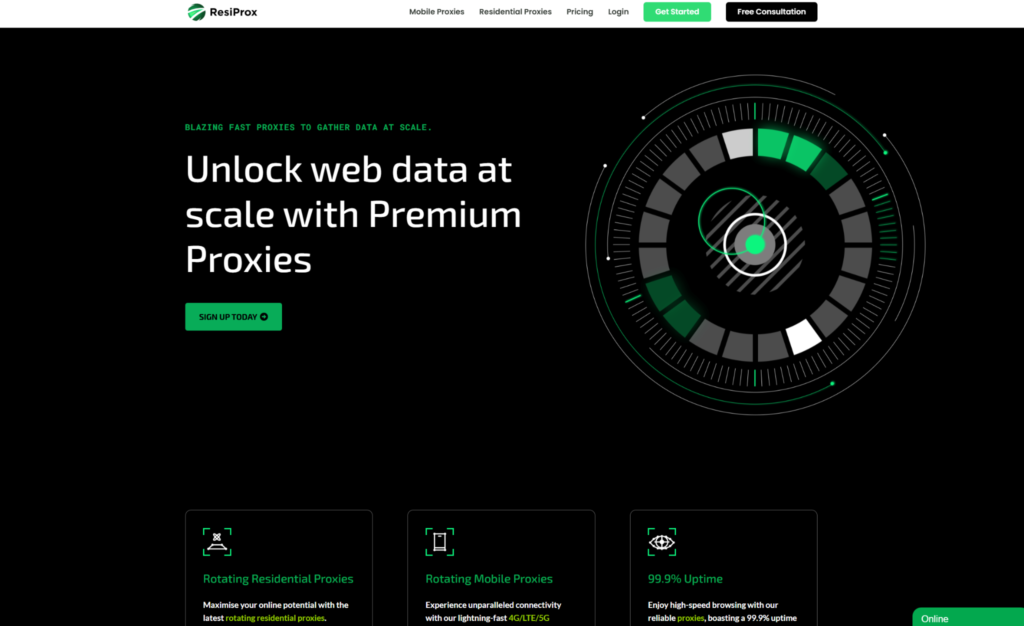
Private mobile proxies give teams a private-feeling carrier identity without waiting on extra hardware. Traffic exits on real 3G, 4G, LTE, and 5G networks. You pick rotating or sticky sessions from one dashboard, then keep that profile for ad verification, market research, and location-based testing with residential IPs when a longer hold is required.
Resiprox Premium Proxies – Unlock the Web with Power and Precision
Introducing Resiprox, the ultimate proxy solution designed to supercharge your online operations. With our Residential Proxies and Mobile Proxies, you get unmatched access to web data at scale, robust security, and seamless connectivity all backed by a free trial to experience the difference firsthand.
Product Features
- Rotating Residential Proxies: Harness the power of 10M+ ethically-sourced IPs across 180+ countries. These proxies rotate dynamically to support large-scale public data collection, market research, and workflows that benefit from automatic IP rotation, delivering 99.9% uptime and precise targeting at the country, city, or ZIP code level.
- Rotating Mobile Proxies: Powered by 4G/LTE/5G networks, our mobile proxies offer lightning-fast speeds with <0.3s response times and a 99.9% success rate perfect for real-time applications.
- Global IP Network: Tap into millions of IPs, including 3.5M+ in the US, 1.8M+ in Brazil, 3.1M+ in India, and more, ensuring coverage wherever you need it.
- Advanced Capabilities: Enjoy HTTPS proxy & SOCKS5 proxy support, unlimited concurrent sessions, and flexible rotating or sticky sessions, all wrapped in premium IP quality.
Product Specifications:
- Performance: High-speed browsing with 99.9% uptime and 24/7 expert support.
- Integration: Seamlessly works with Node.js, Python, PHP, Selenium, and more, featuring a dynamic endpoint generator and robust API access.
What It’s Built For:
Resiprox proxies are your all-in-one tool for:
- Public Data Collection: Collect public web data for approved business use cases, market research, and growth insights.
- Price Monitoring: Track prices across regions in real-time.
- Multi-Account Workflows: Run separate QA, monitoring, and research workflows across multiple accounts.
- SEO & Ad Verification: Monitor rankings and verify ads globally.
- Cybersecurity: Protect your brand and test applications securely.
- Specialized Tasks: From high-volume monitoring of limited-release products to travel fare aggregation, Resiprox delivers.
Why Resiprox Stands Out:
This isn’t just a proxy, it’s a game-changer. With comprehensive documentation, multi-platform compatibility, and a team of experts available 24/7, Resiprox ensures your projects run smoothly. Whether you’re a business scaling operations, a researcher gathering data, or a developer testing apps, our proxies adapt to your needs with precision and reliability.
Resiprox Premium Proxies – Your Key to a Smarter, Faster, and More Connected Online World.
Click here to discover our :
2. ProxyEmpire
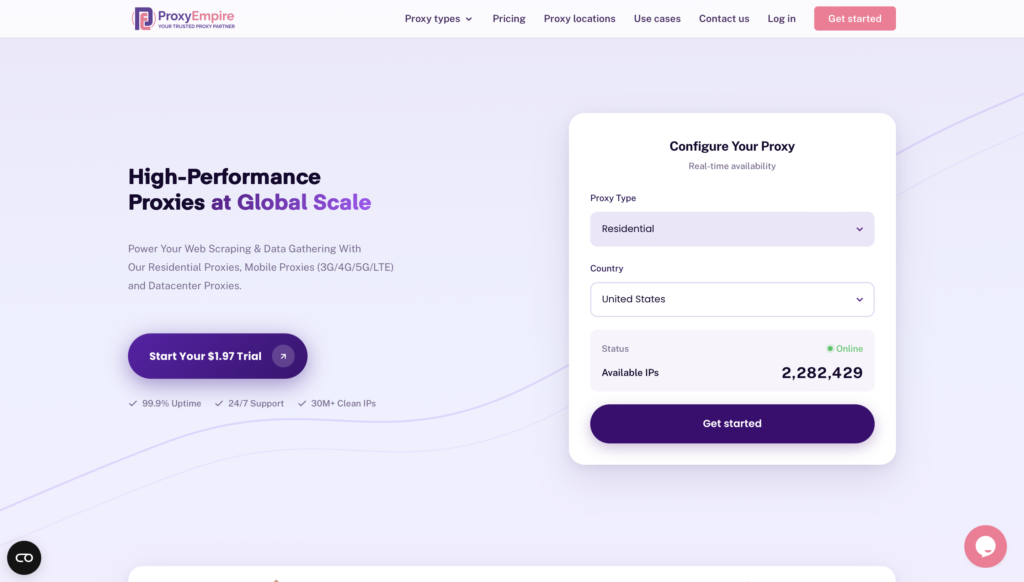
ProxyEmpire runs rotating and dedicated mobile connections on real carrier networks across many countries. Teams use it when they want both a shared pool and a more private port style product in one vendor. Session controls cover automatic rotation and sticky holds. Targeting reaches country, city, carrier, and ASN. The stack also includes residential and datacenter products, which helps mixed research work. Setup is familiar: host, port, username, and password. Some users find the catalog wide enough that picking the right mobile mode takes extra time.
Key features
- Rotating mobile and dedicated mobile options
- Country, city, carrier, and ASN targeting
- HTTP and SOCKS5
- Dashboard session controls
Facts and information
- Large published mobile and residential inventory
- Coverage across many countries
- Often listed for social QA and public data collection
- Headquarters commonly listed in the United States
3. Bright Data
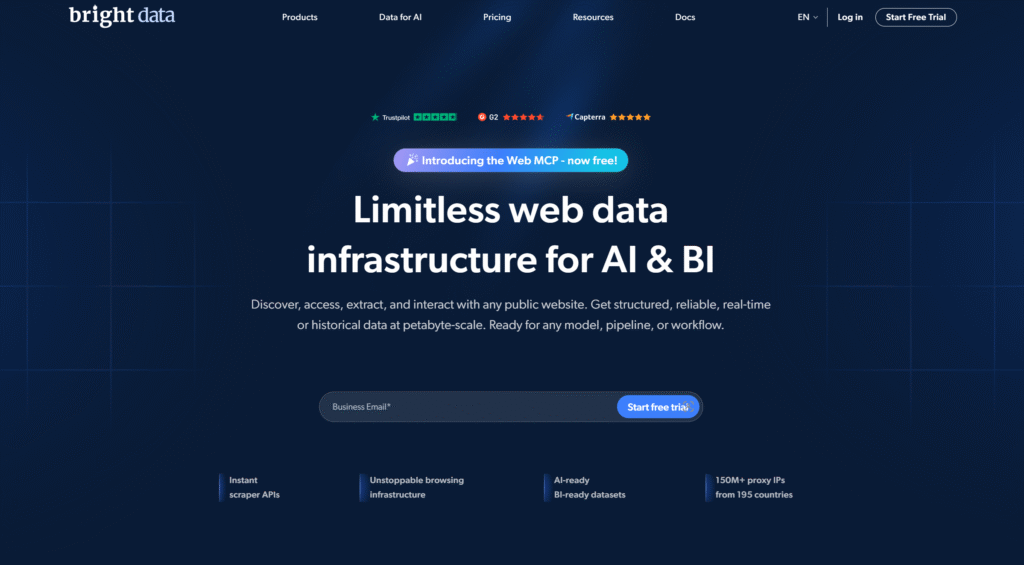
Bright Data sells an enterprise mobile network with deep carrier and city controls. The Proxy Manager and audit tools suit procurement-heavy teams that need named carriers in named cities. Rotation is flexible, and sticky windows support multi-step checks. The platform is powerful. It can feel heavy if you only need four fields and a single private session. Compliance tooling is a clear strength for regulated research programs.
Key features
- Carrier, city, ZIP, and ASN targeting
- Advanced rotation controls
- Proxy Manager and compliance workflows
- HTTP and HTTPS
Facts and information
- Mobile inventory across many countries
- Strong fit for enterprise ad verification and market research
- More controls than most mid-market dashboards
- Headquarters in Israel
4. Oxylabs
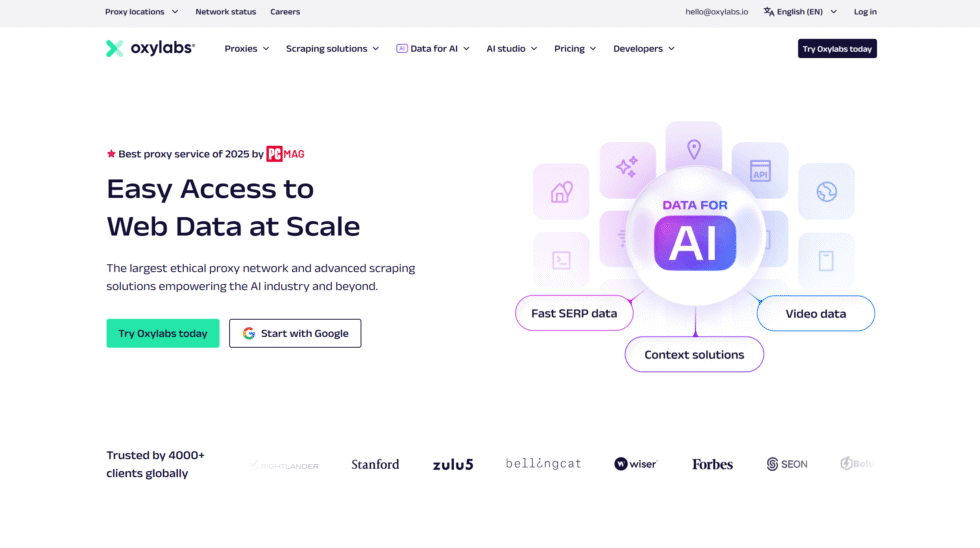
Oxylabs positions mobile as an enterprise reliability product. Targeting can go from country down to city, coordinates, and ASN. Auto-rotation is the default pattern for collection. Teams that already use Oxylabs scraper APIs often keep mobile on the same bill. The network is polished. Entry is aimed at larger pipelines more than a one-person private session. Support depth is a common reason teams stay.
Key features
- Real mobile device IPs
- Country, state, city, coordinate, and ASN targeting
- Auto-rotating sessions
- HTTP, HTTPS, and SOCKS5 in the wider stack
Facts and information
- Large published mobile pool
- High uptime claims and documented response times
- Strong fit for approved public data pipelines
- Headquarters in Lithuania
5. Decodo
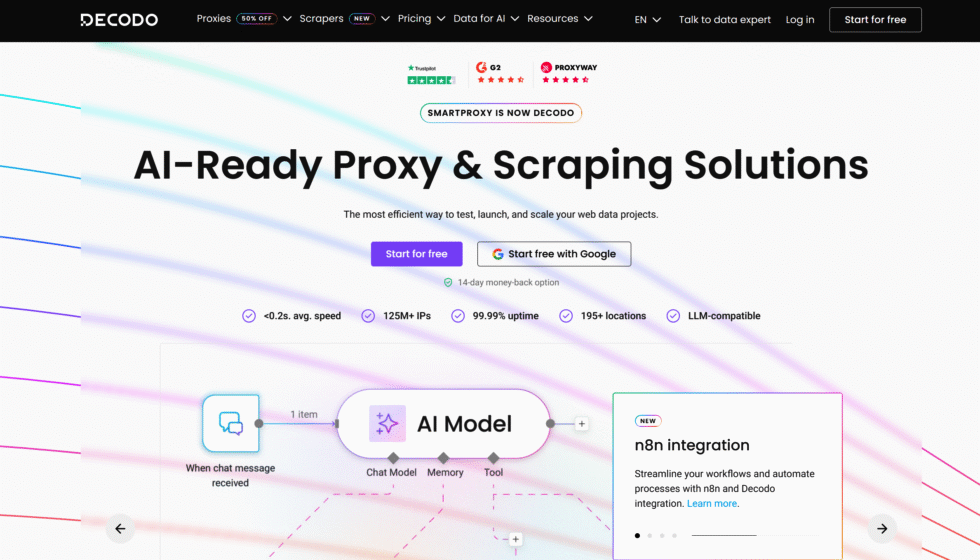
Decodo, formerly Smartproxy, is a mid-market mobile option with a clean dashboard and rotating carrier IPs. Carrier breadth is a talking point, with many networks cited across many locations. Teams that already buy residential or ISP from Decodo can keep mobile in the same workspace. Sticky depth is lighter than some private-SIM vendors. The product is easy to start and less custom than a hardware port.
Key features
- 4G and 5G carrier IPs
- Rotating mobile setup
- Country and city targeting
- Shared dashboard with other proxy types
Facts and information
- Broad carrier list in vendor docs
- Fit for teams that want one mid-market vendor
- Simple onboarding compared with enterprise managers
- Headquarters in Cyprus
6. SOAX
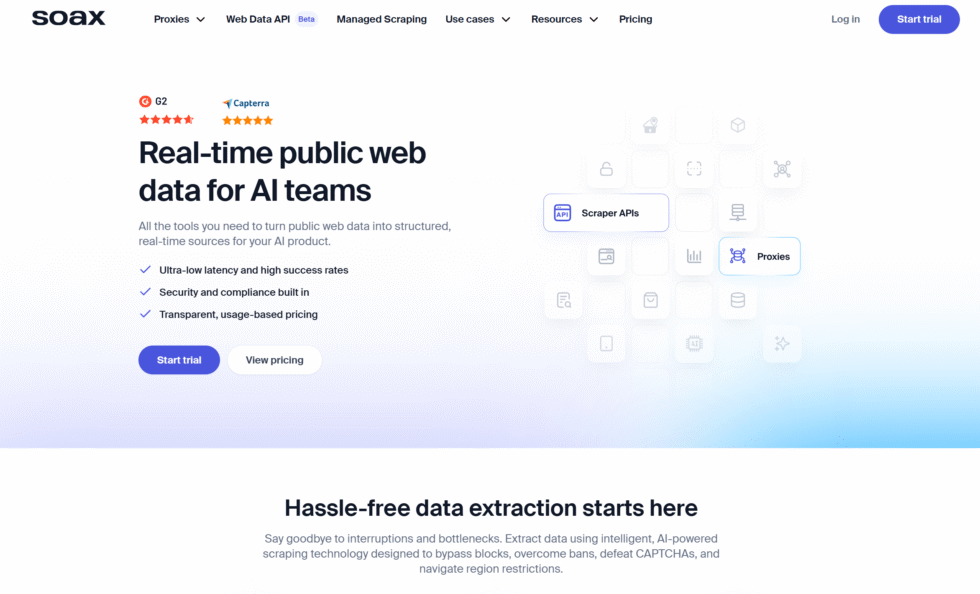
SOAX publishes a very large mobile pool and lets credits sit next to residential and ISP traffic. Targeting includes country, region, city, ISP, and ASN. Sticky sessions can be set for shorter account-style work. UDP and QUIC support help some app tests. The unified credit model is handy. It is less of a “this port is only yours” product than a private SIM platform.
Key features
- Named-carrier targeting
- Rotating plus sticky sessions
- HTTP, HTTPS, SOCKS5, UDP, and QUIC
- Shared credits across proxy types
Facts and information
- One of the larger published mobile pools
- Useful when mobile checks sit next to home-line collection
- Sticky windows are finite
- Often grouped with mid-to-upper market vendors
7. IPRoyal
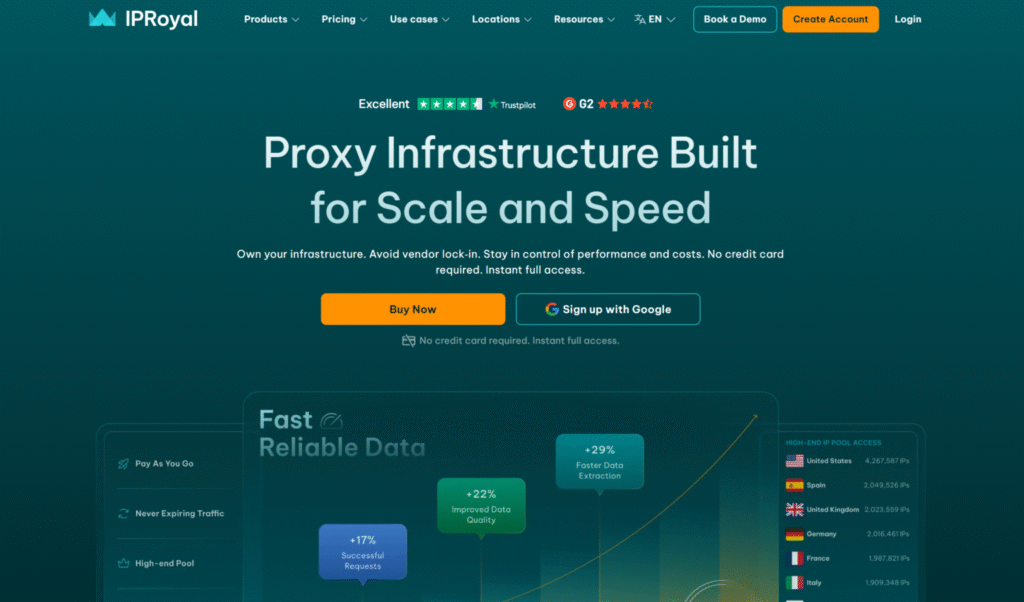
IPRoyal sells rotating mobile and dedicated mobile lines. The dedicated model is closer to true private use, because a line is assigned rather than borrowed from a huge shared pool. Carrier names such as Vodafone, Orange, Verizon, and T-Mobile appear in targeting. The rotating pool is smaller than the biggest enterprise lists. That can be fine for social QA and smaller research teams.
Key features
- Rotating mobile or dedicated mobile
- Country, city, carrier, and network-type filters
- HTTP and SOCKS5
- Account-style dedicated lines
Facts and information
- Mix of shared and private-style products
- Common pick for social and account workflows
- Dedicated lines suit teams that want exclusivity
- Headquarters in Lithuania
8. IPBurger
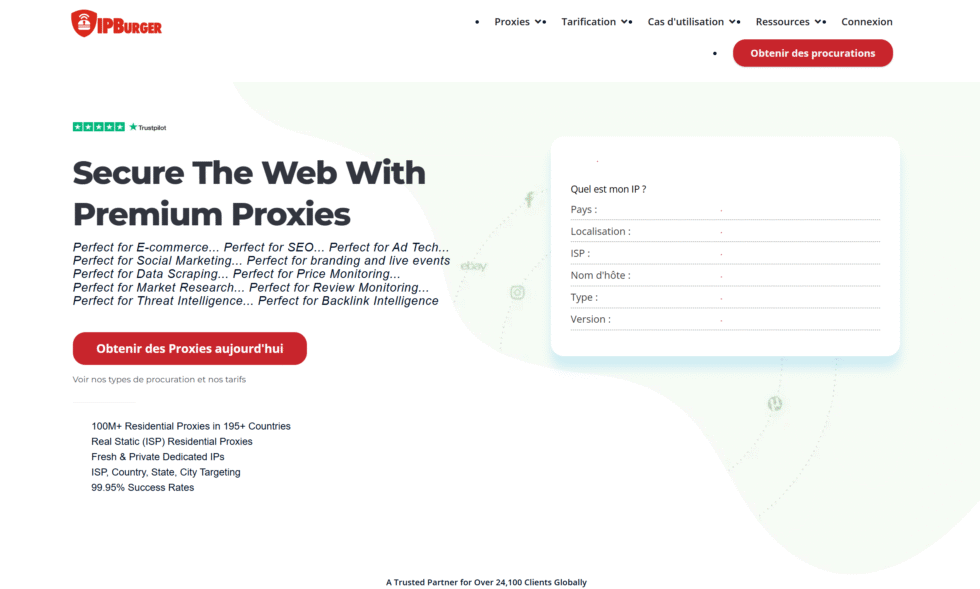
IPBurger sells mobile as named sessions on a shared carrier pool. You change a session ID in the username and get another identity. Sticky time is measured in minutes, not days. Country, state, city, and mobile ISP targeting is available on every plan they publish. The model is fast to start. It is not the same as owning a modem. Teams that need a hold measured in days still look at dedicated hardware.
Key features
- Named session IDs
- Rotating or sticky mobile exits
- Country, city, and mobile ISP targeting
- HTTP credentials for browsers and scripts
Facts and information
- Large published carrier pool
- Unlimited concurrent sessions on published plans
- Sticky holds are short compared with private SIMs
- Strong write-up on keeping one identity per account
9. Lightning Proxies
Lightning Proxies offers a large mobile pool with country and ISP targeting, automatic rotation, and sticky sessions that can last many hours. Backconnect ports and IP allowlists are part of the feature set. The product suits high-volume collection and longer sticky work than some session-ID vendors. Inventory is still a shared carrier pool. Private exclusivity is not the same as a single SIM in your name.
Key features
- Country, city, and ISP targeting
- Sticky or rotating modes
- IP allowlisting and backconnect ports
- Unlimited connections on published plans
Facts and information
- Large mobile inventory across many countries
- Long sticky windows relative to some peers
- Chrome extension for profile switching
- Fit for ad verification and mobile web testing
10. Proxidize
Proxidize is built around private SIM hardware and hosted mobile ports. You control rotation in a dashboard or API, and you pick carriers from the panel. This is the closest model to “this line is mine.” It fits premium account work and production setups where a shared pool is not acceptable. You trade pool size for exclusivity. Hosted plans exist if you do not want to run your own radios.
Key features
- Private SIM-based 4G and 5G
- Manual, API, or per-proxy rotation
- Carrier selection in the dashboard
- Hosted or self-hosted modes
Facts and information
- Designed for exclusive ports, not a giant shared pool
- Common pick when shared-pool reuse is a concern
- More operational overhead than a four-field backconnect
- Strong match for private mobile infrastructure
11. The Social Proxy
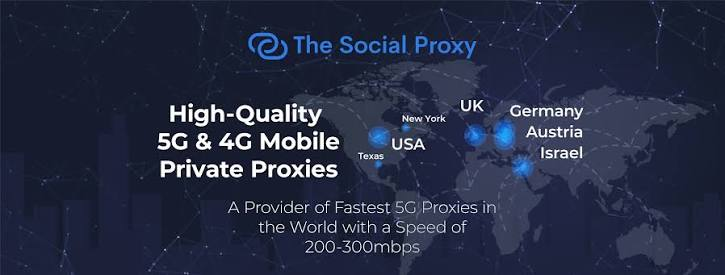
The Social Proxy focuses on dedicated private 4G IPs from real SIM cards, with social QA as the main story. Clean, non-shared connections are the pitch. That helps when each profile should keep its own carrier path. Coverage and pool size are narrower than global backconnect networks. The product is specialized rather than a full research suite.
Key features
- Dedicated private 4G mobile IPs
- Real SIM sourcing
- Non-shared connections
- Social-platform oriented setup
Facts and information
- Built for profile isolation
- Smaller, focused inventory
- Less of a general scraping network
- Useful when one IP per profile is the rule
12. ASocks
ASocks sells mobile network IPs with country, city, and ASN targeting on a simpler mid-market plan. Rotation is the default. Pricing is often framed per proxy rather than per gigabyte, which some teams like for planning. Tooling is lighter than enterprise managers. It is a straightforward rotating mobile product, not a private SIM farm.
Key features
- Rotating mobile IPs
- Country, city, and ASN targeting
- Simple onboarding
- Mid-market dashboard
Facts and information
- Published mobile inventory across many locations
- Predictable per-proxy planning for some teams
- Fewer private-port controls than SIM vendors
- Fit for basic rotating carrier work
Named Sessions vs Private SIM Ports
Two private models show up again and again. A named session lives in the username. Change the session string and you start another identity. Reuse the string and you try to return to the same path for a sticky window. This is how many backconnect mobile proxies work. You pay for traffic. You do not wait for a modem to ship.
A private SIM port is a physical or hosted radio. Only your project uses that line. Rotation is manual or on a timer you set. Hold time can last much longer than a short sticky window. The cost is operational: ports, SIMs, and sometimes hardware. Pick named sessions when you need many identities at once for approved research and QA. Pick a SIM port when one address must stay yours. Dedicated mobile proxies sit in that second camp. Many teams run both: sessions for breadth, ports for the few workflows that cannot share.
What Keeps a Private Mobile Session Steady
The IP type is only the first check. Platforms also read whether the next request still looks like the same phone in the same place.
Keep these aligned:
- One session ID or one port per workflow
- One country, and a city or carrier when the task is local
- Sticky mode for logins and multi-step checks
- Rotating mode for sweeps with no login state
- The same protocol and client each time, whether that is HTTP proxy, HTTPS proxy, and SOCKS5 proxy an anti-detect profile
SOCKS5 mobile proxy setups help some desktop tools. Browser tools usually want HTTP. A trusted carrier IP does not fix a noisy fingerprint or a sudden jump from Dallas to Tokyo. Private mobile work is boring on purpose: same network story, same tool, same task.
When Private Mobile Beats Other Proxy Types
Use this as a plain fit check.
| Need | Better fit |
| Phone-like trust and in-app or mobile-web checks | Private or sticky mobile |
| High-volume public pages with less mobile logic | Residential proxies |
| One address that must not move for a long time | Static ISP or a dedicated SIM port |
| Fast, cheap technical checks | Datacenter |
Private residential proxies still matter when the target treats home broadband as enough. Mobile earns its place when the page or app treats a phone differently from a laptop. USA private proxy work often mixes both: a carrier exit for mobile surfaces, a home-line exit for desktop surfaces. If the job is approved public data collection across many URLs, rotate. If the job is one account, one city, one carrier, stay sticky or go dedicated.
FAQ
What Makes a Mobile Proxy Private?
Private means the identity is reserved for your workflow during the session. That can be a dedicated mobile proxy SIM port or a named sticky session that other customers are not using at the same time. Shared rotating pools can still use real carrier IPs. They are not private in the same sense, because the next customer can draw a nearby address. For account-style QA, keep one session or one port per workflow so the carrier path stays consistent from the first request to the last.
Do Private Mobile Proxies Replace a VPN or a Browser Profile?
No. A mobile proxy moves only the traffic you point at it. A VPN routes the whole device. Neither one sets cookies, canvas, or how you click. Pair the carrier exit with a clean client and steady behavior. The IP is the first check a site runs, not the only one, so the same tool and the same location story should stay in place for the full session.
Should I Use Rotating or Sticky for Private Work?
Rotate when each request can stand alone, such as ad verification sweeps and public listing checks on rotating mobile proxies. Use sticky when a login or a multi-step path must finish on the same carrier IP. Dedicated ports fit the few workflows that need a hold longer than a normal sticky window. Mixing the two modes in one plan is normal. Switching mid-login is what makes a session look inconsistent.
Can I Target a Carrier and a City at the Same Time?
Many networks let you set country, then city or mobile ISP, depending on the vendor. Some allow only one fine filter at a time. Match the carrier to the market you are testing, such as Verizon or T-Mobile in the United States, or a local MNO elsewhere. City filters help when the public page changes by metro. The proxy locations list shows where those country and city exits are available before you stack filters in the username or dashboard.
How Do Private Mobile Proxies Differ From Residential Proxies?
Residential proxies exit through home broadband. Private mobile proxies exit through a carrier network, so the site sees phone traffic on 4G, LTE, or 5G. That carrier path is the reason mobile is used for in-app ads, mobile search pages, and phone-only landing pages. Home-line IPs still fit high-volume public pages that do not need a mobile network story. Many teams keep both: a private mobile identity for mobile-first checks, and a home-line identity for desktop research.
Read Also:
- What Are Mobile Proxies? (2026 Updated Guide)
- Top 19 Best Dedicated Mobile Proxies in 2026
- Top 25 Best 4G Mobile Proxies in 2026
- Top 35 Best 5G Mobile Proxies in 2026
- Top 10 Best Private Residential Proxies in 2026
Discover the Best Private Mobile Proxies in 2026 – ResiProx.