
The best fast residential proxies for public data collection are clean residential IPs, stable sessions, and fewer retries on live pages. Fast routes matter when many requests run at once, and each retry wastes time.
Discover the Best Fast Residential Proxies in 2026 – ResiProx.
What Makes a Residential Proxy Fast

A fast residential proxy finishes the job, not just the first packet. Raw latency helps. Clean home IPs help more. If a request must retry, wait on a challenge, or drop mid-session, the “fast” route still feels slow.
The best fast residential proxies keep three things in balance:
- Quick first response on public pages
- Stable sessions when a workflow must stay on one IP
- High request completion so parallel jobs do not stall
Rotation speed is only useful when the next IP is also clean. Sticky time is only useful when that IP stays healthy. Rotating residential proxies fit large public data collection and market research. A longer sticky session fits login-style checks, QA paths, and location-based testing with residential IPs.
Protocol choice also changes feel. HTTPS is simple for browsers and scripts. SOCKS5 is often better for mixed tools. Some stacks now add HTTP/3 and QUIC for shorter handshakes. None of that replaces IP quality. A short route on a tired IP still burns time.
How Fast Residential Proxies Are Tested
Marketing pages talk about “lightning” routes. Useful tests look at completed work. Independent reviews in 2026 ran live browsing, scripted collection, search checks, and store-page tests. Many teams used Python, cURL, and browser automation on the same public targets.
A fair speed check usually covers:
- How often a request finishes without a retry
- How long the first useful response takes
- How often a page returns a challenge instead of content
- Whether the chosen country or city matches the public view
- How fast setup is inside the dashboard and API
One-off pings mislead. A proxy can look quick on an empty test site and drag on a busy store page. Run enough requests to see retries. Mix rotating and sticky modes. Compare residential proxies against mobile proxies on the same workflow if the target treats carrier IPs differently. If two networks feel close on latency, pick the one that needs fewer repeats. That is the network that finishes the crawl first.
Best Fast Residential Proxies
1. ResiProx – Best Fast Residential Proxies
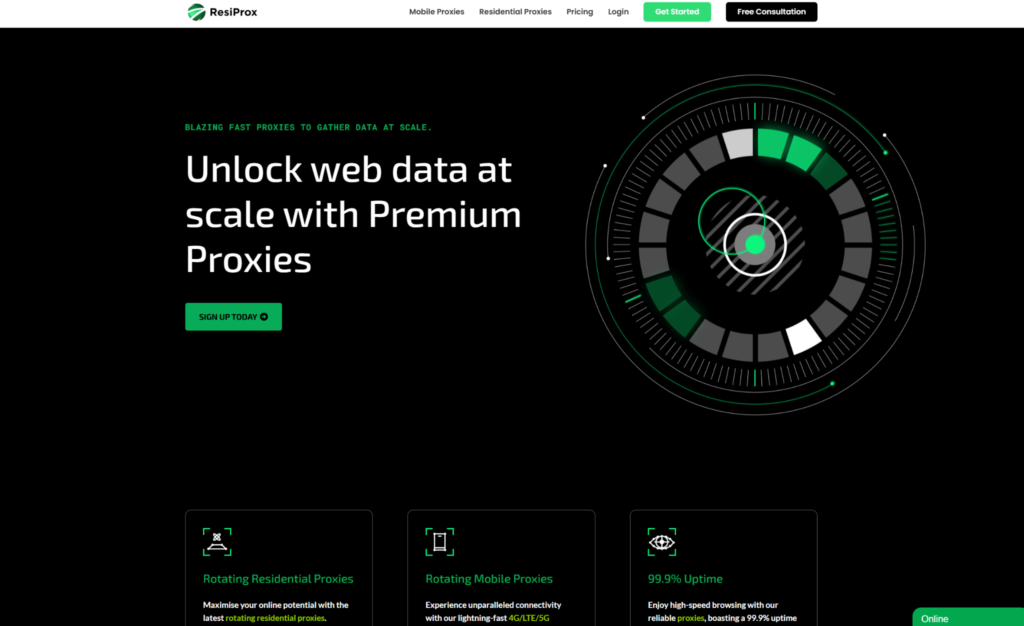
Fast residential proxies from ResiProx are built for teams that need home IPs that stay quick under real load. The network uses ethically sourced residential routes, rotating and sticky sessions, and both HTTPS and SOCKS5. Requests can refresh on each call for public data collection, or hold one IP when a checkout, form, or QA path needs continuity. Location-based testing covers many supported countries, with city and ZIP options for local page checks.
Resiprox Premium Proxies – Unlock the Web with Power and Precision
Introducing Resiprox, the ultimate proxy solution designed to supercharge your online operations. With our Residential Proxies and Mobile Proxies, you get unmatched access to web data at scale, robust security, and seamless connectivity all backed by a free trial to experience the difference firsthand.
Product Features
- Rotating Residential Proxies: Harness the power of 10M+ ethically-sourced IPs across 180+ countries. These proxies rotate dynamically to support large-scale public data collection, market research, and workflows that benefit from automatic IP rotation, delivering 99.9% uptime and precise targeting at the country, city, or ZIP code level.
- Rotating Mobile Proxies: Powered by 4G/LTE/5G networks, our mobile proxies offer lightning-fast speeds with <0.3s response times and a 99.9% success rate perfect for real-time applications.
- Global IP Network: Tap into millions of IPs, including 3.5M+ in the US, 1.8M+ in Brazil, 3.1M+ in India, and more, ensuring coverage wherever you need it.
- Advanced Capabilities: Enjoy HTTPS proxy & SOCKS5 proxy support, unlimited concurrent sessions, and flexible rotating or sticky sessions, all wrapped in premium IP quality.
Product Specifications:
- Performance: High-speed browsing with 99.9% uptime and 24/7 expert support.
- Integration: Seamlessly works with Node.js, Python, PHP, Selenium, and more, featuring a dynamic endpoint generator and robust API access.
What It’s Built For:
Resiprox proxies are your all-in-one tool for:
- Public Data Collection: Collect public web data for approved business use cases, market research, and growth insights.
- Price Monitoring: Track prices across regions in real-time.
- Multi-Account Workflows: Run separate QA, monitoring, and research workflows across multiple accounts.
- SEO & Ad Verification: Monitor rankings and verify ads globally.
- Cybersecurity: Protect your brand and test applications securely.
- Specialized Tasks: From high-volume monitoring of limited-release products to travel fare aggregation, Resiprox delivers.
Why Resiprox Stands Out:
This isn’t just a proxy, it’s a game-changer. With comprehensive documentation, multi-platform compatibility, and a team of experts available 24/7, Resiprox ensures your projects run smoothly. Whether you’re a business scaling operations, a researcher gathering data, or a developer testing apps, our proxies adapt to your needs with precision and reliability.
Resiprox Premium Proxies – Your Key to a Smarter, Faster, and More Connected Online World.
Click here to discover our :
2. ProxyEmpire
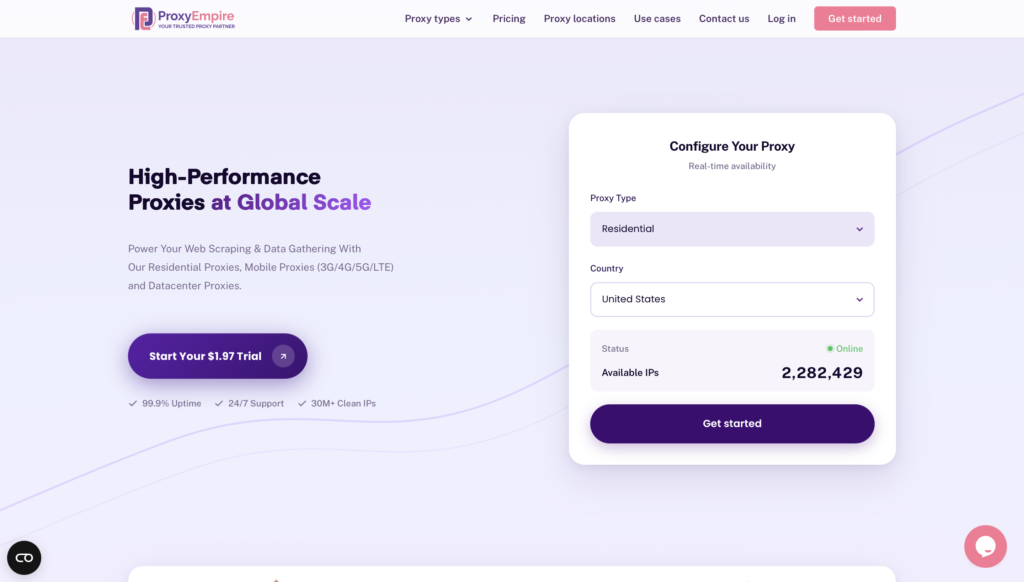
ProxyEmpire is the pick when a fast residential route is not the only network a week needs. The same account covers rotating residential, static residential (ISP), unlimited residential, rotating mobile, dedicated mobile, and rotating datacenter. That mix is the practical speed feature. A public crawl can stay on home IPs. A carrier-sensitive app check can move to mobile without a second login. A long QA path can sit on a static residential IP instead of fighting rotation.
Response times in recent reviews sit in a mid-fast band rather than the shortest enterprise group. Neutral-target probes in 2026 have shown median responses around 500ms with high completion. Older scripted checks often landed near 0.6s to 1.8s depending on country, with Asia slower than the US and Europe. Store and search pages are a separate test. Run those yourself. A competitor echo-style benchmark reported much lower completion. Other probe sets did not. If two networks feel close on the first packet, keep the one that finishes your pages with fewer retries.
Product features
- Rotating residential proxies with country, region, city, ISP, and ASN filters
- Sticky sessions and custom rotation, or a new IP on each request
- Static residential and unlimited residential plans beside the rotating pool
- Rotating and dedicated mobile proxies for carrier-style paths
- HTTP, HTTPS, and SOCKS5, with unlimited concurrent sessions on stated residential plans
- Non-expiring rollover bandwidth on traffic purchases
What it is built for
- Public data collection and market research that spikes one week and idles the next
- Price monitoring and ad verification when the public page must match a city or ISP
- Location-based testing with residential IPs, then a mobile pass on the same account
- Multi-step QA that needs a sticky or static residential IP
- Teams that want residential speed without a full parsing platform
3. Oxylabs
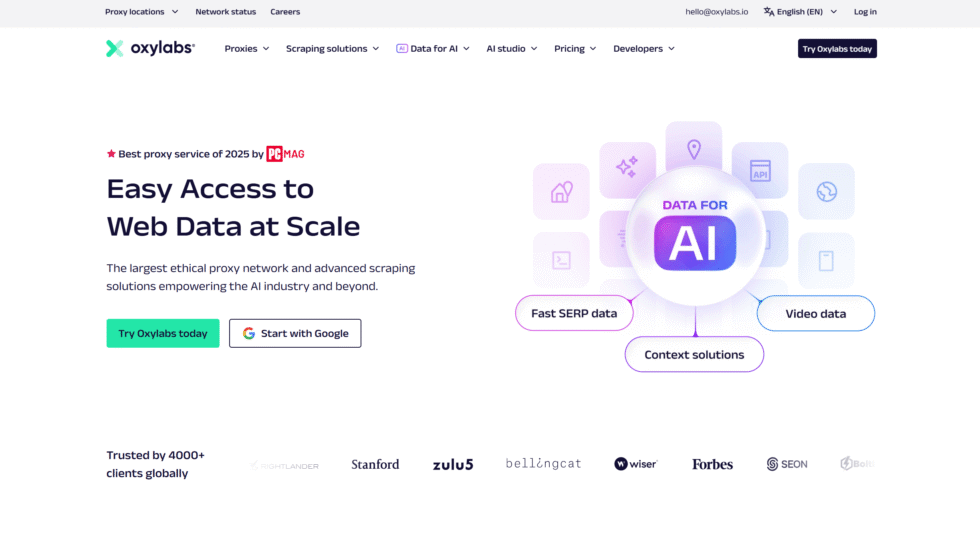
Oxylabs, based in Vilnius, Lithuania, is built for companies that collect public web data all day. The residential pool is large, and many live tests show short response times with very high completion on search pages, store pages, and monitoring jobs. City and ZIP filters help location-based testing with residential IPs when a local public view matters. Dedicated support and account managers suit bigger teams that need help wiring rotation into an existing stack. The platform can feel like more product than a small script needs. Rotation and session tools are aimed at continuous monitoring, search tracking, and market research rather than one-off checks. HTTP, HTTPS, and SOCKS5 cover common clients. Unlimited concurrent connections, as described in recent writeups, help parallel workers finish a batch instead of waiting in a queue. Oxylabs is a common pick when scale and completion matter more than a minimal dashboard. Smaller teams can still use it, but they may only touch a slice of the feature set.
- Large residential pool across many supported locations
- HTTP, HTTPS, and SOCKS5
- City and ZIP filters for local public pages
- Session tools for continuous monitoring and research
- Facts and Information: Independent 2026 tests often place Oxylabs near the top for completion and low delay on demanding public targets
4. Decodo
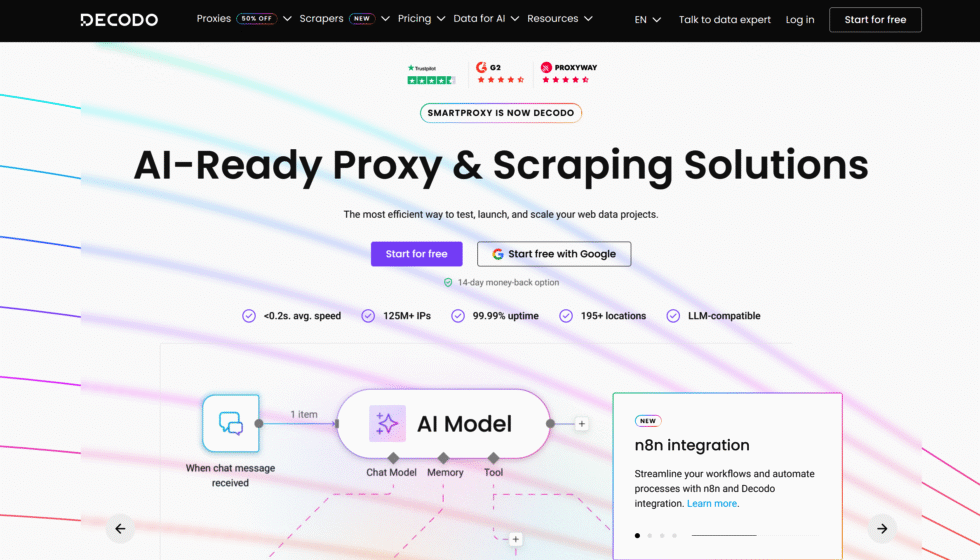
Decodo, formerly Smartproxy and also based in Lithuania, sits between simple self-serve tools and enterprise stacks. Many users like the dashboard more than heavier platforms because creating a rotating or sticky endpoint takes little time. The residential pool is large enough for serious public data collection, and tests often show stable rotation with solid completion. HTTP/3 and QUIC support can shorten handshakes on compatible clients, which is one reason the network feels responsive even when raw ping is only average. Targeting covers many supported locations, including city-level options for local page checks. Advanced teams may still want more custom routing than the default UI shows. Decodo fits developers and smaller data teams that want speed without a long onboarding path. It also still has enough control for larger automation once the first endpoint is working. HTTPS and SOCKS5 remain the everyday protocols. For mixed research and QA work, the main draw is the balance between ease and capacity.
- Residential rotation with city-level location options
- HTTP, HTTPS, SOCKS5, plus HTTP/3 and QUIC on supported setups
- Beginner-friendly dashboard with room for larger jobs
- Sticky and rotating modes for public data and multi-step paths
- Facts and Information: Recent reviews cite high completion and mid-range latency, with a pool large enough for mixed public data work
5. SOAX
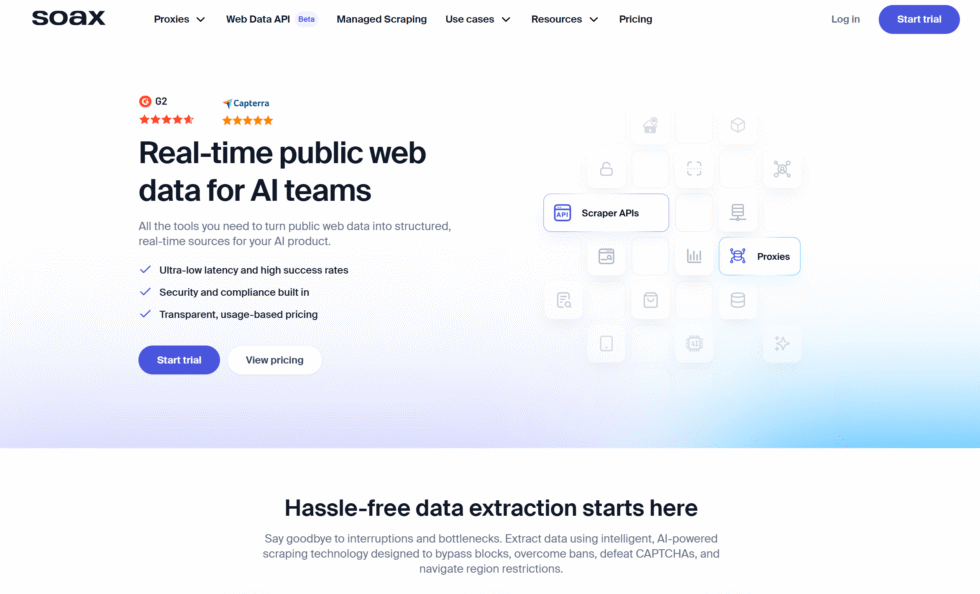
SOAX puts clean IP quality and precise location filters ahead of raw pool size. Users can narrow routes by country, region, city, and ISP, which helps ad verification and local market views when the public page changes by place. Completion in recent tests is high, and response times stay competitive with larger brands. The product is less about extra scraping add-ons and more about how traffic is routed and refreshed. Teams that need exact local views tend to like that control. Teams that only want a single rotating endpoint may find the filter set more than they need. HTTP, SOCKS5, and UDP on supported plans cover more than basic web requests. Session refresh is clear enough for research jobs that must stay on one IP for a while, then move. SOAX is often chosen when accuracy of the public view matters as much as speed. A tired IP still wastes time, so the focus on clean residential traffic is the practical speed feature, not a slogan.
- Country, city, and ISP filters for local public pages
- HTTP, SOCKS5, and UDP on supported plans
- Focus on clean residential traffic
- Flexible routing and refresh for research workflows
- Facts and Information: Reviewers highlight high completion, low challenge rates, and strong local accuracy rather than the biggest advertised pool
6. DataImpulse
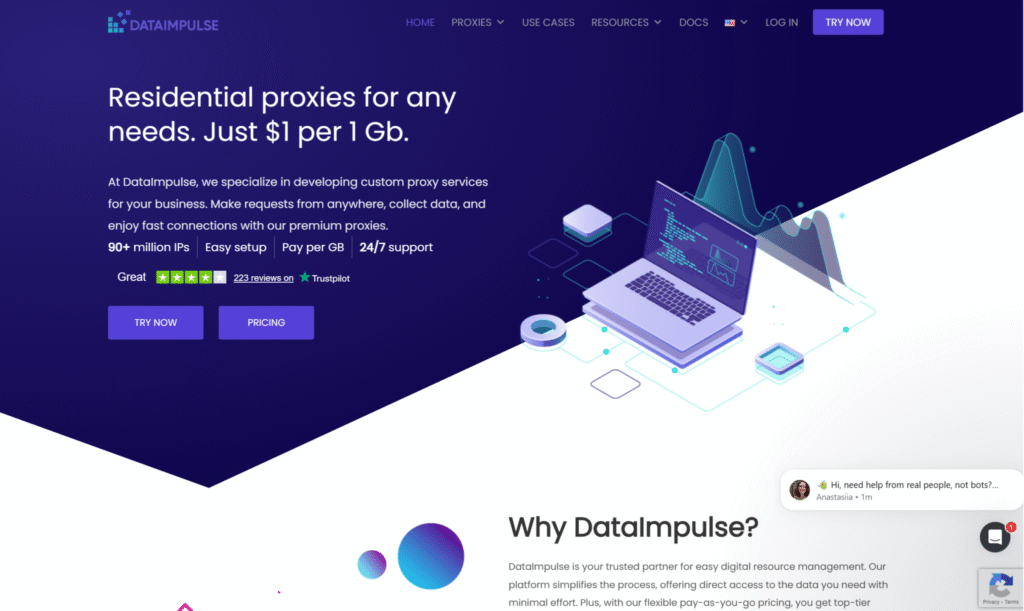
DataImpulse is often grouped with value-focused residential networks for mid-size collection. Tests describe solid completion on everyday public pages, a large pool, and response times that stay workable for product tracking, search monitoring, and competitor research. It is less often named as the absolute lowest-latency option. The draw is a practical mix of coverage and simple access. A trial tier appears in several 2026 roundups, which helps teams validate speed on their own public targets before a longer run. Rotating residential access fits large public data collection and market research. Longer sticky windows help when a checkout-style path or QA flow must keep one IP. Dashboard setup is straightforward next to enterprise suites. Support is described as available around the clock in vendor materials. DataImpulse suits teams that run regular collection, not only rare tests, and want home IPs without adopting a full data platform. Protocol support follows the usual HTTPS and SOCKS5 pattern for scripts and browsers.
- Rotating residential access for mid-scale public data jobs
- Broad coverage across many supported locations
- Simple setup for recurring collection
- Trial access noted in recent roundups
- Facts and Information: Independent tests in 2026 reported high completion on mid-scale tasks, a large pool, and modest challenge rates on common public targets
7. Webshare
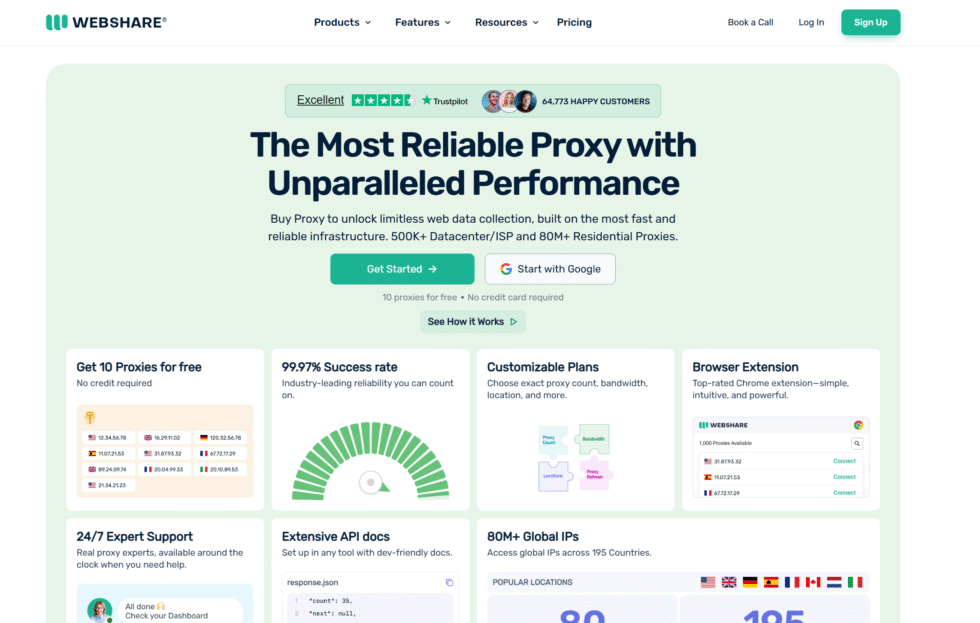
Webshare is known for a clean self-serve dashboard and instant proxy creation. That speed of setup matters when a developer needs routes today, not after a sales call. The residential pool is large, and tests show strong connection completion with mid-range response times. Sticky and rotating modes are both available, so the same account can handle wide public crawls and multi-step QA paths. Power users who want deep ISP filters or extra collection products may outgrow the simple UI. For everyday public data scripts, the short path from signup to first request is the main appeal. HTTPS and SOCKS5 cover standard tools. Activation is immediate in most writeups, which keeps test cycles short. Webshare is a frequent mention when a team wants residential access that is easy to wire into an existing script, browser, or research stack. It is less of a full data suite and more of a fast way to get home IPs into production.
- Instant self-serve activation
- Sticky and rotating residential modes
- HTTP, HTTPS, and SOCKS5
- Large residential pool across many supported locations
- Facts and Information: Reviews cite high connection completion, global coverage, and a dashboard built for fast first use
8. IPRoyal
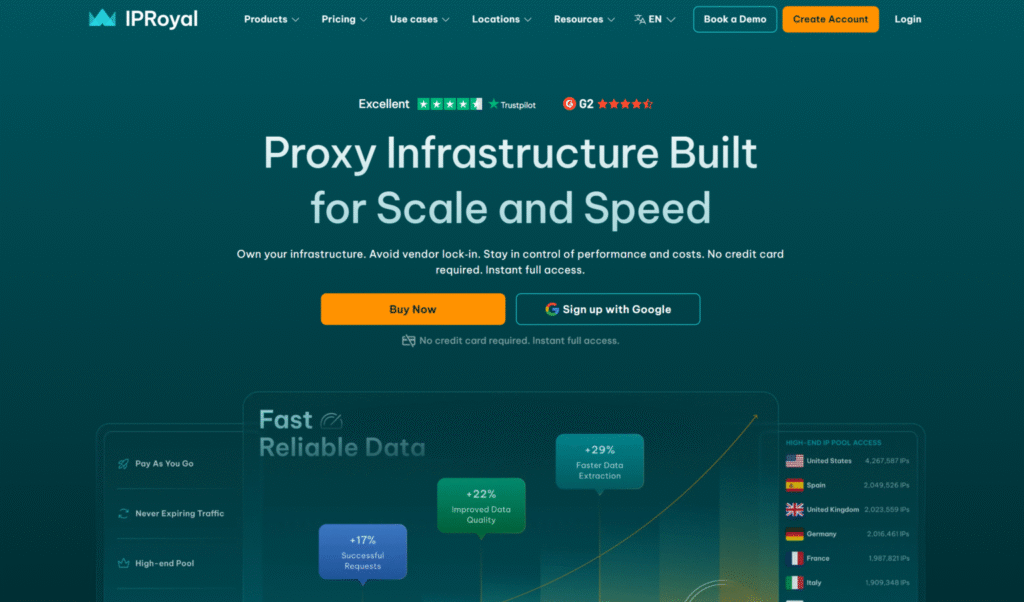
IPRoyal, based in Vilnius, Lithuania, sells residential access with a simple purchase model and traffic that stays available after you buy it. That helps research calendars that are busy one month and quiet the next. Completion in tests is high, and response times sit in a mid-fast band rather than the shortest group. The pool is smaller than the largest enterprise networks, but many users treat IP quality and clear controls as the priority. Common jobs include market research, SEO monitoring, store-page checks, and other approved public data work. Custom rotation exists without the extra platform layers found at bigger vendors. Ethical, opt-in sourcing is a repeated claim in reviews. Session control is flexible enough for both short rotating calls and longer sticky paths. IPRoyal fits individuals and small businesses that want predictable access and less product clutter. It is a weaker match if you need a bundled scraper toolkit beside the proxy.
- Ethically described residential sourcing
- Customizable rotation and session control
- Traffic that remains available after purchase
- HTTPS and SOCKS5 for common clients
- Facts and Information: 2026 reviews place IPRoyal in the high-completion group, with stable routes across many supported locations and flexible session tools
9. NodeMaven
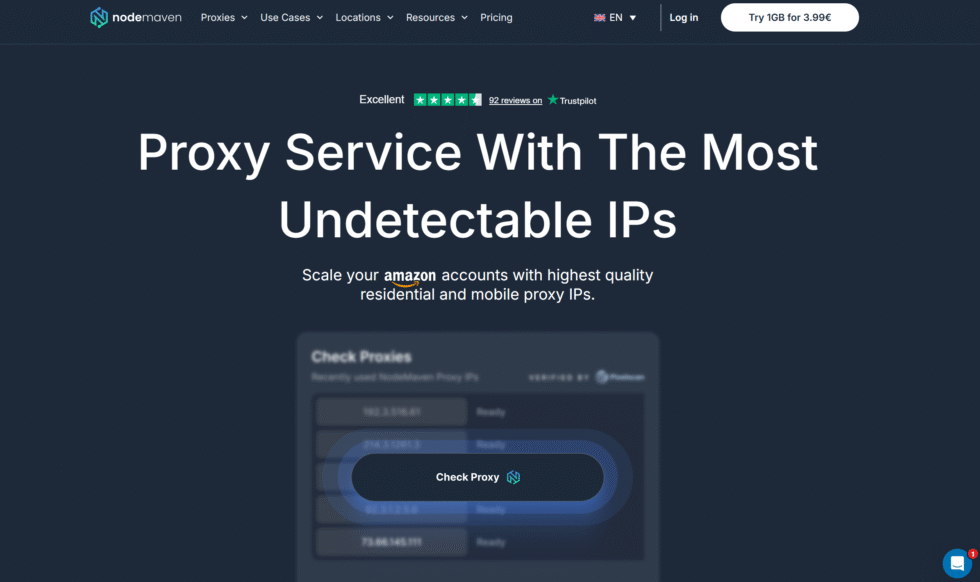
NodeMaven markets filtered residential traffic more than raw pool size. Real-time quality checks aim to keep tired IPs out of the mix, which can cut retries even when headline latency looks average. Sticky sessions can last many hours, which helps QA paths, monitoring tools, and research jobs that must look like one visitor for a long stretch. Coverage spans many supported locations and a large set of cities for location-based testing with residential IPs. The pool is mid-size next to the biggest names. Teams that lose time to weak IPs, not to ping, often look here. Rotation still exists for wide public collection. The product is less about extra parsing tools and more about keeping the route usable. That focus makes NodeMaven a practical speed pick when “fast” means the job finishes, not that the first packet was early. HTTPS-style web use and standard automation clients are the usual fit.
- Quality filtering on residential routes
- Long sticky sessions for multi-step workflows
- City-level coverage across many supported locations
- Rotation for wide public data collection
- Facts and Information: Reviewers describe high clean-IP rates, competitive latency, and strong completion on tougher public targets
10. Geonode
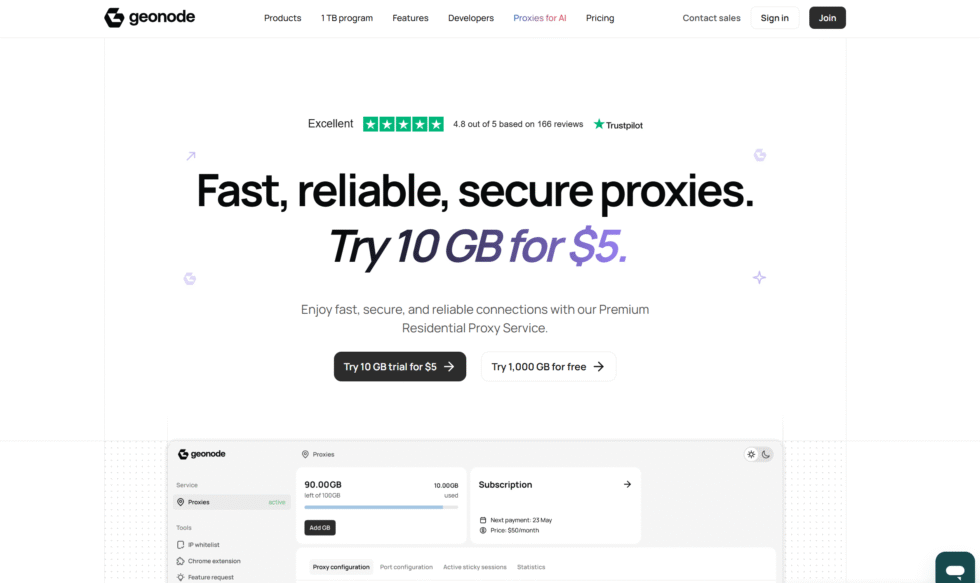
Geonode aims at developers who want proxies inside an API-first workflow. Rotation is built for scripts and internal pipelines rather than a thick extra UI. Tests show high completion and relatively low latency for a mid-size pool. Bandwidth rollover on active plans helps teams that run uneven monthly jobs and do not want leftover capacity to vanish. Targeting covers many supported locations for local public page checks. Users who want a full data platform may want more bundled tools. Users who already have collectors often want exactly this: a fast endpoint and clear API control. Sticky and rotating modes support both short public crawls and longer research paths. Setup is aimed at people who are already writing code. Geonode is a weaker match if you want a point-and-click suite with parsing built in. It is a stronger match if throughput and clean integration decide whether the batch finishes on time.
- API-first residential rotation
- Developer-focused integration
- Bandwidth rollover on active subscriptions
- Location options for local public pages
- Facts and Information: 2026 writeups cite high completion, short average delay, and a pool sized for automated public data pipelines
11. Proxy-Seller
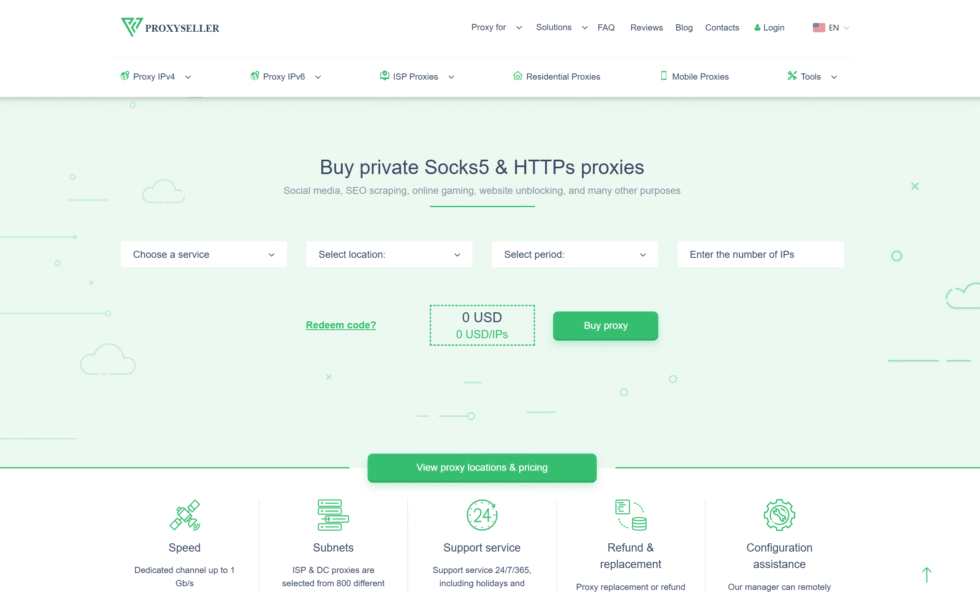
Proxy-Seller puts residential, datacenter, and mobile routes in one dashboard. That mix helps teams that switch workflow types without opening a second vendor. Residential completion in tests is good for lighter automation, price monitoring, and research jobs. Response times are mid-range rather than the shortest in the set. Coverage across supported locations is wide, though the residential pool is smaller than the largest specialists. Setup is simple, and proxy generation is quick. The product fits individuals and small teams that want one login for several proxy types, including jobs that later need carrier-style mobile routes. It is less specialized than a residential-only enterprise network. That is a tradeoff, not a flaw, if your week includes public web checks, QA, and a mobile test. HTTPS and SOCKS5 cover the usual clients. Support is described as live chat in vendor materials. Choose it when flexibility across proxy types matters as much as raw residential speed.
- Residential, datacenter, and mobile options in one place
- Quick proxy generation
- Broad coverage across supported locations
- Suitable for light automation and mixed research
- Facts and Information: Reviews describe solid completion on light automation, a flexible product mix, and a straightforward control panel
12. Shifter
Shifter keeps the product small on purpose. Rotating residential access is the core offer, with unlimited bandwidth on stated plans and little extra platform weight. Tests show respectable completion and mid-range response times on general public data jobs. Coverage reaches many supported locations, with a mid-size pool. There is less emphasis on deep filters or bundled collection tools. That is a gap for complex local checks and a plus for simple, repeating research. Teams that want a quiet rotating endpoint often shortlist it beside larger brands. Sticky-style control is more limited than at session-heavy vendors, so long QA paths may need extra care. Shifter fits routine monitoring and public page collection that benefits from automatic IP rotation. Static-style residential routes are a better mental model when a longer, consistent session is required, and that is not Shifter’s main story. Protocol support is standard for web clients. The dashboard is described as minimalist in reviews.
- Rotating residential connections with simple setup
- Unlimited bandwidth on stated plans
- Minimal dashboard focused on access, not extras
- Coverage across many supported locations
- Facts and Information: Independent reviews put Shifter in the general public-data group, with steady completion and flexible usage rather than the lowest latency
13. Proxy-Cheap

Proxy-Cheap focuses on straightforward residential access for occasional projects rather than constant high-volume collection. Tests describe reliable mid-range completion and slower first responses than the elite group. That is still enough for small research tasks, light price monitoring, and location-based testing with residential IPs when the job is not running all day. The platform stays simple, which helps first-time users generate a route without a long setup. Pool size varies by tier in recent writeups, from modest to large. Coverage reaches many supported locations, though not always with the deepest city filters. HTTP, HTTPS, and SOCKS5 appear in comparison tables. There are no setup fees called out in those same writeups, which keeps a first test easy to start. Proxy-Cheap is a weaker match for enterprise pipelines that need account managers and custom routing. It is a stronger match when you need home IPs for a defined project and want the panel to stay out of the way.
- Simple residential access for lighter research jobs
- Sticky and rotating use on standard web protocols
- Coverage across many supported locations
- Self-serve setup with little extra tooling
- Facts and Information: 2026 reviews cite solid mid-range completion, variable pool size by tier, and a low-friction panel for small public data tasks
14. Floppydata
Floppydata targets users who need residential routes for straightforward automation and small collection scripts. The service keeps the product basic on purpose. Tests show fair completion on general public pages and mid-range response times. Detection on standard tasks is described as modest rather than elite. Coverage spans a wide set of supported locations, with pool size that changes by tier. Quick setup is the main practical advantage. There is less of the advanced session logic seen in larger platforms, so long multi-step paths may need more care from your side. Floppydata fits individuals testing tools, running small public data jobs, or doing light market research. It is not trying to replace a full enterprise data stack. HTTPS-style use and common script clients are the expected fit. If your workflow is simple and you care more about getting a home IP working today than about fine filters, this is the kind of network recent roundups place in the beginner-friendly group.
- Basic rotating residential access for small jobs
- Quick setup for lightweight automation
- Coverage across many supported locations
- Less extra platform weight than enterprise suites
- Facts and Information: Reviews describe fair completion, mid-range delay, and a simple product aimed at everyday public data needs
Protocols That Change Residential Proxy Speed
The same IP can feel fast or slow based on how you connect. HTTPS is the default for browsers and most scripts. SOCKS5 often handles mixed traffic with less friction. HTTP/3 and QUIC can cut handshake time when both sides support them. Most premium residential proxies still win or lose on IP health first.
Match the protocol to the tool:
- Browser QA and simple HTTP proxy clients: HTTPS proxy
- Mixed apps, custom clients, and some automation kits: SOCKS5 proxy
- Modern stacks that already speak HTTP/3: QUIC-aware endpoints
A protocol upgrade will not fix a weak session. Pair it with the right rotation. Sticky and rotating proxy modes change how long an IP stays in play. Short rotation helps large public crawls. Longer sticky time helps multi-step paths. Test both on the same target before you call a network slow.
Clean Ips, Session Control, and Throughput at Scale
Speed at one request is not speed at two hundred. Throughput is how many useful responses you get while sessions stay healthy. Clean IPs reduce retries. Session control keeps a checkout or form on the same route. Concurrency settings decide whether extra threads wait or run.
Useful controls on a fast network include:
- Timed rotation when a job needs fresh IPs
- Sticky windows when a path must look like one visitor
- Parallel sessions that do not queue behind each other
- Live views so you can spot a slow target early
Unlimited-thread residential proxy access helps when many workers hit public pages at once. 4G and 5G mobile proxy routes help when a site treats carrier IPs differently from home IPs. Use mobile as a complement, not a default, unless the workflow needs that network type. If completion drops as you add threads, the pool is the limit, not your script. Lower concurrency until retries fall, then scale again.
Fast Residential Proxies for AI and Public Data Workflows
AI teams now pull large volumes of public pages, product text, and media metadata. The speed problem is not one ping. It is hours of stable throughput. Many vendors now pitch residential routes for model training, RAG corpora, and automation that must keep running overnight.
Approved jobs that benefit from fast home IPs include:
- Ad verification and price monitoring
- Market research on public store and search pages
- Location-based testing with residential IPs
- Separate QA, monitoring, and research workflows
- Collecting public web data for approved business use cases
Pair the proxy with clear parsing and storage. A fast IP still wastes time if your parser fails. Keep USA residential proxy routes and other local pools on the jobs that need a local public view. Keep a general rotating pool on wide crawls. The winning setup is boring: clean IPs, the right session length, and enough parallel room to finish the batch.
Frequently Asked Questions
What Makes Residential Proxies Faster Than Other Proxy Types?
Home IPs often complete more public-page requests on the first try because they look like ordinary household routes. Datacenter and ISP proxy routes can show a lower ping and still stall if a site treats them as automated. Fast residential proxies mix short delay with fewer repeats, so the batch finishes sooner. Session control then keeps multi-step QA and research paths from starting over. Speed here is completed work, not a single ping.
How Should You Test Fast Residential Proxy Speed?
Use your real public targets, not only an empty test page. Send enough requests to see retries, and mix sticky and rotating proxy sessions on the same job. Check that the public page matches the supported location you asked for during location-based testing. Time the full workflow, including failed attempts and parser time. A network that looks average on one request can still win if it finishes the batch with fewer repeats.
Do You Need Mobile Proxies for Fast Residential Work?
Not always. Residential proxies cover most public data, research, and QA jobs. Mobile proxies help when a workflow needs carrier-style IPs or app-like network paths. Many teams keep both in one stack and switch by task. Mobile is a complement when the target treats carrier traffic differently, not a default for every fast job.
Which Session Mode Feels Faster in Practice?
Rotating residential proxies feel faster on wide public crawls because each request can use a fresh IP. Sticky mode feels faster on logins, carts, and multi-page QA because you do not restart the path. The better mode is the one that avoids extra steps on that exact workflow. Test both, then lock the setting that finishes with the least idle time.
What Else Affects Fast Residential Proxy Performance?
Protocol choice changes handshake time. HTTPS fits browsers and simple scripts, while SOCKS5 mobile proxy setups often suit mixed tools. HTTP/3 and QUIC can shorten the first exchange when both sides support them. Clean IPs, parallel room, and the right session length still matter more than the label on the port. Premium residential proxies stay fast when those pieces work together across public data collection, market research, and location-based testing.
Read Also:
- Top 17 Best Rotating Residential Proxy Providers in 2026
- Best Premium Residential Proxies in 2026
- What Are Rotating Residential Proxies? (2026 Updated Guide)
- Sticky Proxy vs Rotating Proxy
- Best USA Private Proxy
Discover the Best Fast Residential Proxies in 2026 – ResiProx.