
Static residential proxies blend the stability of fixed IP addresses with the authenticity of residential networks, making them perfect for web scraping, social media management, and e-commerce operations. These proxies maintain the same IP address for extended periods while appearing as legitimate residential users to websites. Discover the best static residential proxies in 2025
Ready to experience premium static residential proxies? Start your free trial today – ResiProx
- What Makes Static Residential Proxies Different
- Why Businesses Choose Static Over Rotating
- Top 30 Best Static Residential Proxies in 2026
- 1. 🏆ResiProx – Best Static Residential Proxies in 2026 🏆
- 2. ProxyEmpire
- 3. Bright Data
- 4. Oxylabs
- 5. Smartproxy (Decodo)
- 6. SOAX
- 7. NetNut
- 8. IPRoyal
- 9. Rayobyte
- 10. LunaProxy
- 11. Infatica
- 12. Webshare
- 13. DataImpulse
- 14. Proxyrack
- 15. GeoNode
- 16. MarsProxies
- 17. Shifter
- 18. PacketStream
- 19. IPFoxy
- 20. Zyte
- 21. 922Proxy
- 22. PYProxy
- 23. ScraperAPI
- 24. Apify
- 25. Oculus Proxies
- 26. Live Proxies
- 27. LimeProxies
- 28. ProxyWing
- 29. Byteful
- 30. HydraProxy
- Market Growth and Technology Trends
- Choosing Between Static and Rotating Proxies
- Performance Metrics That Matter
- How to Choose the Best Static Residential Proxies in 2026
- Static Residential Proxies Pricing: Costs, Plans & What to Expect in 2025
- Latest News In 2026
- FAQ
- What are static residential proxies, and how do they work?
- How long can I keep the same static residential IP address?
- Are static residential proxies legal to use?
- What makes static residential proxies better than datacenter proxies?
- What factors influence the performance of static residential proxies in real world applications?
- How do static residential proxies support tasks that require long term session stability?
- What role do ISP networks play in delivering effective static residential proxy solutions?
- Which technical specifications should be reviewed when evaluating static residential proxy options?
- How have advancements in proxy infrastructure affected static residential proxy reliability recently?
What Makes Static Residential Proxies Different
Static residential proxies provide fixed IP addresses from real ISP networks, offering a unique advantage over rotating residential proxies. The stability of these connections suits tasks requiring persistent sessions, while their residential nature keeps detection rates low. With 45% lower detection risk compared to datacenter IPs and 45% improvement in data collection efficiency, these proxies have become indispensable for businesses handling sensitive operations.
The market has experienced substantial growth, with an 11.48% compound annual growth rate driven by enhanced security needs and data-driven business strategies. Companies report 30% increases in operational efficiency for data-heavy tasks and 40% improvements in business scalability when implementing static residential solutions.
Why Businesses Choose Static Over Rotating
While rotating proxies excel at high-volume scraping with frequent IP changes, static residential proxies shine in scenarios demanding consistent identity. Account management on platforms like Instagram, Facebook, and Amazon requires the same IP address to avoid triggering security systems. SEO monitoring, price tracking, and brand protection benefit from the long-term stability that static IPs provide.
The 2025 landscape has seen providers integrate AI-powered systems to predict IP blocking and enhance performance. The rollout of 5G networks has significantly reduced latency, making static residential proxies faster and more reliable for high-bandwidth tasks. Businesses now demand proxies that combine speed with authenticity, pushing providers to expand IP pools and improve geographic coverage.
Top 30 Best Static Residential Proxies in 2026
1. 🏆ResiProx – Best Static Residential Proxies in 2026 🏆
Resiprox Premium Proxies – Unlock the Web with Power and Precision
Introducing Resiprox, the ultimate proxy solution designed to supercharge your online operations. With our Residential Proxies and Mobile Proxies, you get unmatched access to web data at scale, robust security, and seamless connectivity, all backed by a free trial to experience the difference firsthand.
Product Features
- Rotating Residential Proxies: Harness the power of 10M+ ethically-sourced IPs across 180+ countries. These proxies rotate dynamically to bypass IP blocks, CAPTCHA, and deliver 99.9% uptime and precise targeting at the country, city, or ZIP code level.
- Rotating Mobile Proxies: Powered by 4G/LTE/5G networks, our mobile proxies offer lightning-fast speeds with <0.3s response times and a 99.9% success rate perfect for real-time applications.
- Global IP Network: Tap into millions of IPs, including 3.5M+ in the US, 1.8M+ in Brazil, 3.1M+ in India, and more, ensuring coverage wherever you need it.
- Advanced Capabilities: Enjoy HTTPS & SOCKS5 support, unlimited concurrent sessions, and flexible rotating or sticky sessions, all wrapped in premium IP quality.
Product Specifications:
- Performance: High-speed browsing with 99.9% uptime and 24/7 expert support.
- Integration: Seamlessly works with Node.js, Python, PHP, Selenium, and more, featuring a dynamic endpoint generator and robust API access.
What It’s Built For:
Resiprox proxies are your all-in-one tool for:
- Web Scraping: Extract public data effortlessly for insights and growth.
- Price Monitoring: Track prices across regions in real-time.
- Multi-Accounting: Manage multiple accounts without limits.
- SEO & Ad Verification: Monitor rankings and verify ads globally.
- Cybersecurity: Protect your brand and test applications securely.
- Specialized Tasks: From sneaker botting to travel fare aggregation, Resiprox delivers.
Why Resiprox Stands Out:
This isn’t just a proxy, it’s a game-changer. With comprehensive documentation, multi-platform compatibility, and a team of experts available 24/7, Resiprox ensures your projects run smoothly. Whether you’re a business scaling operations, a researcher gathering data, or a developer testing apps, our proxies adapt to your needs with precision and reliability.
Resiprox Premium Proxies – Your Key to a Smarter, Faster, and More Connected Online World.
Click here to discover our :
2. ProxyEmpire
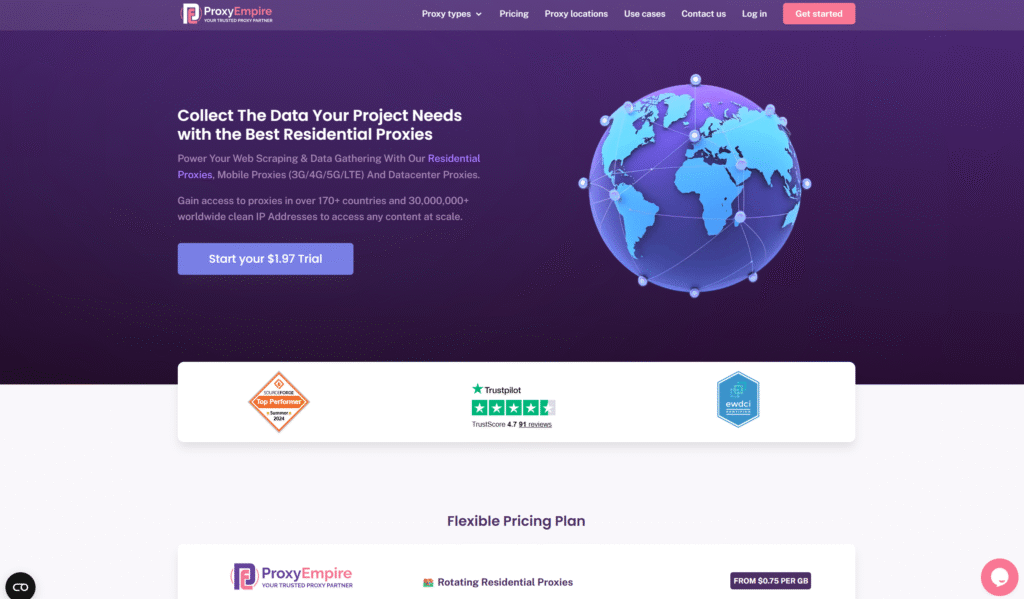
ProxyEmpire has built a solid reputation as a reliable provider of static residential proxies that emphasizes flexibility and broad international reach. It draws from an extensive pool of ethically sourced residential connections and gives users meaningful control through detailed filtering options that align selections with particular operational needs. The platform supports HTTP, HTTPS, and SOCKS5 protocols with added UDP functionality, allowing smooth compatibility across a variety of tools and applications. Sessions can rotate on every request or remain consistent for longer periods, depending on whether the project calls for fresh identities or sustained access. Unlimited concurrent connections and a traffic-based pricing model help teams scale without hitting hard caps on simultaneous activity. Many users value the responsive support and the straightforward gateway setup that simplifies initial configuration. While it delivers solid performance for most everyday tasks, some users find that certain advanced setups benefit from additional configuration steps since IP-based authentication is not offered.
- IP rotation: Every request or customizable sessions
- Connection method: Gateway address with port 9000
- Authentication: Username and password credentials
- Protocols: HTTP, HTTPS, SOCKS5 with UDP support
- Target locations: 170+ countries with city-level precision
- Bandwidth: Traffic allowance unlimited as long as plan permits
- Pros: Extensive geographic coverage, advanced filtering, reliable uptime, VIP support
- Cons: IP whitelisting not available which complicates some setups
3. Bright Data
Bright Data operates at a high level in the proxy space with one of the most extensive residential networks available, including strong options for static and ISP-style connections. Its infrastructure incorporates intelligent unblocking methods that help maintain access when websites present extra challenges. The platform manages customizations such as session duration and connection preferences through simple credential parameters, removing the need to adjust endpoints for different configurations. It accommodates unlimited concurrent activity and offers both short and extended session choices to match different project rhythms. Multiple protocol support along with fallback options contributes to consistent performance across varied conditions. Many larger organizations turn to it for complex, high-volume work that benefits from robust customization and dedicated resources. At the same time, the premium character of the service positions it more toward teams with substantial ongoing requirements rather than smaller or occasional projects.
- IP pool: 72M+ residential IPs, 150M+ total network
- Geographic coverage: 195+ countries with ASN targeting
- Protocols: HTTP, HTTPS, SOCKS5 with UDP support
- Features: IPv4 and IPv6 support with fallback mechanisms
- Rotation: Per-request default or fully customizable
- Authentication: Credentials, IP whitelist, API key
- Pros: Largest IP pool, enterprise-grade features, 99.99% uptime, flexible pay-as-you-go plans
- Cons: Premium pricing may not suit small budgets
4. Oxylabs
Oxylabs delivers enterprise-focused static residential proxy solutions built around long-lasting session control and dependable routing. The platform uses intelligent distribution across servers to keep performance steady and reduce delays during demanding operations. It supports HTTP, HTTPS, and SOCKS5 protocols while allowing sticky sessions that can extend for many hours, which suits tasks needing a consistent online presence. Unlimited threads and ports enable parallel work at scale, and authentication through credentials or IP whitelisting provides flexibility in how teams secure their connections. Dedicated account management adds a layer of personalized assistance that helps users optimize their setup quickly. The overall quality and speed make it a frequent choice for professional environments where reliability directly affects results. On the other hand, the higher investment level aligns best with organizations that treat proxy infrastructure as a core part of their operations rather than an occasional tool.
- IP pool: 100M+ residential IPs globally
- Connection method: Gateway address with load balancing
- Protocols: HTTP, HTTPS, SOCKS5 with UDP
- Session control: Up to 24-hour sticky sessions
- Concurrency: Unlimited threads and ports
- Authentication: Credentials or IP whitelist
- Pros: Premium quality, excellent support, high speeds, extensive coverage
- Cons: Higher price point targets enterprises primarily
5. Smartproxy (Decodo)
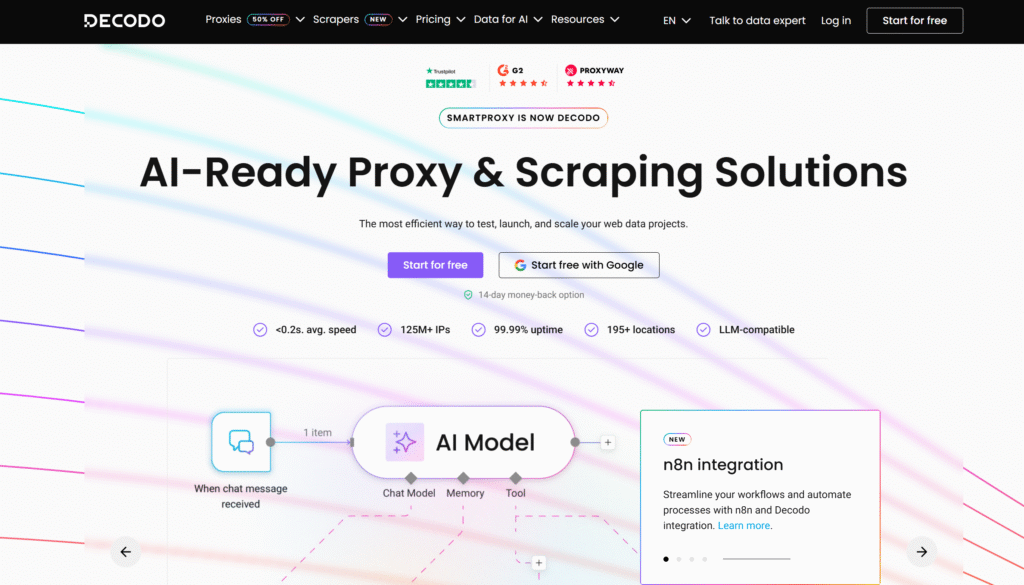
Smartproxy, operating as Decodo, combines strong performance with accessible pricing to serve a wide range of users who need both rotating and stable connection options. The service focuses on ethically sourced residential IPs that support discreet activity across numerous locations worldwide. It offers flexible rotation intervals alongside sticky ISP-style connections that maintain the same address for extended periods when consistency matters. Unlimited threads allow parallel operations without bottlenecks, and the pay-as-you-go model helps control costs based on actual usage. Many appreciate the clean interface and reliable uptime that keeps projects moving smoothly. The balance of capability and affordability makes it practical for teams handling regular data collection or account management without requiring enterprise-level budgets. Some users with very large-scale needs may eventually explore providers with even broader pools, yet Decodo remains a dependable middle-ground choice for most standard and growing workloads.
- IP pool: 115M+ ethically sourced IPs
- Coverage: 195+ countries with city targeting
- Session types: Rotating and sticky available
- Features: State and city-level precision
- Uptime: 99.99% network availability
- Pricing: Flexible pay-as-you-go model
- Pros: Balanced affordability and performance, user-friendly interface, reliable service
- Cons: Smaller pool than top-tier enterprise providers
6. SOAX
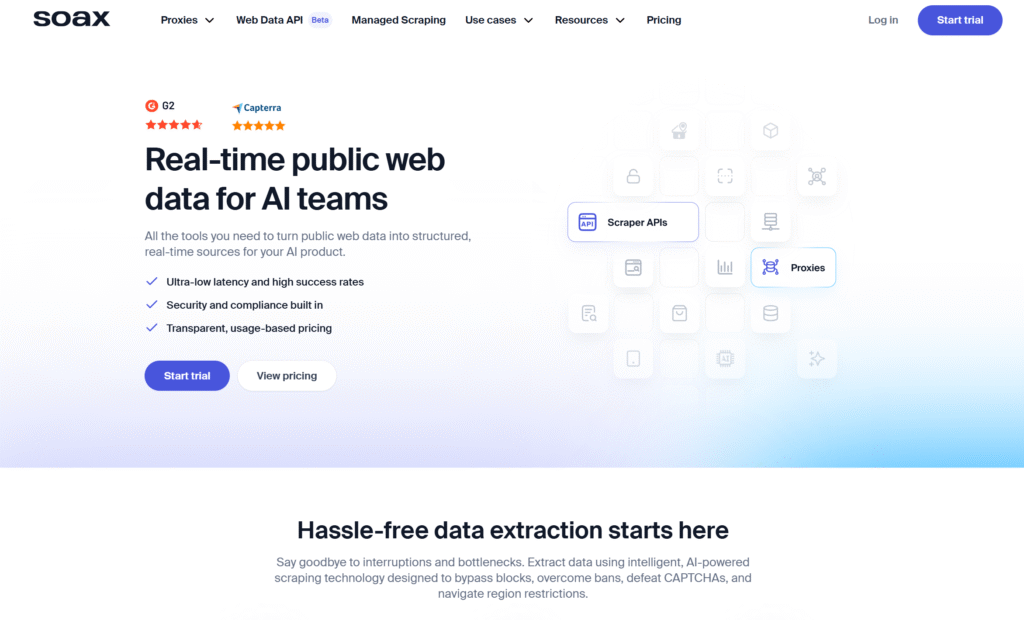
SOAX distinguishes itself through intelligent routing systems that optimize how requests travel across its large residential and ISP network. The platform supports both rotating and static-style connections with options to adjust session length according to the task. It handles high volumes of concurrent requests while maintaining strong success rates on most targets. Users can work with HTTP, HTTPS, SOCKS5, and additional protocol features that suit modern applications. Customizable sticky sessions provide the stability needed for account work or longer monitoring projects, while automatic adjustments help maintain performance. Many teams value the responsive support and the emphasis on ethical sourcing that reduces the chance of interruptions. Bandwidth metering on certain plans encourages users to match their subscription to actual consumption patterns. Overall, SOAX appeals to those who want a technologically refined experience without overly complicated setup steps.
- IP pool: 190M+ ethically-sourced IPs
- Coverage: 195+ global locations
- Response time: Up to 0.9 seconds average
- Protocols: HTTP(S), SOCKS5, UDP/QUIC support
- Session control: Customizable sticky sessions
- Success rate: 99%+ for most operations
- Pros: AI-powered optimization, ethical practices, responsive support
- Cons: Bandwidth metered on lower-tier plans
7. NetNut
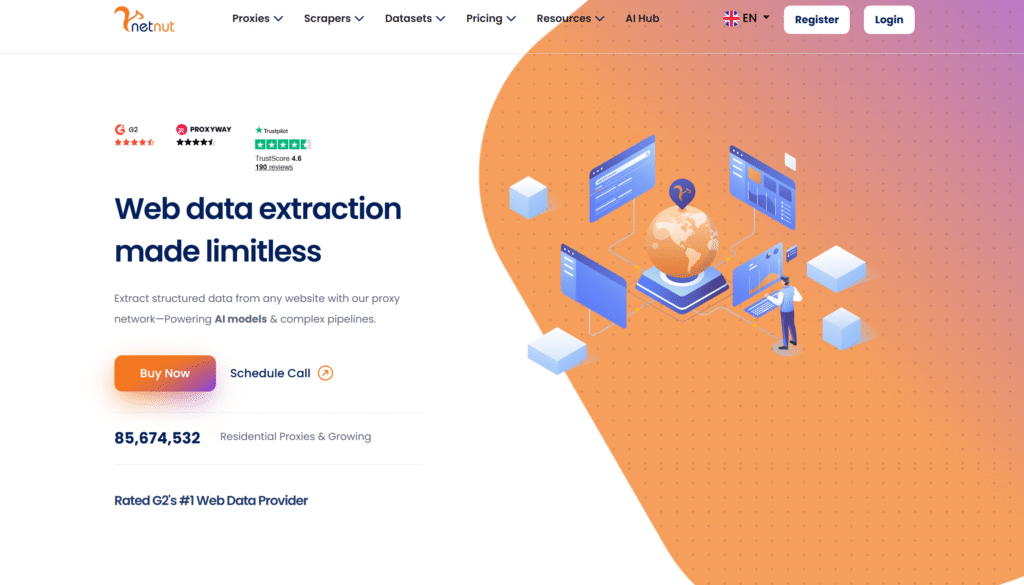
NetNut focuses on ISP-derived residential proxies that combine the legitimacy of real residential connections with the responsiveness often associated with datacenter infrastructure. The direct routing approach helps keep latency low, which benefits time-sensitive operations. The service offers both rotating and static options along with unlimited thread support for high-volume activity. It covers a broad international footprint and maintains strong uptime across its network. Many users highlight the speed advantage for tasks that require quick feedback loops. Authentication and session controls remain straightforward, allowing teams to concentrate on their core objectives rather than managing technical details. While response times can vary slightly depending on the specific route, the overall reliability and direct ISP connections make NetNut a practical selection for performance-oriented projects that still need residential authenticity.
- IP pool: 85M+ direct ISP connections
- Coverage: 200+ territories globally
- Response time: Up to 2.13 seconds
- Protocols: HTTP(S) and SOCKS5 support
- Features: Direct ISP routing for speed
- Bandwidth: Unlimited on many plans
- Pros: Direct ISP connections, low latency, unlimited bandwidth options
- Cons: Response time slightly slower than some competitors
8. IPRoyal
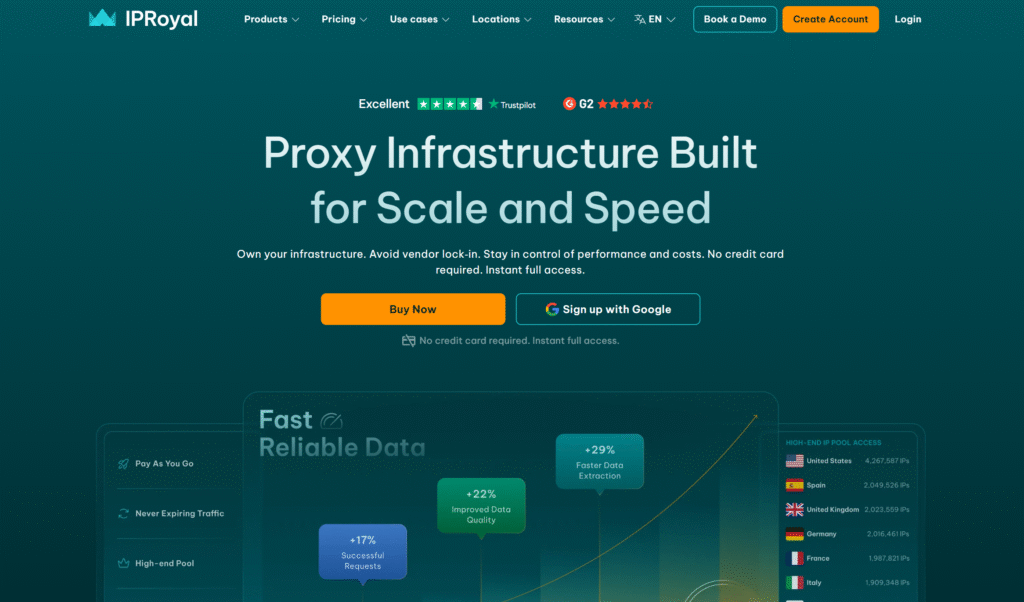
IPRoyal provides flexible static and rotating residential proxy options that emphasize ease of use and cost efficiency. The platform supports city-level selection and allows sessions to stay consistent for up to a full day when longer continuity is required. It works with standard protocols and offers dual authentication methods so teams can choose between IP-based access or traditional credentials. High concurrency limits and compatibility with hundreds of tools make it adaptable to different workflows. Many users appreciate the non-expiring traffic model and the straightforward pay-as-you-go structure that avoids surprise charges. While the total pool size sits below some larger enterprise networks, IPRoyal delivers reliable results for a wide variety of common use cases including account management and ongoing monitoring. Occasional regional speed differences exist but rarely disrupt typical operations once the right endpoints are selected.
- IP pool: 32M+ ethically vetted IPs
- Coverage: 195 countries with city targeting
- Session types: Sticky (up to 24 hrs) and rotating
- Protocols: HTTP, HTTPS, SOCKS5
- Authentication: Dual support for IPs or credentials
- Compatibility: Tested with 650+ tools
- Pros: Affordable pricing, flexible rotation, pay-as-you-go model
- Cons: Smaller pool compared to premium providers, occasional regional speed variations
9. Rayobyte
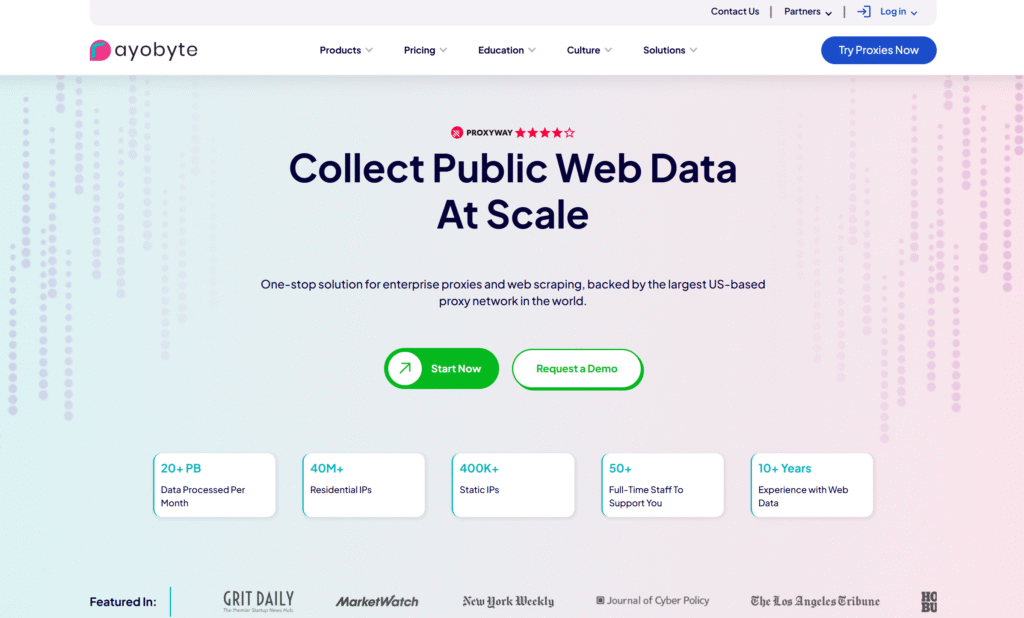
Rayobyte has shifted its emphasis toward residential proxies and now offers versatile options that include both rotating and ISP-style connections. The service provides unlimited bandwidth and thread capacity, which suits heavy scraping or continuous monitoring projects. Ethically sourced IPs and one-time payment options appeal to users who prefer predictable costs over recurring subscriptions. City-level selection helps refine access without excessive complexity. Many appreciate the automatic rotation features and the overall affordability that makes larger-scale work more accessible. While the total number of available addresses is smaller than some leading competitors, the combination of unlimited usage and straightforward pricing delivers strong value for teams focused on consistent output rather than maximum pool size. The platform continues to grow its residential offerings to meet rising demand.
- IP pool: 100,000+ residential proxies
- Coverage: 100+ countries
- Bandwidth: Unlimited across plans
- Payment: One-time purchase available
- Session type: Sticky sessions supported
- Features: Automatic proxy rotation
- Pros: Unlimited bandwidth, affordable pricing, strong geo-targeting
- Cons: Smaller IP pool than major competitors, lacks SOCKS5 on some plans
10. LunaProxy
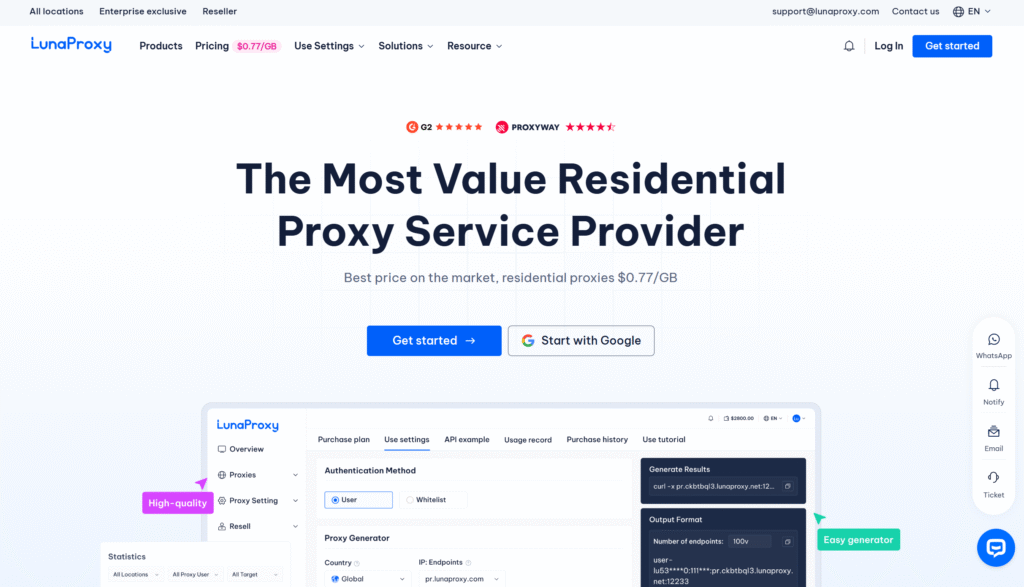
LunaProxy maintains a large residential IP network that supports both rotating and static needs across many international locations. Unlimited bandwidth on its plans removes concerns about hitting caps during intensive data gathering. The service includes a scraping API with success guarantees and built-in CAPTCHA handling that simplifies certain automated workflows. Fast connection times and broad coverage make it suitable for e-commerce research and real-time monitoring tasks. Many users value the straightforward integration options and the success promise on the API side. While brand recognition sits below some long-established names, LunaProxy has earned attention for delivering reliable performance at scale without requiring complicated configuration. It serves as a practical choice for teams that want substantial resources paired with modern tooling.
- IP pool: 200M+ global residential IPs
- Coverage: 195 worldwide locations
- Features: Scraping API with guarantees
- Capabilities: CAPTCHA bypass included
- Bandwidth: Unlimited on plans
- Response time: Approximately 0.3 seconds
- Pros: Large IP pool, unlimited bandwidth, 100% success guarantee API
- Cons: Less established brand recognition than top providers
11. Infatica
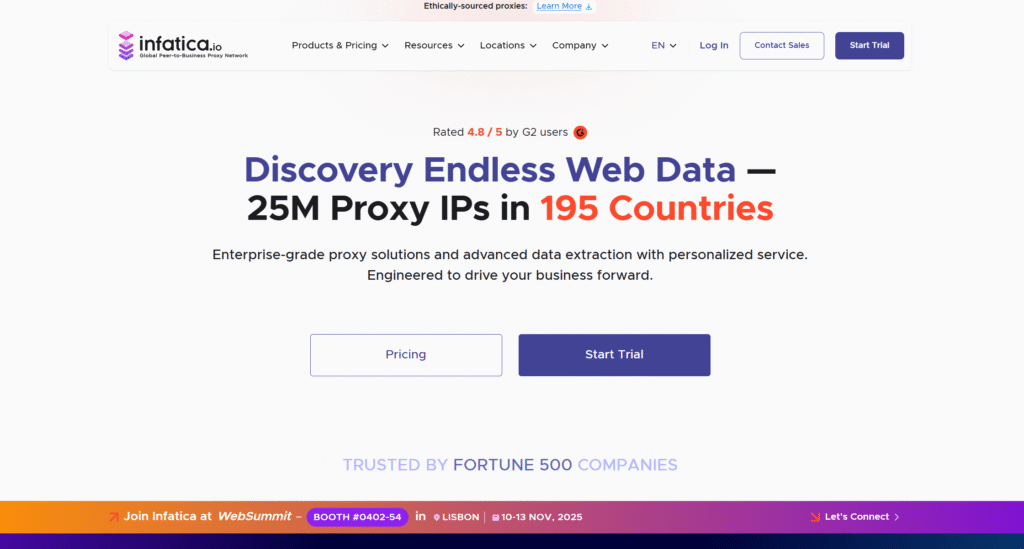
Infatica offers residential proxy solutions with a focus on speed and simplicity for data collection and market research. The platform provides city-level selection and session controls that help users maintain stable connections when needed. Response times stay low, supporting efficient operations across its network. It draws from residential, mobile, and datacenter sources to give teams varied options within a single service. Many appreciate the ethical sourcing standards and the unmetered bandwidth available on select plans, which helps control costs during extended projects. While the overall pool is more modest than the largest providers, Infatica delivers consistent results for everyday and mid-sized workloads. The combination of quick performance and approachable setup makes it a sensible option for teams that prioritize efficiency over maximum scale.
- IP pool: 15M+ residential IPs
- Coverage: 100+ countries globally
- Response time: Under 0.5 seconds
- Uptime: 99% network availability
- Features: City-level targeting
- Bandwidth: Unmetered on select plans
- Pros: Fast response times, ethical sourcing, unmetered bandwidth options
- Cons: Smaller IP pool compared to leaders
12. Webshare
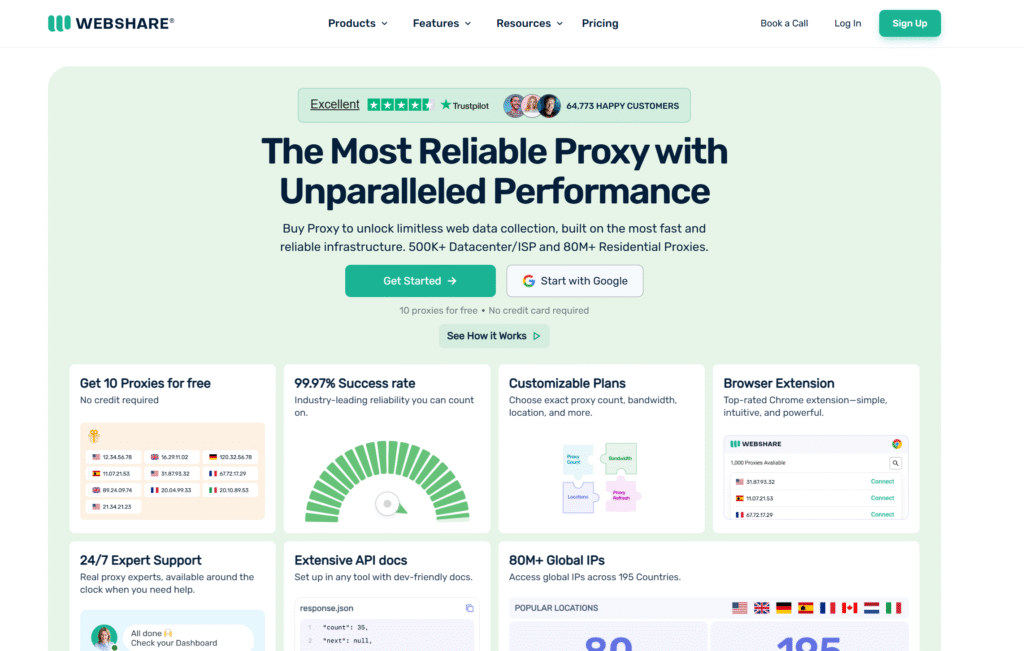
Webshare positions itself as an affordable entry point for users who need residential proxies without complex pricing structures. It supports both rotating and static configurations across dozens of countries and emphasizes high connection speeds on shared plans. Unlimited bandwidth removes usage concerns for many common tasks, and the ethical sourcing approach helps keep ban rates manageable. The self-service model and clean interface appeal especially to individuals and smaller teams who want to get started quickly. Many users find it sufficient for regular browsing, scraping, and light account management. While geographic coverage is narrower than some enterprise-focused services, Webshare delivers dependable performance for the price. It serves well as a practical stepping stone or ongoing solution for budget-conscious projects that do not require the broadest possible network.
- Coverage: 40+ countries available
- IP types: Rotating and static options
- Bandwidth: Unlimited on shared plans
- Target users: Beginners and small projects
- Sourcing: Ethical IP acquisition
- Speed: High connection speeds
- Pros: Affordable pricing, unlimited bandwidth, beginner-friendly
- Cons: Limited geographic coverage, smaller IP pool
13. DataImpulse
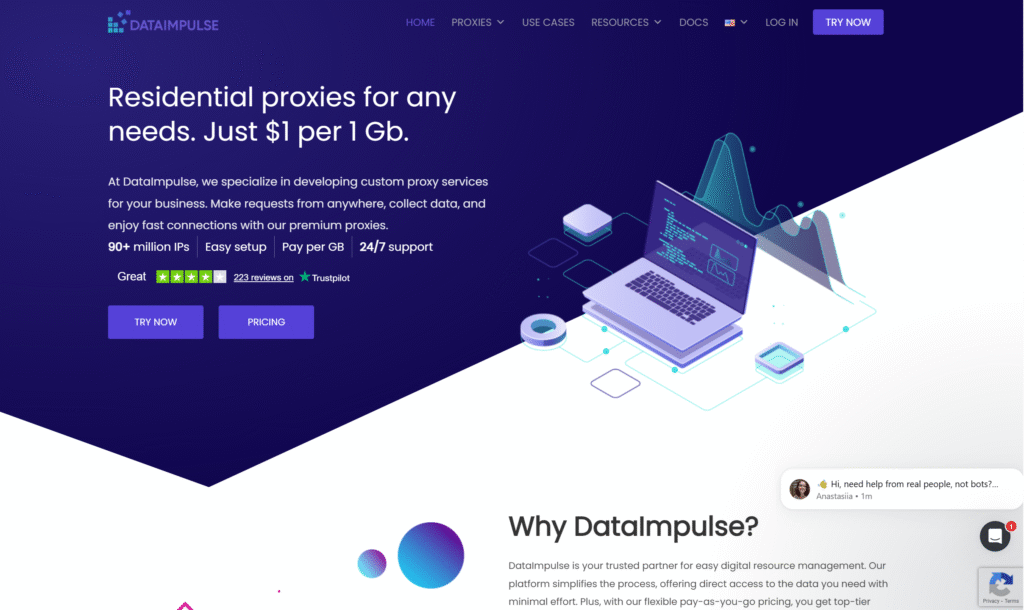
DataImpulse caters to users who want straightforward, cost-effective residential proxy access without unnecessary extras. The platform emphasizes rotating IPs paired with unmetered plans that support continuous data gathering at a predictable cost. Its simple integration process and clear pricing make it easy for teams to adopt without lengthy onboarding. Many recognize it for reliable day-to-day performance on standard collection and automation tasks. While it may lack some of the advanced filtering or AI features found in higher-tier services, DataImpulse focuses on delivering essential functionality efficiently. This approach suits smaller operations or those testing proxy workflows before scaling up. The emphasis on affordability and simplicity has earned it a place among practical options for regular use.
- Pricing: Budget-friendly options
- IP type: Rotating residential
- Bandwidth: Unmetered plans available
- Performance: Fast data collection
- Recognition: Listed among the 2025 top providers
- Setup: Simple integration process
- Pros: Affordable pricing, unmetered bandwidth, good for data gathering
- Cons: Limited advanced features
14. Proxyrack
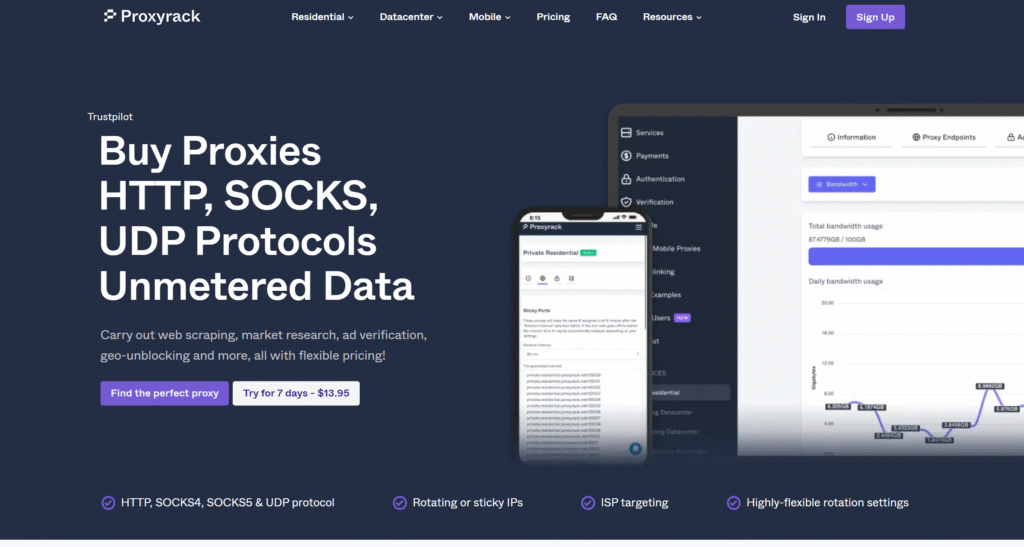
Proxyrack provides unmetered residential proxies with a rotating focus that keeps setups uncomplicated. The service suits secure browsing and scraping projects where users prefer direct access over elaborate configuration. Flexible plans accommodate different bandwidth requirements, allowing teams to match resources to project size. Many appreciate the straightforward nature of the platform, which reduces the learning curve for new users. While it offers fewer specialized tools than some competitors, Proxyrack delivers consistent basic functionality that handles common tasks reliably. Its simplicity makes it a reasonable choice for individuals or small groups who need residential IPs without managing complex enterprise features. The unmetered model further supports extended operations without constant monitoring of usage.
- Bandwidth: Unmetered on plans
- IP type: Rotating residential
- Use cases: Browsing and scraping
- Configuration: Simple setup process
- Plans: Flexible options available
- Security: Secure connection protocols
- Pros: Unmetered bandwidth, simple configuration, flexible plans
- Cons: Smaller provider with limited features
15. GeoNode
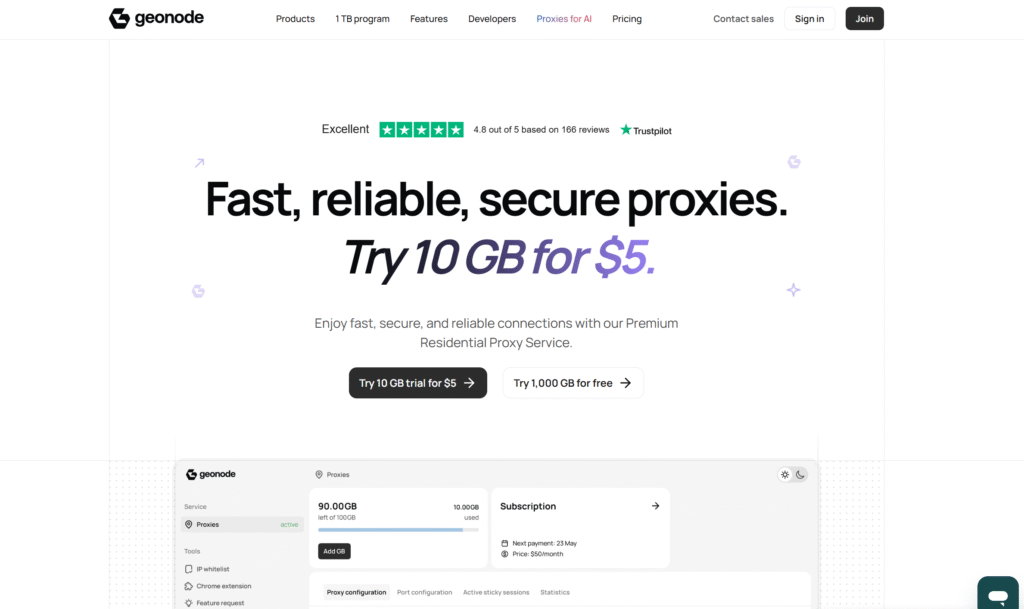
GeoNode takes a flat-rate approach to residential proxies that appeals to users who value predictable billing and unmetered access. The rotating setups provide steady availability without intricate pricing calculations. Ethical sourcing practices underpin the service, giving users confidence in the quality of connections. Many budget-conscious individuals and small businesses find the simple structure refreshing compared to usage-based alternatives. While advanced customization options are more limited, GeoNode covers essential needs for regular browsing and data tasks effectively. The combination of straightforward pricing and reliable basic performance makes it a sensible selection for those who want residential proxies without overcomplicating their workflow or budget planning.
- Pricing: Flat-rate model
- Bandwidth: Unmetered access
- IP type: Rotating residential
- Target market: Budget users
- Sourcing: Ethical practices
- Billing: Simple pricing structure
- Pros: Flat-rate pricing, unmetered bandwidth, ethical sourcing
- Cons: Basic feature set
16. MarsProxies
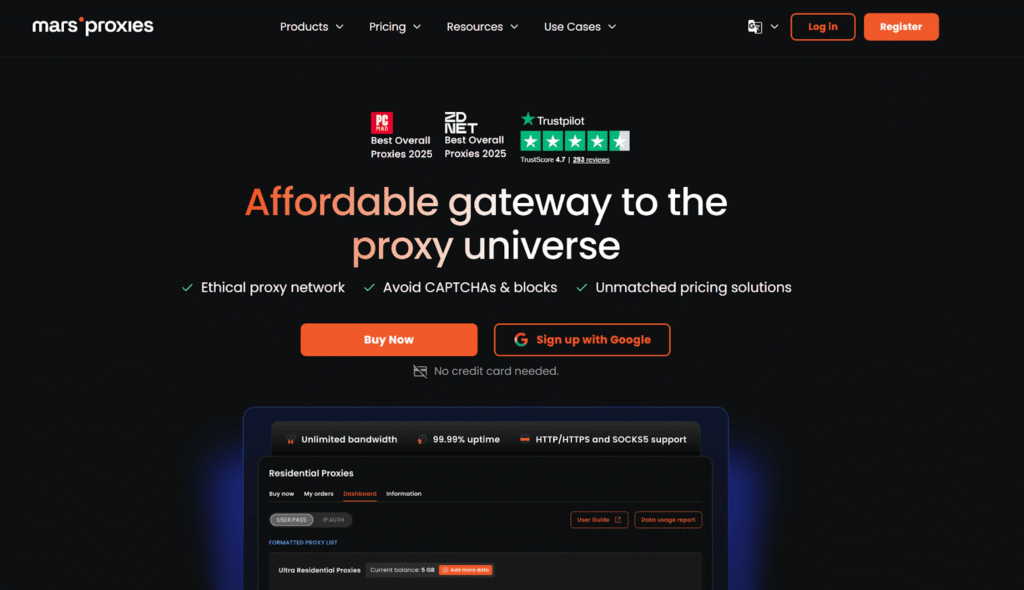
MarsProxies emphasizes speed and unlimited bandwidth in its residential proxy offerings, with additional static ISP options for projects that benefit from longer-term consistency. The focus on performance helps maintain quick response times during intensive operations. Many users who prioritize fast, uninterrupted access appreciate the high-speed connections and reliable uptime the service provides. While pricing sits at a higher tier, the performance-oriented design suits teams running time-sensitive or high-volume work. The inclusion of both residential and ISP-style proxies gives users flexibility to choose the right balance for each task. MarsProxies works well for performance-focused projects where connection quality directly influences outcomes.
- Focus: Speed optimization
- Bandwidth: Unlimited access
- IP types: Residential and static ISP
- Performance: High-speed connections
- Stability: Reliable uptime
- Target users: Performance-focused projects
- Pros: High speeds, unlimited bandwidth, ISP options
- Cons: Higher pricing tier
17. Shifter
Shifter uses a time-based pricing model that grants unlimited bandwidth, making it attractive for large-scale scraping and data collection projects. The rotating IPs support anonymity during high-volume activity, and the straightforward billing structure based on time rather than data transfer helps teams forecast costs easily. Many appreciate the simplicity that lets them focus on their scraping goals instead of tracking usage metrics. While customization features are more basic than some alternatives, Shifter delivers dependable functionality for intensive, ongoing operations. Its approach suits users who run substantial workloads and prefer predictable time-based expenses over per-gigabyte models.
- Pricing: Time-based model
- Bandwidth: Unlimited usage
- IP rotation: Automatic rotation
- Use case: Large-scale scraping
- Anonymity: High-level protection
- Billing: Simple time-based structure
- Pros: Unlimited bandwidth, time-based pricing, high anonymity
- Cons: Limited customization options
18. PacketStream
PacketStream operates a peer-to-peer residential proxy network that offers affordable access to real-user connections. The community-driven model provides cost-effective unmetered bandwidth for a variety of browsing and collection tasks. Many users value the transparent ethical approach and the lower price point that makes residential IPs accessible for smaller projects or testing. Performance can vary depending on the peers available at any moment, yet the service remains practical for everyday needs where budget is a primary consideration. PacketStream serves well for users who want straightforward residential proxy access without premium pricing or complex enterprise tooling.
- Model: Peer-to-peer network
- Pricing: Affordable rates
- Bandwidth: Unmetered access
- IP type: Rotating residential
- Sourcing: Community-based
- Ethics: Transparent practices
- Pros: Low cost, P2P network, unmetered bandwidth
- Cons: Variable performance based on the network
19. IPFoxy
IPFoxy maintains a sizable residential IP network that supports rotating functionality with competitive speeds and unmetered options on many plans. The global coverage and straightforward performance make it suitable for medium-sized operations that need consistent results across different locations. Many users highlight the balance of pool size, speed, and pricing that fits ongoing workflows without excessive cost. While it may not offer the most advanced filtering or specialized features found in top-tier services, IPFoxy delivers reliable everyday performance for common scraping, monitoring, and automation tasks. It represents a solid mid-tier choice for teams scaling up from smaller providers.
- IP pool: 50M+ residential IPs
- Rotation: Automatic IP changes
- Speed: High-performance connections
- Bandwidth: Unmetered on plans
- Coverage: Global locations
- Pricing: Competitive rates
- Pros: Large IP pool, high speeds, unmetered options
- Cons: Mid-tier feature offerings
20. Zyte
Zyte integrates residential proxies with an AI-enhanced scraping ecosystem that handles complex website challenges automatically. The platform supports unlimited concurrent threads and intelligent routing that adapts to difficult targets. Many users who already work within scraping and automation workflows appreciate the seamless combination of proxies and supporting tools that reduce manual intervention. While it carries a premium structure, the end-to-end approach saves time on projects that involve intricate data extraction. Zyte suits advanced users and teams that value integrated solutions over standalone proxy access.
- Technology: AI-enhanced routing
- Threads: Unlimited concurrent
- Integration: Full scraping ecosystem
- IP type: Rotating residential
- Use case: Advanced scraping
- Features: Automatic complexity handling
- Pros: AI-powered features, unlimited threads, ecosystem integration
- Cons: Premium pricing structure
21. 922Proxy
922Proxy focuses on budget-friendly residential proxy access with unlimited usage across a global network. The service prioritizes affordability and simplicity, making it practical for basic scraping and everyday tasks where advanced features are not essential. Many cost-conscious users find the straightforward setup and broad reach sufficient for their needs. While quality and specialized tooling may vary compared to premium providers, 922Proxy delivers acceptable performance for standard operations at a lower price point. It works well for individuals or small projects that require residential IPs without investing in enterprise capabilities.
- Pricing: Budget-friendly
- Proxies: Unlimited access
- Coverage: Global locations
- Use case: Basic scraping
- Complexity: Simple setup
- Target market: Cost-conscious users
- Pros: Very affordable, unlimited proxies, global reach
- Cons: Basic features, variable quality
22. PYProxy
PYProxy offers both static and rotating residential options with unmetered bandwidth and low latency performance. The dual approach gives users flexibility to choose stable long-term connections or fresh IPs depending on the project. Competitive pricing and reliable metrics make it suitable for a range of tasks from account management to data gathering. Many appreciate the straightforward access and the ability to match proxy type to specific requirements without complicated configuration. While brand presence is smaller than some established names, PYProxy provides practical functionality that meets the needs of users seeking balanced performance and cost.
- IP types: Static and rotating
- Bandwidth: Unmetered access
- Latency: Low response times
- Flexibility: Multiple proxy types
- Pricing: Competitive rates
- Performance: Reliable metrics
- Pros: Dual options, unmetered bandwidth, low latency
- Cons: Smaller brand presence
23. ScraperAPI
ScraperAPI combines residential proxies with built-in handling for common blocking obstacles including JavaScript rendering and CAPTCHA challenges. The platform manages proxy rotation automatically and supports unmetered scraping operations at enterprise scale. Many organizations with substantial ongoing collection needs value the all-in-one design that reduces the need to coordinate multiple tools. While the integrated approach carries a higher cost than basic proxy services, it delivers convenience and reliability for teams that want scraping infrastructure handled comprehensively. ScraperAPI suits larger operations that prioritize time savings and consistent results over manual control.
- Integration: Built-in proxy handling
- Scraping: Unmetered operations
- Features: Auto-rotation, JS rendering
- CAPTCHA: Automatic solving
- Scale: Enterprise-level capacity
- Clients: 10,000+ companies
- Pros: All-in-one solution, handles blocking, large scale
- Cons: Higher cost than basic proxies
24. Apify
Apify provides an actor-based automation platform where residential proxies integrate directly into customizable workflows. The extensive marketplace of pre-built actors accelerates development for common scraping and data tasks. Unlimited bandwidth and rotating residential support allow teams to build and run automated processes without worrying about usage limits. Many developers and technical users appreciate the seamless connection between proxies and automation tools that speeds up project deployment. While there is a learning curve for those new to the actor model, Apify rewards users who invest time in building efficient workflows. It serves teams that want more than standalone proxies and value integrated automation capabilities.
- Model: Actor-based automation
- IP type: Rotating residential
- Bandwidth: Unmetered access
- Features: Workflow automation
- Marketplace: Pre-built solutions
- Integration: Seamless tool connectivity
- Pros: Automation platform, marketplace, unmetered bandwidth
- Cons: Learning curve for advanced features
25. Oculus Proxies
Oculus Proxies prioritizes ultra-stable residential connections with exceptional uptime and unmetered bandwidth. The service focuses on reliability and consistency, making it suitable for mission-critical applications where interruptions carry significant consequences. Strict quality standards help minimize downtime and maintain steady performance over extended periods. Many users who run continuous or high-stakes operations value the dependable nature of the network. While pricing reflects the premium stability focus, Oculus Proxies delivers peace of mind for projects that cannot afford variability. It represents a strong choice when consistent access outweighs other considerations.
- Uptime: 99.99% availability
- Stability: Ultra-stable connections
- Bandwidth: Unmetered access
- Focus: Reliability first
- Quality: Strict standards
- Use case: Mission-critical operations
- Pros: Exceptional uptime, ultra-stable, unmetered bandwidth
- Cons: Premium pricing reflects quality
26. Live Proxies
Live Proxies, headquartered in California in the United States, provides residential proxy services built for users who need both session flexibility and reliable stability. The platform supports sticky sessions that maintain the same IP address for extended periods, which helps preserve consistent identities during account management or ongoing monitoring work. It also includes mobile proxies running on real carrier networks to strengthen authenticity in applications where carrier-level legitimacy matters. Many teams value the straightforward integration with common development tools and the capacity to handle numerous simultaneous connections without disruption. The service covers a wide array of international sources, allowing operations to proceed smoothly across different environments. Some users note that while the core features cover most standard demands effectively, those working with highly customized setups may spend additional time confirming full compatibility with specific scripts or frameworks.
- Supports sticky sessions for long-term IP consistency and rotating options when frequent identity changes are required
- Compatible with HTTP, HTTPS, and SOCKS5 protocols for seamless use with various automation and browsing tools
- Features private IP allocation to support dedicated and exclusive connection patterns
- Enables unlimited concurrent threads to allow parallel processing across multiple tasks
- Offers residential and mobile IP types to align with different authenticity needs in diverse projects
- Many users successfully apply the proxies in social media account oversight and e-commerce verification where stable sessions reduce interruptions
- The service has earned recognition for dependable results in settings that benefit from persistent connections and residential legitimacy
- Market observations show growing adoption among developers and marketers who prioritize easy onboarding alongside consistent operational performance
27. LimeProxies
LimeProxies specializes in static residential proxies that blend ISP-assigned addresses with datacenter-style responsiveness. These connections stay persistent without automatic rotation, which suits projects that depend on unchanging IPs over prolonged durations. The service supports major protocols and accommodates unlimited simultaneous connections, enabling teams to run large-scale activities efficiently. Many businesses turn to it for continuous data work and identity-sensitive tasks where stability directly influences outcomes. The hybrid model delivers speeds that feel closer to datacenter performance while retaining the trust signals of real residential origins. Some users find that while the persistent nature simplifies long-running operations, those requiring rapid IP cycling may combine it with complementary rotating solutions for full coverage of their workflow needs.
- Delivers real ISP-assigned IPs that remain fixed for the active session without forced rotation
- Combines residential authenticity with datacenter-like connection speeds for balanced performance
- Supports HTTP and SOCKS5 protocols to ensure compatibility across standard tools and applications
- Allows unlimited concurrent connections to handle high-volume parallel operations without bottlenecks
- Maintains strong reliability for sustained access in environments that penalize frequent IP changes
- Many professionals rely on these proxies for extended monitoring and account stability projects where consistency is essential
- The approach has gained traction in data collection circles for its ability to maintain steady performance over time
- User feedback highlights effective results in scenarios that value both speed and the appearance of genuine residential activity
28. ProxyWing
ProxyWing focuses on static residential proxies linked to real addresses, offering fixed IPs drawn from legitimate residential networks. Headquartered in Delaware in the United States, the service emphasizes connections that persist for extended periods, supporting workflows that require a stable online presence without interruption. It handles standard protocols and prioritizes consistent speeds suitable for data-heavy or identity-dependent activities. Many organizations use it for long-term oversight and sensitive account operations where IP changes could trigger additional verification steps. The emphasis on address-tied stability helps maintain authentic appearances across platforms. Some users observe that while the fixed-IP model excels in continuity-focused tasks, those needing more dynamic rotation may integrate additional services to cover varying project phases.
- Provides address-tied static residential IPs designed for prolonged persistence and minimal changes
- Supports HTTP and SOCKS5 protocols for flexible integration with existing tools and scripts
- Includes options for unlimited bandwidth to sustain continuous operations without usage constraints
- Focuses on configurations that keep the same IP active throughout the subscription period
- Delivers reliable performance for tasks that benefit from unchanging identities over weeks or longer
- Many teams apply these proxies in account management and ongoing verification work where stability reduces risk
- The service has built a following among users who prioritize fixed residential connections for sensitive or extended projects
- Market insights indicate strong suitability for environments that value consistent IP presence and residential trust signals
29. Byteful
Byteful offers private static residential proxies sourced from premium ISP networks, giving users fixed addresses that remain available for extended durations. The service draws from established carriers and emphasizes connections that combine residential legitimacy with dependable uptime. Many professionals appreciate the focus on long-term IP availability without frequent turnover, which supports stable sessions for account work and continuous monitoring. It accommodates standard protocols and handles concurrent activity efficiently for teams running multiple processes. The private nature of the allocations adds a layer of exclusivity that appeals to users handling sensitive or high-value operations. Some users note that while the ISP-backed stability serves most sustained tasks well, those with extremely specialized carrier preferences may verify exact matches during setup.
- Supplies private static residential IPs from premium ISP networks for extended fixed use
- Supports HTTP and SOCKS5 protocols to maintain broad compatibility with automation environments
- Enables configurations suited to long-duration sessions without automatic IP cycling
- Handles concurrent connections effectively for parallel workflow execution
- Emphasizes residential authenticity through established carrier relationships
- Many users deploy these proxies for multi-account oversight and long-running data collection where IP consistency matters
- The service has developed recognition for reliable performance in stability-oriented professional settings
- Observations from the market show particular value for teams that require persistent residential connections over time
30. HydraProxy
HydraProxy builds residential proxy networks that support both rotating and sticky session modes, allowing users to choose between frequent changes and sustained consistency as needed. The platform focuses on high anonymity through real ISP-issued addresses and provides tools for session control that adapt to different project requirements. Many teams value the flexibility to maintain stable identities during account management or extended research while retaining the option to rotate when desired. It integrates with common protocols and scales to support substantial concurrent activity. The network spans diverse sources, helping operations proceed with authentic residential characteristics. Some users find that while the dual-mode flexibility covers a wide range of scenarios effectively, those with very specific session length demands may fine-tune settings to achieve optimal alignment with their exact workflows.
- Supports both rotating and sticky session configurations for adaptable IP management
- Compatible with HTTP, HTTPS, and SOCKS5 protocols for versatile tool and script integration
- Provides residential IPs from genuine ISP sources to support authentic connection profiles
- Enables session controls that let users balance change frequency with stability requirements
- Handles high volumes of concurrent activity for scaled parallel operations
- Many professionals use the service for social media oversight and competitive monitoring where session choice influences results
- The platform has gained attention for its adaptable approach in dynamic data environments
- Market perspectives highlight its utility for teams that need both persistence options and rotation capabilities within one service
Market Growth and Technology Trends
The static residential proxy market has expanded rapidly with an 11.48% compound annual growth rate through 2025. Enhanced security features now include built-in firewalls and end-to-end encryption, countering rising cyber threats. AI and machine learning integration help providers improve proxy performance by predicting IP blocking before it occurs.
The 5G network rollout has transformed static residential proxies by significantly reducing latency and improving performance for bandwidth-intensive tasks. E-commerce businesses have increasingly adopted these proxies for competitor price monitoring, ad verification, and accessing geo-restricted content. Providers have expanded IP pools dramatically, offering users more geographic options and better coverage.
Regulatory compliance has become paramount with stricter data protection laws requiring transparent operations and ethical IP sourcing. IoT integration represents an emerging trend as static residential proxies play roles in managing and securing connections for smart devices. Companies now prioritize sustainability in IP management alongside traditional performance metrics.
Choosing Between Static and Rotating Proxies
The decision between static and rotating residential proxies depends on specific use case requirements. Static proxies excel when consistent identity matters, such as managing social media accounts or accessing platforms requiring the same IP across sessions. Tasks like SEO monitoring, price tracking, and long-term scraping projects benefit from IP stability.
Rotating proxies suit high-volume web scraping where frequent IP changes prevent detection and bans. Market research gathering large datasets across multiple sources works better with rotation. The cost consideration plays a role, as static residential proxies typically command premium pricing due to resource dedication, though development expenses often decrease compared to rotating solutions.
| Feature | Static Residential | Rotating Residential |
| IP Consistency | Same IP for extended periods | New IP per request or interval |
| Best For | Account management, consistent sessions | High-volume scraping, data collection |
| Detection Risk | Lower with proper use | Lower through constant rotation |
| Pricing | Often premium | Generally more affordable |
| Session Length | Hours to days | Seconds to minutes |
| Setup Complexity | Moderate | Simple |
Performance Metrics That Matter
Success rate stands as the most critical metric when evaluating static residential proxies. Top providers maintain 99%+ success rates, ensuring requests reach targets without failures. Response time affects productivity, with leading services achieving under 1-second average response times.
Uptime guarantees separate professional services from budget options, with enterprise providers delivering 99.9% to 99.99% availability. Geographic coverage determines access to region-specific content, making providers with 180+ country coverage more versatile. Bandwidth policies impact total cost of ownership, with unlimited options proving economical for data-intensive operations.
Protocol support affects compatibility across different applications and tools. HTTP, HTTPS, and SOCKS5 with UDP represent standard requirements for modern proxy services. Concurrent connection limits determine scalability, with unlimited threads enabling parallel operations for faster results.
How to Choose the Best Static Residential Proxies in 2026
Static residential proxies provide a fixed address that stays consistent across multiple sessions. This stability makes them valuable for operations where changing addresses frequently could disrupt ongoing activities. Many users look to residential proxies when they need reliable connections that blend into normal internet traffic patterns.
Session control ranks as the top consideration. Providers that allow users to maintain the same address for extended periods deliver better results for account-related work or continuous data processes. Shorter sessions may suit high-volume tasks but often fall short when consistency matters most. The source of the addresses comes next in importance. Those drawn from real ISP networks tend to carry stronger reputations with websites and platforms. This reduces the chance of interruptions compared to addresses from other sources.
Compatibility with everyday tools also plays a major role. Support for common protocols like HTTP proxies, HTTPS proxies, and SOCKS5 proxies ensures smooth operation with scripts, browsers, and automation software that many professionals rely on daily. Overall reliability of the service matters too. Uptime performance and responsive assistance help minimize downtime during critical projects. Services that offer residential proxies often emphasize these qualities in their networks.
Finally, the structure of available plans influences the decision. Transparent options that match the scale of the work help avoid unexpected limits as needs grow. In practice, teams often compare several providers side by side before settling on one that aligns with their specific workflow requirements.
Static Residential Proxies Pricing: Costs, Plans & What to Expect in 2025
Pricing for static residential proxies usually follows a model based on dedicated access rather than shared traffic pools common in some rotating setups. This approach gives users predictable access without constant changes in cost tied to volume alone.
Several elements shape what users pay. The number of addresses required, the length of time each one stays assigned, and any extras for specialized network access all factor into the total. Plans often separate into monthly commitments per address or options that combine a base fee with usage components.
Many providers structure their offerings to suit different scales of operation. Smaller projects may start with limited sets while larger efforts benefit from broader packages that grow with demand. Residential proxies and mobile proxies follow similar logic in their own categories, which helps users compare across types when building a full proxy setup.
Transparency in billing stands out as another practical point. Clear details on what each plan includes prevent surprises when traffic spikes or when additional addresses become necessary mid project. Some services also offer flexibility to adjust as workflows evolve, which proves useful for teams handling varied tasks over time. Users typically review these elements together with performance details before making a choice. This process leads to selections that fit both budget and operational needs without unnecessary complexity.
Latest News In 2026
Developments in proxy technology this year continue to focus on stronger consistency for tasks that depend on uninterrupted connections. Providers refine their approaches to sourcing and session management, which benefits users who rely on stable addresses for extended periods. Discussions in the broader community highlight how these improvements support business activities that need dependable online presence. The blog shares updates on specific markets and proxy types that reflect these shifts. Interest grows around solutions that combine reliability with broad international reach. Residential proxies remain central to many of these conversations because they offer a practical balance for ongoing work. Recent coverage also touches on how mobile proxies fit into mixed environments where speed and stability both matter. These trends point toward more tailored options that match real operational demands rather than one size fits all models. Readers can find further details on evolving proxy approaches through ongoing posts that examine different regions and use patterns.
FAQ
What are static residential proxies, and how do they work?
Static residential proxies provide fixed IP addresses from real ISP networks, maintaining the same IP for extended periods ranging from hours to months. They route your internet traffic through intermediary servers connected to actual residential devices like home computers or smartphones. This makes your online activities appear legitimate and less likely to trigger security systems. Static residential proxies work by establishing persistent connections through specific entry points, giving you a continuous online identity that websites recognize as authentic residential users across multiple sessions.
How long can I keep the same static residential IP address?
Most premium providers allow you to maintain the same static residential IP address for 24 hours to 30 days depending on the plan and provider. Some services offer even longer durations with ISP proxies that can remain stable for months. The duration depends on whether you’re using true static residential proxies or long-session sticky proxies. True static IPs from ISP networks typically last longer than standard residential stickies. Check with your provider about session length guarantees and whether IP replacements are available if your assigned address becomes blocked or flagged.
Are static residential proxies legal to use?
Static residential proxies are legal tools when used for legitimate purposes like market research, SEO monitoring, price comparison, and web scraping of publicly accessible data. The legality depends entirely on how you use them rather than the proxies themselves. Avoid violating terms of service, accessing protected content without authorization, or engaging in fraudulent activities. Different countries have varying laws regarding web scraping and data collection. Ensure compliance with relevant regulations, including GDPR, CCPA, and website-specific terms of servic,e before implementing proxy solutions for business operations.
What makes static residential proxies better than datacenter proxies?
Static residential proxies offer 45% lower detection risk compared to datacenter IPs because they originate from real ISP networks assigned to physical locations. Websites perceive them as genuine users rather than commercial proxy services, resulting in fewer bans and CAPTCHA. They provide better access to geo-restricted content and platforms with strict anti-bot measures. While datacenter proxies offer higher speeds and lower costs, residential options deliver superior success rates for sensitive operations requiring authenticity. The 45% improvement in data collection efficiency with residential proxies often justifies the premium pricing for businesses prioritizing reliability over cost.
What factors influence the performance of static residential proxies in real world applications?
Performance in everyday settings often hinges on consistent response times across different network conditions and the ability to handle complex website protections without frequent interruptions. The underlying infrastructure plays a part in how well these proxies maintain speed during extended use periods. Users also benefit from features that allow easy management of multiple simultaneous connections. Services focused on residential proxies typically highlight robust backend systems that support these needs in professional environments.
How do static residential proxies support tasks that require long term session stability?
Long term session stability comes from the fixed nature of the addresses, which helps preserve login states, shopping carts, and other session based elements on target sites. This consistency reduces the need for repeated authentication steps that can slow down workflows. Many setups also support custom header configurations that further reinforce the appearance of regular user activity over time. When combined thoughtfully with other proxy types like those in residential proxies offerings, teams achieve more flexible coverage for varied tasks.
What role do ISP networks play in delivering effective static residential proxy solutions?
ISP networks contribute by supplying addresses that originate from legitimate consumer connections, which helps sustain trust signals over prolonged periods. This foundation supports smoother interactions with platforms that scrutinize incoming traffic closely. The result is often fewer disruptions during sensitive operations that span multiple days. Providers of residential proxies draw on similar principles to deliver dependable performance in comparable scenarios.
Which technical specifications should be reviewed when evaluating static residential proxy options?
Technical specifications worth reviewing include the range of supported authentication methods and the availability of detailed usage logs for troubleshooting. Proxy integration capabilities with popular programming environments also determine how quickly a setup can be deployed and maintained. Attention to fallback options for different connection types ensures continuity if one pathway encounters issues. Documentation from services offering residential proxies usually covers these points in practical detail.
How have advancements in proxy infrastructure affected static residential proxy reliability recently?
Recent infrastructure updates have focused on smoother handling of encrypted traffic and newer web protocols, which improves overall dependability for modern applications. These changes help reduce friction when working with evolving security layers on target platforms. Better resource management in backend systems also contributes to more predictable behavior during peak activity times. The blog provides ongoing coverage of how proxy technologies continue to adapt to these demands.
Ready to experience premium static residential proxies? Start your free trial with Resiprox and discover why thousands of businesses trust our 18M+ IP network for their mission-critical operations. Contact our expert team today to discuss your specific requirements and get personalized recommendations for your use case.