

Rotating datacenter proxies give you automatic IP address changes for web scraping, high-volume automation, and tasks that need to avoid rate limits. Theserotating proxy solutions use backconnect gateways to swap your IP with every request or at custom intervals, helping you distribute traffic and prevent detection. Whether you need per-request rotation for scraping or time-based changes for monitoring, the right provider makes setup simple and keeps your operations running smoothly. Discover the Best Rotating Datacenter Proxies in 2026
Ready to set up automatic IP rotation for your scraping projects? Test per-request rotation with fast datacenter infrastructure and configure custom intervals that match your workflow needs.
- How Rotating Datacenter Proxies Work (And Why They’re Fast)
- Server Infrastructure vs Real Devices
- When Rotation Helps Your Tasks
- When Static IPs Work Better
- Choosing the Right Rotating Datacenter Proxy Provider
- Rotation Methods: Per-Request vs Time-Based
- Pool Size and Geographic Coverage
- Speed Benchmarks and Concurrent Connections
- Authentication, Bandwidth, and Session Control
- Dashboard Quality and API Access
- Top 15 Best Rotating Datacenter Proxies in 2026
- Per-Request vs Time-Based Rotation: Which Method Fits Your Needs?
- How to Set Up Rotating Proxies for Automated Scraping
- Sticky Sessions with Rotating Proxies: Getting the Best of Both
- Common Rotating Proxy Mistakes (And How to Fix Them)
- When to Upgrade from Rotating Datacenter to Residential Proxies
- Optimizing Rotation Intervals for Different Tasks
- FAQ
How Rotating Datacenter Proxies Work (And Why They’re Fast)
Rotating datacenter proxies automatically switch your IP address with each connection request or after a set time interval. When you connect through a provider’s backconnect gateway, that server pulls a fresh IP from the proxy pool and routes your traffic through it. The rotation happens behind the scenes; you send requests to one endpoint, and the gateway handles all the IP switching.
Server Infrastructure vs Real Devices
Datacenter proxies live on powerful servers in cloud facilities, giving them enterprise-grade bandwidth and minimal latency. Residential proxies route through actual home connections, which introduces more delay. Datacenter infrastructure is typically 3x to 4x faster than residential connections because of dedicated hardware and optimized routing.
When Rotation Helps Your Tasks
Automatic IP changes work best for high-volume scraping, price monitoring, and SEO rank tracking. Rotation spreads your requests across many addresses, helping you bypass rate limits and avoid pattern detection. Each page load or API call appears to come from a different source, making your activity harder to flag
When Static IPs Work Better
Account logins, shopping carts, and session-based platforms expect the same IP throughout your visit. Switching IPs mid-session often triggers security checks or logs you out. For these tasks, static datacenter proxies or sticky sessions (which hold one IP for minutes or hours) give you consistency without rotation.
Choosing the Right Rotating Datacenter Proxy Provider
Picking a rotating proxy service means matching rotation methods, pool size, and speed benchmarks to your specific workflow.
Rotation Methods: Per-Request vs Time-Based
Per-request rotation assigns a new IP for every connection you make. This approach maximizes IP diversity and works well for scraping large sites or hitting APIs thousands of times. Time-based (interval) rotation changes your IP after a fixed period, like every 5, 10, or 30 minutes. Intervals suit monitoring tasks, browser automation, and workflows that need some session continuity before switching. Learn more aboutchoosing between rotating and static proxies for your use case.
Pool Size and Geographic Coverage
Larger IP pools reduce the chance of reusing the same address too soon. Providers with hundreds of thousands of IPs in multiple countries let you target specific regions or spread requests globally. Check if the service offers city-level targeting when you need precise geolocation.
Speed Benchmarks and Concurrent Connections
Response times under 1 second keep scraping fast. Look for providers advertising sub-300ms latency if speed matters. Unlimited concurrent sessions mean you can run parallel threads without hitting connection caps. Metered plans may throttle threads or charge extra for high concurrency.
Authentication, Bandwidth, and Session Control
Most rotating proxies use username:password authentication or IP whitelisting. Unlimited bandwidth plans let you scrape freely, while pay-per-GB models suit smaller projects. Sticky session support gives you the option to hold an IP for a few minutes when you need to log in or complete multi-step actions.
Dashboard Quality and API Access
A clear dashboard with endpoint generators, real-time stats, and easy credential management saves setup time. API access lets you programmatically fetch new credentials, check usage, and rotate settings without logging into a web panel.
Top 15 Best Rotating Datacenter Proxies in 2026
1. 🏆ResiProx – Best Rotating Datacenter Proxies in 2026 🏆
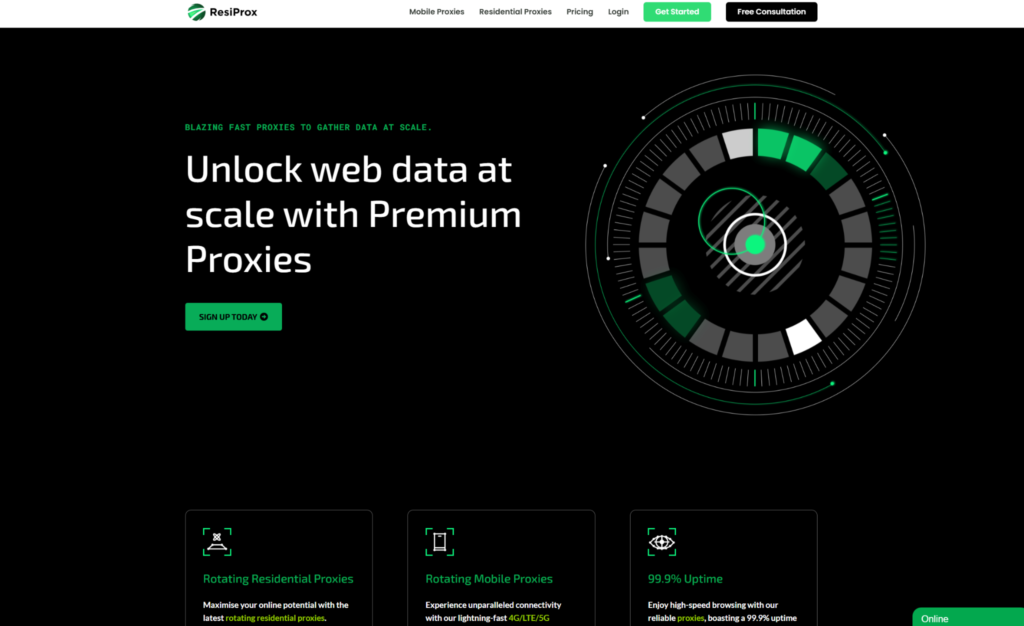
Resiprox Premium Proxies – Unlock the Web with Power and Precision
Introducing Resiprox, the ultimate proxy solution designed to supercharge your online operations. With our Residential Proxies and Mobile Proxies, you get unmatched access to web data at scale, robust security, and seamless connectivity all backed by a free trial to experience the difference firsthand.
Product Features
- Rotating Residential Proxies: Harness the power of 10M+ ethically-sourced IPs across 180+ countries. These proxies rotate dynamically to bypass IP blocks, CAPTCHAs and delivering 99.9% uptime and precise targeting at the country, city, or ZIP code level.
- Rotating Mobile Proxies: Powered by 4G/LTE/5G networks, our mobile proxies offer lightning-fast speeds with <0.3s response times and a 99.9% success rate perfect for real-time applications.
- Global IP Network: Tap into millions of IPs, including 3.5M+ in the US, 1.8M+ in Brazil, 3.1M+ in India, and more, ensuring coverage wherever you need it.
- Advanced Capabilities: Enjoy HTTPS & SOCKS5 support, unlimited concurrent sessions, and flexible rotating or sticky sessions, all wrapped in premium IP quality.
Product Specifications:
- Performance: High-speed browsing with 99.9% uptime and 24/7 expert support.
- Integration: Seamlessly works with Node.js, Python, PHP, Selenium, and more, featuring a dynamic endpoint generator and robust API access.
What It’s Built For:
Resiprox proxies are your all-in-one tool for:
- Web Scraping: Extract public data effortlessly for insights and growth.
- Price Monitoring: Track prices across regions in real-time.
- Multi-Accounting: Manage multiple accounts without limits.
- SEO & Ad Verification: Monitor rankings and verify ads globally.
- Cybersecurity: Protect your brand and test applications securely.
- Specialized Tasks: From sneaker botting to travel fare aggregation, Resiprox delivers.
Why Resiprox Stands Out:
This isn’t just a proxy, it’s a game-changer. With comprehensive documentation, multi-platform compatibility, and a team of experts available 24/7, Resiprox ensures your projects run smoothly. Whether you’re a business scaling operations, a researcher gathering data, or a developer testing apps, our proxies adapt to your needs with precision and reliability.
Resiprox Premium Proxies – Your Key to a Smarter, Faster, and More Connected Online World.
Click here to discover our :
2. Webshare
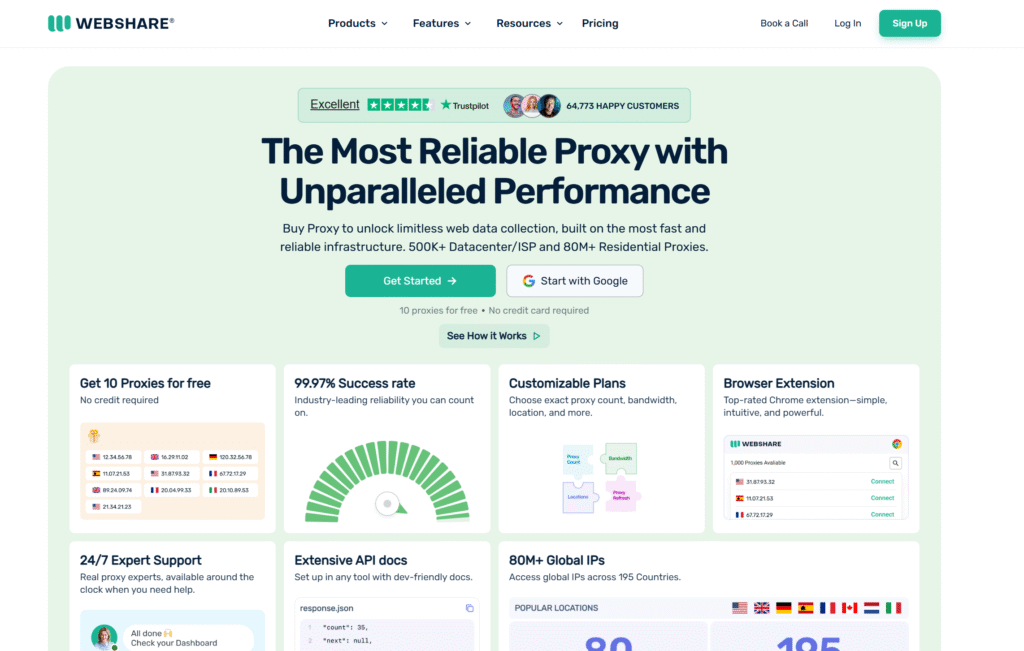
Webshare leads the affordable rotating proxy space with customizable datacenter options across more than 50 locations. You can rotate IPs on every request or set a schedule that fits your scraping rhythm. The provider offers free plans for testing, unlimited sessions, and both HTTP and SOCKS5 support.
Key Features:
- Per-request or scheduled rotation
- 50+ global locations
- Free tier available
- Unlimited concurrent sessions
- HTTP and SOCKS5 protocols
- Pay-per-GB and unlimited traffic plans
Pros:
- Budget-friendly pricing for high-volume scraping
- Easy setup for beginners
- Flexible rotation controls
Gentle Cons:
- Pool size smaller than enterprise-tier providers
3. Decodo (ex-Smartproxy)
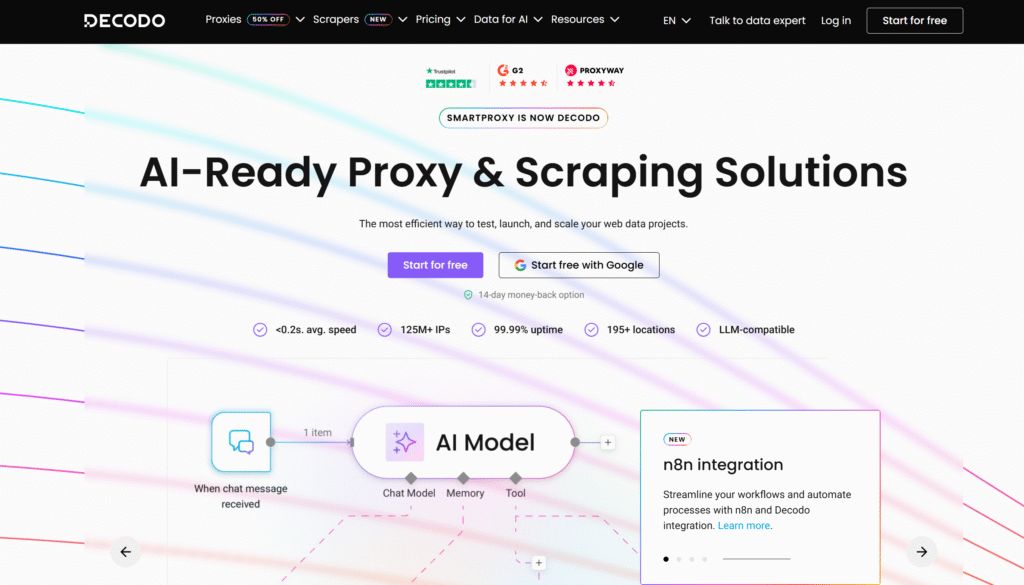
Decodo brings over 100,000 rotating datacenter IPs concentrated in US and EU regions. Per-request rotation ensures fresh addresses on every connection, and dedicated plans include unlimited traffic for predictable costs. Integrations with common scraping tools make setup quick.
Key Features:
- 100K+ datacenter IPs (US/EU focus)
- Per-request automatic rotation
- Unlimited traffic on dedicated plans
- Easy API and tool integrations
- Fast connection speeds
Pros:
- Top value for web scraping
- Strong customer support
- Reliable performance
Gentle Cons:
- Geographic coverage narrower than global providers
4. Oxylabs
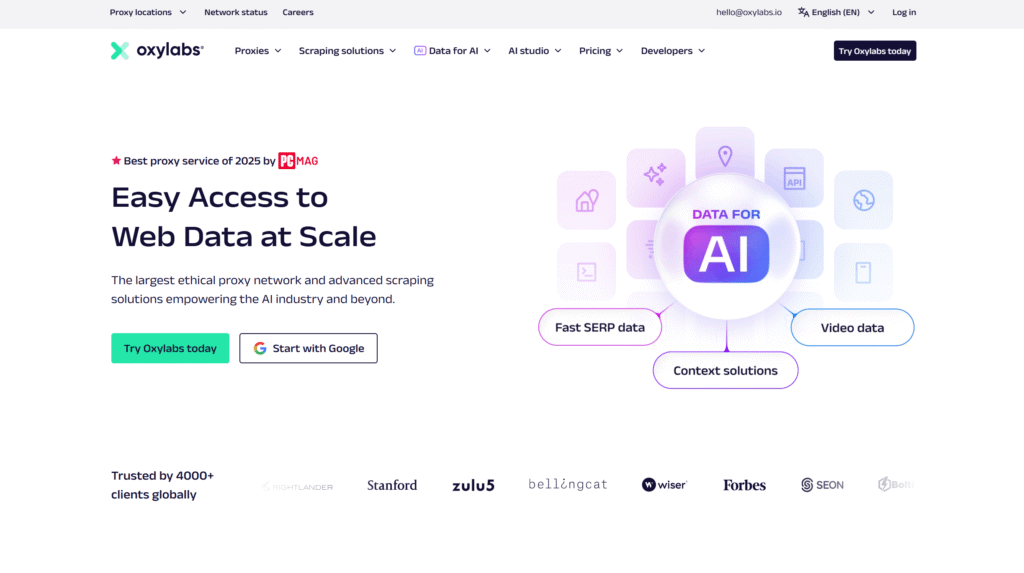
Oxylabs operates a premium pool of more than 2 million datacenter IPs across 188 countries. Advanced IP rotation features include city-level targeting, sticky sessions, and per-request switching. The platform handles large-scale data extraction with high reliability.
Key Features:
- 2M+ IP pool in 188 countries
- Advanced IP rotator with city targeting
- Sticky and per-request rotation modes
- Enterprise-grade infrastructure
- High concurrency support
Pros:
- Best for large-scale, mission-critical tasks
- Excellent uptime and support
- Precise geo-targeting
Gentle Cons:
- Premium pricing tier
5. Bright Data
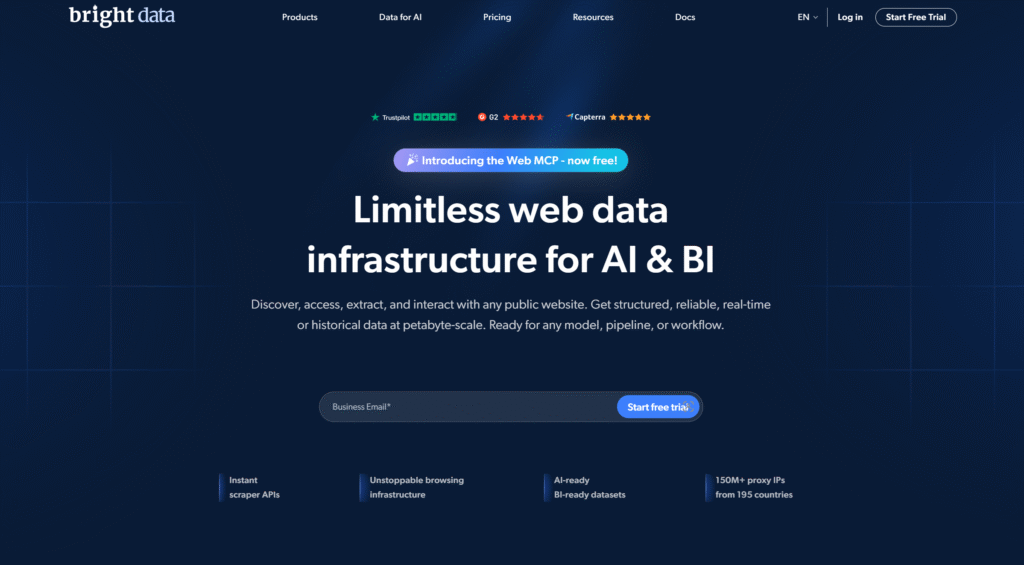
Bright Data’s rotating datacenter network includes over 770,000 IPs spanning 98 countries. You can choose rotation on every request or sticky sessions, with advanced targeting down to city and ASN levels. The service reports 99.99% uptime and handles high-concurrency automation smoothly.
Key Features:
- 770K+ rotating datacenter IPs
- 98 countries
- Per-request or sticky rotation
- City and ASN targeting
- Very high uptime
Pros:
- Suited for complex, high-volume automation
- Flexible rotation and targeting
- Strong infrastructure
Gentle Cons:
- Higher cost structure than budget providers
6. Rayobyte
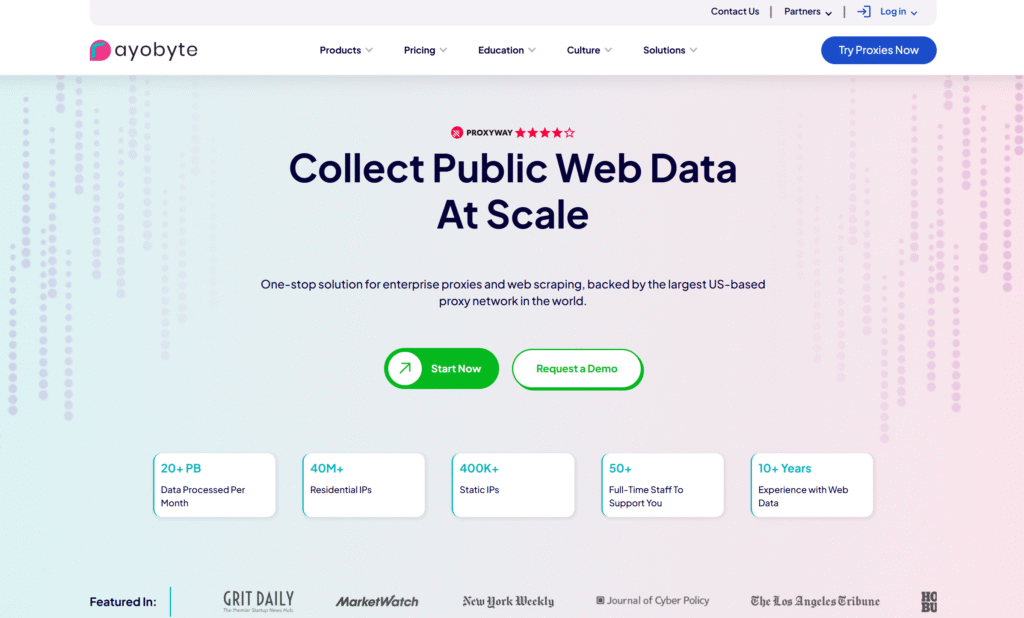
Rayobyte focuses on quality with 300,000+ rotating IPs across more than 29 locations. Customizable rotation intervals range from 10 to 120 minutes, giving you precise control over IP lifespan. Unlimited threads and traffic pair with ethically sourced subnets.
Key Features:
- 300K+ rotating IP pool
- 29+ global locations
- Adjustable intervals (10–120 minutes)
- Unlimited threads and traffic
- Ethical subnet sourcing
Pros:
- Great for ethical scraping and monitoring
- Flexible interval rotation
- Transparent sourcing practices
Gentle Cons:
- Smaller pool than largest providers
7. IPRoyal
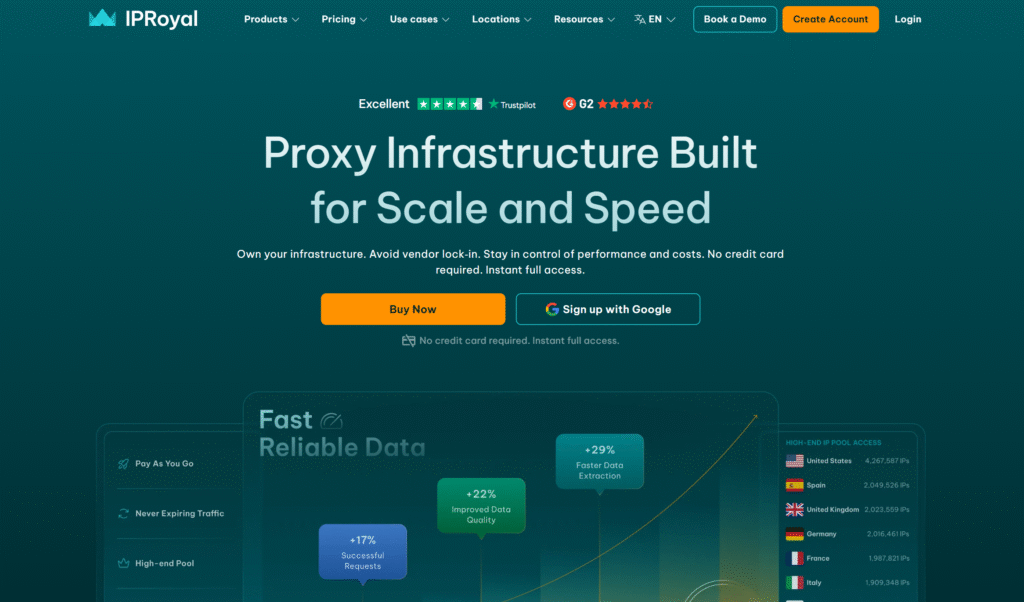
IPRoyal provides budget-friendly rotating and dedicated datacenter proxies in over 60 countries. Fast connection speeds, API management, and sticky session support give you flexibility at a lower price point. The service works well for cost-conscious users who need reliable rotation.
Key Features:
- 60+ countries
- Dedicated and rotating options
- Fast connections
- API credential management
- Sticky session support
Pros:
- Excellent value for money
- Flexible rotation and static choices
- Good speed
Gentle Cons:
- Pool size moderate compared to premium options
8. SOAX
SOAX offers clean rotating datacenter proxies with automatic rotation and comprehensive geographic targeting. Strong customer support and flexible configuration make it a solid choice for SEO research, market analysis, and tasks requiring pattern avoidance.
Key Features:
- Automatic rotation
- Clean IP pool
- Comprehensive geo-targeting
- Strong support team
- Flexible plans
Pros:
- Ideal for SEO and market research
- Easy to configure
- Responsive support
Gentle Cons:
- Pricing higher than ultra-budget providers
9. NetNut
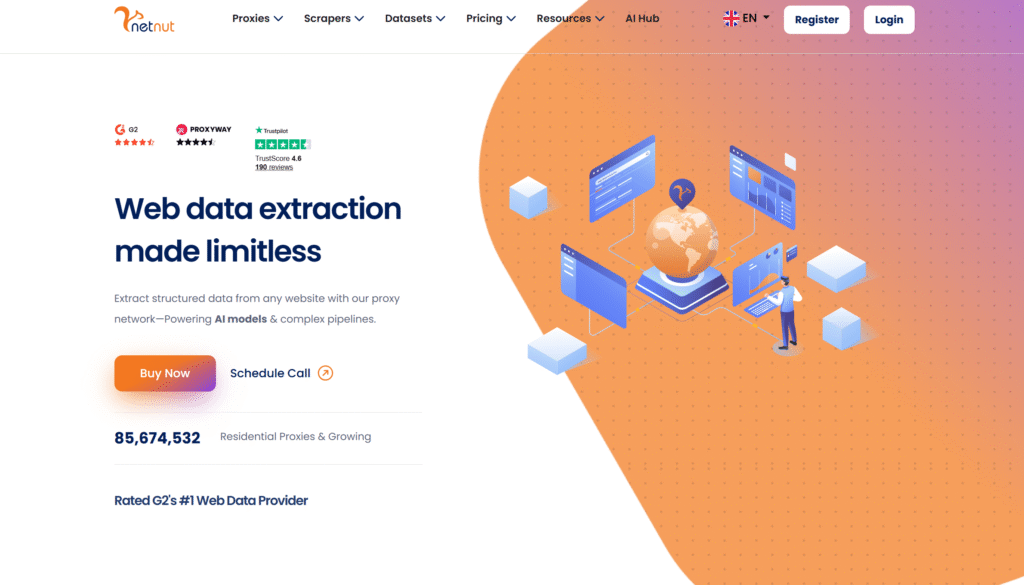
NetNut delivers ISP-grade speed with 150,000+ rotating IPs in more than 200 countries. Precise rotation controls and unlimited concurrency support high-volume data gathering with minimal detection. The service focuses on stealthy, fast operations.
Key Features:
- 150K+ rotating IPs
- 200+ countries
- ISP-grade speed
- Unlimited concurrency
- Precise rotation controls
Pros:
- Top choice for high-volume, stealthy scraping
- Fast response times
- Wide geographic reach
Gentle Cons:
- Premium pricing reflects ISP-quality infrastructure
10. ProxyEmpire
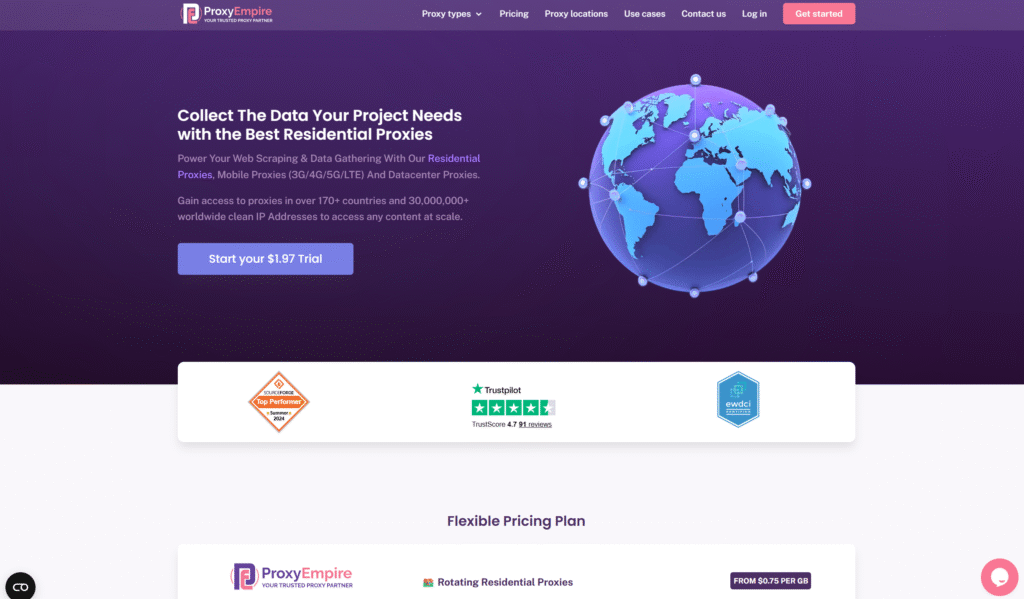
ProxyEmpire specializes in rotating proxies with 210,000+ IPs across 50+ countries. The service reports 99.9% uptime and 0.6-second response times. Both HTTP and SOCKS5 protocols work with scraping tools, bots, and automation platforms.
Key Features:
- 210K+ rotating IP pool
- 50+ countries
- 0.6s average response time
- 99.9% uptime guarantee
- HTTP and SOCKS5 support
Pros:
- Versatile for scraping and bot operations
- Good multi-tool integration
- Reliable uptime
Gentle Cons:
- Mid-range pool size
11. DataImpulse
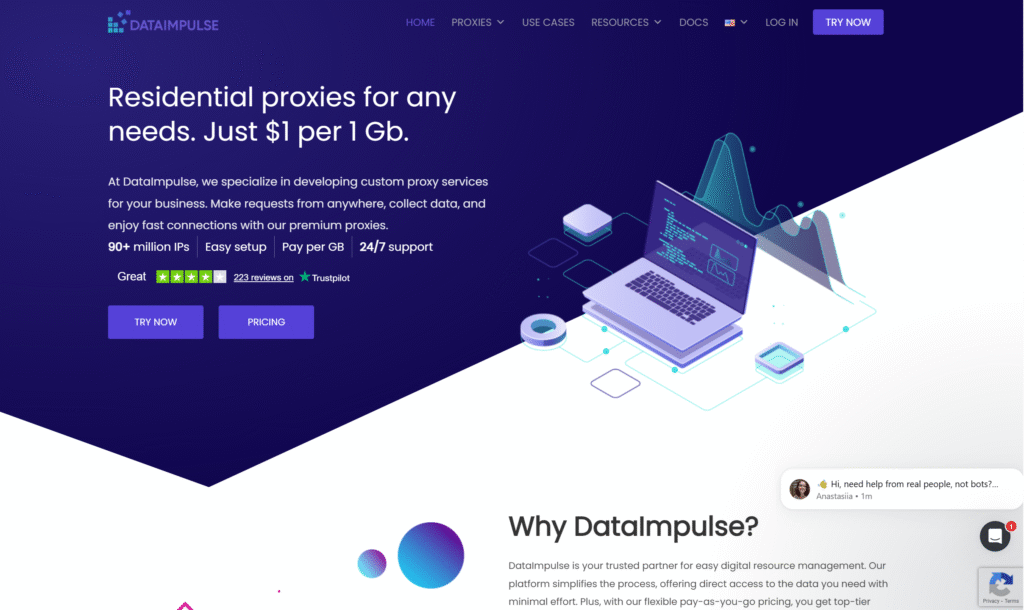
DataImpulse offers affordable rotating proxies with customizable rotation across 100+ countries. City and ASN targeting options pair with low-cost GB plans for budget-conscious large-scale operations.
Key Features:
- 100+ countries
- Customizable rotation intervals
- City and ASN targeting
- Pay-per-GB pricing
- API access
Pros:
- Best for budget large-scale projects
- Flexible targeting options
- Transparent pricing
Gentle Cons:
- Pool smaller than enterprise providers
12. Proxy-Seller
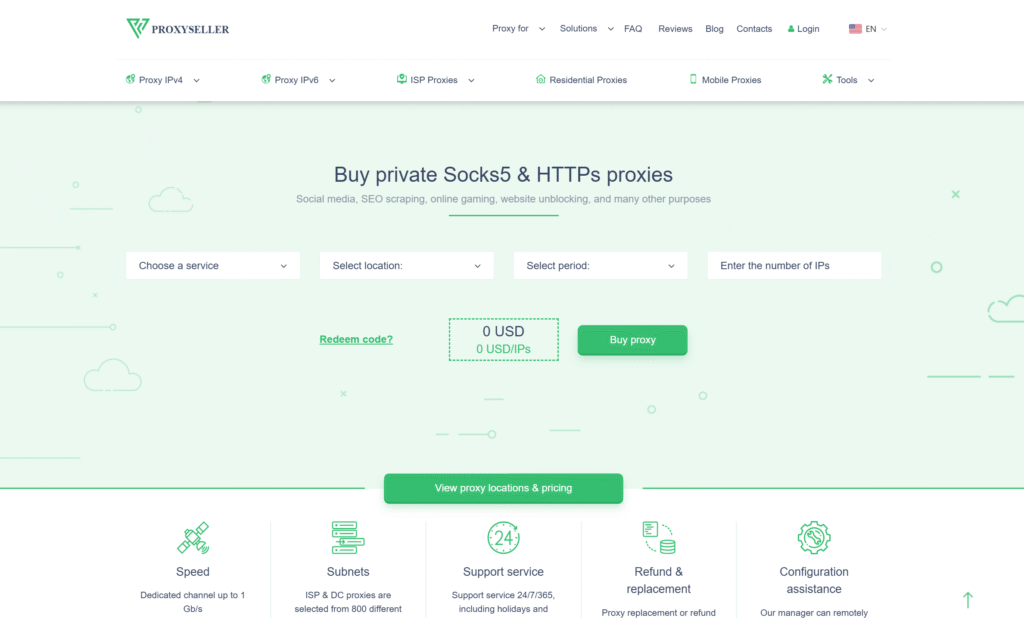
Proxy-Seller provides a reliable static-to-rotating hybrid across 5 continents. Monthly IP refreshes, mixed packages, and no traffic limits suit steady, location-specific tasks that need some rotation flexibility.
Key Features:
- 5-continent coverage
- Static and rotating hybrid options
- Monthly IP refreshes
- Unlimited traffic
- Mixed proxy packages
Pros:
- Good for steady, location-specific work
- No bandwidth caps
- Flexible package options
Gentle Cons:
- Smaller pool than dedicated rotating specialists
13. MarsProxies
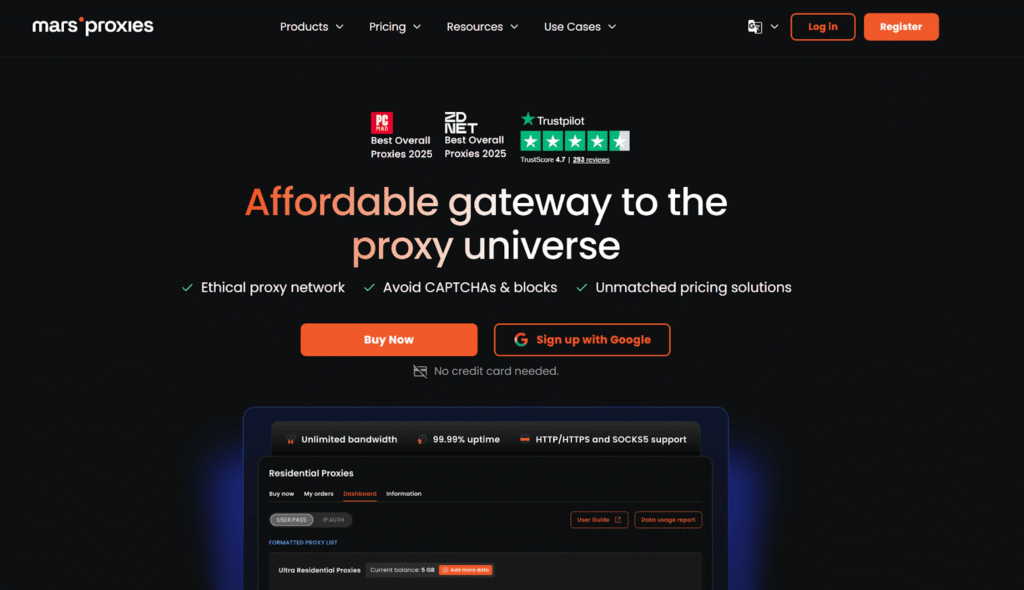
MarsProxies focuses on short-term rotating proxy needs with unlimited bandwidth in 30+ countries. Customizable plans from 1 to 90 days give you high-speed options for temporary bot operations and scraping projects.
Key Features:
- 30+ countries
- Unlimited bandwidth
- 1–90 day custom plans
- Fast rotation speeds
- Short-term focus
Pros:
- Great for temporary high-speed needs
- Flexible duration options
- Unlimited bandwidth
Gentle Cons:
- Better suited for short-term projects than long-term operations
14. Infatica
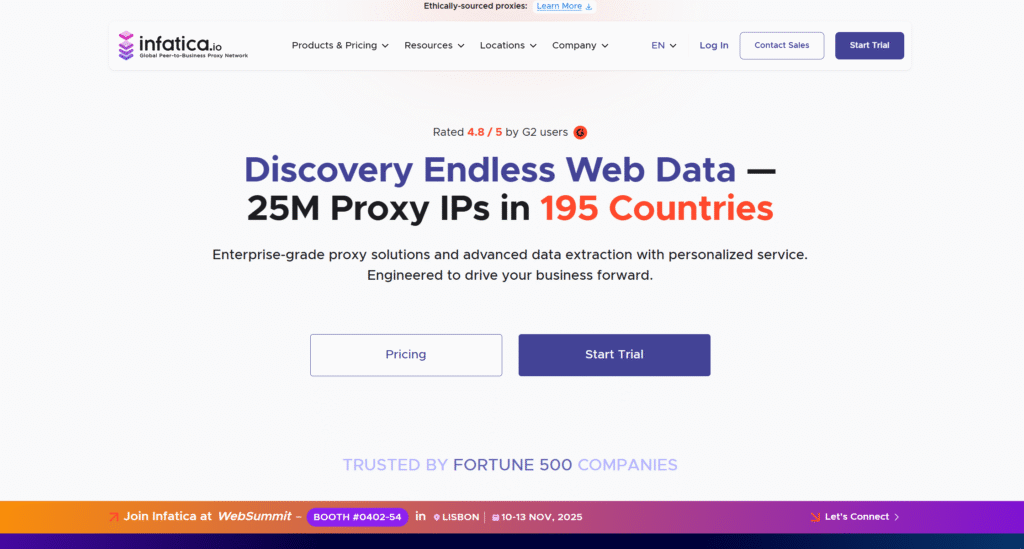
Infatica brings 500,000+ rotating datacenter IPs with business-oriented pricing and ethical sourcing practices. The service handles automation and account management tasks reliably.
Key Features:
- 500K+ rotating IPs
- Business-focused pricing
- Ethical IP sourcing
- Good documentation
- API support
Pros:
- Reliable for automation tasks
- Transparent sourcing
- Reasonable pricing
Gentle Cons:
- Moderate geographic coverage
15. Stormproxies
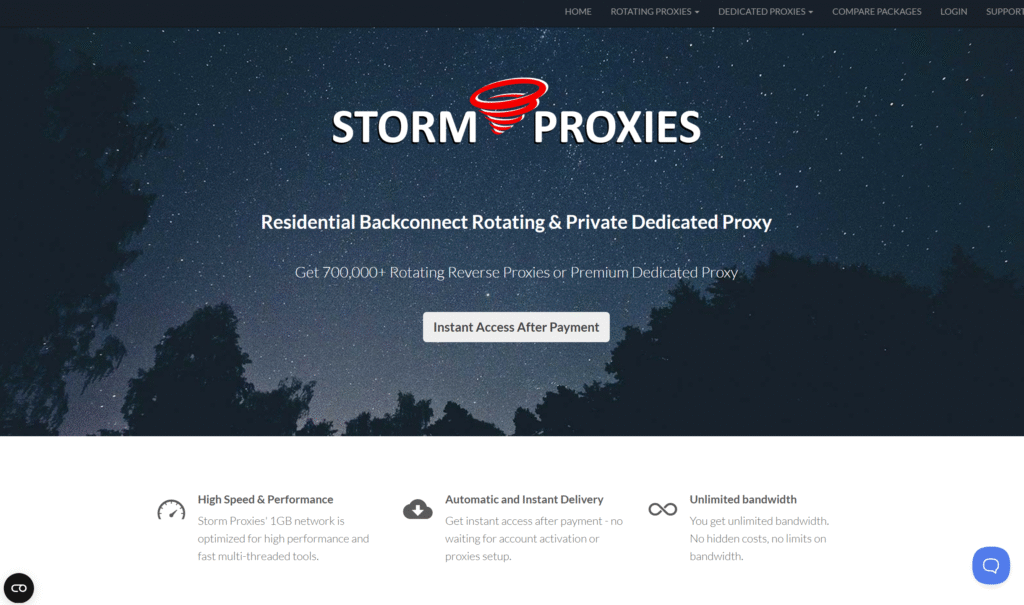
Stormproxies delivers ultra-budget rotating backconnect proxies with automatic IP changes and unlimited bandwidth. The service provides solid entry-level options for high-volume scraping on tight budgets.
Key Features:
- Backconnect rotation
- Automatic IP changes
- Unlimited bandwidth
- Budget pricing
- Simple setup
Pros:
- Best for entry-level, high-volume scraping
- Very affordable
- Unlimited bandwidth
Gentle Cons:
- Basic features compared to premium providers
Per-Request vs Time-Based Rotation: Which Method Fits Your Needs?
Per-request rotation switches your IP with every single connection, maximizing anonymity and request distribution. This method works best when scraping thousands of pages from a single site, hitting rate-limited APIs, or running bot operations that need maximum IP diversity. Each request appears to come from a completely different source, making pattern detection nearly impossible.
Time-based rotation holds an IP for a fixed interval, typically 5, 10, or 30 minutes, before switching. This approach gives you session continuity for tasks like automated testing, monitoring workflows, or browsing that requires some consistency. You can complete multi-step processes under one IP before the rotation kicks in.
Choose per-request when:
- Scraping large volumes quickly
- Bypassing strict rate limits
- Avoiding IP-based detection patterns
- Running parallel scraping threads
Choose time-based when:
- Testing requires session continuity
- Monitoring tasks need periodic checks
- Browser automation spans multiple steps
- Cost matters (fewer IP changes reduce overhead)
How to Set Up Rotating Proxies for Automated Scraping
Setting up rotating proxies for web scraping takes just a few configuration steps. Most providers give you a single endpoint URL that handles all rotation automatically.
- Get your credentials from the provider dashboard, usually a username, password, and gateway URL
- Configure your scraping tool by adding the proxy endpoint in your HTTP client or scraping framework settings
- Test the rotation by making a few requests and checking the response headers or using a service that echoes your IP
- Adjust rotation settings if your provider offers custom intervals or per-request options through API parameters
- Monitor usage through your dashboard to track bandwidth, request counts, and any blocked IPs
For Python scrapers using requests, configuration looks like this:
python
proxies = {
‘http’: ‘http://username:[email protected]:port’,
‘https’: ‘http://username:[email protected]:port’
}
response = requests.get(‘https://target-site.com’, proxies=proxies)
Most providers support integration with Selenium, Puppeteer, Scrapy, and popular scraping frameworks through similar proxy configuration.
Sticky Sessions with Rotating Proxies: Getting the Best of Both
Sticky sessions let you hold a single IP from a rotating pool for a specified duration, usually 1 to 30 minutes. This feature gives you the consistency of a static proxy with the flexibility of rotation when you need it.
Setting up sticky sessions typically works through session ID parameters in your proxy credentials. You add a session identifier to your username, and the gateway maintains the same IP as long as you use that identifier. When you change the session ID or let it expire, the proxy rotates to a new address.
Use sticky sessions for:
- Login workflows that flag IP changes
- Shopping cart operations
- Multi-page form submissions
- Testing checkout flows
- Session-based API calls
Avoid sticky sessions for:
- High-speed scraping where IP diversity matters
- Bypassing aggressive rate limits
- Distributing load across many IPs
Common Rotating Proxy Mistakes (And How to Fix Them)
Rotating too fast for the use case wastes bandwidth and can actually trigger more blocks. Some sites flag frequent IP changes as suspicious behavior. Solution: Use time-based intervals that match normal user session lengths (5-10 minutes).
Not handling retry logic means failed requests get dropped. Rotating proxies occasionally hit blocked or slow IPs. Solution: Implement automatic retries with exponential backoff and cycle through different IPs on failures.
Ignoring geo-targeting leads to inconsistent results. Search engines and localized sites return different content by region. Solution: Pin your rotation to specific countries or cities when location consistency matters.
Skipping authentication testing causes connection failures in production. Credential typos or whitelist misconfigurations break proxy connections. Solution: Test authentication thoroughly before scaling up your scraping operations.
When to Upgrade from Rotating Datacenter to Residential Proxies
Rotating datacenter proxies work great for most scraping and automation tasks, but some targets detect and block datacenter IP ranges. Upgrade to residential proxies when:
- Sites actively block known datacenter subnets
- You need to access platforms that ban automated traffic
- Social media management requires real residential IPs
- Sneaker sites or ticket platforms detect datacenter addresses
- Ad verification demands genuine residential connections
Residential proxies route through actual home devices, making your traffic indistinguishable from that of regular users. The trade-off: residential IPs cost more and run slower than datacenter infrastructure. Start with datacenter rotating proxies for speed and cost efficiency, then switch to residential when detection becomes an issue.
Optimizing Rotation Intervals for Different Tasks
Different workflows need different rotation speeds. Here’s how to match intervals to common use cases:
Web scraping (1-5 second intervals or per-request): Maximize IP diversity to avoid rate limits and detection. Use per-request rotation for large-scale scraping jobs.
Price monitoring (5-15 minute intervals): Balance session consistency with IP freshness. Most e-commerce sites expect session persistence, but rotating every 10 minutes keeps your monitoring natural.
SEO tracking (10-30 minute intervals): Search engines deliver consistent results during typical user sessions. Rotate every 15-20 minutes to simulate organic browsing patterns while gathering rank data from different SEO proxy locations.
Social media automation (30-60 minute intervals): Platforms flag rapid IP changes as bot behavior. Longer intervals mimic real user sessions and reduce account suspension risk.
Account creation (static or 60+ minute intervals): New account flows expect consistent IPs throughout signup. Use sticky sessions or long intervals to avoid triggering security checks.
Test different intervals with your specific targets and monitor block rates to find the optimal rotation speed for your workflow.
FAQ
What are rotating datacenter proxies, and how do they work in 2026?
Rotating datacenter proxies automatically change your IP address with each request or at set intervals using backconnect gateway servers. The gateway pulls IPs from a pool of datacenter addresses and routes your traffic through them, handling rotation behind the scenes. This lets you bypass rate limits and distribute requests across many IPs without manual configuration.
How do I choose between per-request and time-based rotation?
Per-request rotation assigns a new IP for every connection, maximizing diversity for high-volume scraping and API calls. Time-based rotation holds one IP for minutes before switching, giving you session continuity for testing, monitoring, and browser automation. Pick per-request when avoiding detection matters most, and time-based when you need consistent sessions.
Are rotating datacenter proxies better than residential proxies for scraping?
Rotating datacenter proxies deliver faster speeds (3-4x) and lower costs than residential options, making them ideal for most scraping tasks. However, some sites block datacenter IP ranges and require residential connections that route through real home devices. Start with datacenter rotation for speed and efficiency, then upgrade to residential if you hit blocks.
Can I use rotating proxies with sticky sessions?
Yes, most rotating proxy providers support sticky sessions that hold one IP for 1-30 minutes. You add a session identifier to your proxy credentials, and the gateway maintains the same address until the session expires. This gives you rotation flexibility with the consistency needed for logins, shopping carts, and multi-step workflows.
Ready to set up automatic IP rotation for your scraping projects? Test per-request rotation with fast datacenter infrastructure and configure custom intervals that match your workflow needs.