
Web scraping requires fast, reliable proxies that won’t get blocked when you’re collecting data from protected websites. The best residential proxies combine high success rates with ethical sourcing, while datacenter proxies offer speed for large-scale operations. Whether you need rotating proxies or sticky sessions, choosing the right provider makes all the difference. Discover the Best Proxy Providers for Web Scraping in 2026
Start your free trial with Resiprox today and experience 99.9% uptime with 10M+ ethically-sourced residential IPs across 180+ countries.
Why Web Scraping Proxies Matter in 2026
Web scraping has become a multi-billion-dollar industry, with the market projected to reach $3.5 billion by the end of 2026. The challenge? Websites are getting smarter at detecting automated requests. Around 39.1% of developers now use proxies as their primary method to avoid detection.
Success rates tell the real story. Residential proxies achieve 85-95% success rates on heavily protected websites, while datacenter proxies typically see 20-40% success on the same targets. The speed difference works in the opposite direction. Datacenter proxies deliver 100 Mbps to 1 Gbps speeds, roughly 3x to 4x faster than residential connections.
Python remains the dominant language for scraping projects, used by 69.6% of developers. This makes proxy integration straightforward, with most providers offering easy setup guides for popular libraries. The rise of AI-powered anti-detection tools has changed how proxies operate, automatically adapting to target site behaviors rather than using static configurations.
Types of Proxies for Web Scraping
Residential proxies route your traffic through real home internet connections with ISP-assigned IP addresses. They cost between $2 and $15 per gigabyte but deliver authentic-looking requests that websites trust. These work best for SERP scraping, social media management, and e-commerce price monitoring.
Datacenter proxies come from cloud servers, offering speeds of 100 Mbps to 1 Gbps at just $0.10 to $0.50 per IP. They’re faster and cheaper but face higher detection rates on protected sites. ISP proxies bridge the gap, combining datacenter speeds with residential trust levels by using IPs registered to Internet Service Providers.
Mobile proxies use cellular network connections from 4G and 5G devices. They provide the highest trust level but cost more due to limited supply. Websites rarely block mobile IPs since they’re shared among many legitimate users. For specialized needs like sneaker copping or SEO monitoring, mobile proxies deliver the best results.
Top 15 Best Proxy Providers for Web Scraping in 2026
1. 🏆ResiProx – Best Proxy Providers for Web Scraping in 2026 🏆
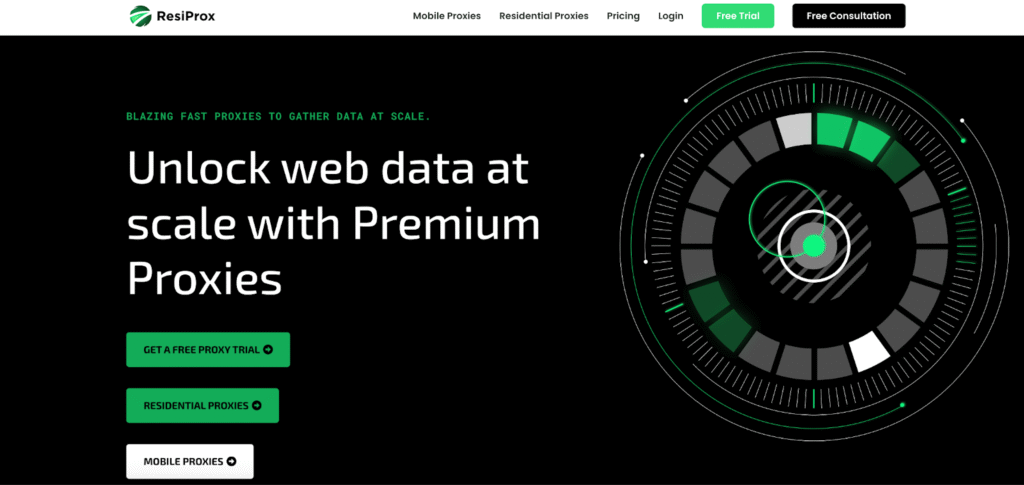
Resiprox Premium Proxies – Unlock the Web with Power and Precision
Introducing Resiprox, the ultimate proxy solution designed to supercharge your online operations. With our Residential Proxies and Mobile Proxies, you get unmatched access to web data at scale, robust security, and seamless connectivity all backed by a free trial to experience the difference firsthand.
Product Features
- Rotating Residential Proxies: Harness the power of 10M+ ethically-sourced IPs across 180+ countries. These proxies rotate dynamically to bypass IP blocks, CAPTCHAs and delivering 99.9% uptime and precise targeting at the country, city, or ZIP code level.
- Rotating Mobile Proxies: Powered by 4G/LTE/5G networks, our mobile proxies offer lightning-fast speeds with <0.3s response times and a 99.9% success rate perfect for real-time applications.
- Global IP Network: Tap into millions of IPs, including 3.5M+ in the US, 1.8M+ in Brazil, 3.1M+ in India, and more, ensuring coverage wherever you need it.
- Advanced Capabilities: Enjoy HTTPS & SOCKS5 support, unlimited concurrent sessions, and flexible rotating or sticky sessions, all wrapped in premium IP quality.
Product Specifications:
- Performance: High-speed browsing with 99.9% uptime and 24/7 expert support.
- Integration: Seamlessly works with Node.js, Python, PHP, Selenium, and more, featuring a dynamic endpoint generator and robust API access.
What It’s Built For:
Resiprox proxies are your all-in-one tool for:
- Web Scraping: Extract public data effortlessly for insights and growth.
- Price Monitoring: Track prices across regions in real-time.
- Multi-Accounting: Manage multiple accounts without limits.
- SEO & Ad Verification: Monitor rankings and verify ads globally.
- Cybersecurity: Protect your brand and test applications securely.
- Specialized Tasks: From sneaker botting to travel fare aggregation, Resiprox delivers.
Why Resiprox Stands Out:
This isn’t just a proxy, it’s a game-changer. With comprehensive documentation, multi-platform compatibility, and a team of experts available 24/7, Resiprox ensures your projects run smoothly. Whether you’re a business scaling operations, a researcher gathering data, or a developer testing apps, our proxies adapt to your needs with precision and reliability.
Resiprox Premium Proxies – Your Key to a Smarter, Faster, and More Connected Online World.
Click here to discover our :
2. ProxyEmpire
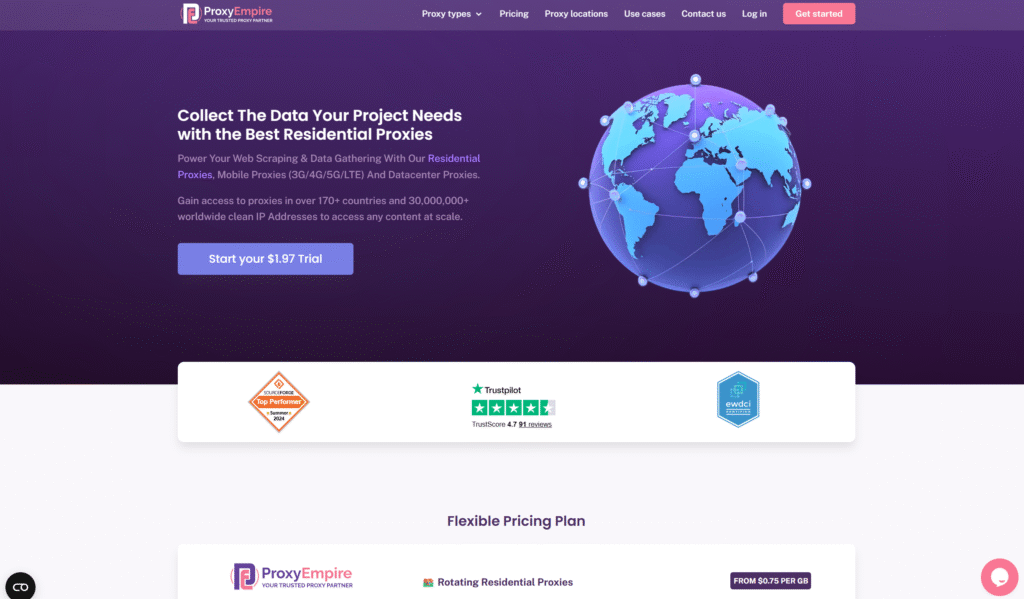
ProxyEmpire specializes in static residential ISP proxies with 99.9% uptime across 21+ countries. The high-speed connections work well for scraping tasks requiring consistent IP addresses over extended periods. Static IPs avoid the session interruptions that occur with rotating proxies, making them good for account-based scraping and login-required data collection.
Key Features:
- Static residential ISP proxy specialization
- 99.9% uptime guarantee
- 21+ country coverage
- High-speed stable connections
- Extended session support
Pros:
- Excellent for account-based scraping
- Very stable connections with minimal drops
- Good speeds for static residential
- Lower detection risk than datacenter
Cons:
- Limited country selection compared to competitors
- Higher pricing for static IP premium
- Smaller overall IP pool
3. Bright Data
Bright Data (formerly Luminati) commands 150 million+ IPs with the industry’s most extensive infrastructure. The platform achieves 99.99% uptime and offers granular targeting down to ZIP codes. Their Proxy Manager tool handles complex rotation logic and retry mechanisms automatically. Compliance-focused ethical sourcing makes them suitable for enterprise clients with strict data governance requirements.
Key Features:
- 150M+ IP pool including residential, mobile, datacenter, and ISP types
- 99.99% uptime guarantee with enterprise-grade reliability
- Advanced Proxy Manager for automated configuration
- City, ASN, carrier, and ZIP code targeting
- Built-in anti-bot bypass technology
Pros:
- Largest and most diverse proxy infrastructure
- Exceptional compliance and ethical sourcing standards
- Powerful tools for complex scraping workflows
- Best-in-class targeting precision
Cons:
- Higher cost structure than competitors
- Bandwidth-based pricing can get expensive at scale
4. Decodo
Decodo (formerly Smartproxy) provides 115 million residential and 500,000 datacenter IPs across 195+ countries. The platform achieves 99.95% success rates while maintaining user-friendly interfaces. Browser extensions simplify proxy configuration for non-technical users. Flexible pricing plans accommodate both small projects and enterprise operations, making it the best overall choice for most scraping needs.
Key Features:
- 115M residential and 500K datacenter IPs
- 99.95% success rate on protected targets
- Browser extensions for easy configuration
- City-level targeting with flexible rotation
- 24/7 customer support
Pros:
- Excellent balance of price and performance
- User-friendly dashboard and setup process
- Strong customer service reputation
- Flexible plans for different project sizes
Cons:
- Slightly smaller IP pool than top competitors
- Advanced features may require higher-tier plans
5. SOAX
SOAX operates 155 million+ residential and ISP proxies with AI-powered routing technology. The platform automatically selects optimal proxy routes based on target site characteristics. City and ASN targeting provides precise geo-location control. Flexible rotation settings let you adjust session duration from per-request to long sticky sessions. The full proxy type lineup handles diverse scraping scenarios.
Key Features:
- 155M+ residential and ISP proxies
- AI-powered intelligent routing system
- City, ASN, and carrier targeting
- Flexible rotation intervals
- HTTP, HTTPS, and SOCKS5 support
Pros:
- Smart routing improves success rates automatically
- Versatile proxy type options
- Good targeting granularity
- Competitive pricing structure
Cons:
- Learning curve for AI routing features
- Pool size smaller than premium providers
6. NetNut
NetNut delivers 85 million+ residential proxies through direct ISP connections that reduce latency. This ISP-derived approach combines datacenter speeds with residential trust levels. The infrastructure handles large-scale scraping operations without performance degradation. City and ASN filtering enables precise targeting, while unlimited threads support high-concurrency workflows.
Key Features:
- 85M+ IPs with direct ISP routing
- Fast speeds from direct connection architecture
- 200+ country coverage
- City and ASN filtering options
- Unlimited concurrent connections
Pros:
- Lower latency than traditional residential proxies
- Strong performance for large-scale operations
- Good speed-to-trust ratio
- Unlimited bandwidth on many plans
Cons:
- Fewer advanced features than competitors
- Limited targeting options compared to premium providers
7. Oxylabs
Oxylabs operates one of the largest proxy networks with 175 million+ residential IPs across 195+ countries. The company targets enterprise clients running millions of daily requests. Success rates hover around 99.95% on demanding scraping targets. Premium features include AI-powered tools like OxyCopilot that automatically adjust to target site behaviors. Their residential, datacenter, ISP, and mobile proxy options provide flexibility for different scraping scenarios.
Key Features:
- 175M+ residential IPs with exceptional global coverage
- 99.95% success rate on protected websites
- AI-powered anti-detection and automated scraping tools
- Dedicated account managers for enterprise support
- City, ASN, and ZIP code targeting capabilities
Pros:
- Industry-leading success rates and stability
- Comprehensive proxy type lineup (residential, datacenter, ISP, mobile)
- Excellent for large-scale operations
- Strong customer support infrastructure
Cons:
- Premium pricing may exceed budget for smaller projects
- Steeper learning curve for beginners
8. Rayobyte
Rayobyte emphasizes ethical sourcing with full transparency about IP acquisition methods. The platform offers rotating residential and datacenter proxies with pay-as-you-go non-expiring traffic. City-level targeting enables geo-specific scraping. The infrastructure supports HTTP, HTTPS, and SOCKS5 protocols for flexibility across different scraping tools and frameworks.
Key Features:
- Ethically sourced residential and datacenter proxies
- Non-expiring traffic credits
- City-level geo-targeting
- Multiple protocol support (HTTP/HTTPS/SOCKS5)
- Flexible pay-as-you-go pricing
Pros:
- Strong ethical sourcing practices
- Traffic doesn’t expire monthly
- Good for varied scraping needs
- Transparent business practices
Cons:
- Smaller IP pool than major competitors
- Fewer advanced automation features
9. Infatica
Infatica maintains 15 million+ residential and 500,000 datacenter IPs with stable infrastructure. Flexible rotation settings and unlimited threads accommodate different scraping patterns. The intuitive dashboard simplifies proxy management for mid-market users. Session control features let you maintain consistent IPs when needed or rotate aggressively for anonymity.
Key Features:
- 15M+ residential and 500K datacenter IPs
- 100+ country coverage
- Flexible rotation and session control
- Unlimited concurrent threads
- User-friendly dashboard
Pros:
- Good stability and uptime
- Easy to use for mid-market projects
- Reasonable pricing structure
- Reliable customer support
Cons:
- Smaller pool limits very large-scale operations
- Basic targeting compared to premium options
10. IPRoyal
IPRoyal provides cost-effective rotating residential proxies with city-level targeting. Non-expiring traffic credits give you flexibility to use bandwidth on your schedule. Browser extensions make setup simple for scraping tools like Chrome proxy configurations. The platform supports multiple protocols and offers sticky sessions for tasks requiring consistent IPs.
Key Features:
- Affordable rotating residential proxies
- City-level targeting
- Non-expiring traffic credits
- Browser extension support
- Multiple protocol options
Pros:
- Very competitive pricing
- Good for budget-conscious projects
- Traffic doesn’t expire
- Easy setup process
Cons:
- Smaller IP pool than premium providers
- Success rates lower on heavily protected sites
11. DataImpulse
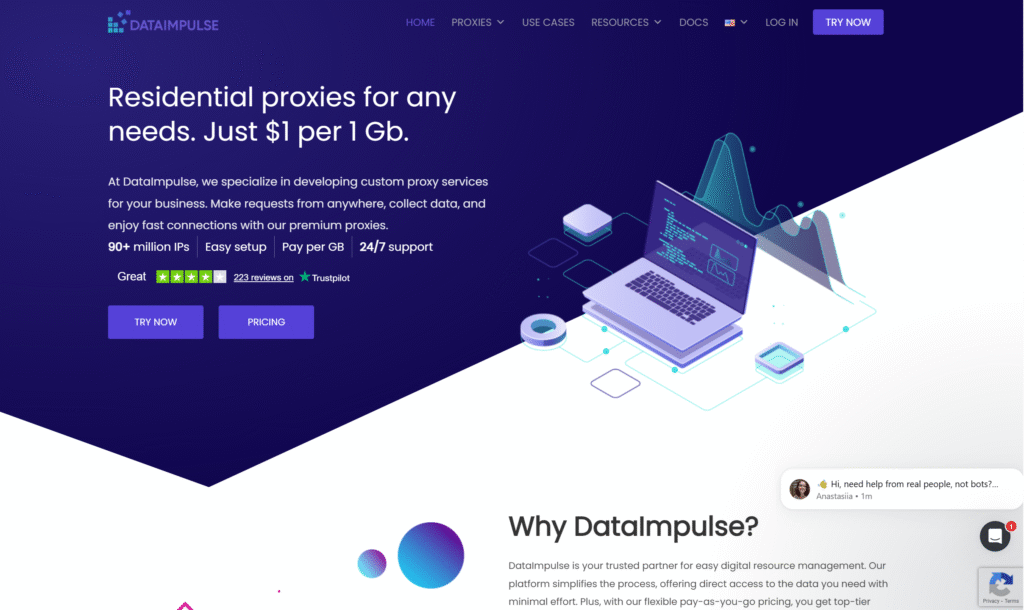
DataImpulse offers affordable rotating residential proxies with in-house sourcing for better quality control. ZIP code targeting provides precise location accuracy when needed. SOCKS5 protocol support adds versatility for complex scraping scenarios. The low cost per gigabyte makes it attractive for large-scale data collection projects with tight budgets.
Key Features:
- In-house IP sourcing
- ZIP code level targeting
- SOCKS5 protocol support
- Budget-friendly pricing
- Good for large-scale collection
Pros:
- Very affordable per-GB rates
- Quality control from in-house sourcing
- Precise geo-targeting
- Suitable for high-volume projects
Cons:
- Smaller IP pool
- Basic dashboard features
- Limited advanced targeting options
12. Scrapingdog
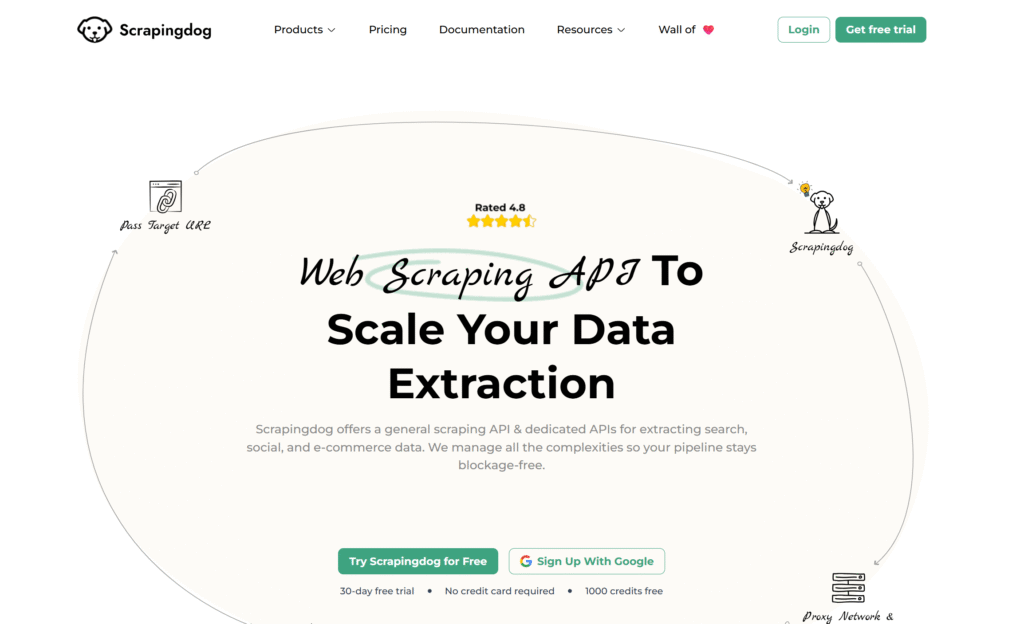
Scrapingdog provides 40 million+ datacenter proxies with JavaScript rendering capabilities. The platform handles dynamic content automatically, eliminating the need for separate headless browser setups. 24/7 support assists with configuration and troubleshooting. Economical pricing plans make it accessible for startups and mid-sized scraping operations.
Key Features:
- 40M+ datacenter proxy IPs
- Built-in JavaScript rendering
- Automatic CAPTCHA handling
- 24/7 customer support
- Pay-as-you-go pricing
Pros:
- Good for JavaScript-heavy websites
- Simple API integration
- Affordable for basic scraping
- Responsive support team
Cons:
- Datacenter IPs have higher detection rates
- Limited residential proxy options
- Basic targeting capabilities
13. Crawlbase
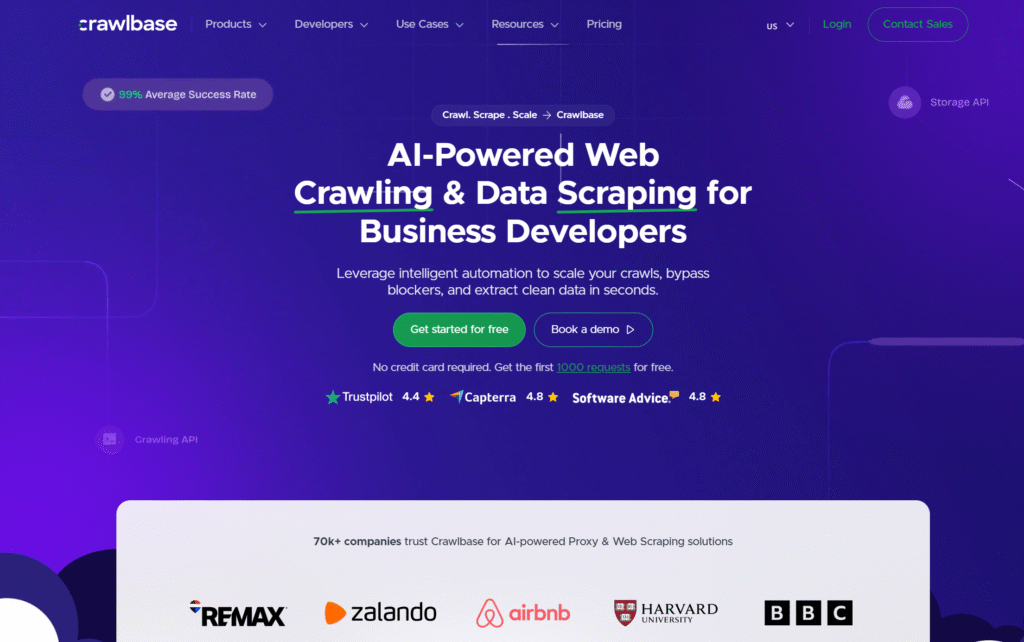
Crawlbase operates 2 million+ proxies with automatic rotation and CAPTCHA handling built into the service. JavaScript rendering executes client-side code before returning content. Preconfigured APIs simplify integration for developers new to web scraping. The all-in-one approach reduces complexity but offers less customization than traditional proxy services.
Key Features:
- 2M+ proxy pool with auto-rotation
- Built-in CAPTCHA solving
- JavaScript rendering included
- Preconfigured API endpoints
- Simplified integration
Pros:
- Easy setup for beginners
- Handles common blocking methods automatically
- Good for quick scraping projects
- Reduces need for additional tools
Cons:
- Smaller proxy pool
- Less control over proxy selection
- Higher per-request costs
14. Proxyrack
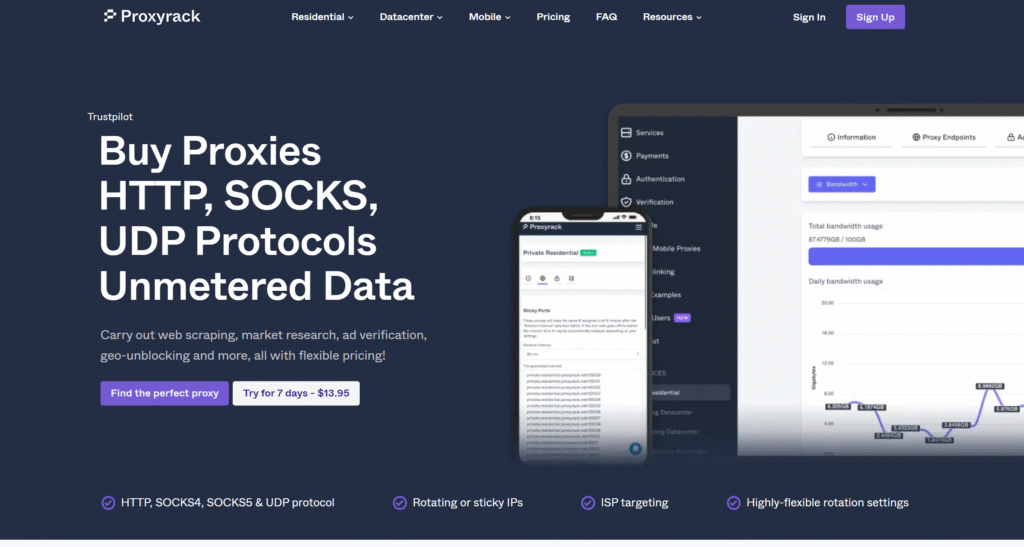
Proxyrack delivers unlimited bandwidth datacenter and residential proxies with rotating and sticky session options. HTTP and SOCKS5 protocol support works with most scraping tools and frameworks. The budget-friendly pricing structure appeals to cost-conscious projects. Premium residential plans offer better success rates on protected targets.
Key Features:
- Unlimited bandwidth on many plans
- Datacenter and residential options
- Rotating and sticky sessions
- HTTP/HTTPS and SOCKS5 support
- Budget-focused pricing
Pros:
- Unlimited bandwidth eliminates overage fees
- Flexible session control
- Affordable entry-level plans
- Multiple proxy types available
Cons:
- Success rates vary on protected sites
- Basic targeting options
- Customer support could be faster
15. Geonode
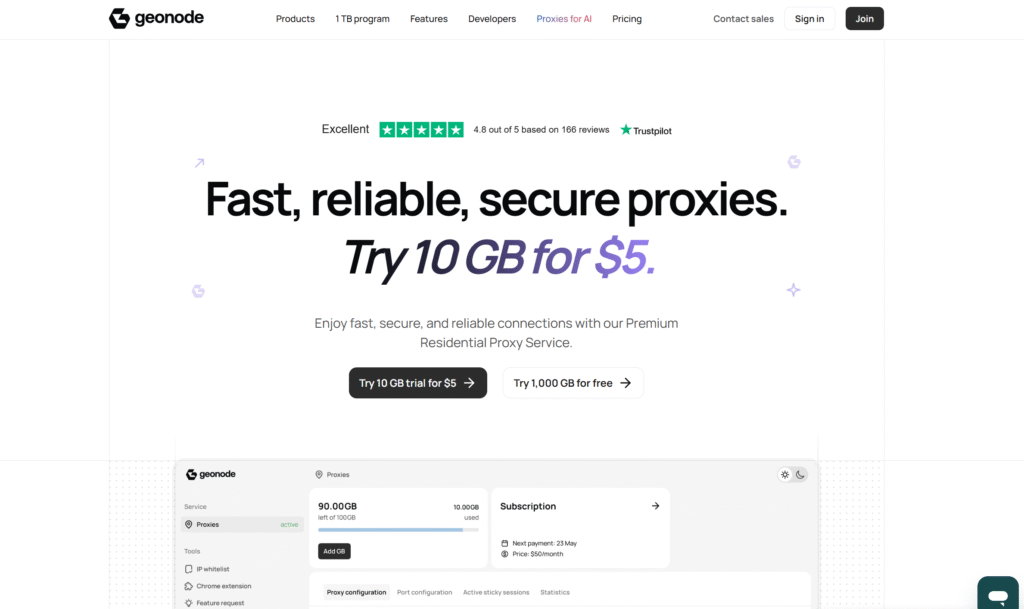
Geonode provides residential, mobile, datacenter, and ISP proxies with pay-as-you-go flexibility. Free testing lists let you evaluate performance before committing. The web unblocker feature automatically handles anti-bot challenges. Global coverage spans major markets with decent depth in popular regions.
Key Features:
- Multiple proxy types (residential, mobile, datacenter, ISP)
- Pay-as-you-go with no commitments
- Free proxy testing lists
- Web unblocker feature
- Good global coverage
Pros:
- Try before you buy with free testing
- Flexible payment model
- Various proxy types for different needs
- Unblocker simplifies protected site access
Cons:
- Smaller pool than established providers
- Newer player with a less proven track record
- Basic dashboard features
Success Rate Benchmarks for 2026
Success rates vary dramatically based on target difficulty and proxy type. A Q4 2025 report found that 61% of businesses using geo-targeted residential proxies achieved scraping success rates above 90%. The same study showed datacenter proxies averaged 35-45% success on the same protected targets.
Target site complexity plays a huge role. Simple sites with basic rate limiting show 95%+ success for both residential and quality datacenter proxies. E-commerce platforms with sophisticated bot detection drop datacenter success to 20-30% while residential maintains 80-90%. Social media sites represent the hardest targets, where only residential and mobile proxies consistently work.
Businesses switching from datacenter to residential proxies report 3x better ROI despite higher per-GB costs. The improved success rates mean fewer retries, less wasted bandwidth, and more complete data collection. For market research and competitive intelligence, the accuracy gains justify premium pricing.
Choosing Between Speed and Stealth
Speed matters when you’re scraping millions of pages. Datacenter proxies deliver 3-4x faster throughput than residential connections. This makes them perfect for large public datasets, API scraping, and sites without sophisticated protection. You can collect data faster and reduce server costs.
Stealth becomes important when sites actively fight automation. Ad verification requires residential IPs that look like real users. Travel fare aggregation needs authentic residential connections to see accurate pricing. Brand protection monitoring demands trustworthy IPs that won’t trigger blocks.
The hybrid approach works best for most projects. Use fast datacenter proxies for initial discovery and list building. Switch to residential proxies for protected pages requiring authentication or showing personalized content. ISP proxies split the difference when you need both speed and moderate stealth.
FAQ
What’s the difference between rotating and sticky proxies?
Rotating proxies change your IP address with each request or after a set time period. This provides maximum anonymity but can cause issues with session-based websites. Sticky proxies maintain the same IP for a longer duration, typically 10-30 minutes. They work better for sites requiring login or maintaining shopping cart state. Most providers offer both options, letting you choose based on your scraping target.
How many proxies do I need for web scraping?
The number depends on your target’s rate limits and your throughput requirements. Start with 10-20 proxies for basic scraping projects targeting a few thousand pages daily. Scale up to 100-500 proxies for aggressive scraping of protected sites. Enterprise operations scraping millions of pages need thousands of rotating IPs. Residential proxy pools automatically rotate through millions of IPs, eliminating manual proxy management.
Are datacenter proxies good enough for web scraping?
Datacenter proxies work well for public data, APIs, and sites without strong anti-bot protection. They’re 3-4x faster than residential proxies and much cheaper per request. However, sophisticated sites detect and block datacenter IPs easily. If your scraping gets blocked frequently, switch to residential proxies. The improved success rates offset the higher cost through reduced retries and more complete data collection.
How do I avoid getting blocked while web scraping?
Use residential proxies with realistic request patterns that mimic human behavior. Add random delays between requests instead of hammering servers at maximum speed. Rotate user agents and headers to avoid consistent fingerprints. Respect robots.txt guidelines even though proxies bypass technical blocks. Set up retry logic with exponential backoff when requests fail. Monitor your success rates and adjust rotation settings if blocks increase.
Ready to supercharge your web scraping projects? Try Resiprox’s residential proxy network with a free trial and experience 99.9% uptime across 180+ countries. Our ethically-sourced IPs deliver the success rates you need for profitable data collection.