

Finding the best high quality proxies in 2026 is not just about picking the biggest network. It is about matching the right proxy type to your workflow, whether that is web scraping, account management, automation, or SEO research. This guide covers the top high quality proxy providers available right now so you can compare performance, flexibility, and value in one place. If you want to get started today, check out these proxy services designed for real workloads and demanding use cases. Discover the Best High Quality Proxies in 2026
Compare pricing and performance across all 11 providers below, or start with affordable quality proxies from ResiProx to test speeds under 0.3 seconds today.
What Makes a Proxy Provider High Quality?
Not every proxy network is built the same way. High quality proxy providers separate themselves through a mix of technical infrastructure, IP sourcing practices, and how well their tools support real-world tasks.
Here are the core factors that define proxy quality in 2026:
- IP pool size and diversity — Larger pools reduce the chance of IP reuse and ban patterns
- Success rate — The percentage of requests that complete without getting blocked or returning errors
- Session control — The ability to hold sticky sessions or rotate IPs on a schedule that fits your workflow
- Geo-targeting depth — Country, state, city, and ISP-level targeting for precision results
- Protocol support — HTTP, HTTPS, and SOCKS5 proxies are standard for most professional tools
- Ethical sourcing — Proxies sourced with user consent perform better and carry lower fraud scores
- Dashboard and API usability — Clean interfaces and solid API docs reduce setup time and errors
- Support quality — Fast, knowledgeable support matters when something breaks mid-task
A proxy provider can have millions of IPs but still underperform if session management is poor or geo-targeting is shallow. Quality is the combination of all these elements working together.
How to Compare Proxy Types by Use Case
There are four main proxy types available from most premium providers: residential proxies, datacenter proxies, mobile proxies, and ISP proxies. Each one performs differently depending on what you need it for.
Choosing the Right Proxy Type
| Use Case | Best Proxy Type | Why |
| Web scraping at scale | Residential or Rotating | Lower block rates, broad IP diversity |
| Social media automation | Mobile or Residential | Trusted network footprint, harder to detect |
| SEO rank tracking | Residential or ISP | Geo-accurate results without triggering bans |
| Account management | Sticky residential or ISP | Consistent IP per session |
| Speed-sensitive tasks | Datacenter or ISP | Sub-second response times |
| Budget-limited projects | Datacenter or shared residential | Lower cost per GB |
Rotating proxies are a strong default for most scraping and data collection tasks because they automatically cycle IPs and keep request patterns unpredictable. For tasks that need a persistent identity — like managing multiple accounts — private proxies or sticky sessions on residential IPs are the better call.
If you are running mixed workflows, look for providers that offer multiple proxy types under one dashboard so you can switch without managing separate accounts.
Top 11 Best High Quality Proxies in 2026
1. 🏆ResiProx – Best High Quality Proxies in 2026 🏆
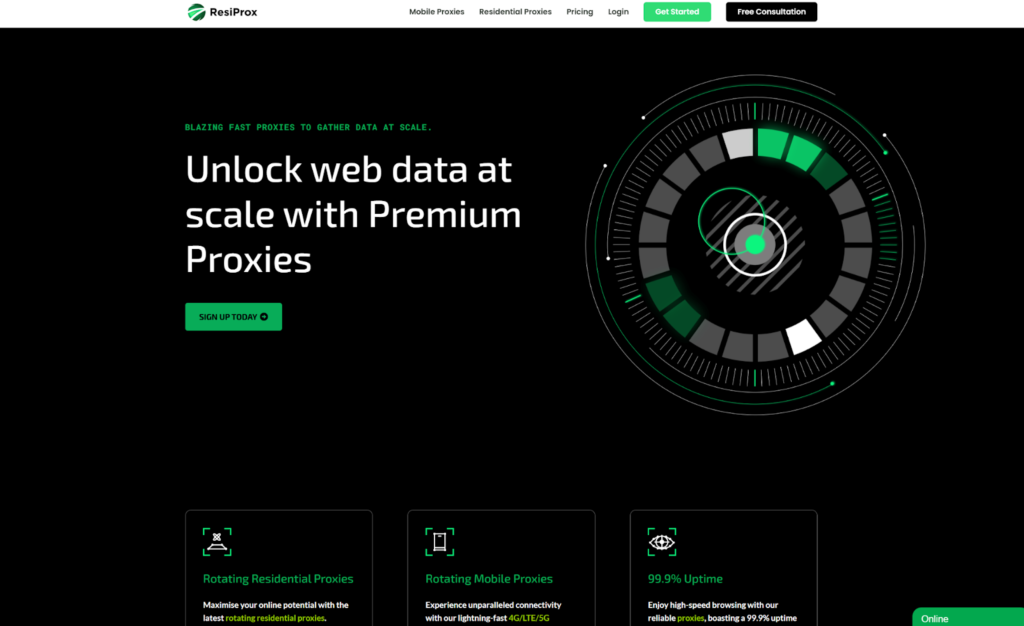
Resiprox Premium Proxies – Unlock the Web with Power and Precision
Introducing Resiprox, the ultimate proxy solution designed to supercharge your online operations. With our Residential Proxies and Mobile Proxies, you get unmatched access to web data at scale, robust security, and seamless connectivity all backed by a free trial to experience the difference firsthand.
Product Features
- Rotating Residential Proxies: Harness the power of 10M+ ethically-sourced IPs across 180+ countries. These proxies rotate dynamically to bypass IP blocks, CAPTCHAs and delivering 99.9% uptime and precise targeting at the country, city, or ZIP code level.
- Rotating Mobile Proxies: Powered by 4G/LTE/5G networks, our mobile proxies offer lightning-fast speeds with <0.3s response times and a 99.9% success rate perfect for real-time applications.
- Global IP Network: Tap into millions of IPs, including 3.5M+ in the US, 1.8M+ in Brazil, 3.1M+ in India, and more, ensuring coverage wherever you need it.
- Advanced Capabilities: Enjoy HTTPS & SOCKS5 support, unlimited concurrent sessions, and flexible rotating or sticky sessions, all wrapped in premium IP quality.
Product Specifications:
- Performance: High-speed browsing with 99.9% uptime and 24/7 expert support.
- Integration: Seamlessly works with Node.js, Python, PHP, Selenium, and more, featuring a dynamic endpoint generator and robust API access.
What It’s Built For:
Resiprox proxies are your all-in-one tool for:
- Web Scraping: Extract public data effortlessly for insights and growth.
- Price Monitoring: Track prices across regions in real-time.
- Multi-Accounting: Manage multiple accounts without limits.
- SEO & Ad Verification: Monitor rankings and verify ads globally.
- Cybersecurity: Protect your brand and test applications securely.
- Specialized Tasks: From sneaker botting to travel fare aggregation, Resiprox delivers.
Why Resiprox Stands Out:
This isn’t just a proxy, it’s a game-changer. With comprehensive documentation, multi-platform compatibility, and a team of experts available 24/7, Resiprox ensures your projects run smoothly. Whether you’re a business scaling operations, a researcher gathering data, or a developer testing apps, our proxies adapt to your needs with precision and reliability.
Resiprox Premium Proxies – Your Key to a Smarter, Faster, and More Connected Online World.
Click here to discover our :
2. Decodo (ex Smartproxy)
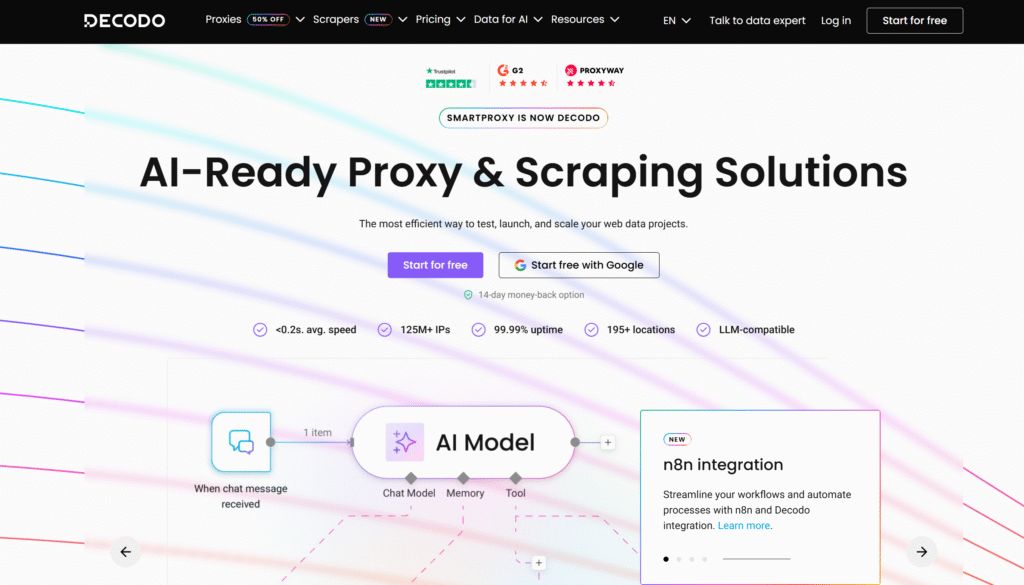
Decodo, previously known as Smartproxy, is ranked by Proxyway as the best bang-for-your-buck proxy provider in 2026. It offers one of the largest residential proxy networks on the market — over 125 million IPs — alongside mobile, ISP, and datacenter options. The platform is known for its polished user experience, strong customer support, and a Site Unblocker tool that handles JavaScript-heavy pages and anti-bot layers automatically. It is a strong pick for buyers who want premium-grade features without paying enterprise prices.
Key Features:
- 125M+ residential IPs across 195+ locations
- 10M+ mobile proxies with carrier and OS filtering
- Rotating and sticky (up to 30 min) sessions
- HTTPS and SOCKS5 protocol support
- Site Unblocker for difficult scraping targets
- Shared and dedicated datacenter proxies
Pros:
- Outstanding value for the proxy network size
- Very user-friendly dashboard and onboarding
- Broad proxy type coverage under one account
- Reliable uptime and 24/7 support
Light cons:
- Some advanced enterprise features require higher-tier plans
3. Oxylabs
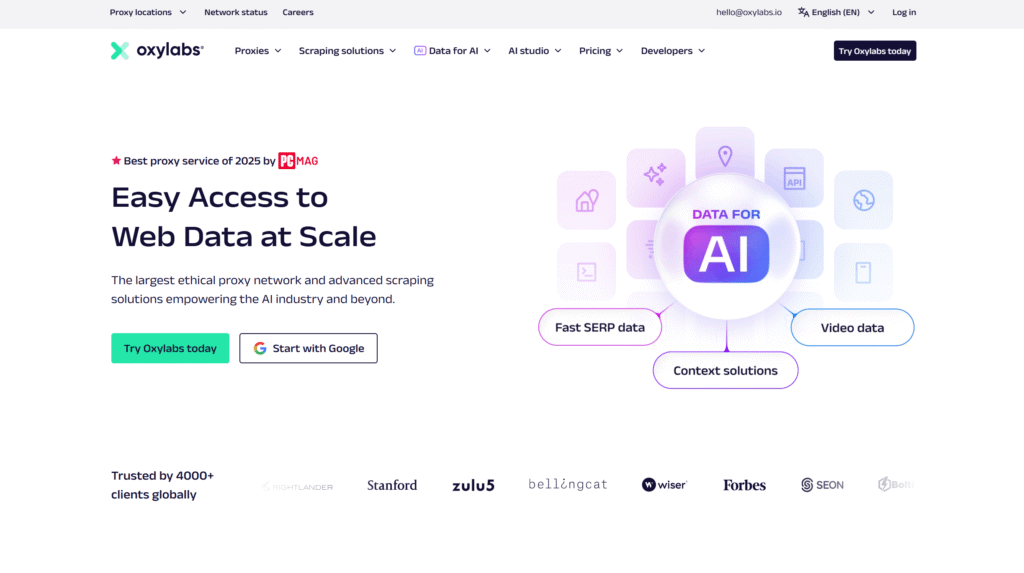
Oxylabs is positioned by Proxyway as the top enterprise-grade proxy provider in 2026. It runs one of the largest proxy pools globally, with over 100 million residential IPs and over 2 million datacenter IPs. The platform is built for teams that need high-volume scraping, advanced targeting, and robust management tools, including a SERP API and Web Unlocker for hard-to-reach sites. Oxylabs consistently performs well on success rate benchmarks, making it a go-to for businesses with demanding uptime requirements.
Key Features:
- 100M+ residential IPs with city + ASN targeting
- 2M+ datacenter IPs with strong US and EU coverage
- 20M+ mobile IPs in 140+ countries
- SERP API and Web Unlocker included
- HTTP, HTTPS, SOCKS5, and UDP support
- Dedicated account managers for enterprise clients
Pros:
- Largest datacenter IP pool among major providers
- Excellent success rates across all proxy types
- Advanced targeting and management tools
- Strong enterprise-grade infrastructure and support
Light cons:
- Higher starting prices compared to mid-market options
4. SOAX
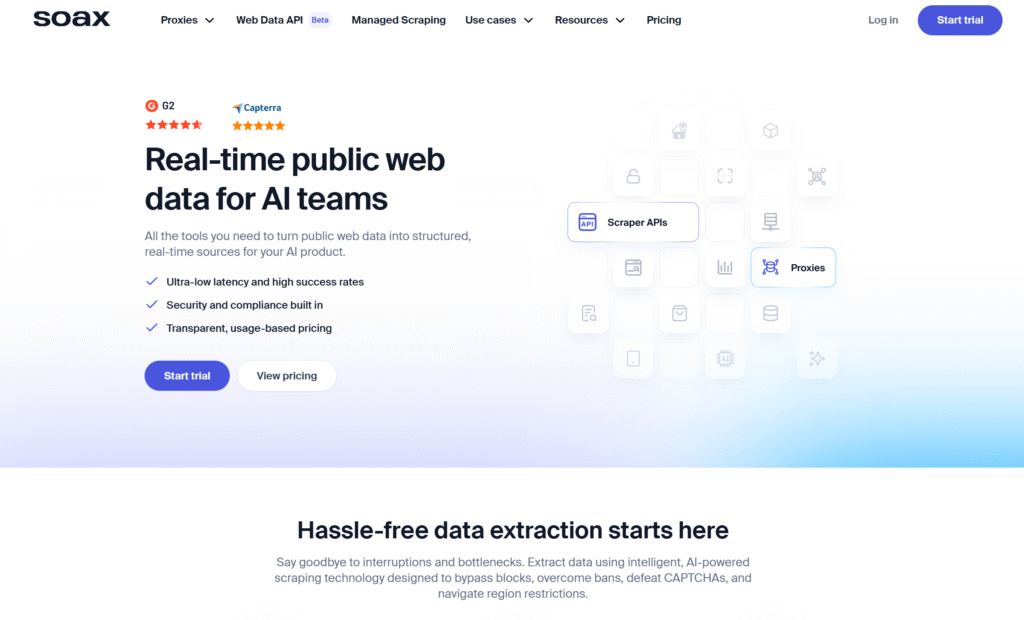
SOAX is listed among the best proxy providers in 2026 for its advanced features, flexible filtering, and AI-powered proxy rotation. Its network covers over 191 million IPs across residential, mobile, datacenter, and ISP categories in 195+ countries. The platform uses machine learning to automatically route requests through the best-performing IPs based on your target and request history, which reduces failed requests without requiring manual adjustment. SOAX is a strong fit for teams running multi-geo data collection, marketing verification, and scraping at scale.
Key Features:
- 191M+ IPs across residential, mobile, datacenter, and ISP
- AI-powered smart rotation and session management
- Sticky and rotating sessions with configurable refresh rates
- Country, region, city, and ISP-level targeting
- HTTP, HTTPS, SOCKS5, UDP, and QUIC support
- One subscription covers multiple proxy types
Pros:
- Smart rotation reduces block rates automatically
- Broad proxy type coverage under a single account
- Strong geo-targeting depth down to city and ISP
- Good documentation and API access
Light cons:
- Mobile and residential sticky sessions capped at one hour between IP changes
5. Webshare
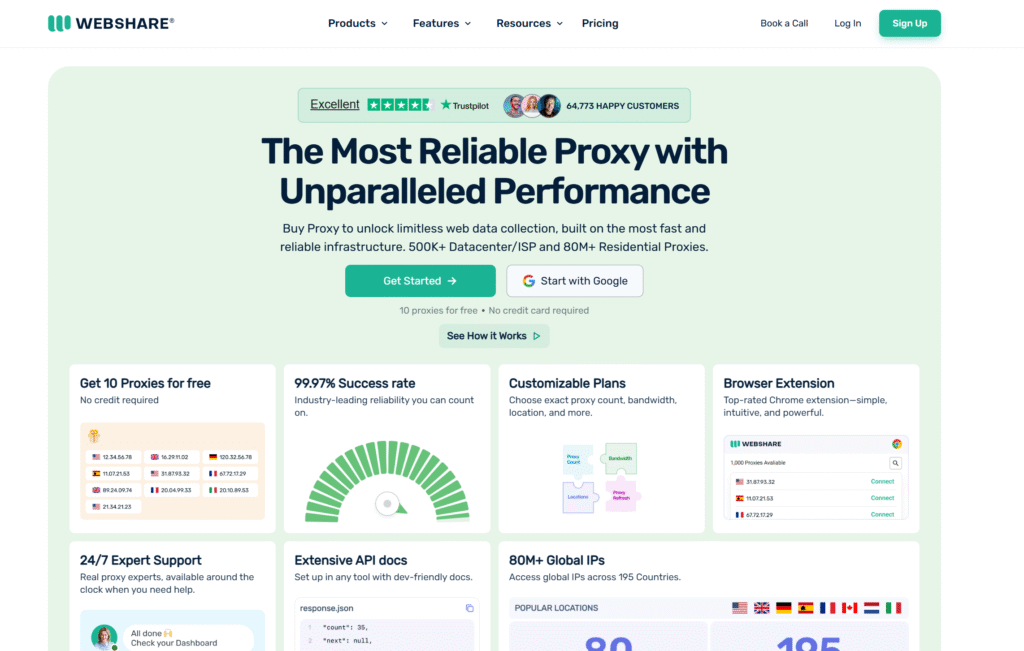
Webshare is included by Proxyway as one of the most affordable and customizable proxy providers in 2026, with strong appeal for entry-level and mid-market buyers. The platform is known for its flexible datacenter plans and the ability to build a proxy setup that matches specific budget and performance needs. Webshare supports HTTP, HTTPS, and SOCKS5 protocols and offers both shared proxies and dedicated options. It works well for buyers who want customizable subscriptions without paying for features they do not use.
Key Features:
- Shared and dedicated datacenter proxies
- Flexible, customizable subscription plans
- HTTP, HTTPS, and SOCKS5 protocol support
- Residential proxies available alongside datacenter options
- User-friendly interface and straightforward onboarding
- Good geo coverage across popular locations
Pros:
- Very affordable entry pricing
- High level of plan customization
- Clean, easy-to-use dashboard
- Good fit for smaller teams and individual buyers
Light cons:
- More focused on datacenter use cases; residential pool is smaller than top-tier providers
6. Bright Data
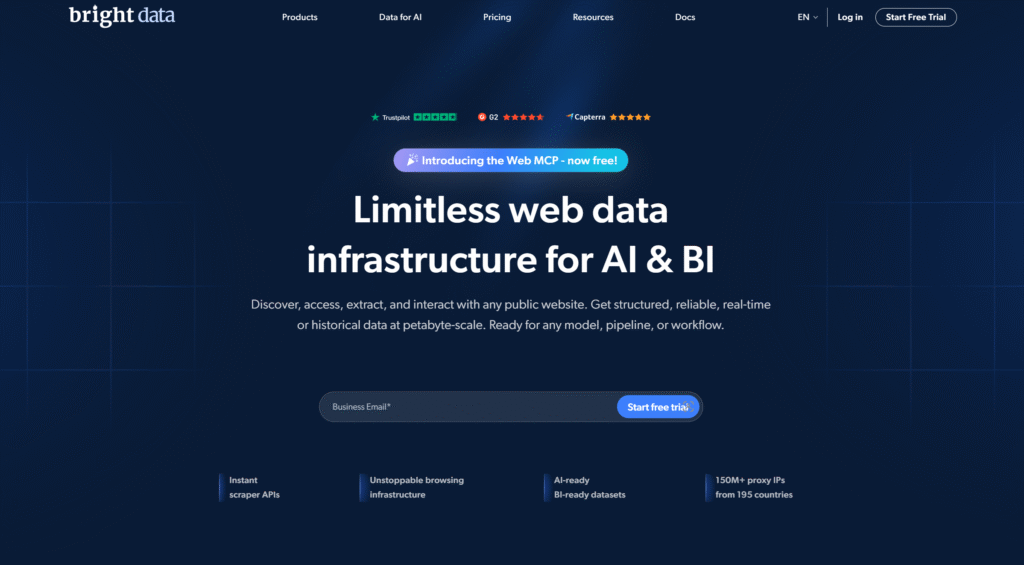
Bright Data is highlighted by Proxyway as a leading premium proxy platform with one of the most complete proxy ecosystems available in 2026. Its network includes over 72 million residential IPs, a large mobile proxy pool with real 3G/4G/5G connections, ISP proxies, and over 770,000 datacenter IPs. Beyond proxies, Bright Data offers a Web Unlocker, SERP API, and browser-based data collection tools that make it a full data infrastructure platform for enterprise users. It holds the top spot on G2 in the proxy network category with a 4.7-star rating.
Key Features:
- 72M+ residential IPs with city and ASN targeting
- Real 3G/4G/5G mobile proxies worldwide
- 770K+ datacenter IPs with dedicated and shared options
- Web Unlocker and SERP API included
- Rotating and dedicated datacenter formats
- 7-day free trial available
Pros:
- Most complete proxy + data tools ecosystem
- #1 rated proxy network on G2
- Strong residential success rates (up to 99.7%)
- Extensive documentation and developer resources
Light cons:
- Premium pricing; can be expensive for smaller budgets
7. NetNut
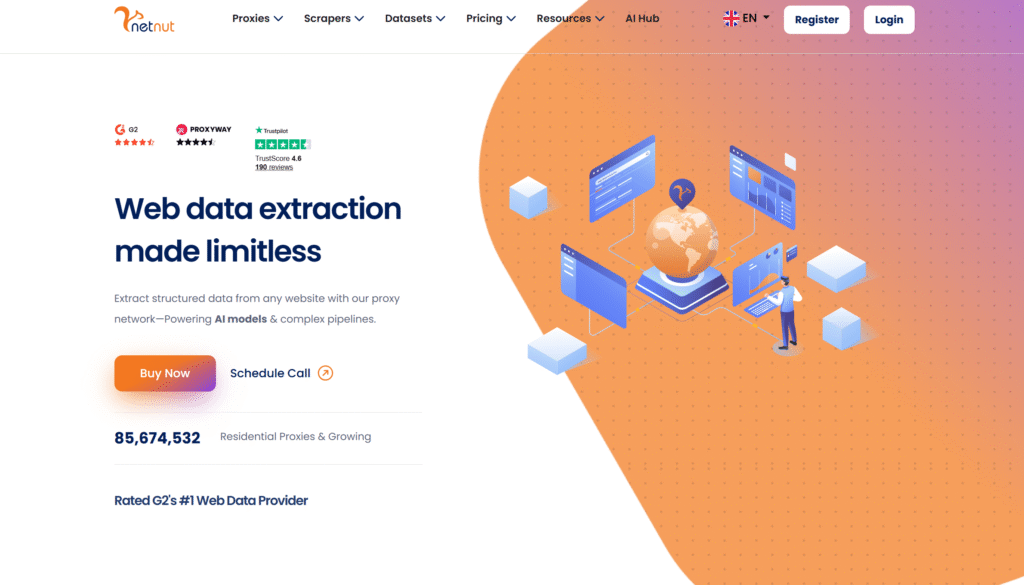
NetNut is presented by Proxyway as a strong option for large-scale proxy use, with a rotating proxy pool that spans mobile, residential, ISP, and datacenter categories. What makes NetNut different is its direct ISP connectivity model, which bypasses peer-to-peer routing and provides more consistent speeds and lower latency for long automation runs. This makes it a reliable choice for scraping, ad verification, and market research that runs continuously. NetNut scales well and offers dedicated account support for higher-volume plans.
Key Features:
- Direct ISP connectivity for lower latency
- Rotating and sticky session options
- Residential, mobile, ISP, and datacenter proxy types
- 150,000+ dedicated datacenter IPs
- SOCKS5 protocol support
- Available in popular locales with strong bulk pricing
Pros:
- More stable speeds than peer-to-peer networks
- Good for long-running automation tasks
- Strong enterprise and large-scale pricing
- Broad multi-type proxy coverage
Light cons:
- Entry plans start at higher price points; less suitable for small-volume buyers
8. Infatica
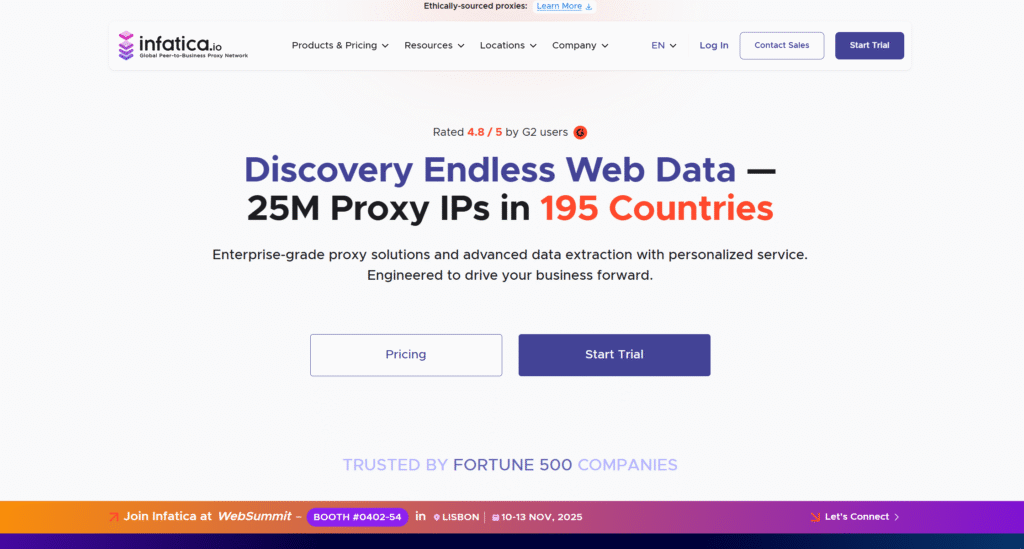
Infatica is described by Proxyway as a solid all-around provider covering all four major proxy types — residential, mobile, ISP, and datacenter. The platform offers flexible geo-targeting and mid-market pricing that makes it accessible for teams that need reliable performance without the premium cost of top-tier providers. Infatica supports both HTTP and SOCKS5 protocols and includes HTTPS proxies as part of its standard offering, making it compatible with most scraping and automation workflows.
Key Features:
- Residential, mobile, ISP, and datacenter proxy types
- HTTP and SOCKS5 protocol support
- Flexible geo-targeting options
- Rotating proxy pools with session controls
- Mid-market pricing across all proxy types
- Broad geo coverage for international use cases
Pros:
- Full proxy-type coverage from one provider
- Competitive mid-market pricing
- Versatile targeting options
- Good fit for teams with mixed proxy needs
Light cons:
- IP pool size is smaller than top enterprise providers
9. DataImpulse
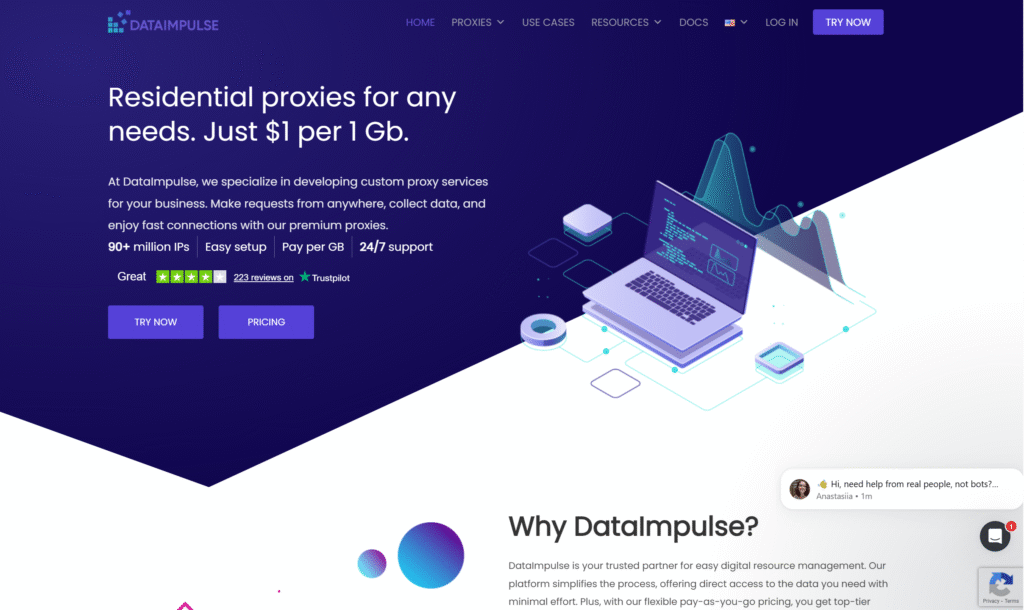
DataImpulse is ranked by Proxyway as one of the most affordable proxy providers in 2026, with rotating pools, non-expiring traffic, and broad geo coverage across proxy types. The non-expiring bandwidth model is a major draw for buyers who have variable usage patterns and do not want to lose paid traffic at the end of a billing cycle. DataImpulse covers HTTP and HTTPS protocols with a simple, user-friendly interface that works well for web scraping and data collection tasks without a steep learning curve.
Key Features:
- Non-expiring traffic model
- 5M+ IP proxy pool with geo-targeting
- Rotating residential proxies
- HTTP and HTTPS support
- Affordable pricing with pay-as-you-go flexibility
- 24/7 customer support via email and ticketing
Pros:
- Non-expiring bandwidth is great for variable usage
- Very affordable entry pricing
- Simple setup and easy-to-use interface
- Good geo coverage for the price
Light cons:
- Smaller IP pool compared to larger providers
10. IPRoyal
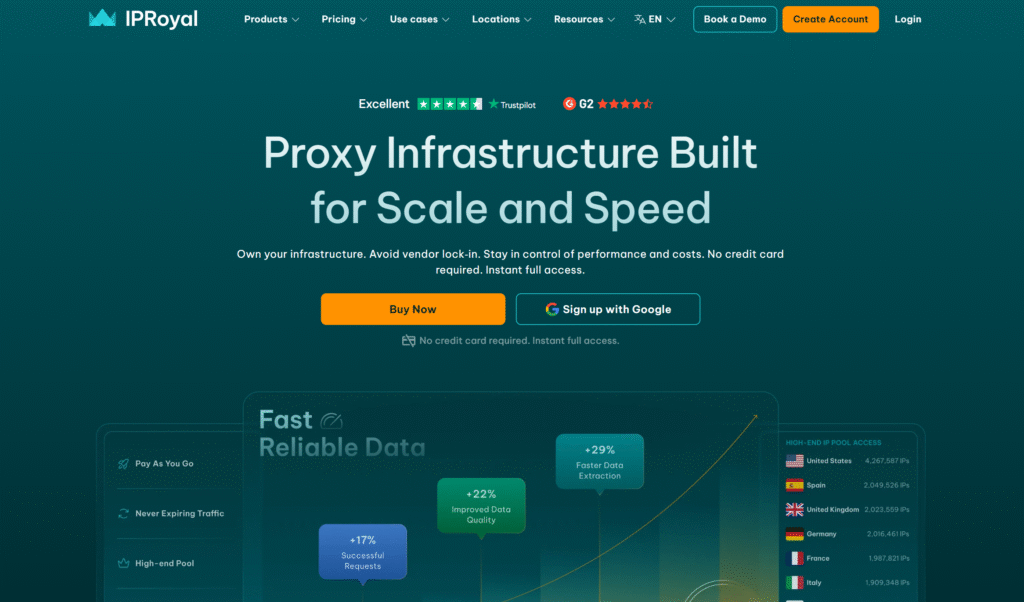
IPRoyal is included by Proxyway as a flexible proxy provider with friendly entry-level plans, multiple proxy types, and strong appeal for smaller to mid-size buyers. Its residential network offers targeting down to the city and state level, and the platform supports both HTTP and SOCKS5 protocols. IPRoyal is a practical option for users who are new to proxies or working on lower-volume tasks that do not require a massive IP pool. It also offers ethically sourced IPs, which improves long-term reliability and reduces ban rates.
Key Features:
- Residential, datacenter, mobile, and ISP proxies
- City and state-level geo-targeting
- HTTP and SOCKS5 protocol support
- Rotating and dedicated proxy formats
- Ethical IP sourcing
- Low minimum entry costs
Pros:
- Very accessible pricing for smaller buyers
- Multiple proxy types under one account
- Ethically sourced IPs reduce ban risk
- Good onboarding for new proxy users
Light cons:
- Some city-level targets can run out of stock
- Full IP pool not accessible on all plans
11. Rayobyte
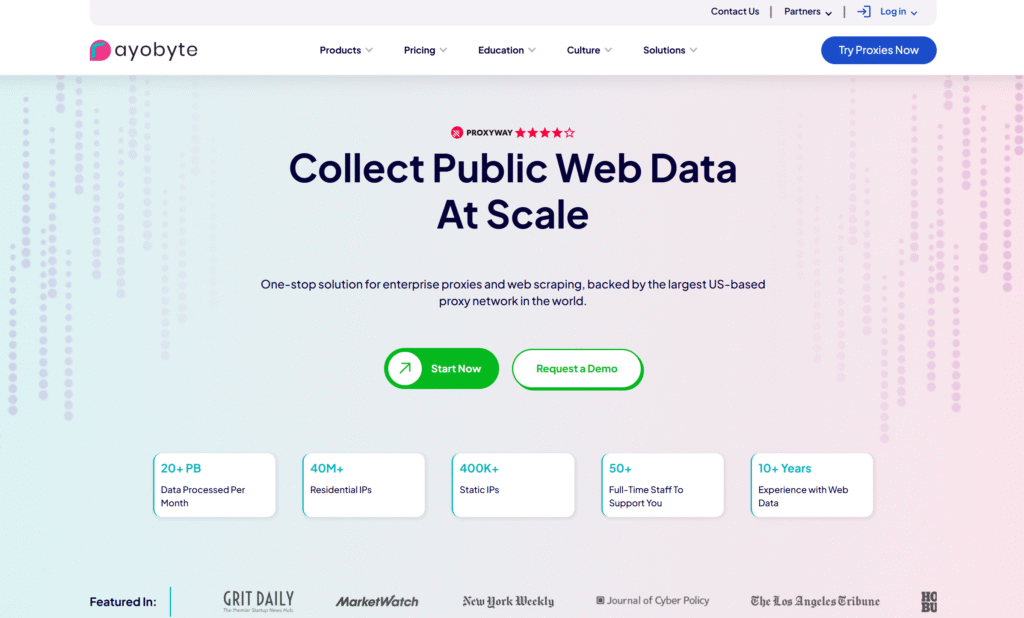
Rayobyte is listed by Proxyway as a provider capable of covering many proxy needs, with rotating, shared, and dedicated formats across datacenter, ISP, residential, and mobile products. The platform operates its own infrastructure in many locations and sources residential IPs ethically, which contributes to lower fraud scores and better long-term performance. Rayobyte supports HTTP and SOCKS5 protocols and offers customizable session rotation, making it a good pick for teams that want control over their proxy behavior without a complicated setup.
Key Features:
- Datacenter, ISP, residential, and mobile proxies
- Rotating, shared, and dedicated formats
- HTTP and SOCKS5 protocol support
- Ethical residential IP sourcing
- Available in approximately 180 countries
- Customizable session rotation
Pros:
- Broad proxy type and format coverage
- Ethically sourced IPs with lower fraud risk
- Good international geo coverage
- Flexible rotation and session controls
Light cons:
- Less well-known than top-tier providers; smaller community resources
What to Expect From High Quality Proxies
A high quality proxy delivers more than just an IP address. The real value shows up in how reliably your requests go through, how well the IPs blend into normal traffic, and how consistently you can maintain sessions across long workflows.
Here is what you should see from a well-performing proxy service:
- High success rates — 95% or above on most targets, with top providers reaching 99%+ on residential IPs
- Low block rates — Especially on sites with active anti-bot protection
- Fast response times — Datacenter proxies typically respond under 0.5 seconds; residential IPs average 0.5–1.5 seconds
- Stable uptime — Most reliable providers guarantee 99.9% or higher network availability
- Clean IP reputation — IPs with low fraud scores pass through Cloudflare and similar checks more easily
For mobile workflows, look for providers that offer real carrier IPs with 4G/5G connections, not emulated ones. Real mobile IPs perform significantly better on platforms that fingerprint devices and network types. Learn more about how mobile proxies work and when they are worth using.
Residential vs Datacenter vs Mobile Proxies
Each proxy type has a different strength profile. Knowing which one fits your task saves time and money.
| Proxy Type | Speed | Trust Level | Cost | Best For |
| Residential | Medium | High | Medium–High | Scraping, geo research, account management |
| Datacenter | Fast | Lower | Low | Speed-sensitive tasks, large-scale data collection |
| Mobile | Medium | Very High | High | Social media, mobile app testing, high-trust targets |
| ISP | Fast | High | Medium | Scraping with datacenter speed and residential trust |
Residential proxies are real IPs assigned by internet service providers to home users, which gives them a high trust level. Datacenter proxies come from cloud servers and are faster but more easily detected. Mobile proxies sit at the top of the trust scale because they look like real smartphone users on a carrier network.
For a direct comparison, see Mobile Proxies vs Residential Proxies and Rotating Proxies vs Dedicated Proxies to understand which setup suits your workflow better.
Best Use Cases for High Quality Proxies in 2026
High quality proxies are used across a wide range of industries and tasks. Here are the most common workflows where proxy quality makes a direct difference in results:
- Web scraping — Collecting product data, pricing, and reviews at scale without getting blocked; see Best Web Scraping Proxies 2025 for top-rated options
- SEO monitoring — Tracking rankings and SERPs from multiple geo-locations accurately; Best SEO Proxies in 2025 covers this in detail
- Account management — Running multiple accounts across platforms without linking them through a shared IP
- Ad verification — Checking how ads appear in different regions and catching fraudulent placements
- E-commerce intelligence — Monitoring competitor pricing, inventory, and promotions in real time
- Social media automation — Managing posts, follows, and engagement tools across multiple profiles
- Market research — Gathering localized data from sites that serve different content by location
- Digital marketing workflows — Proxies support SEO and digital marketing tasks that require clean, diverse IP traffic
For most of these tasks, rotating proxies are the default starting point. If your task requires a consistent IP identity, switch to dedicated or sticky-session proxies.
FAQ
What makes a proxy provider high quality?
A high quality proxy provider combines a large, diverse IP pool with strong session management, high success rates, and reliable uptime. Beyond raw IP count, the quality of sourcing matters — ethically obtained IPs from real devices and ISPs perform better and carry lower fraud scores than scraped or recycled addresses. Good geo-targeting, fast response times, clean API documentation, and responsive support round out what separates a premium service from a basic one.
Are high-quality proxies better for scraping and automation?
Yes. Higher quality proxies result in fewer blocks, lower CAPTCHA triggers, and more consistent data collection over time. Providers with AI-powered rotation — like SOAX — automatically route requests through the best-performing IPs for a given target, which reduces failed requests without manual tuning. For automation that runs unattended, the difference between a mid-tier and premium proxy can mean the difference between a completed job and a failed pipeline.
Which is better: residential, mobile, or datacenter proxies?
It depends on your use case. Residential proxies offer the best balance of trust and cost for most scraping and geo-research tasks. Mobile proxies perform best on platforms that are aggressive about detecting bots, like social networks and mobile-first apps. Datacenter proxies are the fastest and cheapest option for speed-sensitive workloads where the target site is less restrictive. ISP proxies offer a middle ground — datacenter-speed with a residential trust footprint. See SOCKS Proxies vs Datacenter Proxies and Unlimited Bandwidth Proxies vs Datacenter Proxies for deeper comparisons.
Can a lower-cost proxy provider still be high quality?
Yes, in many cases. Providers like Decodo and DataImpulse offer strong performance at competitive prices. The key is to match the proxy type to your use case — overpaying for mobile proxies when datacenter IPs would work fine is a common mistake. For budget-aware buyers, the most important factors are success rate, session control, and support quality, not just price per GB. A provider with slightly fewer IPs but better rotation logic and cleaner IP reputation will often outperform a cheaper option with a bloated, low-quality pool.
Compare pricing and performance across all 11 providers below, or start with affordable quality proxies from ResiProx to test speeds under 0.3 seconds today.