
SEO at scale needs clean, stable IPs so your rank tracking and SERP data match what real users see. Dedicated SEO proxies give you consistent IPs, high uptime, and geo-targeting to scrape search results without CAPTCHAs or blocks. Use residential SEO proxies when you want search engines to see you as a real user, web scraping proxies for SEO for large data pulls, and rank-tracking proxies for precise local SERPs. Discover the Best Dedicated SEO Proxies in 2026
Start tracking more accurate rankings with ResiProx residential SEO proxies
- What are dedicated SEO proxies?
- Key features to look for in 2026
- Top 20 Dedicated SEO Proxies in 2026
- Advanced SEO Proxy Configurations for 2026
- Integrating SEO Proxies with Modern Tools and AI
- Dedicated SEO vs shared / residential proxies
- How to use dedicated proxies in your SEO stack
- Data: why proxies matter for SEO accuracy
- FAQ
- Are dedicated proxies good for SEO?
- Do I need residential proxies for rank tracking?
- How many SEO proxies should I buy?
- Are SEO proxies legal to use?
- What makes residential proxies superior for SEO compared to datacenter proxies?
- How do sticky sessions improve SEO proxy performance?
- Which proxy protocol is best for SEO tools and scrapers?
- How often should I rotate proxies for optimal SEO scraping success?
What are dedicated SEO proxies?
Dedicated SEO proxies are IP addresses used only by you for SEO tasks like rank tracking, SERP scraping, and site audits. They avoid noisy neighbors so your IP reputation stays clean and your tools run with fewer hiccups.
Key points:
- Dedicated IPs reduce shared bans and give more stable SERP results across tools and locations.
- For SEO, most teams combine dedicated datacenter proxies for speed with residential or ISP IPs for harder targets like Google and local results.
Use cases where dedicated SEO proxies shine:
- Continuous rank tracking across thousands of keywords and locations.
- Large-scale SERP scraping for keyword research, content gap analysis, and ad research.
- Multi-account SEO workflows in tools, panels, and multi-login browsers.
Key features to look for in 2026
Picking the best dedicated SEO proxies in 2026 comes down to speed, stability, and accurate geo-targeting, not just raw IP count.
Most important features:
- High uptime & success rate: Leading SEO proxy providers report success rates above 90% on Google and uptime near 99.9%.
- Geo & ISP targeting: Country, city, and sometimes ASN targeting help you see hyper-local SERPs similar to what real users see in each region.
More advanced capabilities for serious SEO teams:
- Mix of datacenter, residential, and ISP IPs for different difficulty levels.
- Sticky sessions for up to 10–24 hours, so long-running crawls and audits keep the same IP.
Top 20 Dedicated SEO Proxies in 2026
1. 🏆ResiProx – Best Dedicated SEO Proxies in 2026 🏆
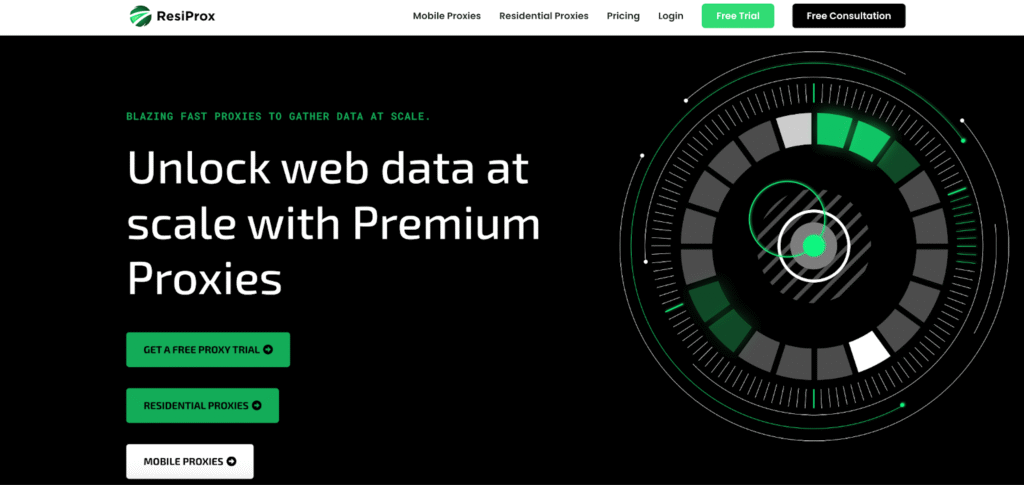
Resiprox Premium Proxies – Unlock the Web with Power and Precision
Introducing Resiprox, the ultimate proxy solution designed to supercharge your online operations. With our Residential Proxies and Mobile Proxies, you get unmatched access to web data at scale, robust security, and seamless connectivity all backed by a free trial to experience the difference firsthand.
Product Features
- Rotating Residential Proxies: Harness the power of 10M+ ethically-sourced IPs across 180+ countries. These proxies rotate dynamically to bypass IP blocks, CAPTCHAs and delivering 99.9% uptime and precise targeting at the country, city, or ZIP code level.
- Rotating Mobile Proxies: Powered by 4G/LTE/5G networks, our mobile proxies offer lightning-fast speeds with <0.3s response times and a 99.9% success rate perfect for real-time applications.
- Global IP Network: Tap into millions of IPs, including 3.5M+ in the US, 1.8M+ in Brazil, 3.1M+ in India, and more, ensuring coverage wherever you need it.
- Advanced Capabilities: Enjoy HTTPS & SOCKS5 support, unlimited concurrent sessions, and flexible rotating or sticky sessions, all wrapped in premium IP quality.
Product Specifications:
- Performance: High-speed browsing with 99.9% uptime and 24/7 expert support.
- Integration: Seamlessly works with Node.js, Python, PHP, Selenium, and more, featuring a dynamic endpoint generator and robust API access.
What It’s Built For:
Resiprox proxies are your all-in-one tool for:
- Web Scraping: Extract public data effortlessly for insights and growth.
- Price Monitoring: Track prices across regions in real-time.
- Multi-Accounting: Manage multiple accounts without limits.
- SEO & Ad Verification: Monitor rankings and verify ads globally.
- Cybersecurity: Protect your brand and test applications securely.
- Specialized Tasks: From sneaker botting to travel fare aggregation, Resiprox delivers.
Why Resiprox Stands Out:
This isn’t just a proxy, it’s a game-changer. With comprehensive documentation, multi-platform compatibility, and a team of experts available 24/7, Resiprox ensures your projects run smoothly. Whether you’re a business scaling operations, a researcher gathering data, or a developer testing apps, our proxies adapt to your needs with precision and reliability.
Resiprox Premium Proxies – Your Key to a Smarter, Faster, and More Connected Online World.
Click here to discover our :
2. ProxyEmpire
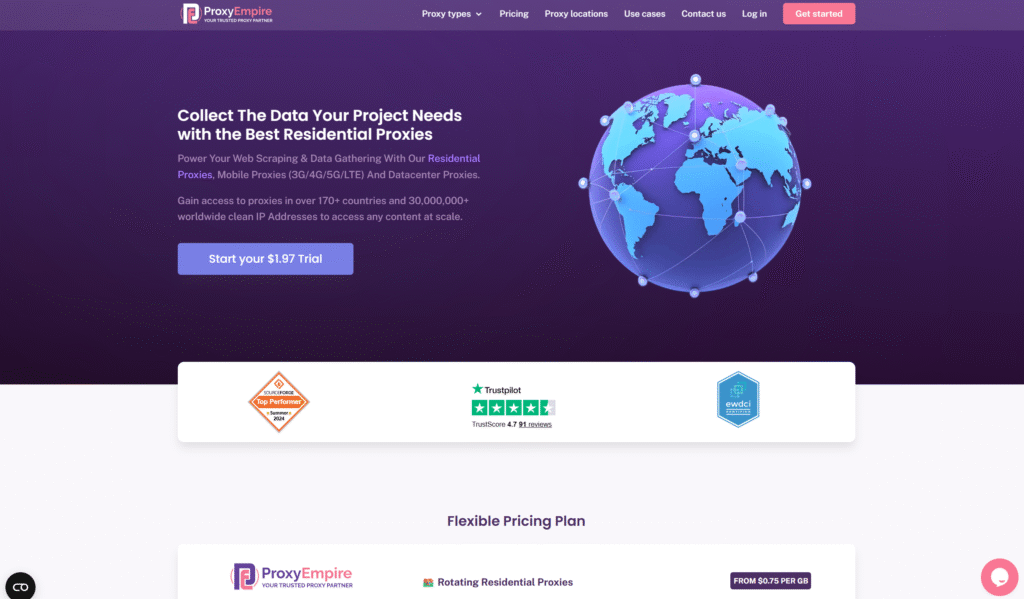
ProxyEmpire provides dedicated datacenter proxies aimed at stable SEO data extraction and automation, with solid geo-coverage across many countries.
- Key features: Dedicated datacenter IPs, rotating options, and support for HTTP(S) and SOCKS proxies for SEO tools and scrapers.
- Pros: Good stability for SERP checks, wide location coverage, and plans that work for both small and large SEO projects.
- Extra: Often mentioned among the 2025–2026 top datacenter proxy providers for scraping and SEO tasks.
3. Decodo
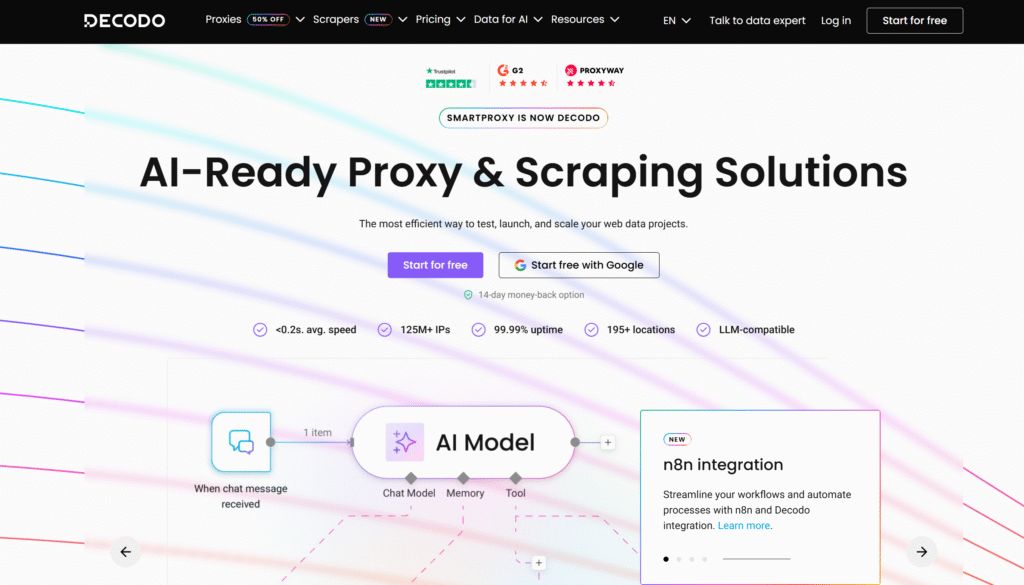
Decodo (formerly Smartproxy) offers dedicated and ISP-style SEO proxies with strong performance, large IP pools, and flexible targeting.
- Key features: 115M+ residential IPs, HTTP(S) and SOCKS5 support, rotation every request with sticky sessions up to 24 hours.
- Pros: Fast Google response times, high success rates for SEO scraping, and easy-to-use dashboard for managing large campaigns.
- Extra: Recommended by independent reviews as one of the best-priced SEO proxy solutions for small to medium businesses.
4. Bright Data
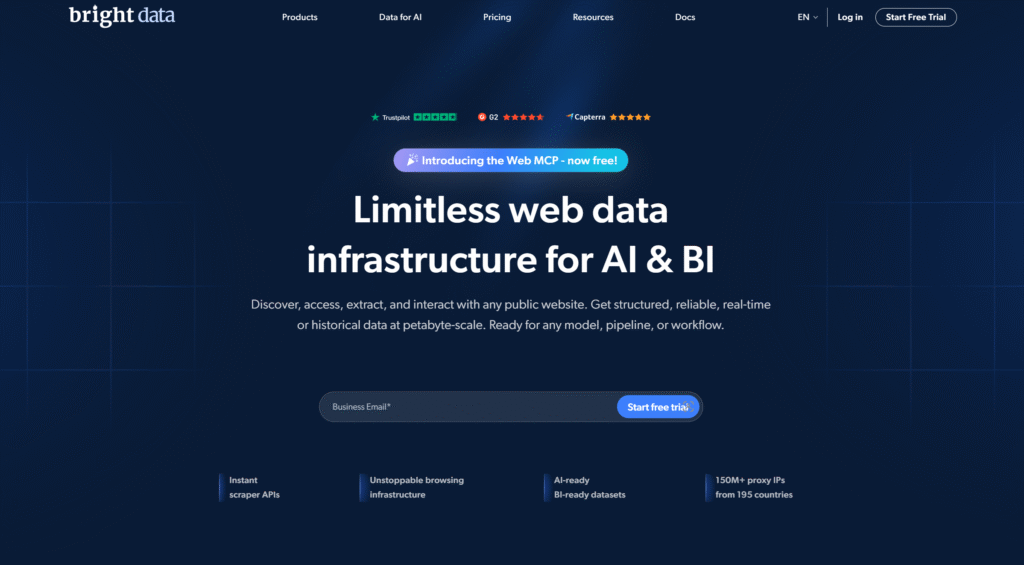
Bright Data runs one of the largest proxy networks, with 72M+ residential IPs and more than 1.3M static ISP IPs, plus strong uptime guarantees.
- Key features: Granular geo-targeting down to ZIP code, unlimited concurrent sessions, and 99.9%+ uptime on residential and ISP networks.
- Pros: Great for enterprise-grade SEO, ad verification, and SERP scraping where accuracy and scale matter more than cost.
- Extra: Trusted by tens of thousands of businesses and fully compliant with GDPR, CCPA, and security standards like ISO 27001.
5. SOAX
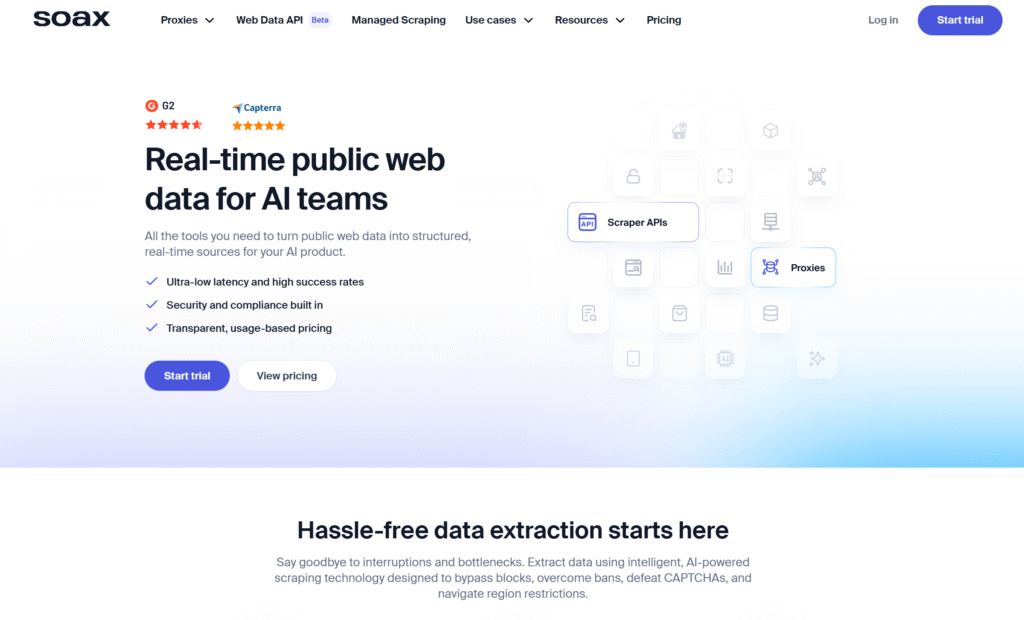
SOAX focuses on flexible residential and ISP proxies with AI-powered routing and precise targeting, making it strong for SEO rank tracking and competitor checks.
- Key features: 150M+ IPs, country, city, ASN, and carrier targeting, along with dynamic rotation and sticky sessions.
- Pros: Powerful targeting helps SEO teams simulate real users in specific locations and devices.
- Extra: Often highlighted for flexible rotation rules that make SERP scraping smoother on platforms like Google.
6. Webshare
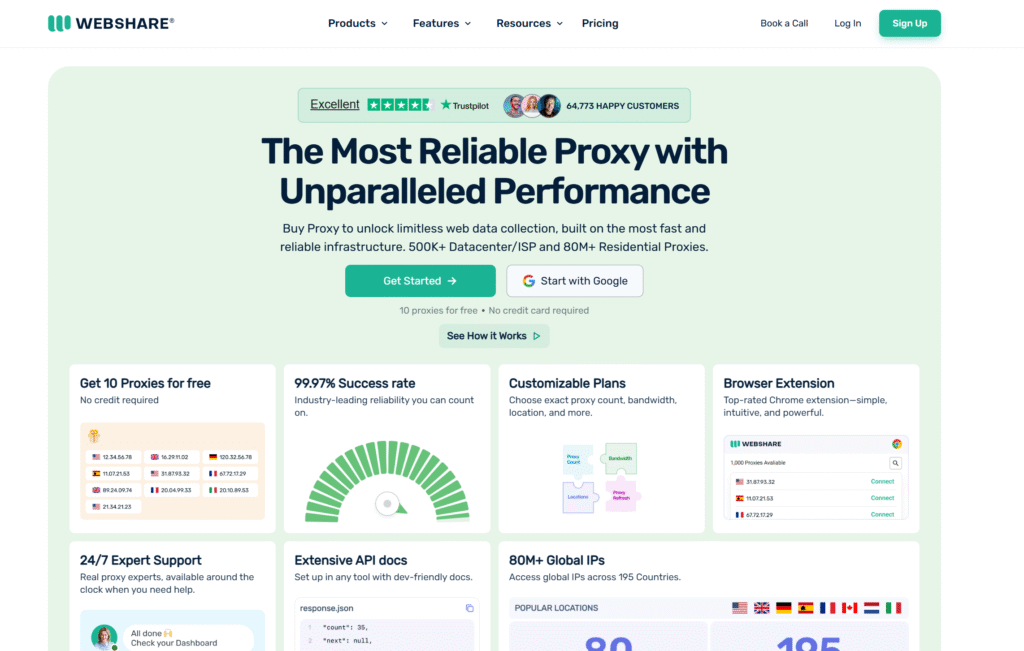
Webshare offers budget-friendly dedicated and shared datacenter proxies used for SEO, scraping, and smaller automation workflows.
- Key features: Unlimited bandwidth datacenter proxies, support for HTTP(S) and SOCKS, and self-service proxy management.
- Pros: Good fit for smaller SEO projects that mainly need speed and low cost rather than residential-level stealth.
- Extra: Frequently included in “best datacenter proxies” roundups for 2026 as a budget option.
7. NetNut
NetNut specializes in static residential and ISP proxies that behave like datacenter speeds with residential credibility, ideal for long SEO sessions.
- Key features: Direct ISP routing, static IPs, global coverage, and unlimited concurrent threads for scraping-heavy workflows.
- Pros: Strong for consistent rank tracking and long-running SERP crawls where you need the same IP.
- Extra: Reported Google success rates around or above 90% in independent SEO proxy tests.
8. IPRoyal
IPRoyal offers flexible dedicated and shared proxies with non-expiring traffic options that suit ongoing SEO and market research tasks.
- Key features: Mix of datacenter, residential, and ISP proxies, with unlimited threads and multiple locations.
- Pros: Good balance of cost and performance for marketers who want SEO scraping without large enterprise budgets.
- Extra: Often featured in 2025–2026 datacenter proxy comparisons as a strong mid-tier choice.
9. Rayobyte
Rayobyte focuses on ethically sourced ISP and datacenter proxies with unlimited bandwidth and persistent sessions.
- Key features: ISP-level IPs, country and city targeting, and both shared and dedicated options.
- Pros: Good fit for SEO automation, web scraping, and long-running keyword tracking jobs.
- Extra: Positions itself heavily around compliance and transparent sourcing, which appeals to security-conscious teams.
10. NodeMaven
NodeMaven provides clean residential and ISP proxies with long sticky sessions, tailored for scraping and SEO tools that need stable IPs.
- Key features: Long sessions up to 24 hours, HTTP(S) and SOCKS, and filtering options for cleaner IP subnets.
- Pros: Great for deep audits and crawls that can’t switch IPs mid-process.
- Extra: Known for high success rates on search engines and anti-bot platforms.
11. MarsProxies
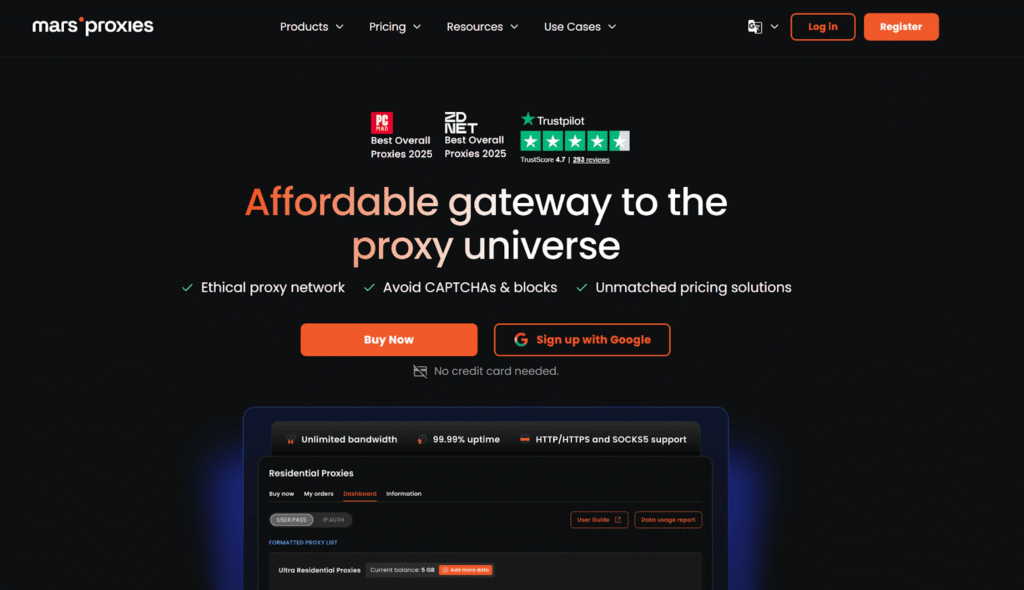
MarsProxies delivers fast datacenter and residential proxies tuned for SEO, scraping, and geo-restricted tasks.
- Key features: City-level targeting, unlimited bandwidth plans, and support for common SEO tools and bots.
- Pros: Strong value for users who need both speed and location control.
- Extra: Marketed heavily for e-commerce and SEO scraping workloads.
12. Storm Proxies
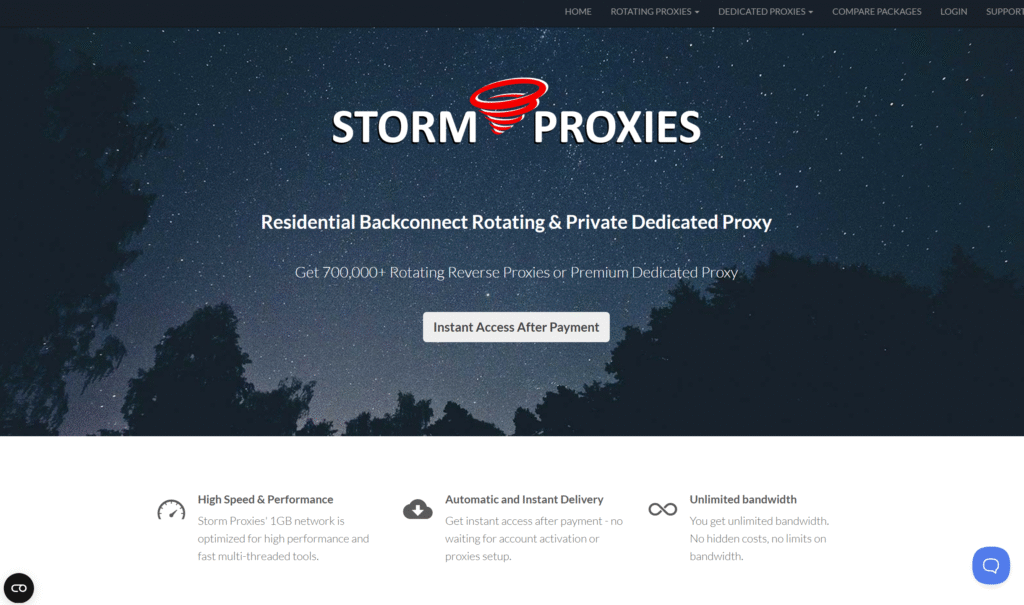
Storm Proxies offers simple dedicated and rotating proxies often used for SEO tools and bulk operations.
- Key features: IP rotation options, unlimited bandwidth, and easy IP replacement.
- Pros: Suitable for entry-level or experimental SEO projects.
- Extra: Long-time presence in the market gives it a steady user base for basic scraping.
13. Proxy-Seller
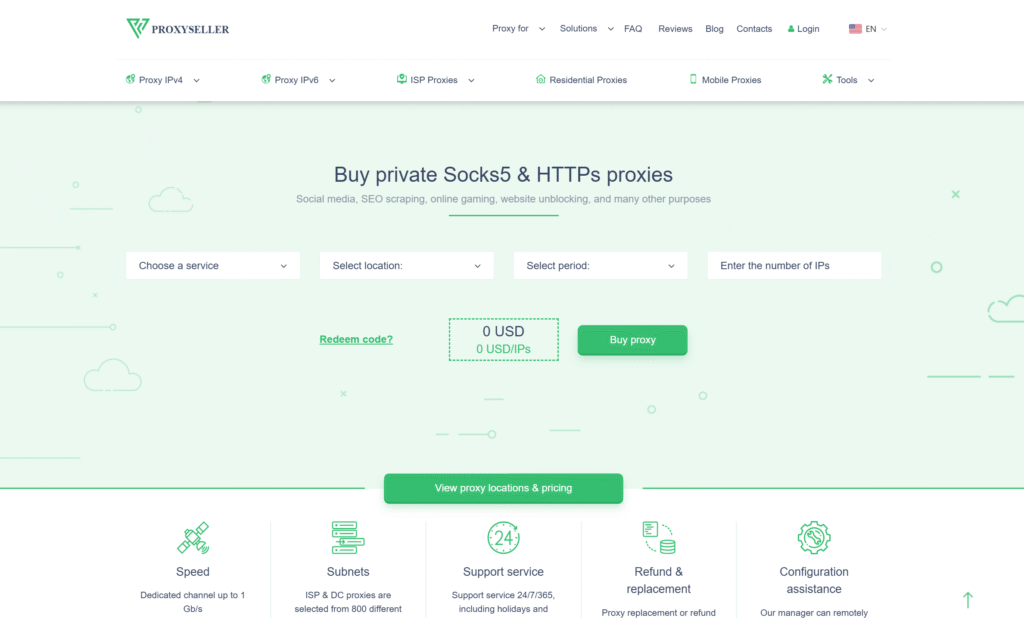
Proxy-Seller provides customizable dedicated proxies sold per IP, with multiple locations and configurations.
- Key features: Pay-per-proxy model, IPv4 and IPv6 options, and choice of countries and cities.
- Pros: Useful when you need a specific mix of SEO proxies instead of a bundle.
- Extra: Often used for web scraping, SEO, and account management.
14. High Proxies
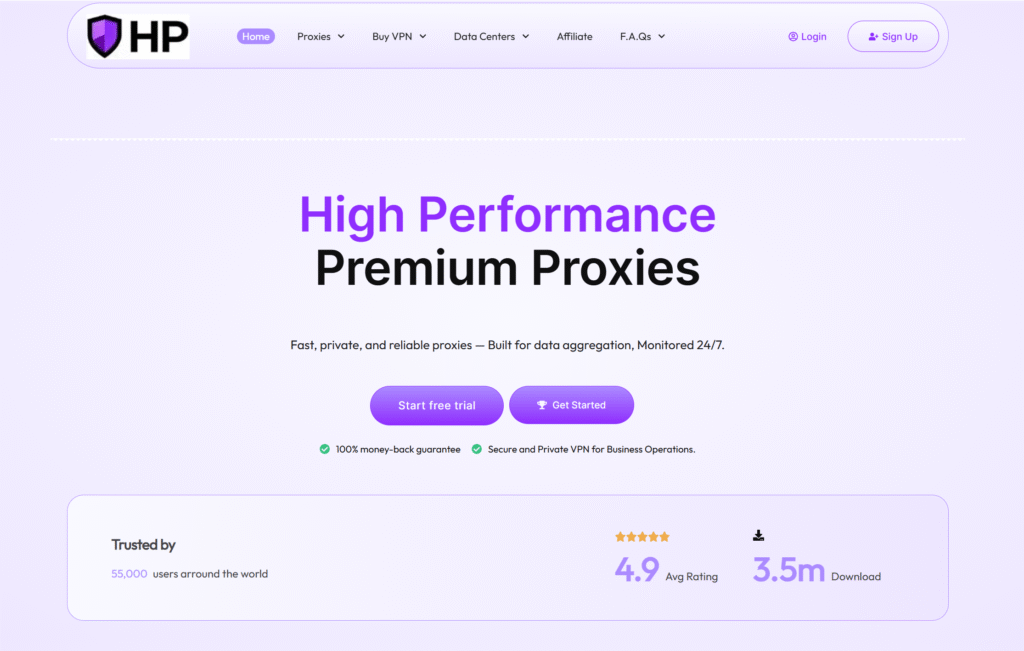
High Proxies offers high-anonymity dedicated proxies aimed at SEO, social media, and rank tracking.
- Key features: Proxies optimized for rank tracking tools, multiple locations, and unlimited bandwidth.
- Pros: Good fit for agencies that run continuous rank tracking and SEO audits.
- Extra: Highlights how rank tracker proxies became essential in 2025 for accurate SERP data.
15. My Private Proxy
My Private Proxy sells exclusive-use proxies tuned for SEO scraping and account management.
- Key features: Private IPs, multiple datacenters, and tools-focused configurations.
- Pros: Strong for users who want full control and isolation of their SEO proxies.
- Extra: Frequently referenced in datacenter proxy reviews for reliability.
16. Infatica
Infatica provides dedicated residential and datacenter proxies optimized for SEO workflows, with a network spanning 15M+ residential IPs across 100+ countries. The service supports HTTP(S) and SOCKS5 protocols with sticky sessions up to 30 minutes, making it suitable for rank tracking tools, SERP scrapers, and competitor analysis that require consistent IP behavior during multi-step queries. Infatica’s dashboard offers real-time IP monitoring and automatic replacement for failed connections, achieving reported Google success rates around 90% for SEO data collection. It targets mid-market SEO agencies and enterprises that need reliable residential access for ongoing keyword monitoring and backlink profile audits without enterprise pricing complexity.
Key features:
- 15M+ residential IPs across 100+ countries
- Sticky sessions up to 30 minutes with HTTP(S)/SOCKS5 support
- Real-time IP monitoring and auto-replacement
- 90%+ Google success rates for SEO scraping
Pros: Reliable mid-market residential performance, automatic IP replacement, good for ongoing keyword monitoring Cons: Smaller pool than top-tier providers, less granular city-level targeting
17. FleetProxy
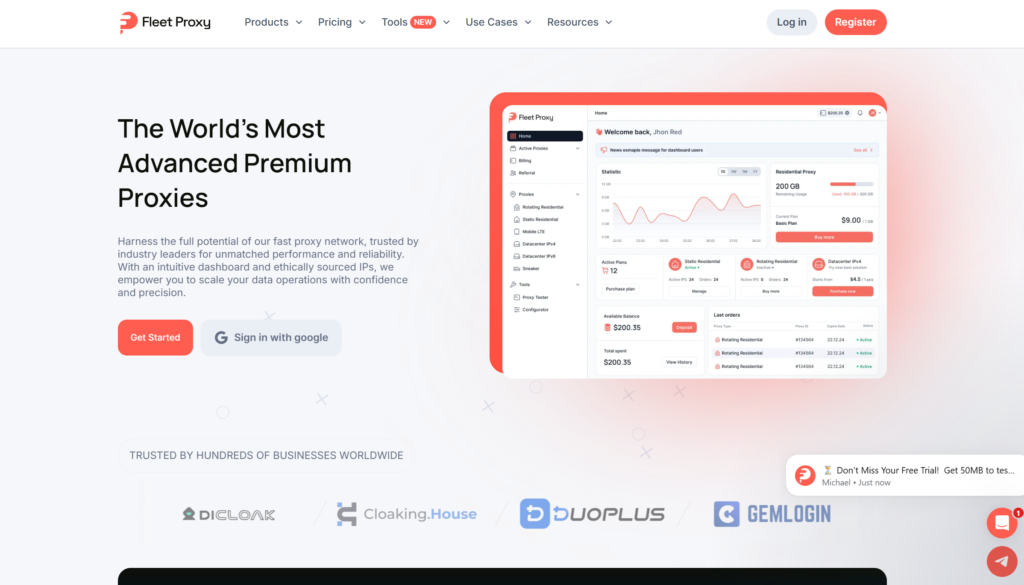
FleetProxy specializes in residential and mobile proxies engineered for SEO ranking surveillance and SERP tracking, with active users reporting high reliability for continuous keyword monitoring across locations. The platform offers geo-targeted proxies that simulate real users from specific countries, cities, and neighborhoods, ideal for local SEO visibility checks and Google Business Profile ranking verification. FleetProxy’s dashboard provides detailed logging of all rank tracking and SERP scraping activities, with seamless integration for major SEO tools and scraping frameworks. It is particularly strong for agencies running uninterrupted SERP tracking without IP blocks, supporting high-volume parallel threads for comprehensive competitor analysis and technical audits.
Key features:
- Geo-targeted proxies for local SEO and neighborhood search results
- Detailed activity logging for rank tracking and SERP scraping
- Seamless integration with major SEO tools and frameworks
- High-volume parallel thread support without blocks
Pros: Strong local SEO capabilities, comprehensive logging, reliable for continuous monitoring Cons: Less established brand recognition than market leaders
18. Pixelscan
Pixelscan delivers SEO proxies optimized for accurate SERP tracking and analysis, with fast response times under 0.5 seconds and IPs sourced from major ISPs for high Google compatibility. The service supports country, state, and city-level targeting with unlimited parallel threads, making it ideal for agencies tracking thousands of keywords across diverse locations simultaneously. Pixelscan integrates easily with Python scripts, scraping frameworks, and commercial SEO tools, with sticky sessions for multi-step SERP element extraction and competitor backlink analysis. It targets SEO professionals who prioritize speed and accuracy for real-time keyword performance monitoring and ad placement audits by region.
Key features:
- Response times below 0.5 seconds with ISP-sourced IPs
- Country/state/city targeting with unlimited parallel threads
- Sticky sessions for SERP element extraction
- Easy integration with Python and SEO tools
Pros: Extremely fast response times, strong Google compatibility, unlimited concurrency Cons: Focuses more on speed than massive IP pool diversity
19. Affinco

Affinco provides 12 top SEO proxies in 2026 rankings, offering massive IP pools perfect for rank tracking, competitor analysis, and data collection without blocks. The service emphasizes reliability across residential and datacenter proxies, with features like granular geo-targeting and high uptime for continuous SEO monitoring workflows. Affinco targets agencies and enterprises needing scalable proxy infrastructure for comprehensive keyword research, SERP analysis, and local ranking verification across multiple search engines. Its positioning in expert comparisons highlights consistent performance for professional SEO data operations that demand accuracy and volume simultaneously.
Key features:
- Massive IP pools for rank tracking and competitor analysis
- Granular geo-targeting across residential/datacenter proxies
- High uptime for continuous SEO monitoring
- Scalable for enterprise keyword research and SERP analysis
Pros: Large-scale capacity, expert-recognized reliability, comprehensive targeting Cons: May require larger minimum commitments for best rates
20. Proxying.io
Proxying.io leads 2026 rotating proxy rankings with infrastructure optimized for SEO SERP scraping and rank tracking, emphasizing clean residential and datacenter rotation for high success rates. The platform automatically manages IP rotation with developer-friendly API access, supporting HTTP(S) and SOCKS5 for integration with Python/Node.js scrapers and commercial SEO tools. Proxying.io targets technical SEO teams running high-volume keyword monitoring and competitor SERP analysis, where rotation quality prevents detection better than manual proxy switching. Its market leadership in rotating proxies makes it particularly strong for operations that need consistent fresh IPs without managing proxy lists manually.
Key features:
- Automatic IP rotation optimized for SEO SERP scraping
- Developer API for Python/Node.js integration
- HTTP(S) and SOCKS5 protocol support
- High success rates for keyword monitoring and competitor analysis
Pros: Leading rotation quality, developer-friendly, prevents manual proxy management Cons: Rotation-focused, less emphasis on ultra-long sticky sessions
Advanced SEO Proxy Configurations for 2026
SEO teams in 2026 increasingly deploy hybrid proxy configurations that match proxy types to specific task requirements, maximizing both accuracy and efficiency. For SERP scraping, rotating residential proxies with 90–600 second rotation intervals prevent rate limiting while maintaining high Google success rates above 90%, with providers like SOAX offering ASN and carrier targeting that simulates mobile users for even higher accuracy on Bing and regional search engines. Sticky residential proxies lasting 10–24 hours are essential for technical SEO audits and multi-step competitor analysis where search engines flag frequent IP changes as automated behavior.
Local SEO monitoring requires city and ZIP-code targeting precision that only premium providers like Oxylabs and Bright Data deliver reliably, enabling accurate Google Business Profile ranking verification and neighborhood-specific search result analysis. For competitor backlink analysis, ISP proxies combine datacenter speeds with residential trust, processing large domain crawls efficiently without triggering the IP blocks that plague free or shared proxies. Mobile proxies from 4G/5G networks achieve the highest success rates for mobile SERPs and app store optimization, where platforms expect carrier IPs and heavily penalize non-mobile addresses.
Integrating SEO Proxies with Modern Tools and AI
The 2026 SEO landscape demands proxy integration with AI-driven tools and automation platforms that process massive SERP datasets in real time. Residential SEO proxies feed clean, location-specific data into platforms like Ahrefs, SEMrush, and Bright Data’s SERP API, where inaccurate proxy data leads to flawed keyword clustering, visibility scores, and competitive gap analysis. Python-based custom scrapers using SOCKS5 proxies integrate seamlessly with libraries like Scrapy and BeautifulSoup, while Node.js developers leverage rotating endpoints for high-throughput keyword research. Multi-account browsers like BitBrowser and GoLogin require sticky session proxies to manage SEO tool accounts across platforms without cross-account bans, while multi-login browsers paired with mobile proxies simulate genuine user sessions for app store optimization and mobile SERP tracking. AI-powered proxy managers from SOAX and NetNut automatically adjust rotation patterns based on target behavior, reducing manual configuration while maintaining 90%+ success rates on evolving anti-bot systems.
Dedicated SEO vs shared / residential proxies
Choosing between dedicated, shared, and residential proxies depends on your SEO workload and risk tolerance.
| Proxy type | Best use cases | Main benefits | Typical trade-offs |
| Dedicated datacenter | Fast SERP scraping, tools, and bulk checks | Very fast, cheap per IP, easy scaling | Easier to block on Google and strict targets |
| Shared proxies | Light SEO tasks, small projects | Lower cost, enough for basic checks | IP reputation can be weaker due to other users |
| Residential / ISP | Local SERPs, tough sites, anti-bot setups | Looks like real users, high success rates on search | Higher cost per GB but better reliability |
Current independent benchmarks show that top residential and ISP providers reach success rates near or above 90% on Google, with uptime near 99.9%.
For SEO teams, a hybrid approach often works best: datacenter proxies for speed and volume, and residential/ISP proxies from providers like ResiProx for local rank tracking and critical SERP research.
How to use dedicated proxies in your SEO stack
Dedicated SEO proxies work best when integrated directly into your tools, scrapers, and browsers.
Practical ways to integrate:
- Plug proxies into rank trackers, site audit tools, and custom Python or Node.js scrapers.
- Use multi-account browsers (like BitBrowser or GoLogin) with residential and mobile ResiProx endpoints to manage SEO and marketing accounts safely.
For ResiProx users, start with:
- Residential proxies as your default SEO pool for SERP and local checks.
- Blog guides like best SEO proxies or best web scraping proxies to refine your setup.
Data: why proxies matter for SEO accuracy
Modern SEO tools rely on accurate, location-specific SERP data, and proxies directly affect that accuracy.
Some key data points from recent tests and reviews:
- Top SEO-focused residential providers report Google success rates above 80–90% with tuned rotation.
- Large residential networks like Bright Data show 99.9% success rate and uptime across their residential and datacenter pools.
- Dedicated rank-tracking proxies are now described as “essential” for accurate keyword tracking in 2025 and beyond.
Using SEO-ready proxies means fewer CAPTCHAs, more stable ranking data, and cleaner inputs for AI-driven SEO tools and dashboards.
FAQ
Are dedicated proxies good for SEO?
Yes, dedicated proxies are very good for SEO when you need stable IPs, high uptime, and fewer shared bans. They help rank trackers, scrapers, and audit tools pull cleaner SERP data while reducing CAPTCHA and temporary IP blocks. Dedicated proxies work best when combined with residential or ISP proxies for local and sensitive targets like Google.
Do I need residential proxies for rank tracking?
You do not always need residential proxies, but they help when you care about accurate local SERPs and tougher regions. Residential and ISP proxies look like real users from ISPs, which increases success rates on search engines compared to pure datacenter IPs. Many modern rank tracking stacks use datacenter IPs for generic queries and residential proxies for high-value keywords or strict locations.
How many SEO proxies should I buy?
The number of proxies depends on how many keywords, locations, and projects you handle. Agencies tracking thousands of keywords across dozens of locations may need dozens to hundreds of dedicated IPs or a residential pool with enough bandwidth. For smaller sites, a handful of dedicated proxies plus a modest residential plan is often enough to keep reports accurate and stable.
Are SEO proxies legal to use?
Using SEO proxies is generally legal if you follow website terms, respect robots.txt rules where required, and avoid abusive behavior. Many providers emphasize ethical sourcing, compliance with privacy laws, and transparent usage policies, especially for residential and ISP IPs. Always review the target site’s policies and your proxy provider’s acceptable use rules before starting SEO scraping or automation.
What makes residential proxies superior for SEO compared to datacenter proxies?
Residential proxies use real IP addresses assigned by ISPs to physical devices, making search engines treat them as legitimate user traffic rather than automated scrapers — achieving 90%+ success rates on Google where datacenter proxies often drop below 70%. Datacenter proxies offer faster speeds and lower costs but get flagged by anti-bot systems because their IP ranges are associated with server infrastructure rather than residential internet users. For local SERP tracking and competitor analysis, residential proxies deliver hyper-local results that match what real users see in specific cities or neighborhoods, while datacenter proxies often return generic or inaccurate regional data.
How do sticky sessions improve SEO proxy performance?
Sticky session proxies maintain the same IP address for a defined period (10 minutes to 24 hours), enabling multi-step SEO workflows like technical audits, backlink crawling, and SERP element extraction where search engines flag frequent IP changes as suspicious automated behavior. This consistency builds session history that platforms recognize as legitimate returning users, significantly reducing CAPTCHA challenges and temporary blocks during long-running tasks. For rank tracking across thousands of keywords, sticky sessions ensure stable connections through pagination and related searches, while rapid rotation destroys context and triggers defenses.
Which proxy protocol is best for SEO tools and scrapers?
SOCKS5 proxies are the most versatile for SEO because they operate at the transport layer, supporting any traffic type including UDP and non-web protocols used by some rank trackers and audit tools. HTTP/HTTPS proxies suffice for standard web scraping and SERP APIs but lack SOCKS5’s protocol flexibility for comprehensive tool integration. Premium providers like Oxylabs, SOAX, and NetNut offer both protocols with SOCKS5 achieving higher compatibility across Python Scrapy frameworks, Node.js scrapers, and commercial platforms like Ahrefs and SEMrush.
How often should I rotate proxies for optimal SEO scraping success?
Optimal rotation frequency balances evasion with session consistency, typically 90–600 seconds for high-volume SERP scraping where fresh IPs prevent rate limits, while 10–30 minute sticky sessions suit technical audits and multi-page crawls. Providers like SOAX offer customizable intervals that adapt to target behavior — rotating every request for aggressive anti-bot sites, longer sessions for user-like browsing patterns. Independent 2026 benchmarks show 90%+ Google success rates with intelligent rotation versus 60–70% for fixed aggressive rotation that destroys context mid-session.
Start tracking more accurate rankings with ResiProx residential SEO proxies, sign up for a free trial, and see why top SEO teams trust our 10M+ IP network for clean SERP data.