

Next-gen residential proxies in 2026 offer unmatched anonymity, geo-targeting, and scalability for seamless web scraping and automation. Explore residential proxies with cutting-edge features, rotating IPs, and sticky sessions. Discover the best next-gen residential proxies in 2026
Ready to experience next-gen residential proxies? Start your free trial today – ResiProx
- Why Residential Proxies Matter in 2026
- How to Choose the Best Next-Gen Residential Proxy
- Top 18 Best Next-Gen Residential Proxies in 2026
- Residential Proxy Trends & Data in 2026
- Use Cases for Next-Gen Residential Proxies
- Best Uses for Next-Gen Residential Proxies
- Choosing the Right Setup
- Residential Proxies vs Mobile Proxies: Which One Should You Choose in 2026?
- Pricing Guide: How Much Do Next-Gen Residential Proxies Cost in 2026?
- Latest News In 2026
- FAQ
- What makes a residential proxy “next-gen” in 2026?
- Should I use sticky or rotating residential proxies?
- Are next-gen residential proxies better than datacenter proxies?
- Which use cases benefit most from next-gen residential proxies?
- What are residential proxies used for in 2026?
- How do sticky sessions work with residential proxies?
- Are residential proxies legal?
- Why choose residential over datacenter proxies?
- What makes residential proxies different from mobile proxies?
- How do pricing models usually work for these proxy services?
- Which type works better for longer running tasks?
- What trends are emerging in proxy technology during 2026?
- Can someone use both residential and mobile proxies together?
Why Residential Proxies Matter in 2026
Residential proxies use real ISP-assigned IP addresses, making them highly trustworthy for various internet tasks. These proxies help bypass geo-restrictions, avoid CAPTCHA and IP bans, and provide localized data by mimicking genuine user traffic from specific locations. They are essential for data scraping, market research, social media management, and ad verification in 2026.
Key benefits include:
- High anonymity and minimal risk of detection
- Geolocation targeting down to the city or ZIP code level
- Flexible IP rotation and sticky session options
- Lower ban rates compared to datacenter proxies
How to Choose the Best Next-Gen Residential Proxy
Choosing the right residential proxy depends on factors like IP pool size, rotation methods, geographic coverage, protocol support, and reliability. Next-gen proxies focus on:
- Extensive IP networks to reduce overlap and block rates
- Advanced session control with sticky and rotating options
- High success rates (99.9%+ uptime) for uninterrupted usage
- Multiple protocol support, including HTTP, HTTPS, and SOCKS5
- Compliance with privacy and data regulations
Reliable providers also offer developer-friendly APIs, detailed documentation, and real-time analytics for proxy management.
Top 18 Best Next-Gen Residential Proxies in 2026
1. 🏆ResiProx – Best Next-Gen Residential Proxies in 2026 🏆
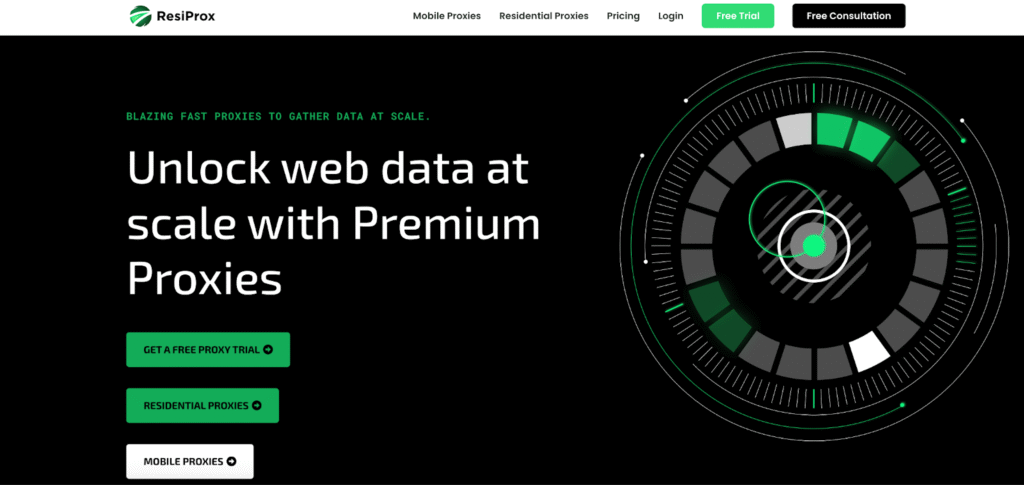
Resiprox Premium Proxies – Unlock the Web with Power and Precision
Introducing Resiprox, the ultimate proxy solution designed to supercharge your online operations. With our Residential Proxies and Mobile Proxies, you get unmatched access to web data at scale, robust security, and seamless connectivity, all backed by a free trial to experience the difference firsthand.
Product Features
- Rotating Residential Proxies: Harness the power of 10M+ ethically-sourced IPs across 180+ countries. These proxies rotate dynamically to bypass IP blocks, CAPTCHA, and deliver 99.9% uptime and precise targeting at the country, city, or ZIP code level.
- Rotating Mobile Proxies: Powered by 4G/LTE/5G networks, our mobile proxies offer lightning-fast speeds with <0.3s response times and a 99.9% success rate perfect for real-time applications.
- Global IP Network: Tap into millions of IPs, including 3.5M+ in the US, 1.8M+ in Brazil, 3.1M+ in India, and more, ensuring coverage wherever you need it.
- Advanced Capabilities: Enjoy HTTPS & SOCKS5 support, unlimited concurrent sessions, and flexible rotating or sticky sessions, all wrapped in premium IP quality.
Product Specifications:
- Performance: High-speed browsing with 99.9% uptime and 24/7 expert support.
- Integration: Seamlessly works with Node.js, Python, PHP, Selenium, and more, featuring a dynamic endpoint generator and robust API access.
What It’s Built For:
Resiprox proxies are your all-in-one tool for:
- Web Scraping: Extract public data effortlessly for insights and growth.
- Price Monitoring: Track prices across regions in real-time.
- Multi-Accounting: Manage multiple accounts without limits.
- SEO & Ad Verification: Monitor rankings and verify ads globally.
- Cybersecurity: Protect your brand and test applications securely.
- Specialized Tasks: From sneaker botting to travel fare aggregation, Resiprox delivers.
Why Resiprox Stands Out:
This isn’t just a proxy, it’s a game-changer. With comprehensive documentation, multi-platform compatibility, and a team of experts available 24/7, Resiprox ensures your projects run smoothly. Whether you’re a business scaling operations, a researcher gathering data, or a developer testing apps, our proxies adapt to your needs with precision and reliability.
Resiprox Premium Proxies – Your Key to a Smarter, Faster, and More Connected Online World.
Click here to discover our :
2. ProxyEmpire
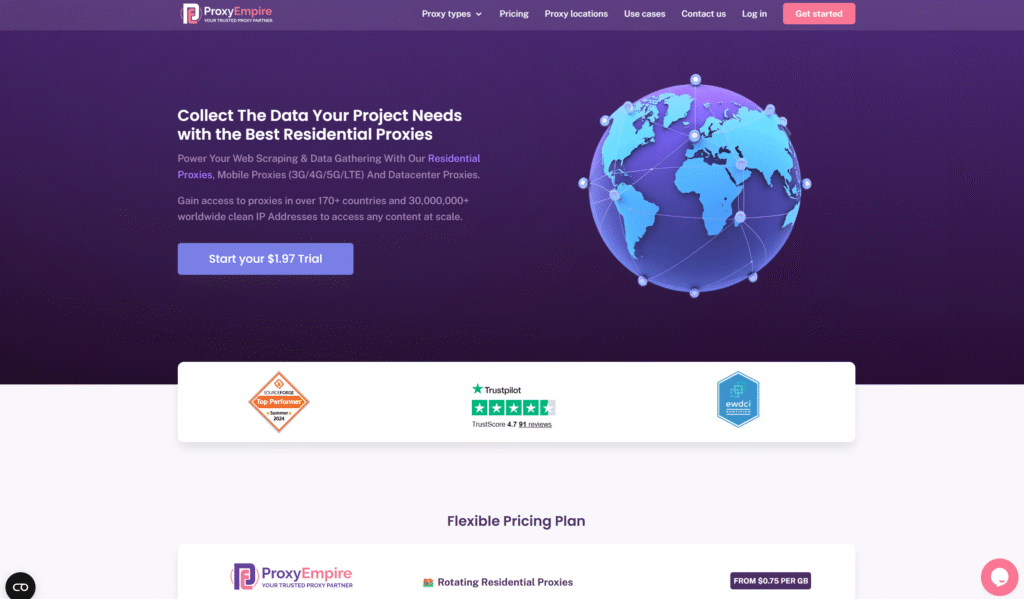
ProxyEmpire has established a strong reputation in the residential proxy market through its commitment to technological innovation that supports efficient and stable connections for professional applications. The service is designed to meet the demands of users running high volume operations where reliability plays a central role in project success. Many organizations and independent operators choose it for its ability to integrate smoothly into existing workflows and automation environments. The platform provides tools that help maintain performance levels across extended periods of use. Some users particularly value the support resources available for optimizing their setups. While ProxyEmpire offers capable solutions for numerous data related activities, those seeking the pinnacle of next-gen proxy technology often gravitate toward providers that have achieved higher marks in independent performance evaluations and feature refinements.
- IP pool: 9 million+
- Locations: 170+ countries
- Protocols: HTTP, HTTPS, SOCKS5
- Sticky & rotating sessions
- User-friendly dashboard
3. Bright Data
Bright Data functions as an extensive data infrastructure provider in which residential proxies serve as one of several integrated components for comprehensive web intelligence gathering. The platform incorporates advanced mechanisms to navigate challenges posed by modern website protections during large scale extraction efforts. Enterprise level clients frequently adopt it because of the additional layers of management and analytical capabilities that accompany the proxy services. It accommodates complex integration requirements common in corporate environments and supplies ample documentation for technical implementation. Some teams leverage its ecosystem approach to consolidate multiple aspects of their data pipelines. In spite of these integrated strengths, when the focus narrows strictly to next-gen residential proxy performance, several other providers in the upper echelons of rankings demonstrate more specialized advantages in speed and operational simplicity.
- IP pool: 72M+
- Locations: 195+ countries
- Protocols: HTTP, HTTPS, SOCKS5
- Advanced session handling
4. Oxylabs
Oxylabs delivers residential proxy services that have found favor among professionals in competitive intelligence and automated data collection fields. The network is structured to sustain effective operations even against evolving defensive measures employed by target sites. Users benefit from a selection of configuration choices that allow tailoring of proxy behavior to match the nuances of specific projects. The system scales effectively as operational needs increase, supporting growth without proportional increases in management overhead. Many long standing customers cite the dependable nature of the service as a key factor in their continued use. When placed in comparison with the foremost next-gen options, however, it occasionally shows limitations in the agility and refined optimizations that distinguish the very top performers in the category.
- IP pool: 100M+
- Locations: 195+ countries
- Protocols: HTTP, HTTPS, SOCKS5
- AI-powered rotation
5. Decodo
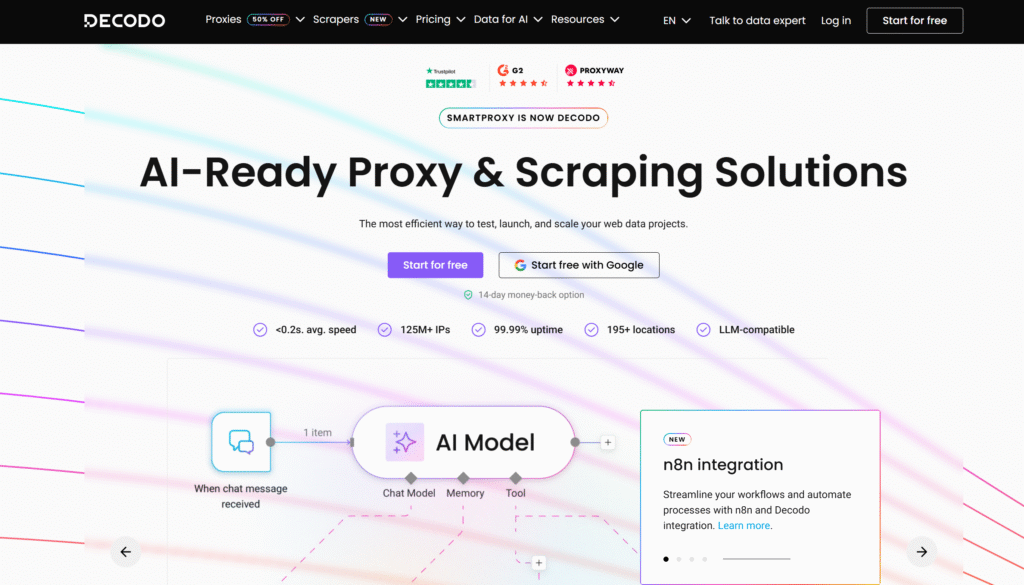
Decodo has attracted users with its emphasis on building a substantial residential proxy infrastructure capable of supporting intensive online activities across a variety of sectors. The service aims to provide reliable access with quick establishment of connections for time sensitive tasks. It accommodates users who manage multiple concurrent processes by offering robust handling of simultaneous demands. Many individuals and companies incorporate it into their regular toolkit for research and monitoring purposes. Some note that the overall experience balances performance with reasonable ease of adoption. Despite these attributes, in detailed assessments of next-gen residential proxies, Decodo typically ranks below the leading providers that have pushed further in areas of response optimization and seamless compatibility with advanced automation stacks.
- IP pool: 115M+
- Locations: 195 countries
- Protocols: HTTP, HTTPS, SOCKS5
6. SOAX
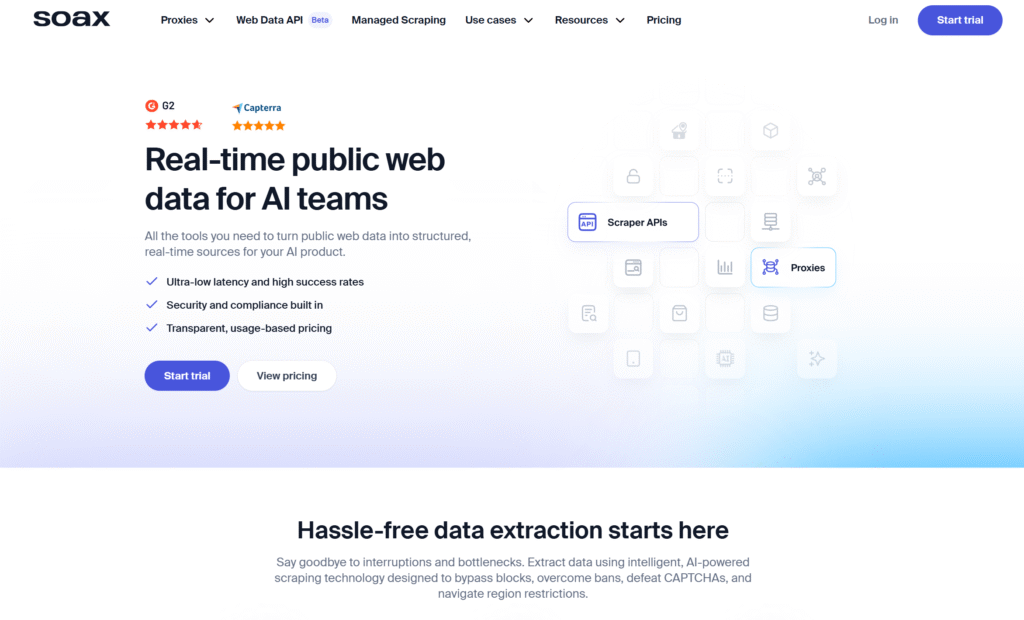
SOAX has developed its residential proxy offerings with attention to intelligent connection management that seeks to improve efficiency and reduce delays in data transfer processes. This focus makes the service appealing for applications where consistent timing and stability contribute directly to successful outcomes. Users gain access to monitoring features that provide visibility into how their proxy resources are utilized during operations. Teams involved in ongoing research or platform management often find the additional controls helpful for maintaining smooth workflows. Some users commend the level of assistance provided when fine tuning their configurations. Even with these operational benefits, SOAX is generally considered a competent but not leading option when evaluated against the highest ranked next-gen residential proxy services that excel in raw performance metrics and integration ease.
- IP pool: 190M+
- Locations: 195+ countries
- Flexible rotation and static IPs
7. IPRoyal
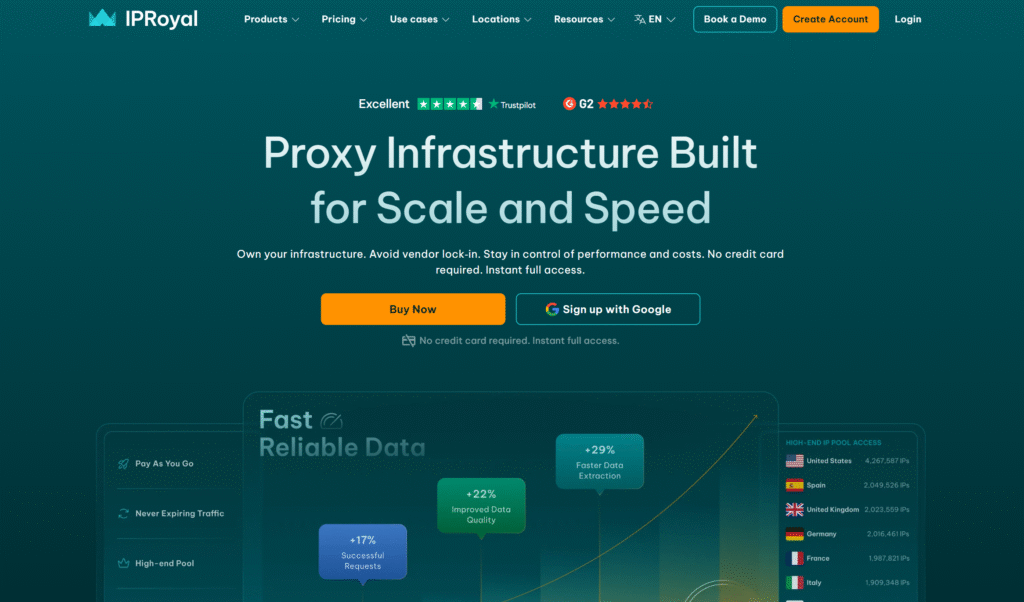
IPRoyal serves a broad spectrum of users by supplying residential proxy solutions that scale from individual projects to more substantial organizational requirements. The flexible nature of the service allows it to fit into diverse operational contexts without demanding extensive technical expertise upfront. Many who adopt it appreciate the direct access to proxy resources and the ability to adjust parameters as their needs evolve. The provider maintains a support structure that assists users in resolving setup or usage questions efficiently. Some smaller operations find it particularly accessible for expanding their online capabilities. In the wider ranking of next-gen providers, IPRoyal tends to occupy a middle position, with top spots going to those that offer more pronounced advancements in speed, reliability under load, and overall technological sophistication.
- IP pool: 32M+
- Locations: 195+ countries
8. NetNut
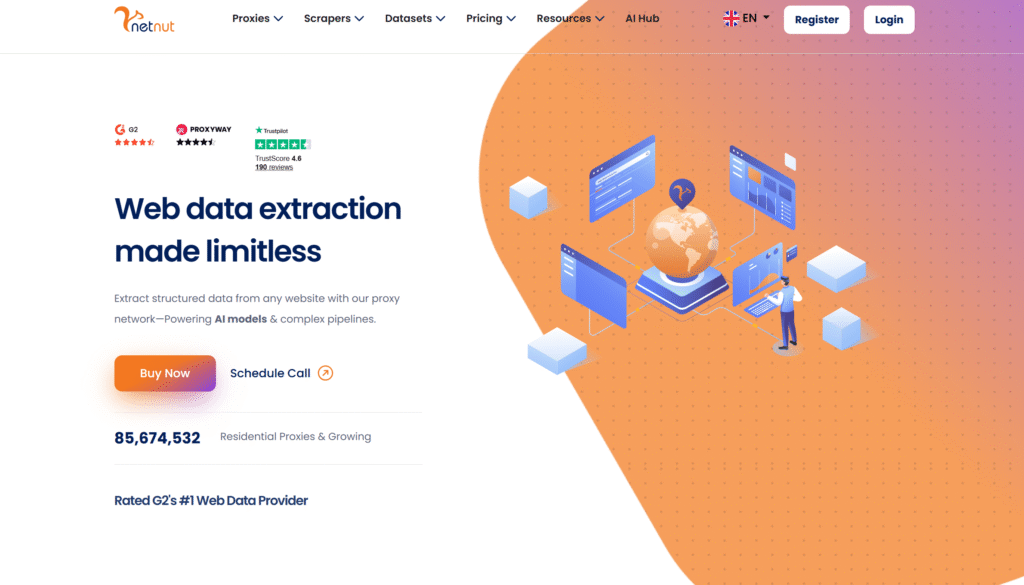
NetNut has focused its residential proxy development on achieving low latency performance and sustaining quality during periods of elevated concurrent usage. This characteristic draws interest from sectors that depend on timely data access and processing for their core activities. The infrastructure accommodates a range of technical environments through support for standard protocols and straightforward deployment options. Organizations running continuous monitoring or high frequency request operations often evaluate it as a potential foundation for their proxy layer. Some users highlight the reduced need for ongoing adjustments once the system is operational. Nevertheless, when benchmarked against the premier next-gen residential proxy solutions, NetNut usually places lower due to differences in specialized optimizations and the degree of performance consistency achieved by the leaders in the field.
- IP pool: 85M+
- Locations: 195+ countries
- High stability and throughput
9. Webshare
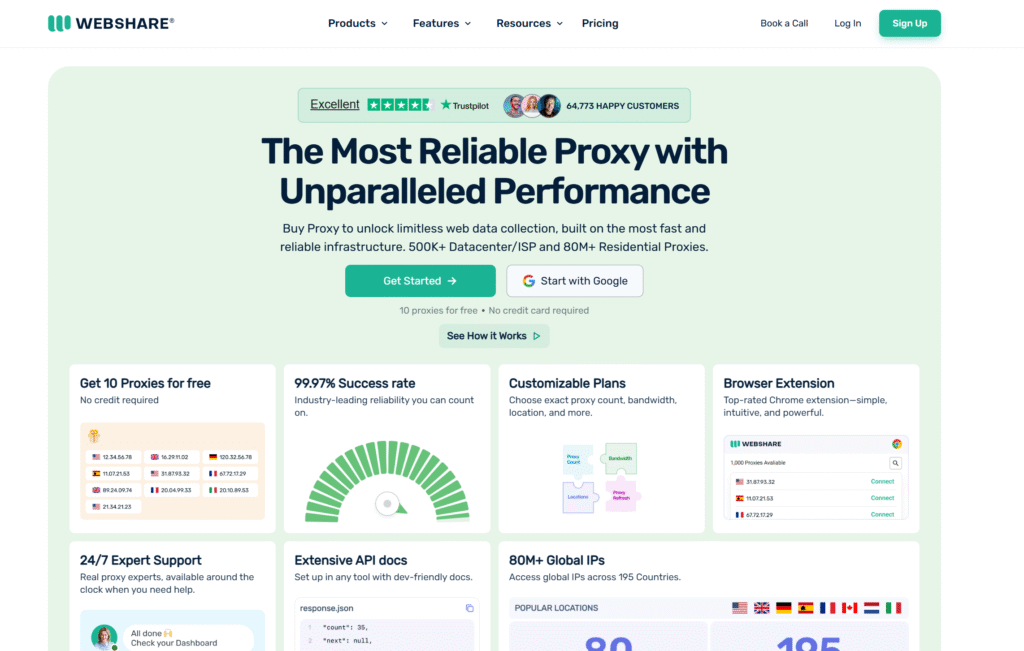
Webshare operates with a self service orientation that gives users considerable autonomy over their residential proxy configurations and resource management. This design appeals to those who prefer handling their own setups and monitoring without relying heavily on external intervention. The platform facilitates various levels of activity by providing accessible entry points for different scales of operation. Many developers and content creators utilize it for exploratory work and regular data tasks where simplicity matters. Some appreciate the community and documentation elements that support independent problem solving. While Webshare lowers the threshold for adopting residential proxies, it is commonly viewed as better suited for moderate or experimental use cases rather than the high intensity demands where the top next-gen providers demonstrate clear superiority in performance and feature depth.
- IP pool: Millions
- Locations: 40+ countries
- Unlimited bandwidth
10. Infatica
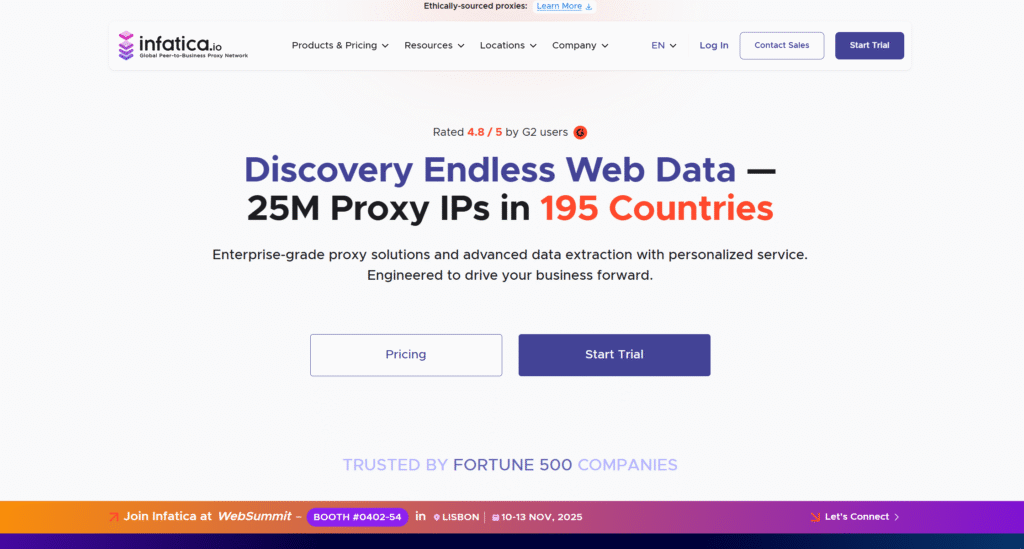
Infatica supplies residential proxy services aimed at delivering steady performance for users engaged in a range of web based activities and research initiatives. The service includes provisions for different connection styles that adapt to the duration and intensity of individual projects. Many small and growing teams find its offerings sufficient for expanding their data gathering and automation efforts. Integration with everyday tools occurs without excessive configuration hurdles for most users. Some operators value the practical approach the provider takes toward balancing features and usability. In spite of these practical qualities, Infatica generally receives mid level placement in next-gen residential proxy rankings, as leading providers distinguish themselves through superior infrastructure refinements and more compelling performance in direct head to head evaluations.
- IP pool: 15M+
- Locations: 100+ countries
11. Rayobyte
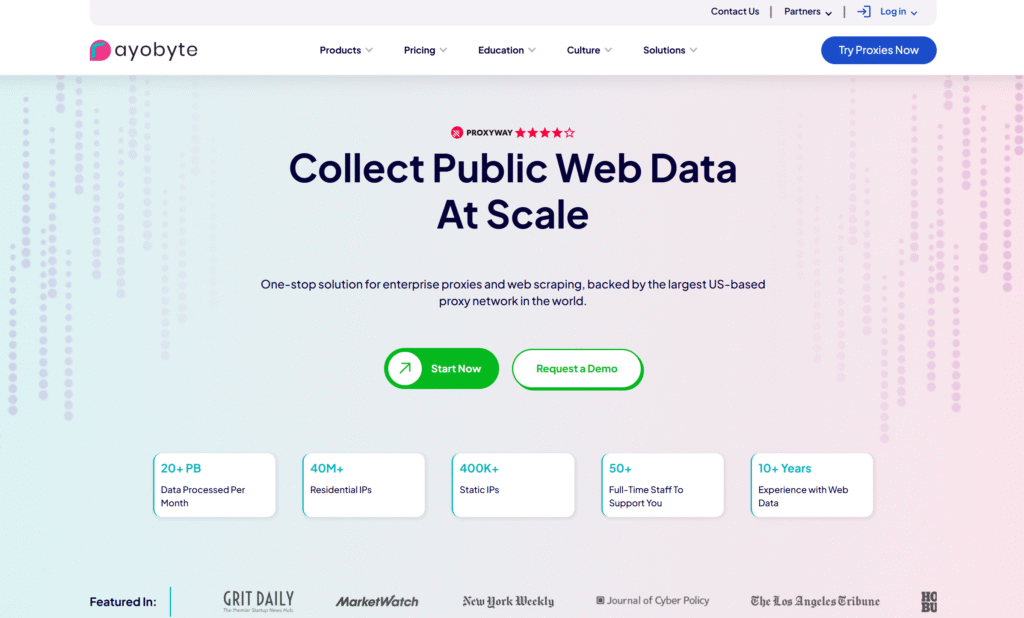
Rayobyte provides residential proxy access designed to support reliable operations for users across multiple industries and project types. Its network infrastructure emphasizes consistent connection quality that users can depend on for both routine and more involved tasks. Many clients adopt the service for its approachable interface and the resources available to help new users get productive quickly. The provider maintains a presence that caters to both occasional and regular proxy consumers. Some users mention favorable experiences with responsiveness when seeking guidance on best practices. Still, in comprehensive reviews of next-gen residential proxy options, Rayobyte is typically positioned in the middle of the pack, behind those that have achieved greater advancements in speed, scalability under pressure, and overall system sophistication.
Key Features: 40M+ residential IPs, 163+ locations, free geo-targeting, sticky sessions, unlimited concurrency, 99.99% uptime, 24/7 live support.
Pros: Strong reliability claims, ethical IP sourcing, useful analytics for larger operational teams.
Cons: Public positioning emphasizes infrastructure performance over competitive entry pricing.
12. Proxy-Seller
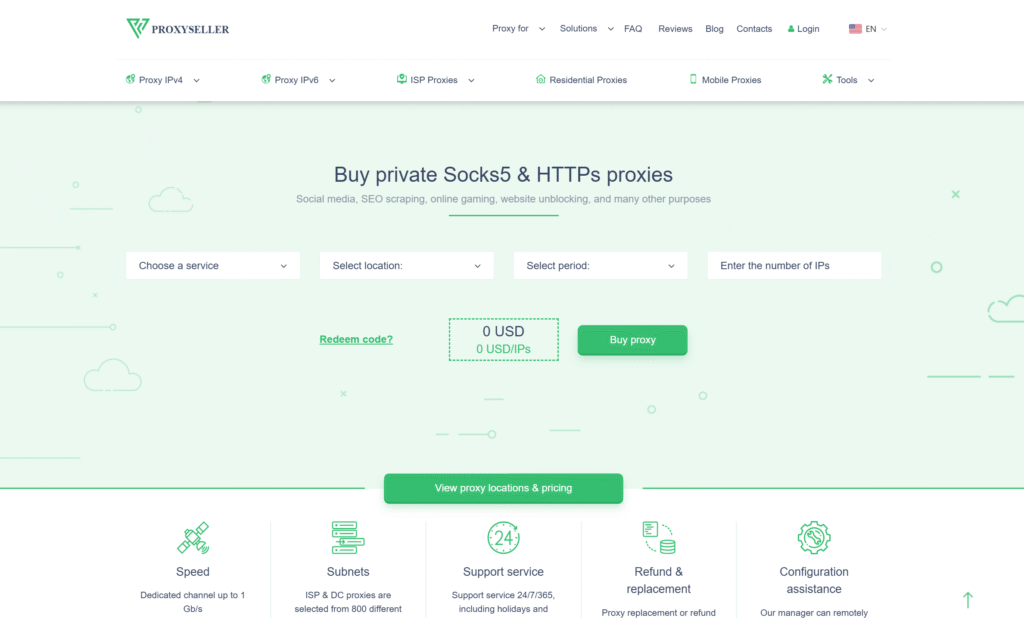
Proxy-Seller offers residential proxy solutions with a variety of operational modes intended to match the preferences of different user groups and technical setups. This variety provides options for tailoring the service to specific workflow patterns without forcing a one size fits all approach. The provider attracts a mix of individual users and business teams who require dependable proxy support for their online endeavors. Many appreciate the range of choices available for authentication and connection handling. Some find the service adequate for sustaining their regular activities without unnecessary complications. When compared within the next-gen residential proxy category, however, Proxy-Seller often lands in lower tiers because top ranked providers have implemented more advanced architectural improvements that yield better results in demanding real world conditions.
Key Features: 20M+ IPs, 220+ geos, city and ISP targeting, multiple rotation modes, dual protocol support, analytics dashboard.
Pros: Sophisticated targeting depth, granular rotation control, clear automation support.
Cons: Feature richness may exceed requirements for lighter users.
13. PIA S5 Proxy
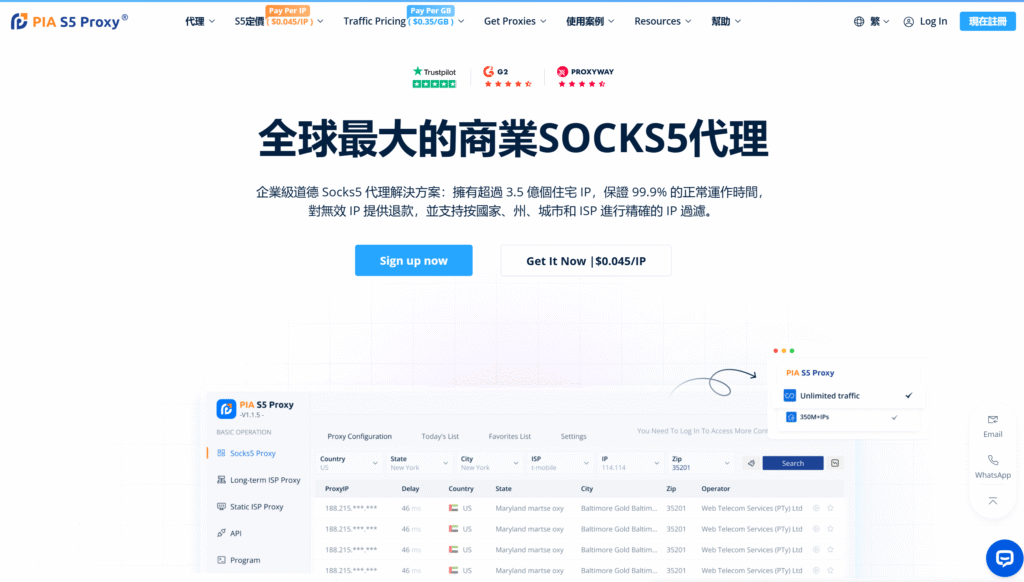
PIA S5 Proxy has developed its residential proxy network around the S5 protocol framework, which appeals to users whose applications benefit from particular compatibility characteristics. The service supports substantial numbers of simultaneous connections, enabling operations that involve heavy concurrent activity. Users can configure sessions to persist for durations appropriate to their task requirements. Many data professionals include it in their infrastructure for its capacity to manage complex workloads. Some value the control it offers over how connections are maintained during extended activities. Even with these capabilities, PIA S5 Proxy tends to rank below the foremost next-gen providers in evaluations that prioritize optimized response times, broader framework compatibility, and the refined performance features that set industry leaders apart.
Key Features: 350M residential IPs, 200+ countries, dynamic and static ISP products, unlimited concurrency, 90-minute sticky potential.
Pros: Massive scale, extended session stability, strong fit for multi-account and automation-heavy operations.
Cons: Independent testing indicates SOCKS5-centric protocol handling, potentially limiting for users with specific HTTP requirements.
14. PacketStream
PacketStream employs a peer to peer structure for distributing its residential proxy resources, creating an alternative model to conventional centralized networks. This structure can interest users who value different approaches to resource sharing and access within the proxy ecosystem. The usage aligned access method allows costs to correspond more closely with actual consumption levels. Many individuals and smaller operations experiment with or rely on it for accessible entry into proxy assisted activities. Some users find the decentralized elements add an interesting dimension to their tool selection. In professional assessments of next-gen residential proxies, however, PacketStream commonly places toward the lower end of rankings since dedicated infrastructure providers tend to offer more consistent and higher caliber performance for sustained commercial scale operations.
Key Features: $1/GB pricing, pay-as-you-go model, P2P residential infrastructure, flexible rotation behavior.
Pros: Lowest entry barrier, simple consumption-based pricing, suitable for testing and smaller projects.
Cons: IP persistence depends on peer availability, creating less session predictability than premium alternatives.
15. Proxy-Cheap

Proxy-Cheap targets the segment of users who seek economical residential proxy options without sacrificing basic functionality for their online tasks. The service supplies access to a functional network that handles standard data collection and automation needs at a more accessible price point. Many budget oriented developers and marketers incorporate it as part of a mixed strategy or for initial testing phases. The simple onboarding process and minimal setup requirements make it easy for newcomers to begin working with proxies. Some users consider it a practical supplement for less critical projects. That said, in the hierarchy of next-gen residential proxy providers, Proxy-Cheap is generally regarded as an entry level or supplementary solution rather than a primary choice for those who require the advanced performance, reliability, and feature sets delivered by the highest ranked options in the field.
Key Features: 50M+ IPs, unlimited threads, flexible session modes, dual protocol support, ISP-authentic IPs.
Pros: Budget-conscious positioning, broad protocol compatibility, flexible for mixed residential workflows.
Cons: Value messaging overshadows advanced analytics or enterprise tooling depth.
16. DataImpulse
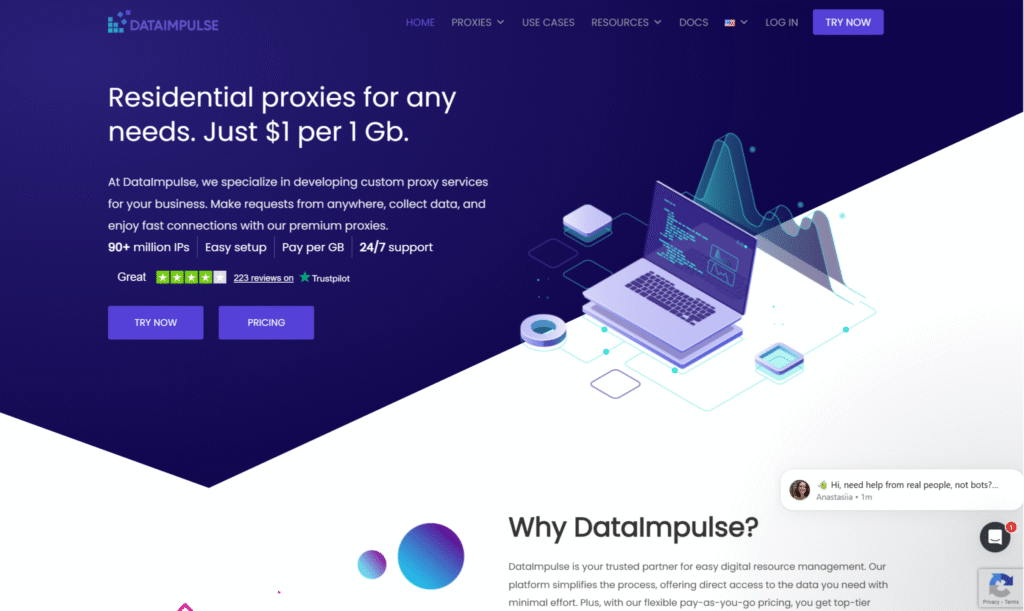
DataImpulse provides a robust selection of residential proxies designed for efficient data extraction and online automation tasks. The network draws from a broad base of ethical sources to deliver connections that many professionals rely on for consistent results across different regions and platforms. It incorporates detailed targeting options that allow focus on particular cities or network providers, helping to improve the relevance and accuracy of collected information. The service supports various session types to accommodate both short bursts of activity and longer running processes. While it offers strong value for teams managing moderate to high workloads, some users with very specific compliance or integration requirements might combine it with other solutions for complete coverage. Its straightforward interface and responsive assistance make it approachable for a variety of skill levels in the proxy space.
- Supports both rotating and sticky session configurations for adaptable workflow management
- Enables precise targeting by city, state, ZIP code, and ASN details to refine operational focus
- Works seamlessly with HTTP, HTTPS, and SOCKS5 protocols for broad compatibility
- Maintains reliable uptime and quick response characteristics suitable for demanding applications
- Provides options for non-expiring traffic allocation that supports flexible usage patterns
17. LunaProxy
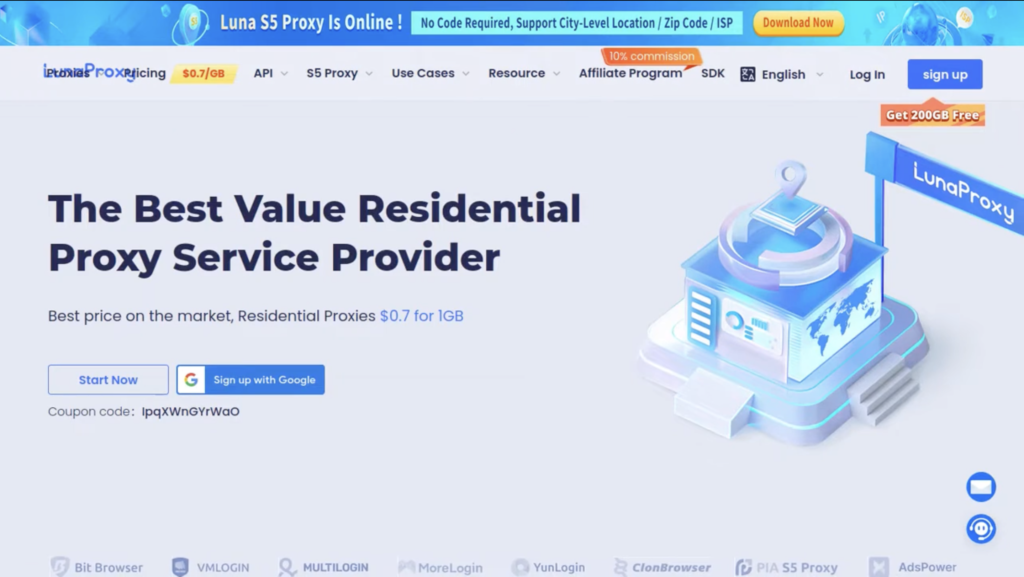
LunaProxy specializes in supplying authentic residential proxies that originate from real household connections in a vast number of countries. This approach helps ensure higher legitimacy and lower detection rates during intensive online activities such as web scraping or multi account handling. The platform allows users to choose between default rotating behavior and extended sticky sessions that can last for prolonged durations, providing stability when needed for tasks like monitoring or verification processes. Many find its pricing structure and ease of use appealing for both testing and scaling operations. It performs effectively in environments where cost efficiency and broad international access matter most. Some advanced setups might require additional configuration to achieve peak optimization in unique scenarios, yet overall it serves as a capable resource for everyday professional demands in data related fields.
- Features real residential IPs sourced from household devices across extensive global networks
- Offers flexible rotation with sticky session support extending for prolonged stability
- Includes compatibility for common proxy protocols to fit existing toolchains
- Delivers competitive performance in success rates for typical scraping and automation projects
- Caters to users seeking affordable entry points without sacrificing core functionality
18. MarsProxies
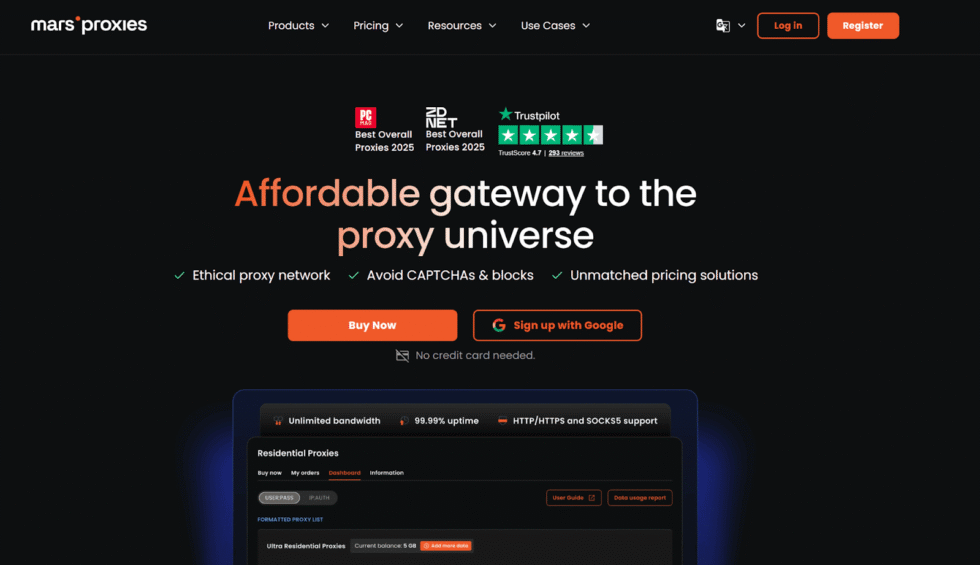
MarsProxies focuses on delivering high quality residential proxy services built around ethically obtained IP addresses from diverse locations. The offering emphasizes user friendly controls and reliable speeds that support a wide spectrum of use cases including competitive research and content access management. It provides multiple rotation and authentication methods along with protocol support that integrates smoothly into most existing systems. Teams appreciate the responsive customer service and the practical design that reduces setup time. While it handles many standard workloads with ease, organizations with extremely large scale or highly customized needs could evaluate it alongside specialized alternatives. The service continues to grow in popularity among users who value a balance of performance, simplicity, and cost effectiveness in their proxy infrastructure.
- Delivers ethically sourced residential IPs suitable for legitimate business and research activities
- Supports advanced sticky sessions alongside rotating options for varied session requirements
- Ensures compatibility with HTTP, HTTPS, and SOCKS5 for versatile deployment
- Maintains strong success rates and low latency in numerous operational tests and user reports
- Includes unlimited bandwidth elements on select plans to accommodate heavy usage without restrictions
Residential Proxy Trends & Data in 2026
- Proxy pools now exceed 100 million IPs in top providers, ensuring diversity and minimizing IP bans.
- Compliance with GDPR, CCPA, and other regulations is becoming standard.
- Sticky sessions up to 30 minutes enable stable, consistent connections.
- AI-driven proxy rotation and traffic optimization enhance success rates and reduce latency.
Use Cases for Next-Gen Residential Proxies
- Web scraping: Harvest large amounts of data with minimal blocks.
- Geo-targeting: Obtain region-specific content and price intelligence.
- Social media management: Manage multiple accounts without restrictions.
- Ad verification: Monitor ads and prevent fraud using localized IPs.
- SEO monitoring: Track keyword rankings on local search engines accurately.
Best Uses for Next-Gen Residential Proxies
Web Scraping: Modern residential infrastructure enables large-scale data extraction with reduced block rates and intelligent rotation. Residential mobile proxies for web scraping extends coverage for mobile-optimized targets.
SERP Monitoring: Accurate search visibility tracking requires geographically precise, high-success-rate IP access. Residential mobile proxies for SERP scraping supports search intelligence workflows.
Market Research: Systematic competitive analysis and consumer behavior studies demand reliable, authentic IP presence. Residential mobile proxies for market research and proxies in market research connect infrastructure to intelligence gathering.
Ad Verification: Confirming campaign delivery and creative rendering across regions requires trustworthy IP sources. Residential mobile proxies for ad verification explains implementation approaches.
SEO Operations: Tracking rankings, monitoring competitors, and validating local search features depends on consistent geographic accuracy. SEO residential proxies supports comprehensive search marketing infrastructure.
For foundational understanding, residential proxies, what are residential proxies, and best sticky residential proxies 2026 establish selection frameworks.
Choosing the Right Setup
Session Management: Workflow requirements determine optimal IP persistence. What are sticky proxies explains identity continuity for account stability and long-duration tasks. What are rotating proxies covers distribution strategies for high-volume operations. Rotating vs static residential proxies guides architecture decisions.
Technical Infrastructure: Protocol and proxy type selection impacts compatibility and performance. What are SOCKS5 proxies addresses advanced routing needs. What are datacenter proxies explains speed-focused alternatives. Best SOCKS5 proxy service providers identifies compatible vendors.
Residential Proxies vs Mobile Proxies: Which One Should You Choose in 2026?
Residential proxies stand out because they route traffic through real home internet connections from internet service providers. Many online services treat this type of traffic with higher trust levels compared to other options. This makes them suitable for projects that require consistent access over time. Some projects run for hours without issues.
Mobile proxies operate through cellular data networks instead. They often provide different performance characteristics that some users find helpful for particular applications. The decision between these two usually comes down to the nature of the work and the platforms involved. For example, certain data collection tasks or account management activities may perform better with one connection style over the other.
When the goal involves mimicking typical mobile user behavior, connections from phone networks tend to align more closely with those expectations. On the flip side, activities that benefit from the stability of fixed home connections frequently lean toward residential options. Both types support various session settings, including options that keep the same connection for a while or change it frequently as needed. Understanding the differences helps match the right tool to the job without unnecessary complications.
Pricing Guide: How Much Do Next-Gen Residential Proxies Cost in 2026?
Next-gen residential proxy services come with different pricing models. Some charge based on the amount of data used while others offer fixed plans for certain periods. The final cost usually reflects the quality of the IP pool, the level of support, and additional features like advanced session controls. Many providers adjust their rates according to volume commitments or specific needs.
Information on available proxy pricing options provides clarity on how different plans align with various project sizes. Smaller tests often start with lower commitments while larger operations look for scalability in the structure. Flexible approaches let users match spending to actual usage patterns rather than overcommitting upfront. Some services also include options for unlimited access during active periods, which changes how teams calculate overall expenses.
The right model depends on how often connections are needed and how long individual sessions typically last. Clear breakdowns of what each plan includes help avoid surprises later. Many users compare these structures carefully before settling on one that supports their workflow without extra layers of cost.
Latest News In 2026
In 2026, the proxy field continues to evolve quickly. Providers focus more on improving how connections maintain stability during extended use. New tools for handling multiple sessions at once are becoming common. Mobile proxy networks are growing alongside improvements in cellular technology. These changes help users handle more complex online tasks with greater ease.
FAQ
What makes a residential proxy “next-gen” in 2026?
Next-generation residential proxies combine ethical IP sourcing, intelligent geographic targeting, flexible session control, unlimited concurrency, and advanced analytics—moving beyond simple rotation to support sophisticated automation. Residential proxies, what are residential proxies, and what are rotating residential proxies establish baseline understanding for evaluating advanced features.
Should I use sticky or rotating residential proxies?
Sticky sessions suit workflows requiring identity persistence—account management, extended browsing, and stateful interactions where consistency builds platform trust. Rotation fits high-volume scraping, monitoring, and repeated request patterns where IP diversity prevents detection. What are sticky proxies, what are rotating proxies, and rotating vs static residential proxies explain selection criteria.
Are next-gen residential proxies better than datacenter proxies?
Residential proxies offer superior trust and reduced block rates for sensitive targets but trade raw speed for authenticity. Datacenter proxies provide maximum performance for less protected infrastructure. What are datacenter proxies, residential proxies vs Tor proxies, and unlimited bandwidth proxies vs datacenter proxies compare trade-offs across trust, speed, and detection resistance.
Which use cases benefit most from next-gen residential proxies?
Scraping, ad verification, market research, and SEO monitoring gain significant advantage from modern residential infrastructure’s combination of authenticity, geographic precision, and intelligent session management. Residential mobile proxies for web scraping, residential mobile proxies for ad verification, residential mobile proxies for market research, and SEO residential proxies align capabilities with business requirements.
What are residential proxies used for in 2026?
Residential proxies are primarily used for web scraping, geo-restricted content access, social media management, ad verification, and SEO monitoring. They provide high anonymity and reduce bans from websites by using real ISP IPs.
How do sticky sessions work with residential proxies?
Sticky sessions keep the same IP address for a set duration, usually between 10 to 30 minutes, to maintain continuity during browsing or data collection sessions, reducing detection risk.
Are residential proxies legal?
Residential proxies are legal when used responsibly and ethically. Users should avoid activities that violate the terms of service or applicable laws. Providers typically emphasize compliance with privacy laws.
Why choose residential over datacenter proxies?
Residential proxies use real ISP IP addresses, making them harder to detect and block compared to datacenter proxies, which appear suspicious and often trigger CAPTCHA.
What makes residential proxies different from mobile proxies?
Residential proxies operate on infrastructure tied to residential internet subscriptions. Mobile proxies function through carrier networks designed for portable devices. This foundation leads to variations in how traffic appears to receiving servers and how easily connections persist. The distinction influences choices when projects involve platforms sensitive to traffic origin patterns.
How do pricing models usually work for these proxy services?
Pricing structures for proxy services generally tie expenses to consumption metrics or subscription tiers. Factors such as connection concurrency and feature access often influence the overall arrangement. Some approaches allow automatic scaling while others involve predefined limits that require monitoring. Reviewing these elements reveals how costs align with the demands of sustained operations.
Which type works better for longer running tasks?
Extended operations tend to favor connections that preserve identity across repeated interactions. Residential proxies align with this need through their more predictable network behavior in many environments. Mobile proxies may suit cases where periodic shifts in the connection source add beneficial variation. Project length and platform tolerance for continuity usually guide the selection between them.
What trends are emerging in proxy technology during 2026?
Proxy technology is seeing refinements in how connections adapt to changing platform requirements. Integration capabilities with automation frameworks continue to improve across different provider offerings. Emphasis is growing on tools that simplify adjustments without interrupting active workflows. These advancements support more reliable performance as online systems implement stricter verification methods.
Can someone use both residential and mobile proxies together?
Combining residential proxies with mobile proxies occurs in setups that require varied traffic sources at different points. One might manage initial data gathering while the other supports verification steps that benefit from alternative network characteristics. This layered method provides flexibility when single type limitations appear during complex projects. Testing both in sequence or parallel helps identify optimal pairings for specific goals.